
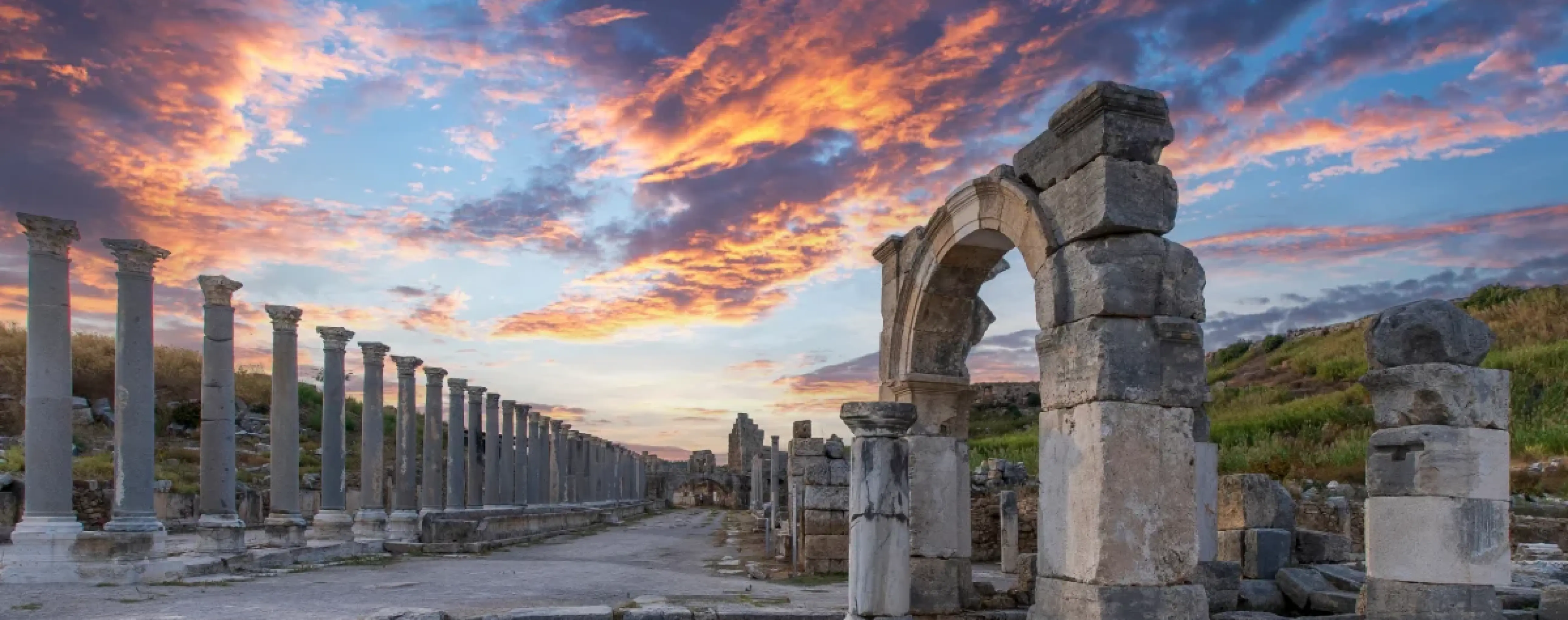
Ancient Perge
Ancient Perge in Antalya, Turkey - archaeological complex
Ancient Perge is located in the Aksu district, about 15 km east of the city center of Antalya. It is one of the largest archaeological sites of ancient Pamphylia in southern Turkey. The city arose on the Kestros River, now known as the Aksu, and held an important position on the route between the inland regions and the coast. Since 2009, Perge has been included in the UNESCO Tentative World Heritage List.
The history of the settlement begins in deep antiquity: archaeologists associate the early stage of occupation of this place with the Bronze Age. Later, Perge developed during the Hellenistic period and reached its greatest flourishing under the Romans, in the 2nd-3rd centuries AD. It was then that wide colonnaded streets, monumental gates, public buildings, baths, a theatre, a stadium, and city squares appeared here.
Perge is known not only as an ancient city, but also as one of the early centers of Christianity. It is mentioned in connection with the journeys of the Apostle Paul. Over time, the importance of the city declined: changes in the riverbed, the loss of access to the sea, and external threats led to a gradual decline, and by the Middle Ages the city was largely abandoned.
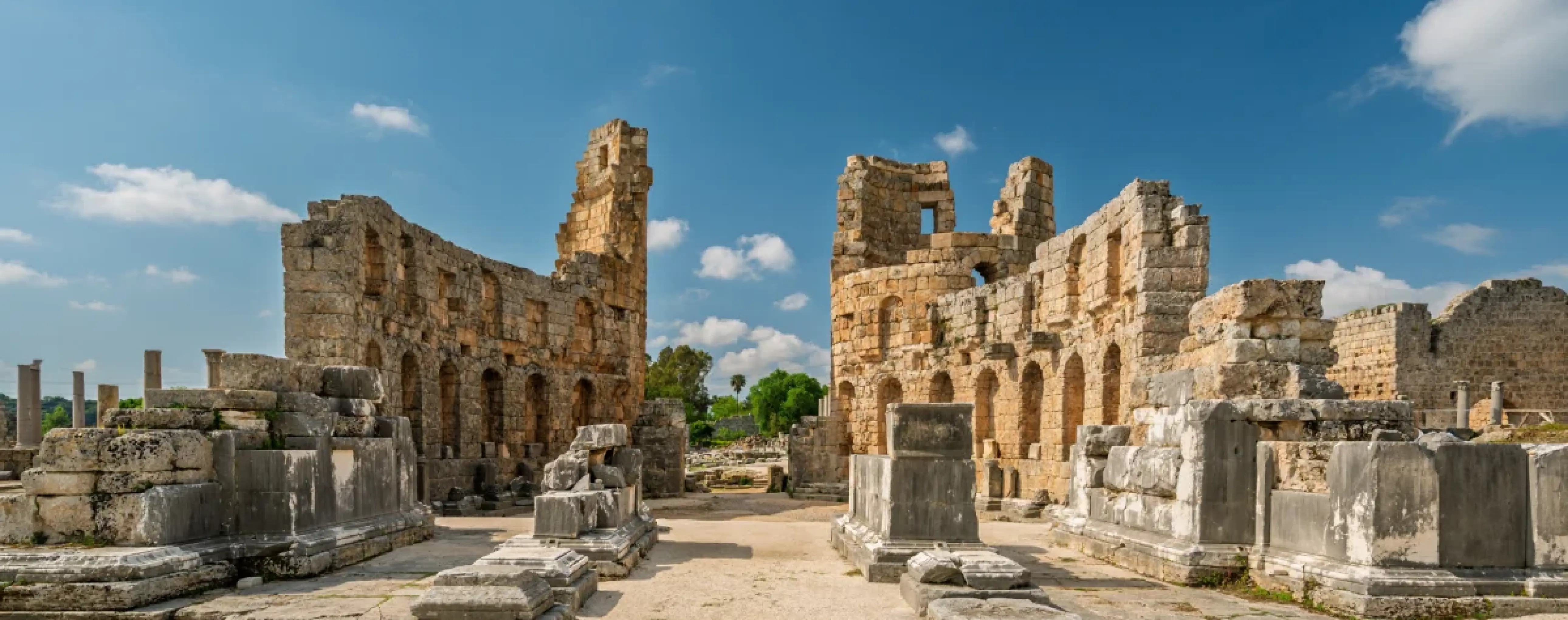
Today, Perge is interesting because it allows visitors to see the layout of a large Roman city in the open air. The Hellenistic towers and gates, a long colonnaded street with a central water canal, the agora, nymphaeum, baths, stadium, theatre, sections of the fortification walls, and remains of residential quarters have been preserved here. A visit is especially suitable for those who want to understand the structure of an ancient city not through isolated ruins, but as a complete archaeological complex.
Ancient Perge on the map
Antalya, Aksu: Ancient cities and ruins
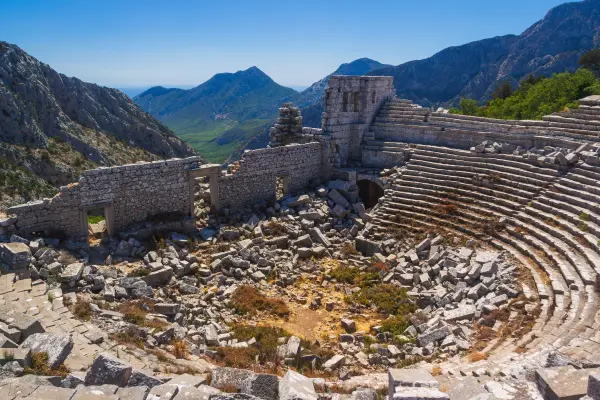
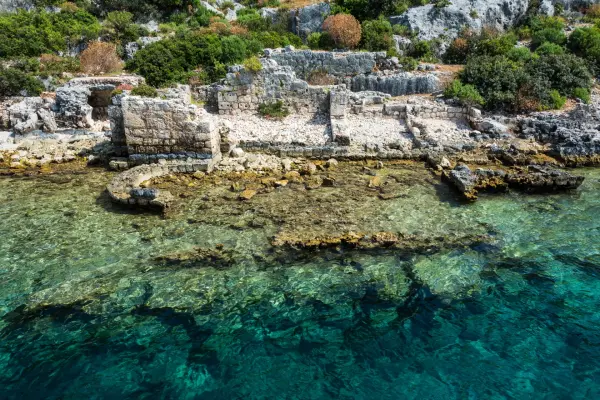
Ancient City of Termessos, The Sunken City of Kekova
Ancient Perge - layout, streets, and main monuments
A walk through the excavations reveals the structure of a large Roman city.
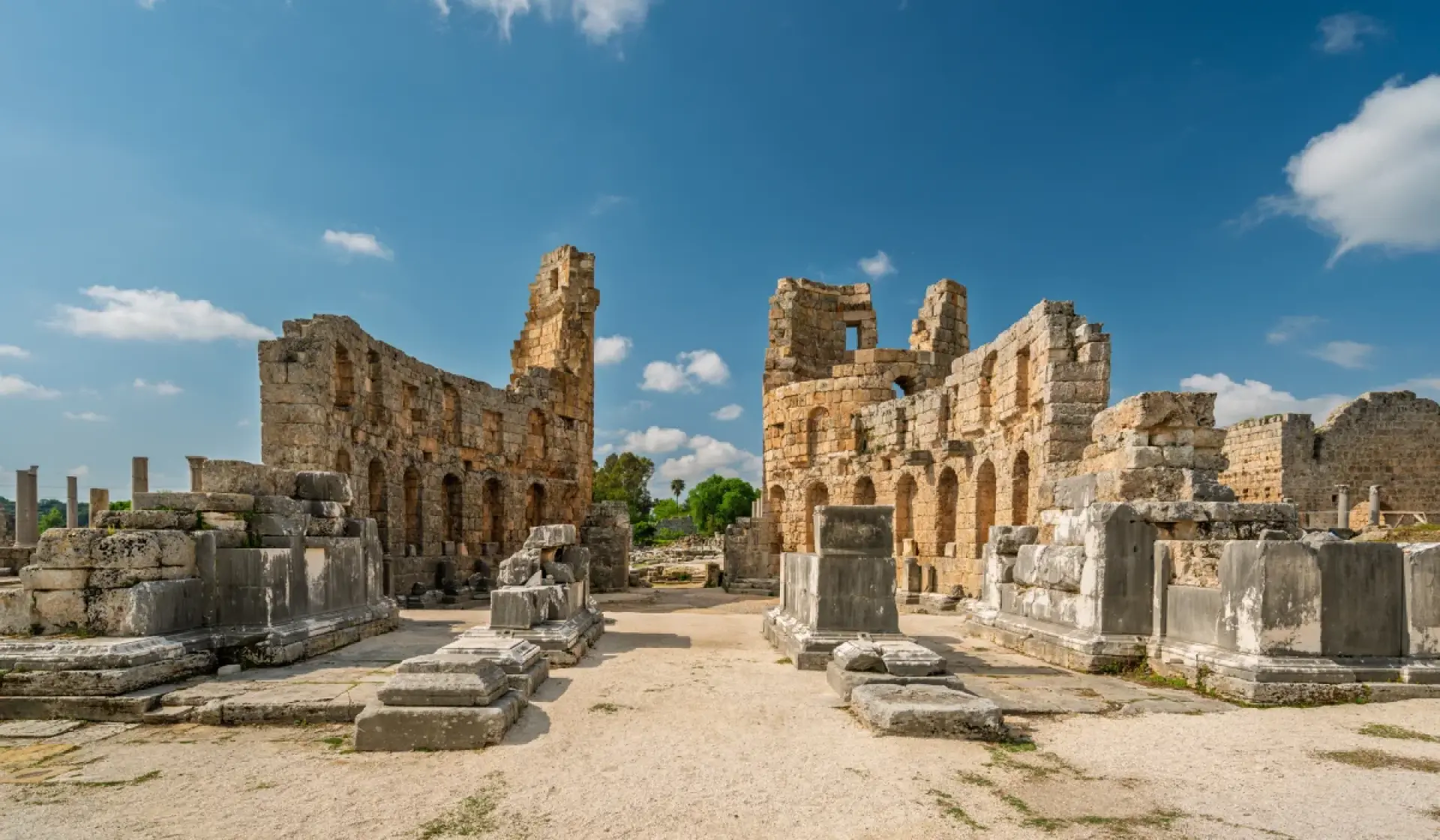
Roman streets, stadium, and gates of the ancient city
The route through the site usually begins at the monumental entrance with Hellenistic towers and later Roman reconstructions. Farther on, the main street with columns and a water canal in the middle opens up - one of the most recognizable parts of Perge. As you walk, you can examine the remains of commercial and public spaces, as well as imagine how everyday urban life was organized.
Among the most notable structures are the ancient theatre and the large stadium, which is considered one of the best-preserved in Asia Minor. Roman baths, the agora, and the monumental nymphaeum at the foot of the acropolis are also visible on the site. Part of the architectural decoration, statues, and objects found in Perge are now housed in the Antalya Archaeological Museum, so a visit to the complex is often combined with viewing the museum collection.
For a walk through the excavations, it is worth planning for comfortable shoes, water, and sun protection, especially in the warm season: the area is open and quite large. It is best to allow at least 1.5-2 hours to calmly walk through the main sections and examine the details of the masonry, arches, canals, and city walls.
Nearby are the Aspendos Theatre and Kursunlu Waterfall, which are often included in a route around the surroundings of Antalya. Perge is easy to reach from the center of Antalya by car, taxi, or local transport toward Aksu.
Best tours and travel experiences across the continent

Photos of Ancient Perge
Guided tours, popular attractions, and top-rated hotels across the continent


