
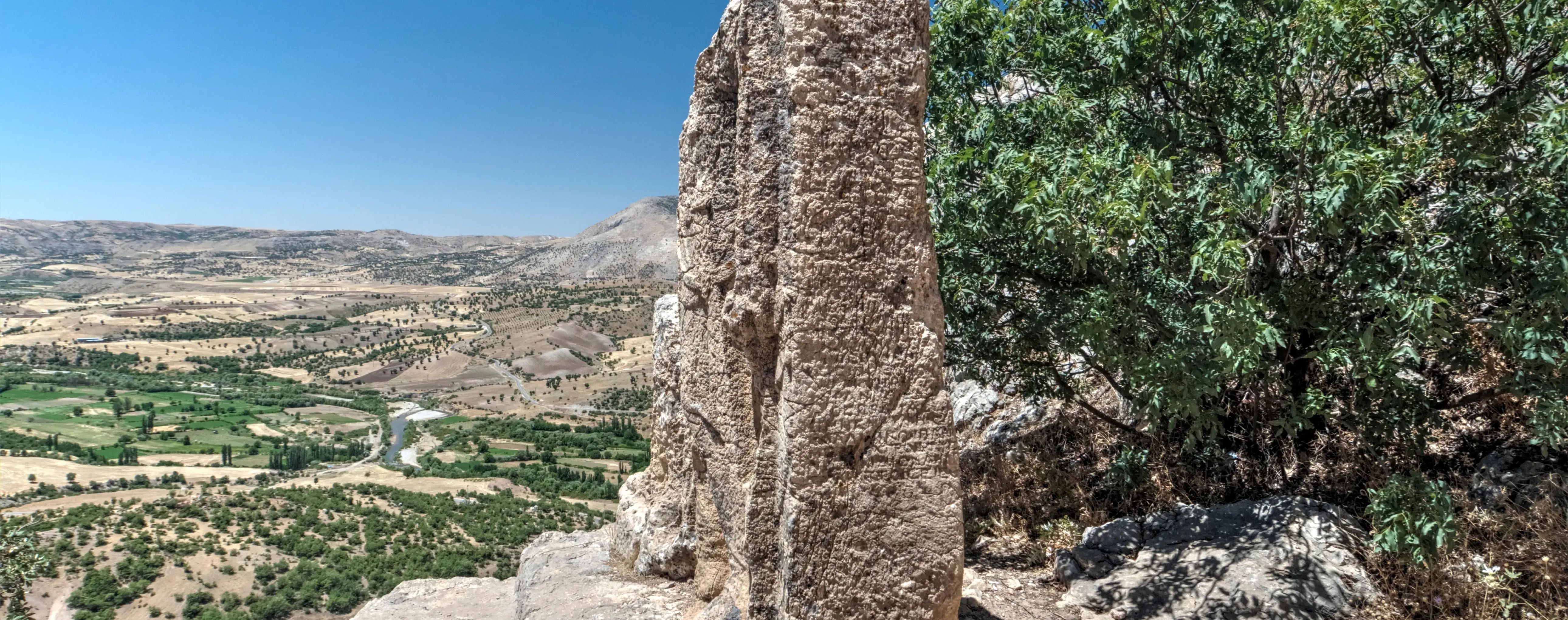
Arsameia on the Nymphaeus
Arsameia on the Nymphaeus in Adiyaman, Turkey
Arsameia on the Nymphaeus is an archaeological monument of the Kingdom of Commagene in Adiyaman Province in southeastern Turkey. It is located not far from the city of Adiyaman, away from modern settlements, on a slope above the valley of the Nymphaeus River, usually associated with the present-day Cendere River. The city was founded in the 2nd century BC and was considered one of the residences of the rulers of Commagene.
This site is especially important for understanding the culture of Commagene, a small kingdom where Greek and Iranian traditions intertwined. Arsameia was not only a palace and administrative center, but also a space connected with the royal cult. That is why monuments reflecting the official ideology and religious beliefs of that era have been preserved here.
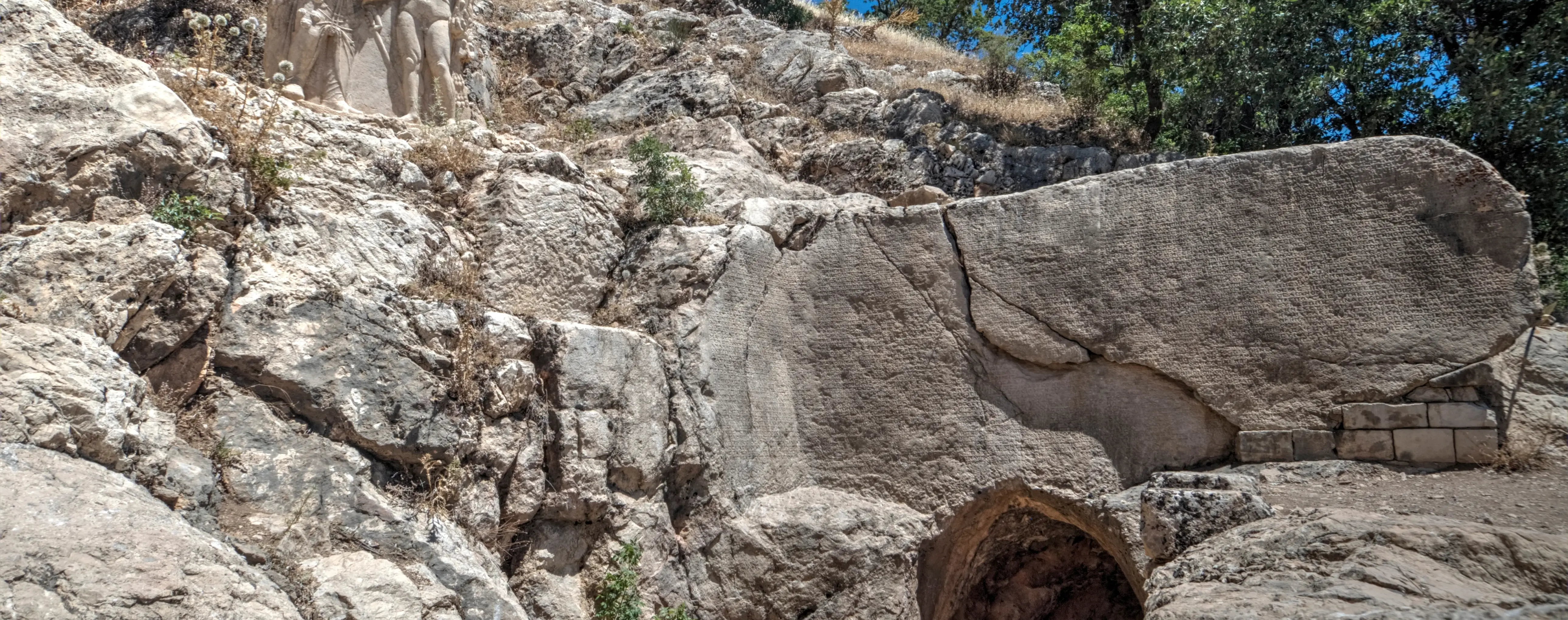
Visitors come here for the rock-cut reliefs, ancient inscriptions, and remains of structures built into the slope. One of the most famous features is a large Greek inscription, as well as a passage descending deep into the rock. The archaeological zone does not look like a restored ancient city, but it conveys well the character of a place where the natural terrain was part of the architecture and ritual space.
Arsameia is usually included in an itinerary of Commagene monuments together with Mount Nemrut and the Cendere Bridge. It will be of interest to those who want to see not only the region's well-known monuments, but also a less obvious site that helps to better understand the history of the ancient kingdom and the organization of its sacred centers.
Arsameia on the Nymphaeus on the map
Arsameia on the Nymphaeus: reliefs, inscriptions, and a rock passage
A monument of the Kingdom of Commagene on the slope above the Nymphaeus valley.
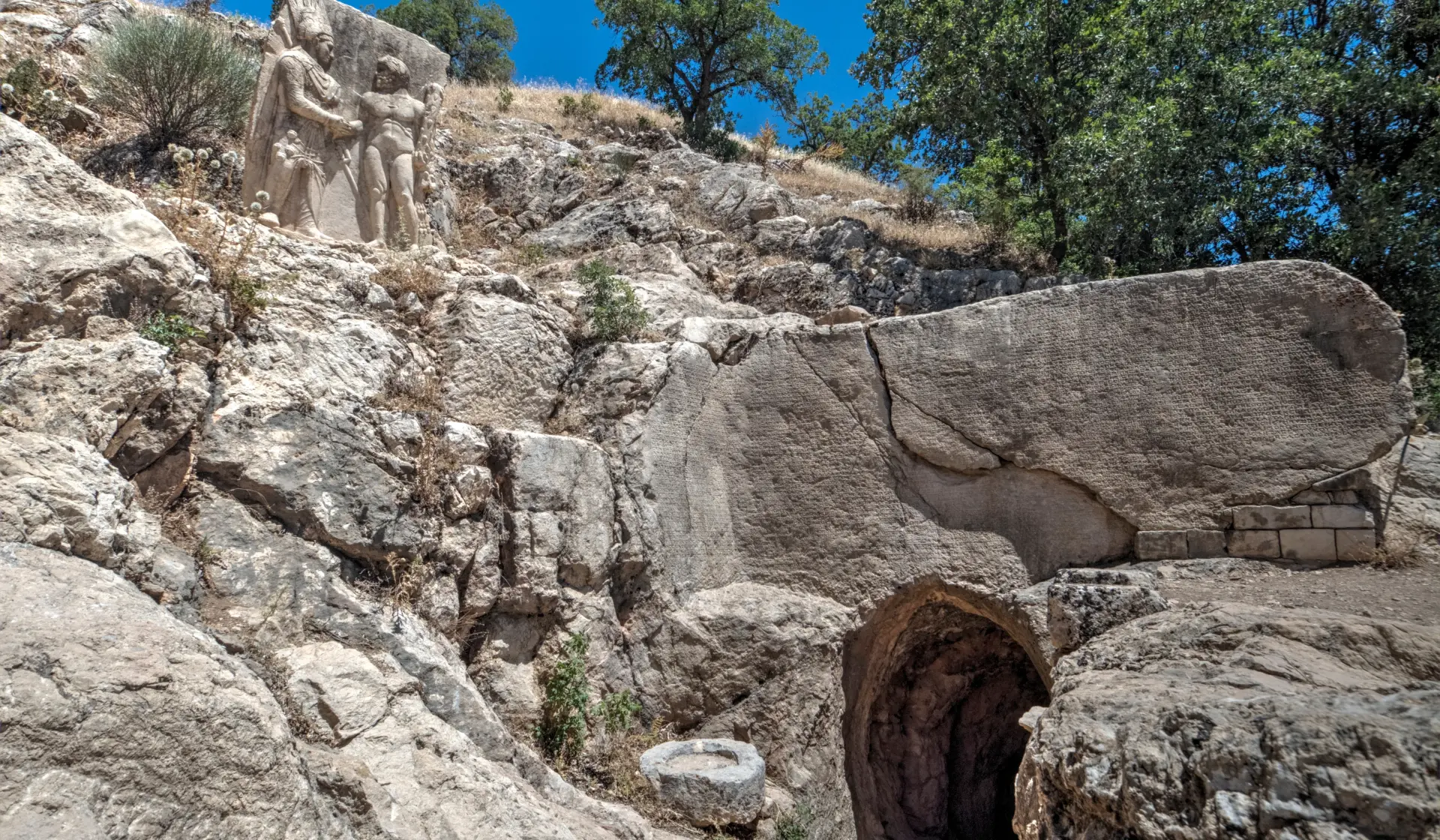
Rock reliefs, inscriptions, and a passage inside the mountain
At Arsameia, attention is drawn first of all to the elements carved into the rock. Here you can see reliefs associated with royal symbolism, fragments of ancient construction, and large Greek inscriptions that are of great importance for the study of the Kingdom of Commagene. The visit takes place outdoors, on a site with a noticeable change in elevation, so comfortable shoes are especially useful here.
One of the most unusual features is considered to be the stone passage descending deep into the rock. It makes a strong impression not because of its size, but because of its very design and the way the monument is so organically built into the slope. During the walk, it is worth paying attention not only to the individual objects, but also to the position of the terraces above the valley: this makes it easier to understand why the place was chosen for a royal residence and cult center.
Arsameia is most often of interest to those who are already exploring the heritage of Commagene and want to see a monument in a calmer setting than at the region's most famous sites. Nearby are the Cendere Bridge, the tumulus and sanctuary on Mount Nemrut, as well as other archaeological sites in the surroundings of Adiyaman, which can easily be combined into one trip.
It is usually reached by car or with a local driver from the city of Adiyaman. Before the trip, it is worth taking into account the hot weather in the warm season and the fact that tourist infrastructure at the monument itself is limited.
Best tours and travel experiences across the continent

Arsameia photos
Guided tours, popular attractions, and top-rated hotels across the continent


