
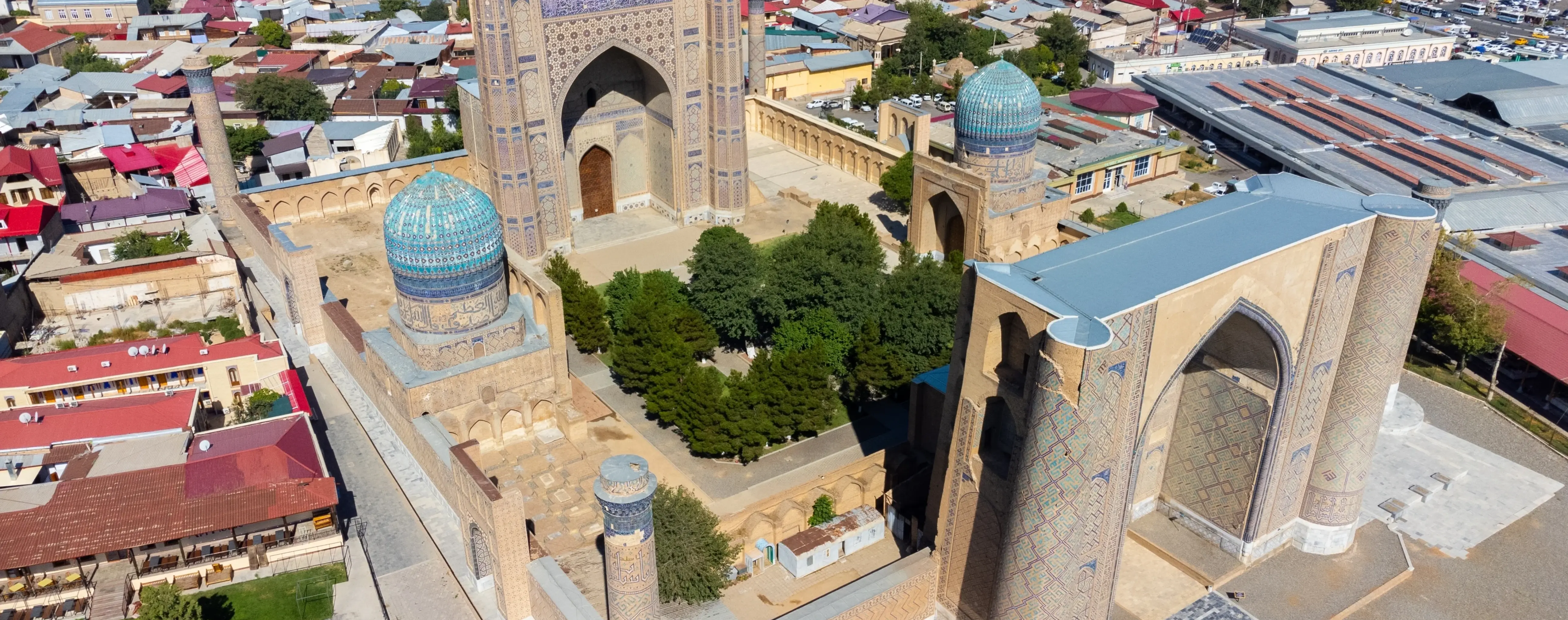
Bibi-Khanym Mosque
Bibi-Khanym Mosque in Samarkand, Uzbekistan
Bibi-Khanym Mosque is located in the historic center of Samarkand, next to the Siab Bazaar and not far from Registan Square. It is one of the most prominent monuments of Timurid architecture, associated with the period of Amir Temur's reign. The mosque began to be built at the end of the 14th century after his campaign in India, and it was intended to become one of the largest congregational mosques of its time.
The complex was conceived as a large ceremonial ensemble with a monumental entrance portal, a main domed mosque, side buildings, and a spacious inner courtyard. A marble lectern - a stone stand for the Quran - installed in the courtyard has survived to this day. The decoration features glazed tiles, majolica, mosaic, carved marble, and calligraphic inscriptions characteristic of Samarkand architecture from the Temur era.
The history of the mosque is associated not only with prosperity but also with destruction. Soon after construction was completed, the building began to suffer from structural problems, and later earthquakes caused serious damage. In the 20th and 21st centuries, the complex was restored, so today visitors can see the reconstructed volumes and better imagine the original scale of the structure.
For tourists, Bibi-Khanym Mosque is interesting as one of the key monuments of old Samarkand and an important part of the UNESCO World Heritage Site "Samarkand - Crossroads of Cultures." People come here to see a major Timurid building, examine decorative details, and combine the visit with a walk through the neighboring historic quarters.
Bibi-Khanym Mosque on the map
Bibi-Khanym Mosque: architecture and courtyard with a lectern
The complex helps reveal the scale of Timurid Samarkand.
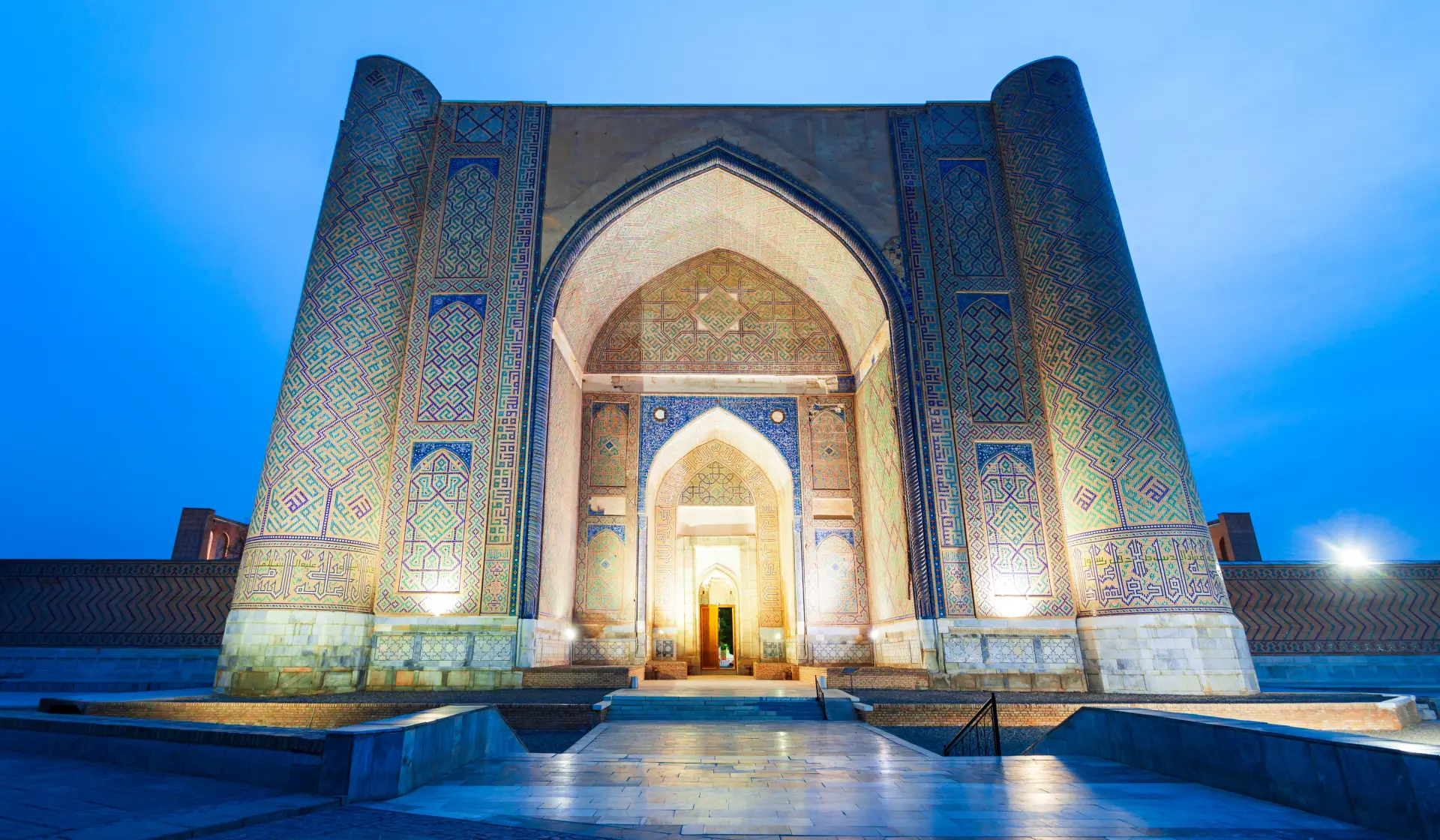
Monumental portal and courtyard with a marble lectern
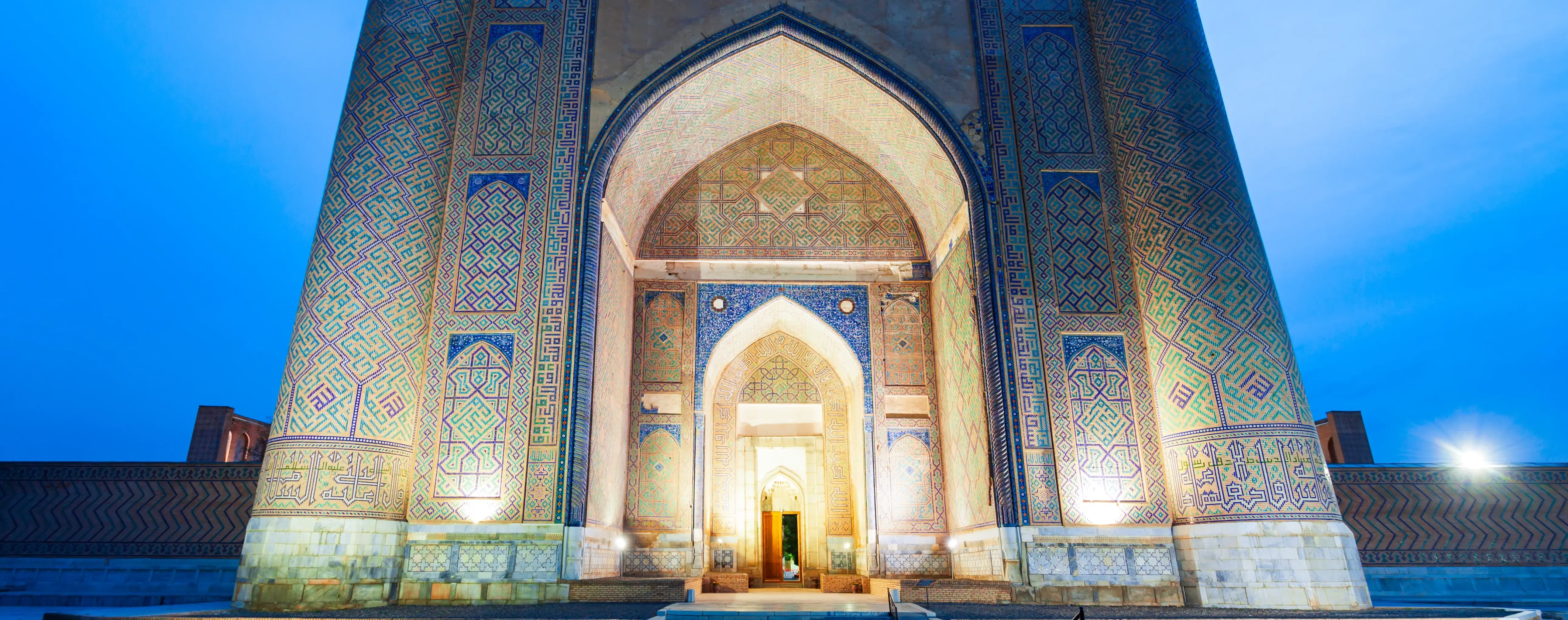
When visiting the complex, attention is immediately drawn to the tall entrance portal and the large dome of the main building. On the facades, you can see a combination of turquoise and blue tones, geometric ornamentation, fragments of mosaic, and Arabic calligraphy. Inside and in the courtyard, the scale of the structure is most noticeable: the wide space, massive walls, and symmetry of the composition help convey how solemn this ensemble was intended to be.
In the courtyard there is the famous marble lectern, which is associated with several local legends. Tourists usually examine it together with the surviving architectural elements of the complex and the decorative finishes preserved after restoration. In good lighting, the differences between the historic parts and the restored sections are especially noticeable, which makes the visit interesting from an architectural point of view as well.
A visit can easily be combined with a walk through this part of the city: nearby are the Siab Bazaar, the Bibi-Khanym Mausoleum, and the Shah-i-Zinda necropolis. From Registan Square, the mosque can be reached on foot in about 15-20 minutes, and from other parts of Samarkand people usually get here by taxi or public transport to the historic center.
For sightseeing, it is worth choosing a time with soft daylight, when the colors of the tiles and the relief of the decoration are more visible. When entering the grounds, you should follow the usual rules of respectful behavior in a religious and historic place, and it is better to choose modest clothing, especially if you plan to visit other nearby shrines as well.
Best tours and travel experiences across the continent


Photos of the mosque
Guided tours, popular attractions, and top-rated hotels across the continent


