
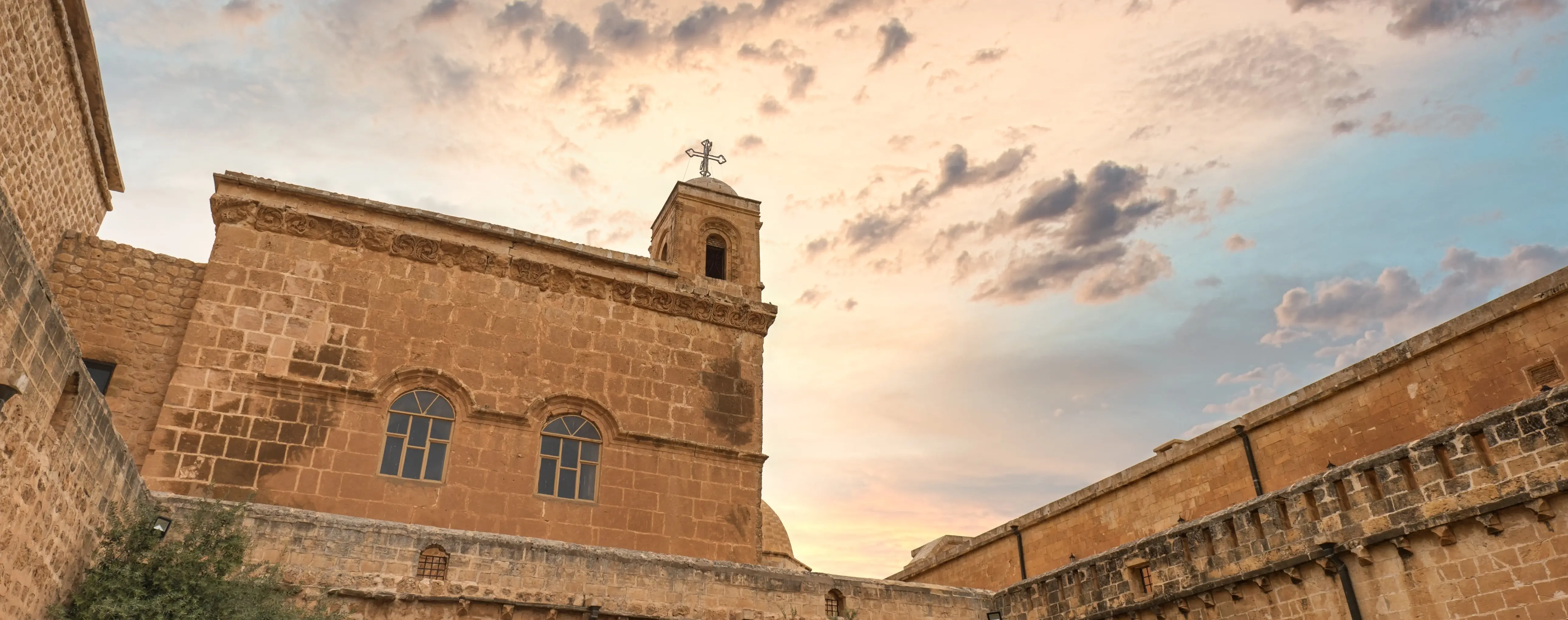
Deyrulzafaran Monastery
Deyrulzafaran Monastery in Mardin, Turkey
Deyrulzafaran Monastery is located east of central Mardin, on a slope with broad views over the plains of Upper Mesopotamia. It is one of the best-known monasteries of the Syriac Orthodox Church in southeastern Turkey and an important monument of the Christian tradition of the Tur Abdin region. People come here not only for its history, but also to better understand the religious and cultural environment of Mardin.
The history of the monastery goes back to late antiquity, and the present complex took shape gradually on the basis of earlier buildings. For several centuries, Deyrulzafaran served as the residence of the Syriac Orthodox Patriarchate, so its significance goes beyond that of an ordinary monastic ensemble. The name is usually translated as “saffron monastery” - it is associated with the warm shade of the local stone and with the tradition of using saffron, which was widespread in the region.
The complex is built of yellowish stone typical of Mardin and its surroundings. The monastery preserves inner courtyards, old chapels, prayer halls, and underground rooms that help illustrate how monastic life developed over the centuries. The architecture here is restrained yet expressive, with a noticeable combination of religious function and local building traditions.
Today, Deyrulzafaran remains an active religious center and is also open to visitors. For tourists, this is an opportunity to see one of the key monuments of Syriac Christianity and to gain a better understanding of the layered history of Mardin, where different languages, faiths, and cultures coexisted for centuries.
Deyrulzafaran Monastery on the map
Deyrulzafaran Monastery: courtyards, chapels, and a view over the plain
Here, monastic tradition, stone architecture, and the history of Tur Abdin come together.
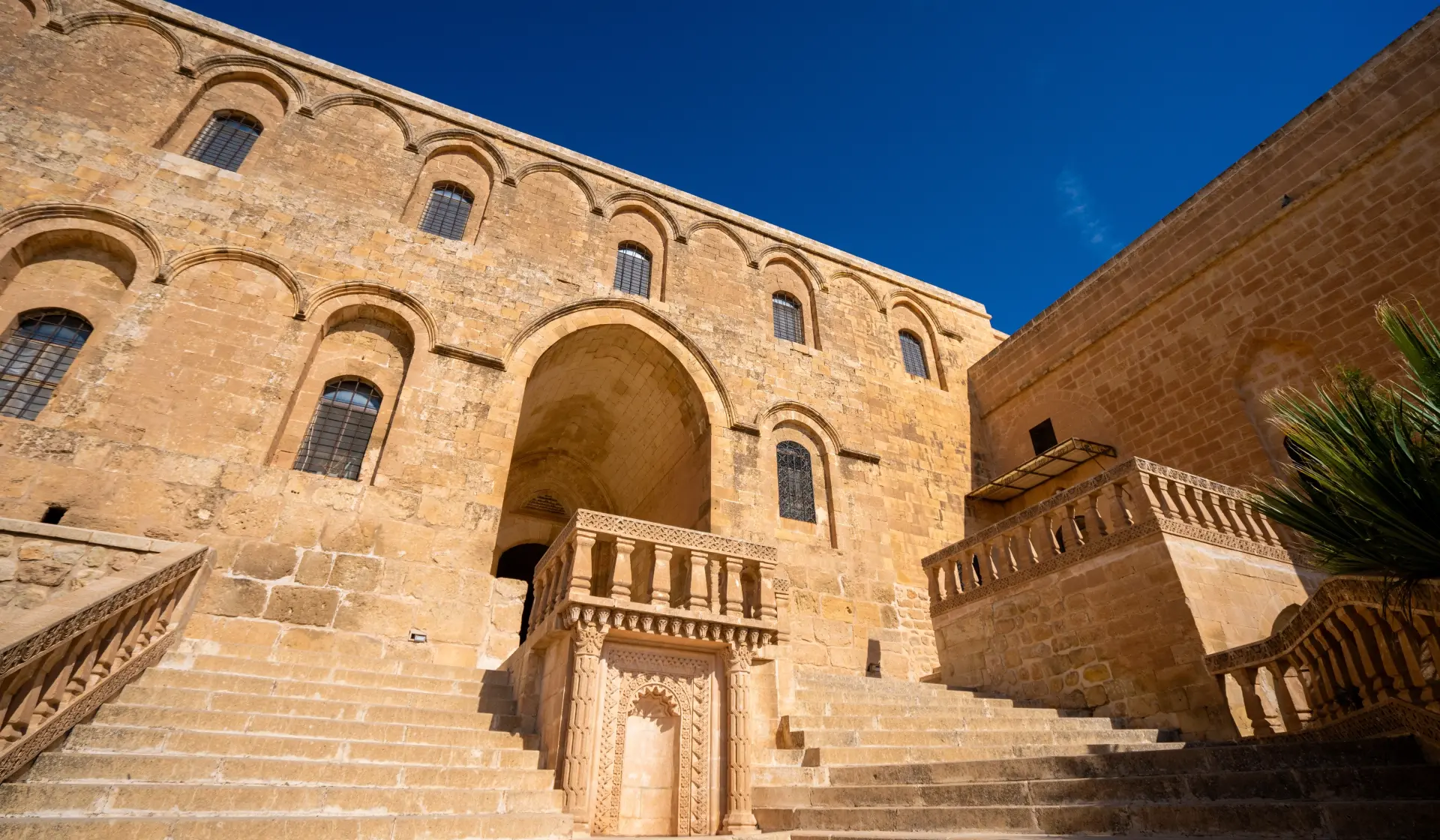
Courtyards, chapels, and underground rooms on a slope above the plain
During a visit, several parts of the complex connected by passages and inner courtyards are usually explored. Of greatest interest are the ancient prayer rooms, stone halls, and underground spaces that belong to the oldest layers of the monastery. In the interiors, it is worth paying attention to the massive stone masonry, arches, carved details, and the overall layout of the rooms, adapted to monastic life and worship.
The monastery is interesting not only for its architecture, but also for its living church tradition. Here, visitors can become acquainted with the heritage of Syriac Christianity, which has its own liturgical language and a centuries-old history in Mesopotamia. Since this is an active monastery, visitors should generally maintain quiet behavior and be aware of possible restrictions during religious services.
The grounds offer views of the surroundings of Mardin, so the trip is often combined with a visit to the city's historic center. Other well-known monuments of the region linked to Syriac Christian culture are also located nearby, including ancient churches and monastic complexes in the Tur Abdin area.
The easiest way to get here is by car or taxi from the center of Mardin - the journey takes little time, as the monastery is located about 4-5 km east of the city. Before visiting, it is useful to check opening hours, especially on religious holidays and on days when services are held.
Best tours and travel experiences across the continent




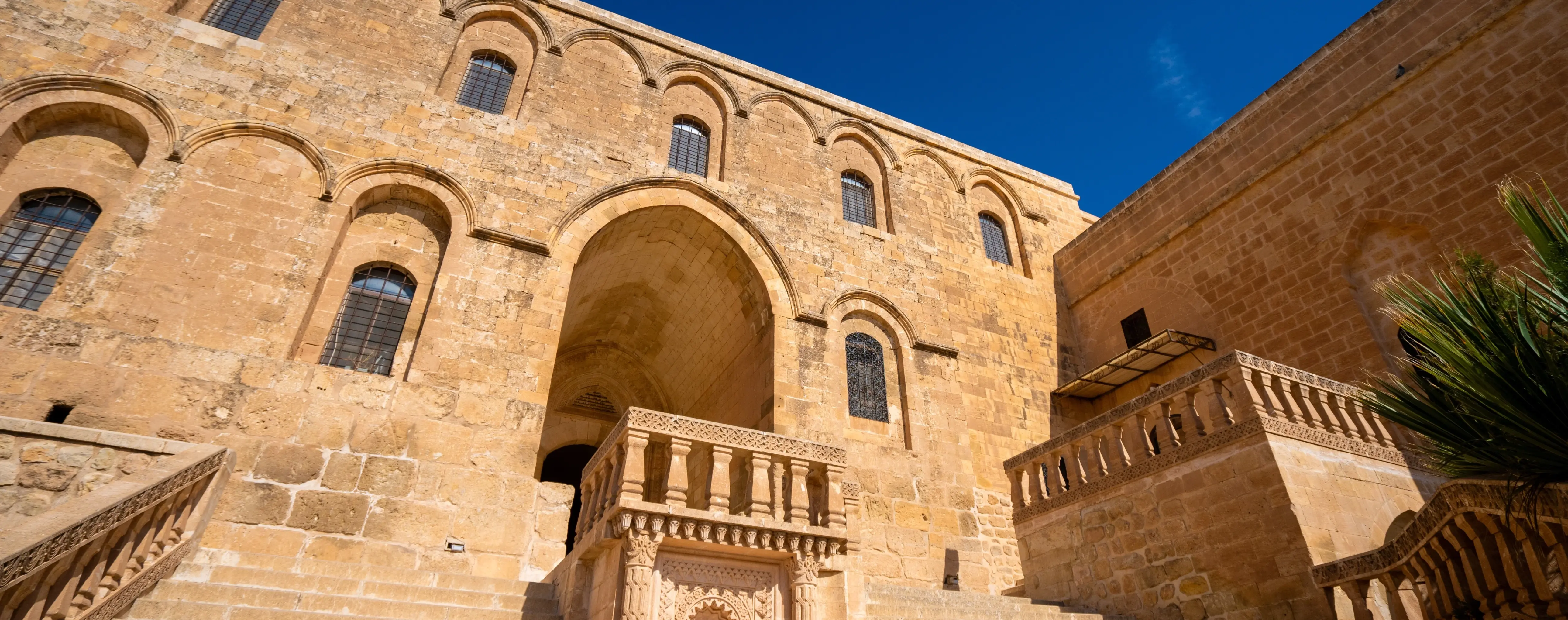
Photos of the monastery
Guided tours, popular attractions, and top-rated hotels across the continent


