

Photos of the Fortress of Trapezunt
Fortress of Trapezunt (modern Trabzon)
Fortress of Trapezunt (modern Trabzon) in Ortahisar, Trabzon, Turkey
The Fortress of Trapezunt is the surviving city fortifications in the centre of modern Trabzon, mainly in the Ortahisar district. The earliest sections of the walls date to Roman-Byzantine times, and the main defensive perimeter was strengthened and rebuilt in the 13th-15th centuries, when the city was the capital of the Empire of Trebizond, and later in the Ottoman period.
The fortifications are traditionally divided into three belts - lower, middle and inner, or upper town. The upper part served as an acropolis with residences and administrative buildings, fragments of which remain. The middle and lower belts protected residential quarters and the approaches to the harbour, using the valleys of the Zağnos and Tabakhane rivers as natural boundaries.
Today there are long stretches of walls, towers and gates from different periods. The lines of fortification are clearest in the upper and middle parts, and restoration work is visible in places. The scale and layout of the walls help to picture the organisation of the medieval city and its relationship to the terrain.
At the foot of the fortress slopes is Zağnos Vadisi Park, laid out along the bed of a natural ravine. Walkways, stairs and bridges make it possible to view sections of the fortress from different points and to combine the visit with a walk through the green space in the historic centre.
Show More
Show Less
The Fortress of Trapezunt is the surviving city fortifications in the centre of modern Trabzon, mainly in the Ortahisar district. The earliest sections of the walls date to Roman-Byzantine times, and the main defensive perimeter was strengthened and rebuilt in the 13th-15th centuries, when the city was the capital of the Empire of Trebizond, and later in the Ottoman period.
The fortifications are traditionally divided into three belts - lower, middle and inner, or upper town. The upper part served as an acropolis with residences and administrative buildings, fragments of which remain. The middle and lower belts protected residential quarters and the approaches to the harbour, using the valleys of the Zağnos and Tabakhane rivers as natural boundaries.
Today there are long stretches of walls, towers and gates from different periods. The lines of fortification are clearest in the upper and middle parts, and restoration work is visible in places. The scale and layout of the walls help to picture the organisation of the medieval city and its relationship to the terrain.
At the foot of the fortress slopes is Zağnos Vadisi Park, laid out along the bed of a natural ravine. Walkways, stairs and bridges make it possible to view sections of the fortress from different points and to combine the visit with a walk through the green space in the historic centre.
A walk along the walls reveals construction phases and the link with the city's terrain.
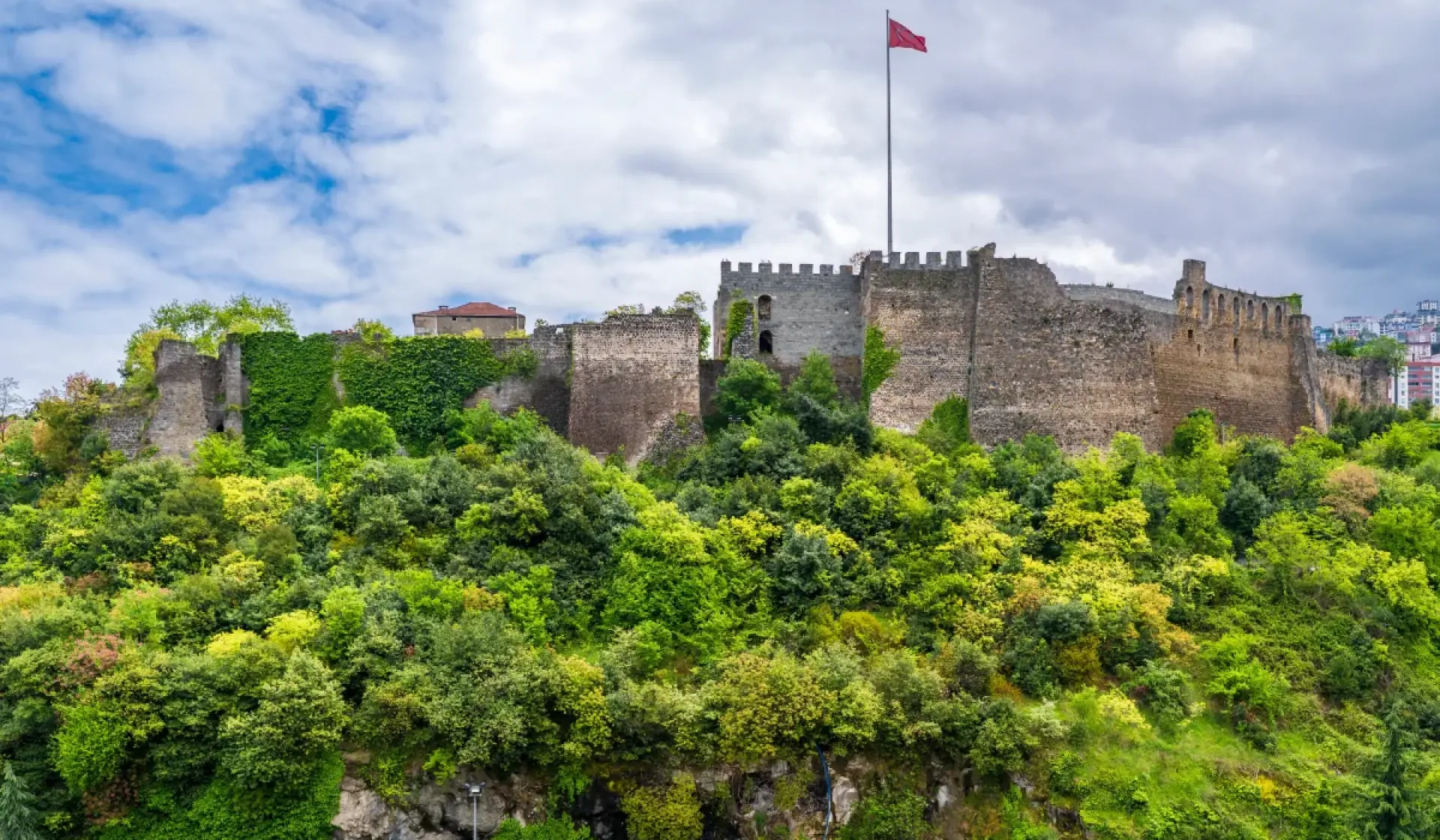
Medieval walls above the Zağnos Valley and the Ortahisar quarter
A walk along the fortification lines reveals different types of masonry and construction phases - from early Byzantine ashlar blocks to later stretches with bonding and brick inserts. On the slopes there are surviving towers, fragments of curtain walls and gates that linked the old quarters with the harbour and the valleys. In places modern stairs and paths meet the walls, making it convenient to climb up to the upper town.
On the ridge at the top, fragments of former administrative and residential buildings are visible, as well as sections of the massive acropolis walls. From here there are views over the Zağnos and Tabakhane valleys, the roofs of Ortahisar and the Black Sea coast. The terrain is steep in places, so plan the route taking the climbs and descents into account.
Zağnos Vadisi Park is laid out on terraces with paths, viewpoints and pedestrian bridges. From the park it is easy to reach the preserved sections of wall and the stone bridge across the valley, which links the ravine banks and serves as a landmark during the visit. Part of the park is illuminated in the evening.
Nearby are the Ortahisar Fatih Mosque and the Gülbahar Hatun complex at the western exit of the valley; a little further west is Trabzon Ayasofya. From Meydan Square in central Trabzon to Zağnos Vadisi Park and the fortress lines is a 10-15 minute walk; city buses and dolmuş also run to the Ortahisar district.
Popular Tours
Best tours and travel experiences across the continent

Guided tours, popular attractions, and top-rated hotels across the continent


