
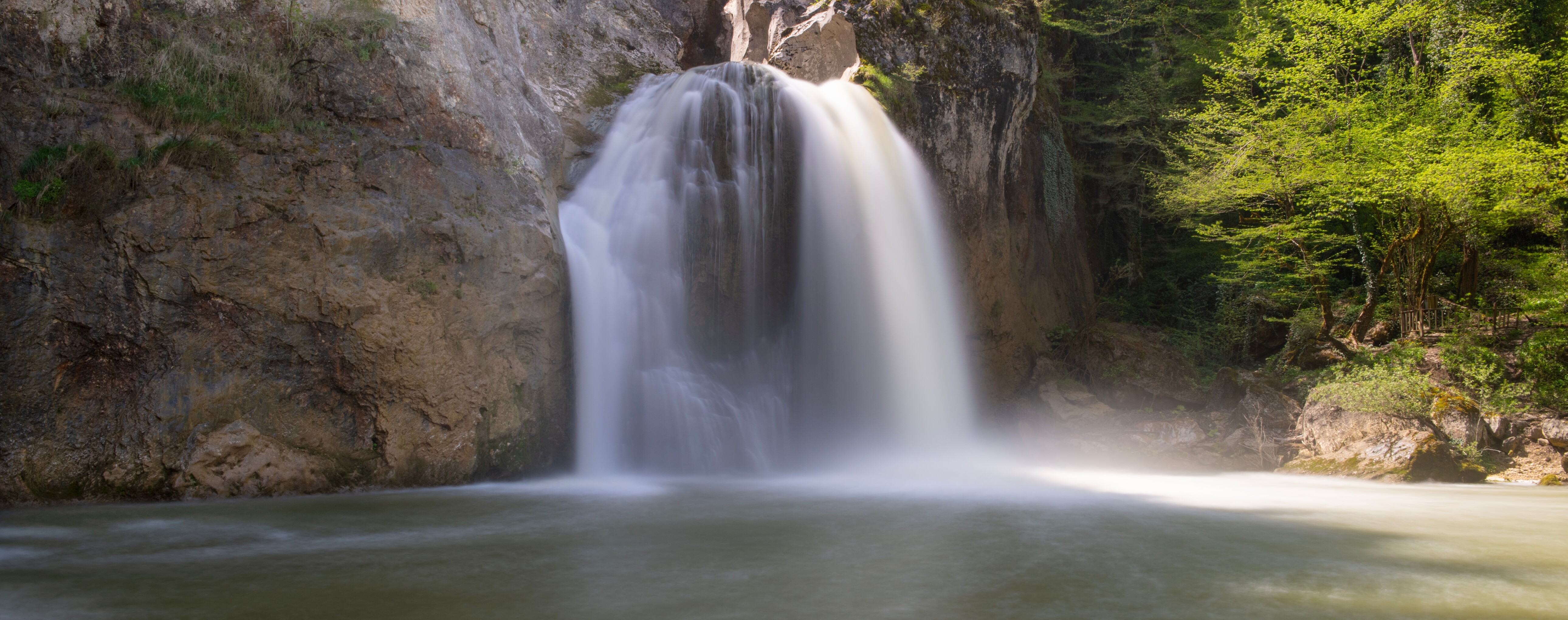
Horma Canyon
Horma Canyon in Kastamonu, Turkey
Horma Canyon is located in Kastamonu Province, in the northern part of Turkey, within the Kure Mountains National Park. It is one of the best-known natural sites in the region: a narrow gorge carved by a river, with high rock walls that in some places come very close to each other. Thanks to the shade, water, and dense forest, a cool and humid microclimate is preserved here, noticeably different from the more open areas around it.
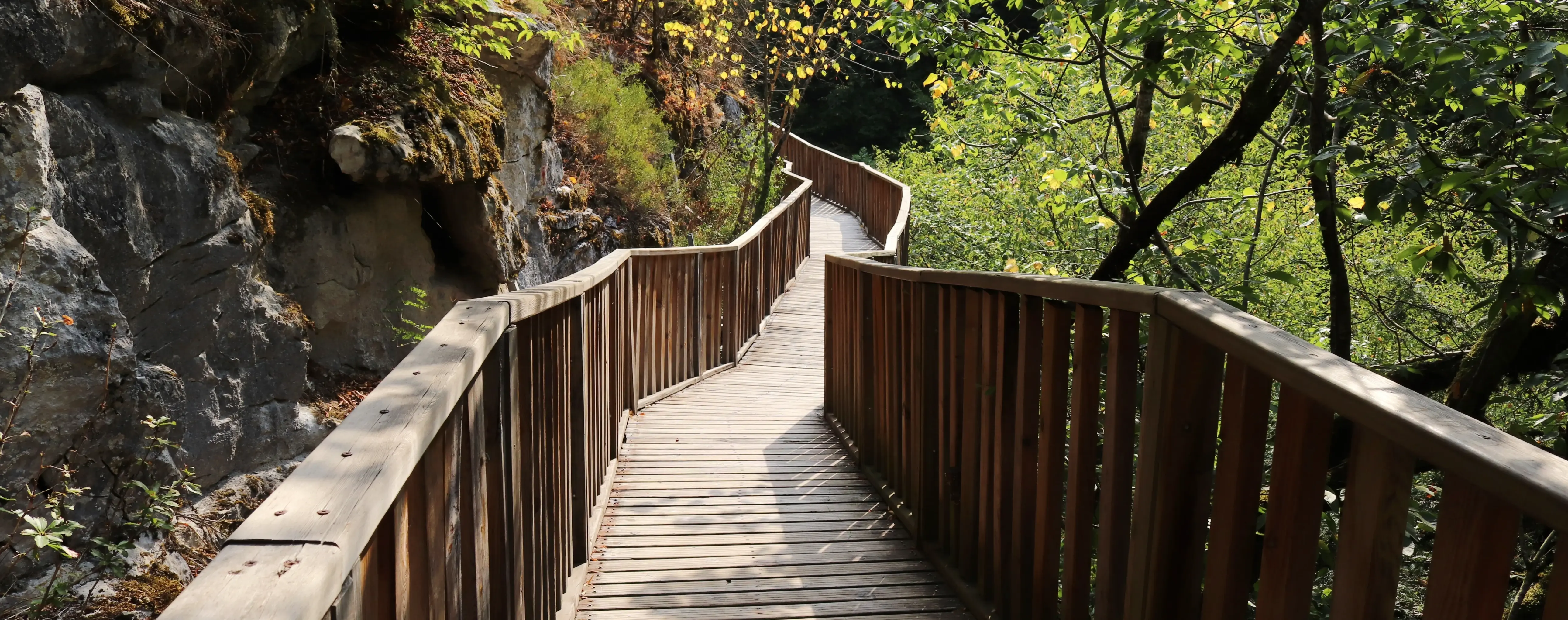
The canyon’s main feature for visitors is the wooden walkway built along the cliffs and above the riverbed. It makes it possible to pass through a hard-to-reach part of the gorge without special equipment and to see the canyon’s terrain up close. Along the route, there are mossy sections, small water cascades, rock ledges, and viewing points from which the depth of the gorge can be clearly seen.
Horma Canyon is of interest to those who want to experience the nature of Turkey’s Black Sea region not only from the road, but from within the landscape itself. People come here for a walk along the equipped route, to observe the forest environment, and for photography. The impression is created not by vast panoramas, but by the combination of confined rocky space, flowing water, and dense vegetation.
A trip to the canyon is usually combined with visits to the surroundings of the Pinarbasi district, which serves as a convenient starting point for nature routes in the Kure Mountains. One of the best-known access routes passes through the village of Ilica. From the center of Kastamonu city, the drive usually takes about 2–2.5 hours, depending on the chosen route and road conditions.
Horma Canyon on the map
Horma Canyon and the wooden route above the river
Here you can walk along a boardwalk by the cliffs and see the canyon’s riverbed.
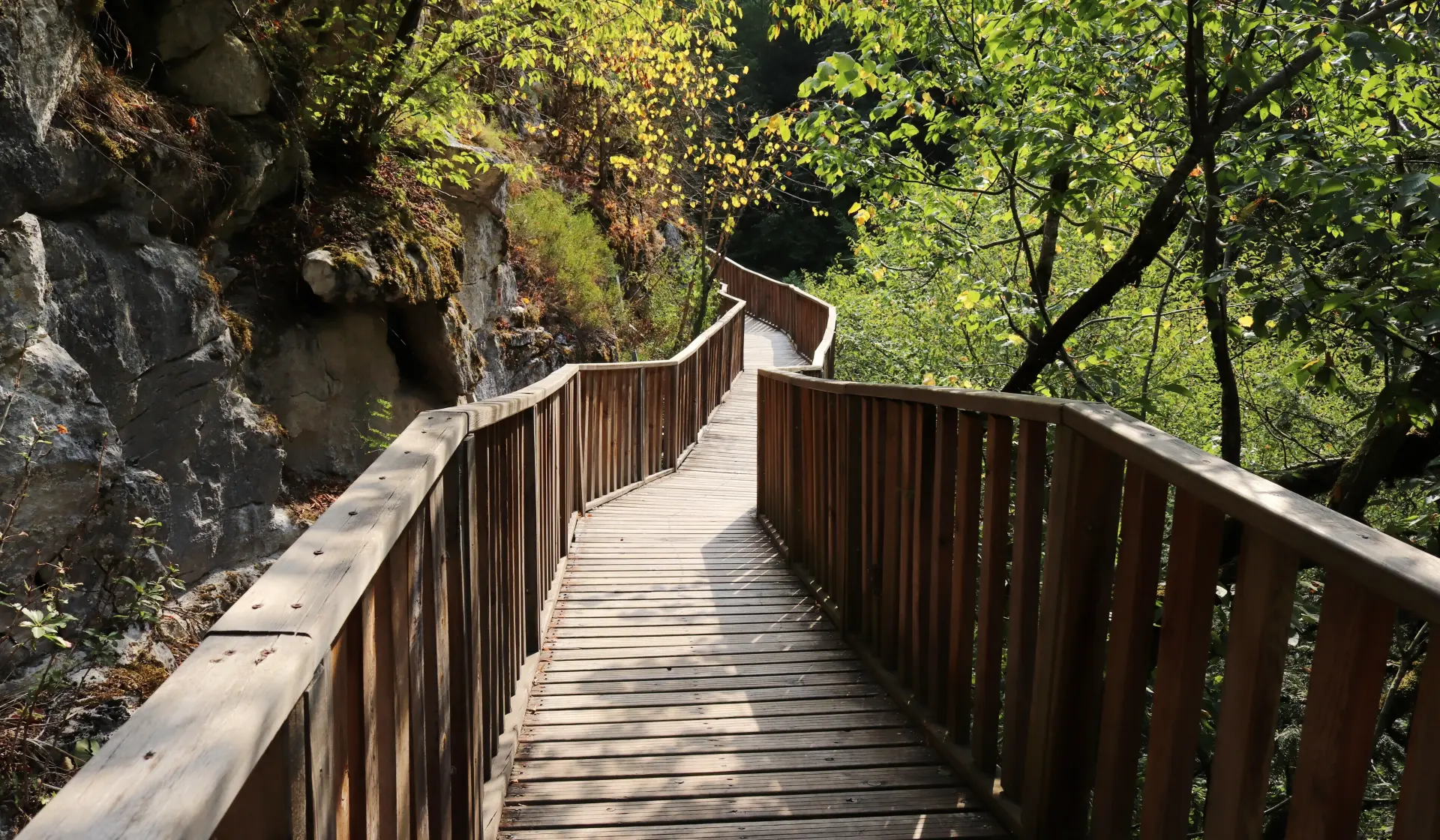
Wooden route above the river between steep cliffs
A walk through the canyon follows an equipped wooden platform with railings, fixed along the rock walls. This route makes accessible the part of the gorge that could previously be reached only over difficult terrain. During the walk, the layered surfaces of the rocks, the narrowing of the riverbed, and damp areas where mosses and small plants cling to the stone are clearly visible.
Visitors usually follow the route at a relaxed pace, stopping at viewing sections and bends in the riverbed. After rainfall, the water flow and humidity in the air are felt more strongly, and the wooden surface can be slippery, so comfortable footwear is especially important here. The site is suitable for observing nature and photographing landscape details — the textures of stone, water, forest, and light within the narrow space of the canyon.
Not far from the canyon, visitors often also go to the Glass Terrace Catalzeytin viewpoint and Valla Canyon, if the route around the Pinarbasi district is planned for a full day. The canyon itself is usually explored on foot after arriving by car at the entrance area from the Ilica side or nearby roads.
Before the trip, it is worth taking the weather and seasonal crowds into account, especially on weekends and public holidays. For an unhurried visit, it is better to allow time not only for walking along the boardwalk, but also for stops to rest and to view the canyon from different points.
Best tours and travel experiences across the continent

Photos of the canyon
Guided tours, popular attractions, and top-rated hotels across the continent


