
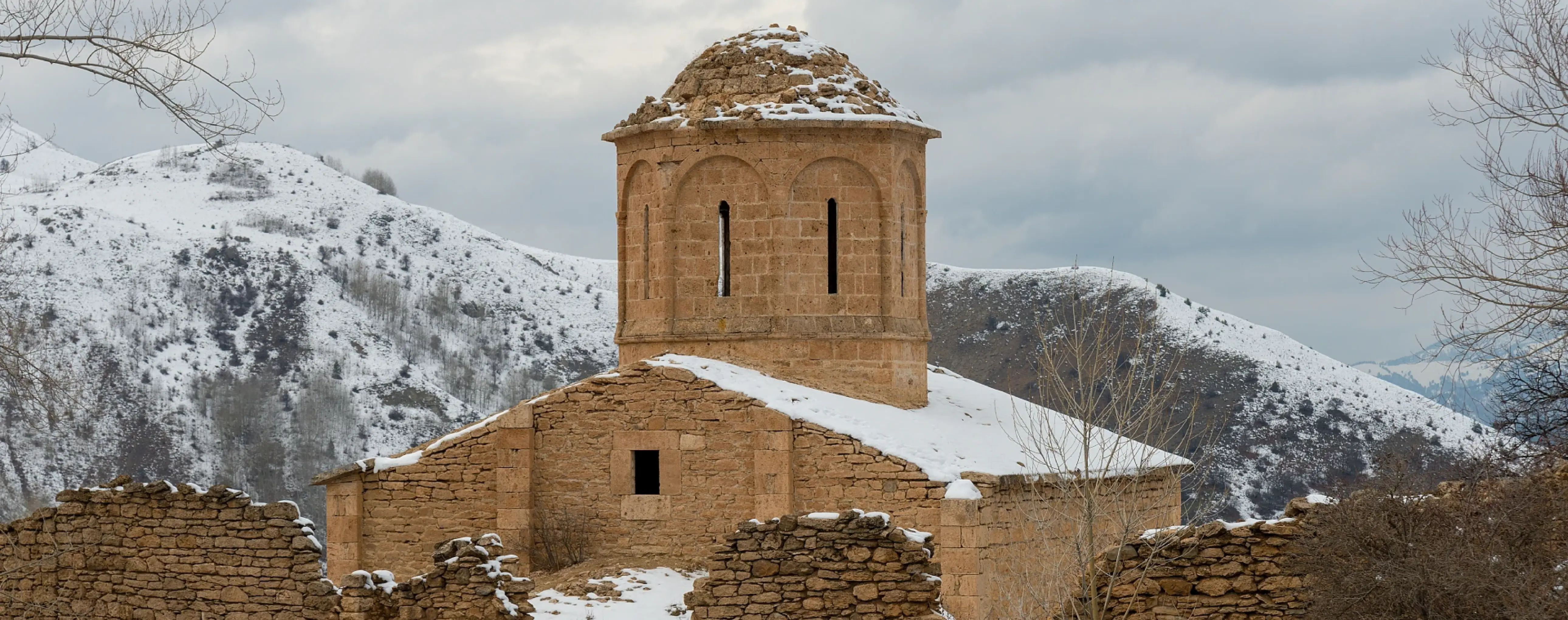
Imer Monastery
Imer Monastery in Gumushane, Turkey
Imer Monastery is located in the mountainous part of Gumushane Province and is among the Christian monuments of the historical Pontus region. It is usually associated with the late Byzantine period and dated to the 14th century. The main church of the complex was dedicated to John the Baptist, and the monastery remained an important religious site for local Orthodox communities for a long time.
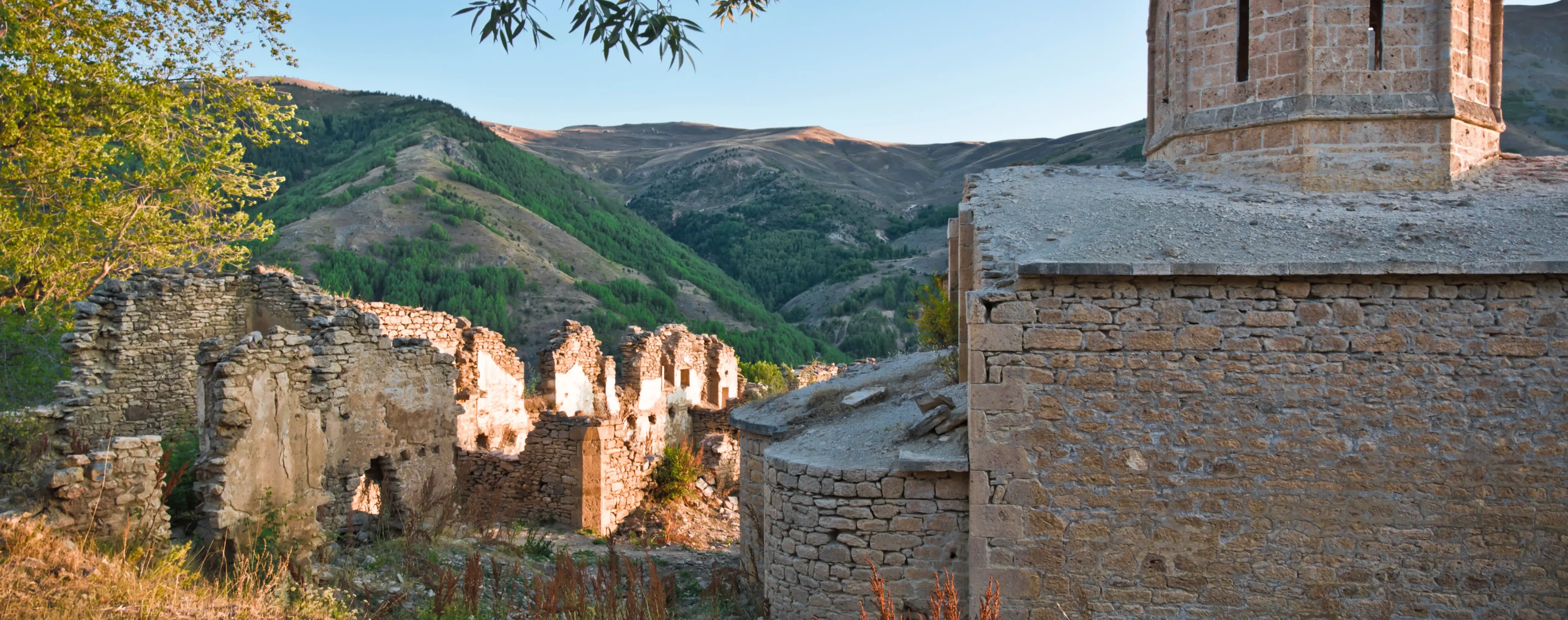
Today, the monastery has not survived in full, but its main parts are still clearly distinguishable. On site, visitors can see the central church, fragments of walls and arches, remains of the entrance decoration, and traces of other structures that once surrounded the church. Even in its ruined state, the features of the stone masonry and the overall composition of the complex are noticeable.
Interest in Imer Monastery is connected primarily with its historical setting and the medieval Christian architecture, which is rare for the region. It is not a museum site with restored interiors, but rather an authentic monument where the preserved structure, the landscape, and the connection to the past are what matter. This is the kind of place usually chosen by those interested in ancient monasteries, the history of the Eastern Black Sea region, and lesser-known routes in Turkey.
A trip here should be planned with the mountainous terrain and limited nearby infrastructure in mind. The road and the approach to the ruins may be uneven, so comfortable footwear is especially useful. A visit to the monastery is often combined with trips to other historical and natural sites in Gumushane.
Imer Monastery on the map
Imer Monastery: ruins of a church and monastic complex
A monument of medieval Christian architecture in a mountainous area.
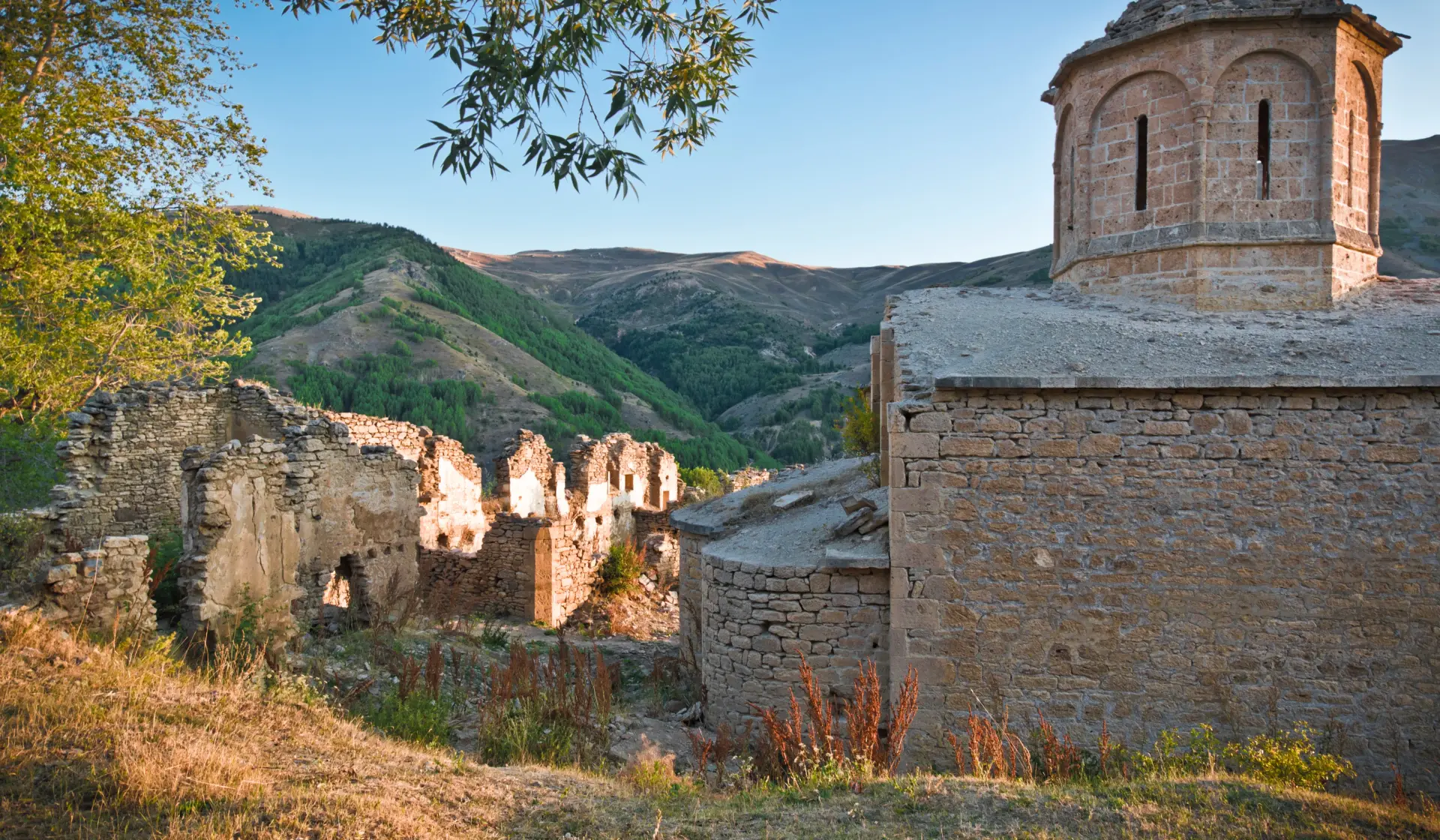
Ruins of a domed church in the mountainous landscape of Pontus
Within the monastery grounds, the central church is the most clearly recognizable element, with the other buildings of the complex once arranged around it. Visitors can examine the stone walls, arched openings, individual decorative elements, and the overall layout of the monastic courtyard. What is interesting here is not only the surviving fragments, but also the way the monument is integrated into the terrain and the surrounding countryside.
The visit usually does not take much time, but it requires attention: the surface is rocky in places, and the structures are in a ruined condition. Inside the church and nearby, visitors can see the preserved volumes of the building and imagine its original composition. Daytime is best for photographs, when the stone masonry and architectural details are most clearly visible.
Infrastructure at the site is minimal, so it is best to bring water and everything you need in advance. Closed shoes and dry weather are suitable for a visit, especially if you plan to explore the surroundings on foot. Nearby, travelers sometimes include other ancient Christian monuments and natural views of Gumushane Province in their route.
The site is usually reached by car via local roads from settlements in Gumushane Province, after which a short walk may be required. Before the trip, it is useful to check the road conditions and exact navigation, as the site is located away from the main tourist routes.
Best tours and travel experiences across the continent


Photos of the monastery
Guided tours, popular attractions, and top-rated hotels across the continent


