
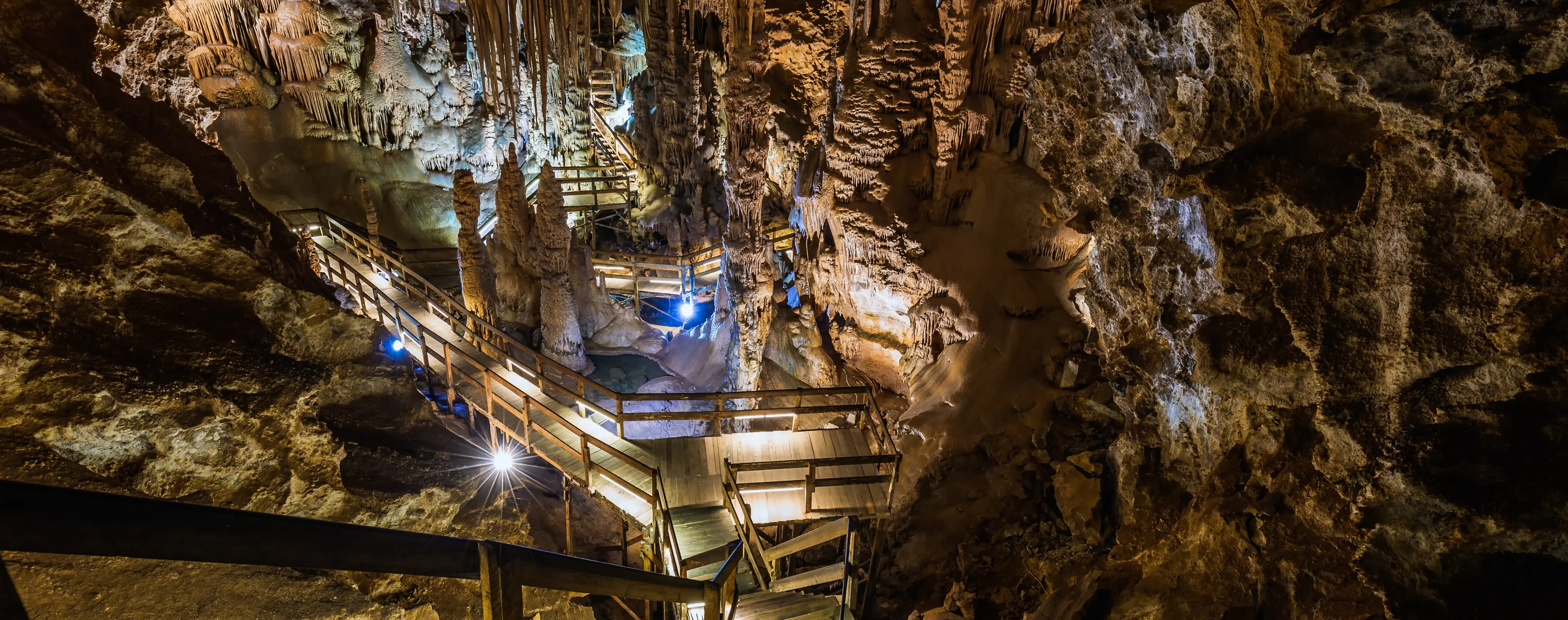
Karaca Cave
Karaca Cave in Gumushane, Turkey
Karaca Cave is located in Gumushane Province in northeastern Turkey, in a mountainous area near the town of Torul. It is one of the best-known developed caves in the region, visited for its well-preserved karst formations and convenient sightseeing route. For tourists, it is above all a natural site that makes it possible to see how complex calcite formations gradually develop in limestone rocks.
The interior of the cave attracts visitors with its variety of dripstone formations. Here you can observe stalactites, stalagmites, columns, draperies, and other mineral structures formed over a long period of time. The shades of the rock and calcite vary from white and cream to orange and reddish tones, while the lighting helps distinguish the volume of the chambers and the details of the relief without completely losing the natural perception of the space.
The cave is characterized by a stable microclimate with a cool temperature of around +15 °C and high humidity. Thanks to this, it is usually visited in different seasons, although dampness and coolness are felt inside even in warm weather. Equipped paths and passages make the route easier to follow for ordinary visitors without special training.
Karaca Cave is of interest to those who want to see a natural monument connected not with archaeology or legends, but with geological processes that have continued in karst areas for millions of years. It is often included in a trip around the surroundings of Gumushane together with mountain roads, viewpoints, and other natural sites in this part of Turkey.
Karaca Cave on the map
Karaca Cave and its dripstone chambers
The route passes among calcite formations and cool, humid air.
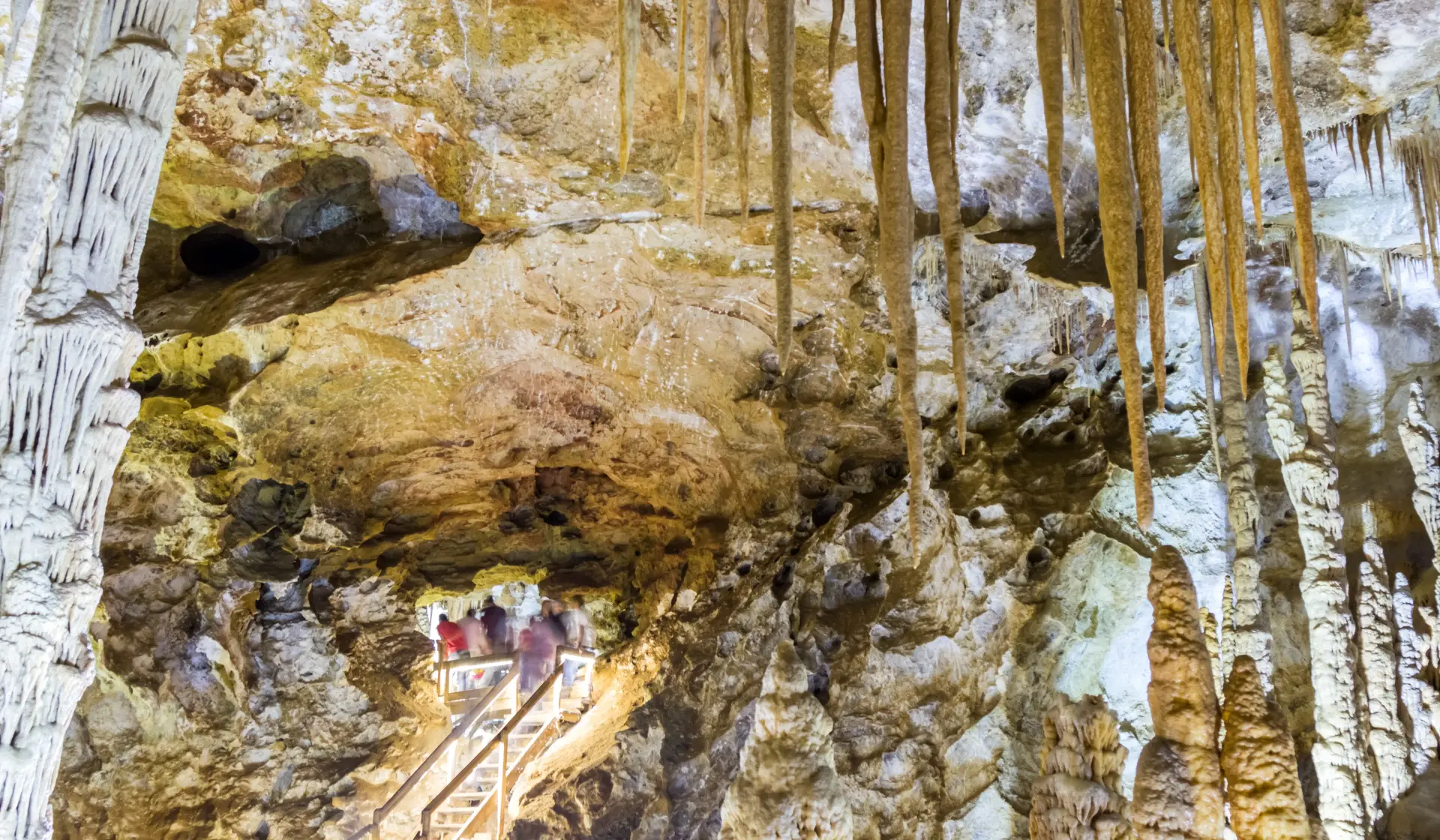
Dripstone chambers with calcite columns and draperies
The route inside проходит through equipped sections from which it is convenient to observe the vaults, walls, and ledges with dense accumulations of calcite. The cave is especially notable for its columns, formed where stalactites and stalagmites have joined, as well as undulating dripstone surfaces resembling stone curtains. A visit usually takes little time, but because of the large number of details, exploration often proceeds more slowly than visitors expect.
At the entrance, it is worth taking the microclimate into account: the air here is humid, and the surface of some sections may feel cool. It is better to choose comfortable non-slip footwear and a light outer layer even in summer. For visitors, the most important thing is not to hurry and to look around carefully, since the most interesting formations are often found not only in the large chambers, but also on the side sections of the walls and ceiling.
The cave is suitable for a short nature stop during a trip around the surroundings of Torul and the city of Gumushane. Nearby, travelers also visit mountain viewpoints and the Torul Glass Terrace if they combine several sites in one day.
Visitors usually get here by road from the Torul side and then go up to the cave by car or as part of an excursion. Before visiting, it is useful to check opening hours and the condition of the access road, especially outside the high season.
Best tours and travel experiences across the continent



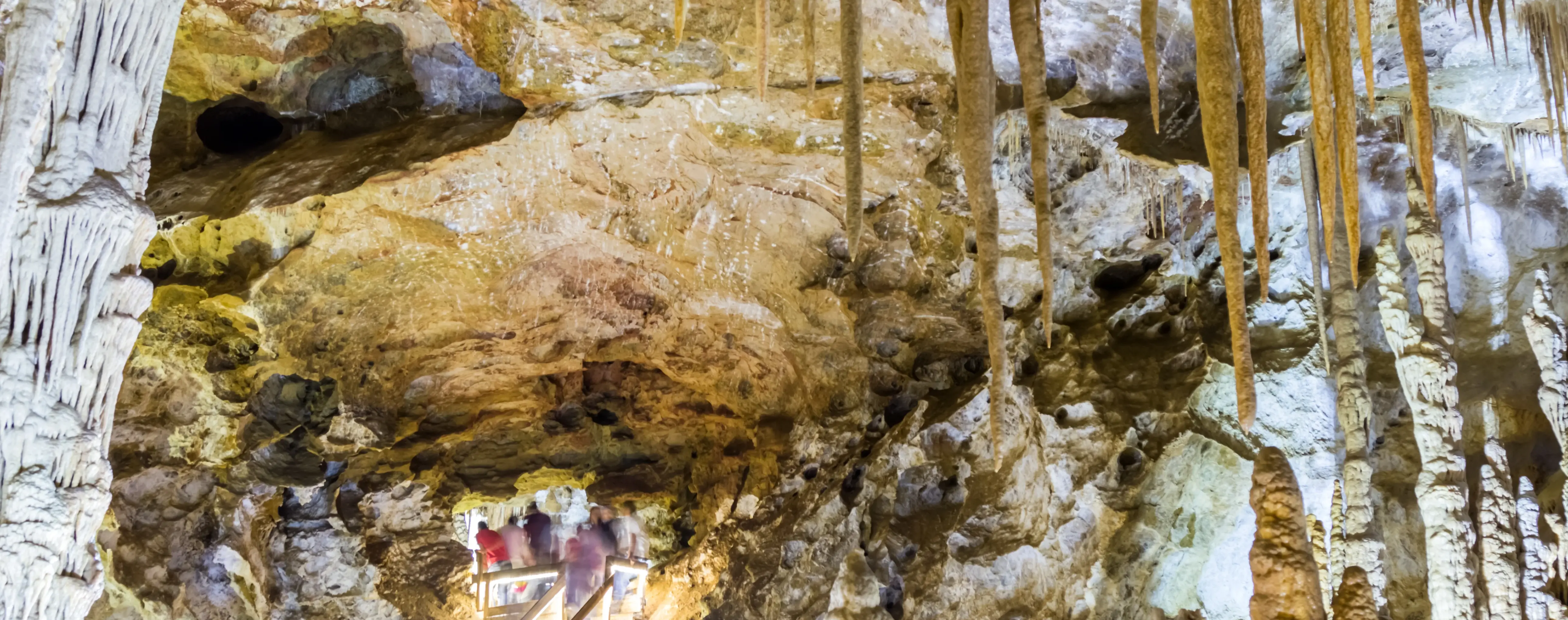
Photos of the cave
Guided tours, popular attractions, and top-rated hotels across the continent


