
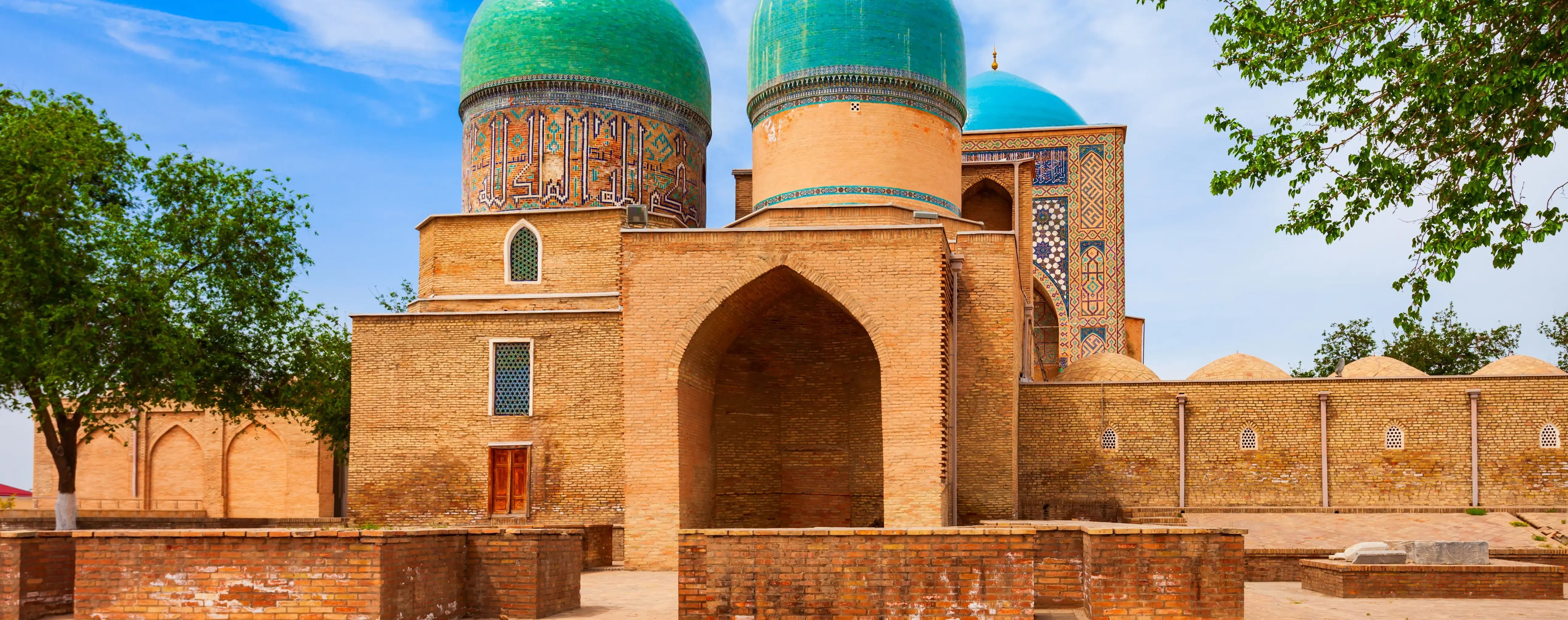
Mausoleum of Sheikh Shamseddin Kulyal
Mausoleum of Sheikh Shamseddin Kulyal in Shakhrisabz, Uzbekistan
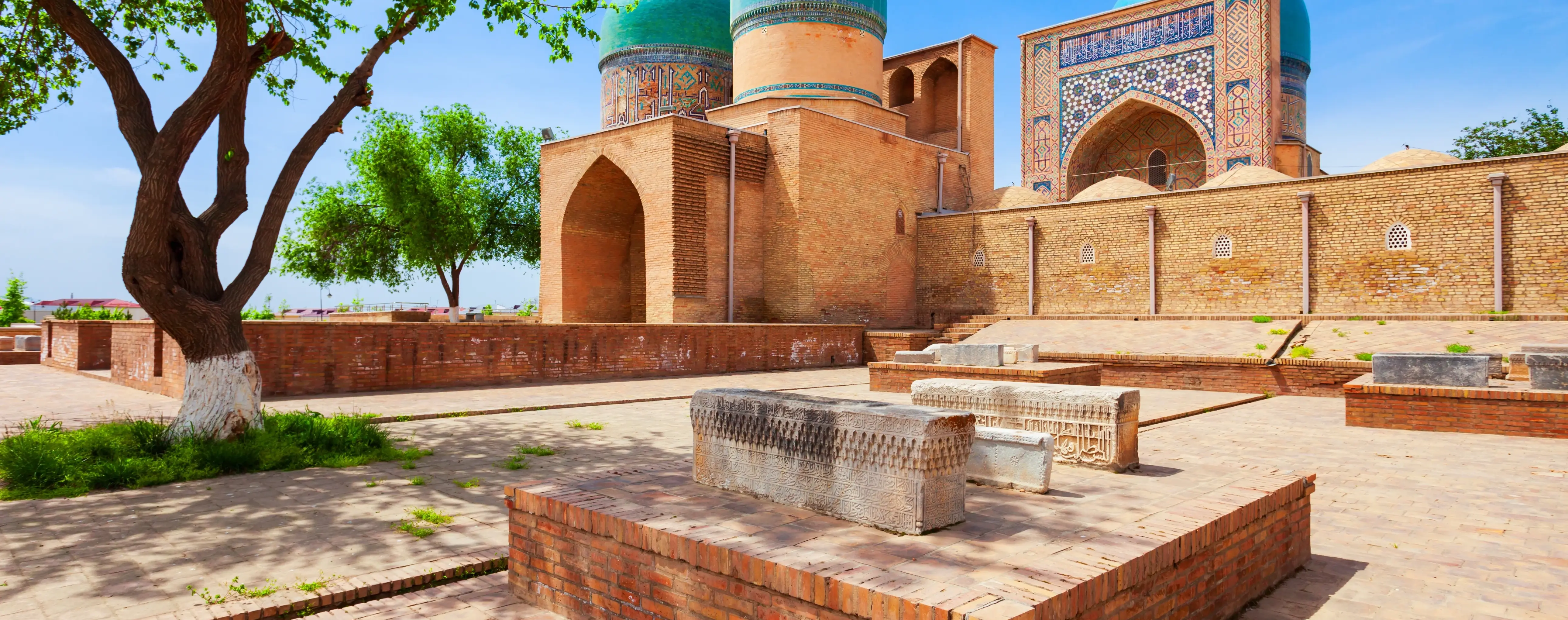
The Mausoleum of Sheikh Shamseddin Kulyal is located in Shakhrisabz, within the Dorut Tilovat memorial complex, not far from the city's historic center. It is associated with the name of the 14th-century Sufi mentor Shamseddin Kulyal, who is considered the spiritual teacher of Bahauddin Naqshband. For travelers, it is one of the key sites that helps explain the religious and architectural history of Shakhrisabz.
Sheikh Shamseddin Kulyal came from an artisan background, as reflected in his nickname, which translates as "potter." After his death, his burial place became venerated, and later a mausoleum was built over the grave. The monument reflects the traditions of Central Asian memorial architecture and shows how the veneration of a saint, the Sufi tradition, and urban history were brought together in one space.
Of particular interest here is the decoration of the mausoleum. The main entrance was arranged on the western side and designed with a portal, while the facing partially preserves brick mosaic with eight-pointed stars made of blue glazed bricks. Kufic inscriptions are placed within the ornamental elements, making the decor not only decorative but also an important monument of the artistic culture of its time.
Later, in the 17th century, a memorial mosque was added to the east of the mausoleum, which has not survived to the present day. Despite these losses, the mausoleum remains an important part of the historic fabric of Shakhrisabz and is of interest to those who want to see not only the city's well-known ceremonial monuments, but also more intimate structures connected with the spiritual life of the region.
Mausoleum of Sheikh Shamseddin Kulyal on the map
Mausoleum of Sheikh Shamseddin Kulyal within Dorut Tilovat
The monument is connected with the Sufi tradition and the history of Shakhrisabz.
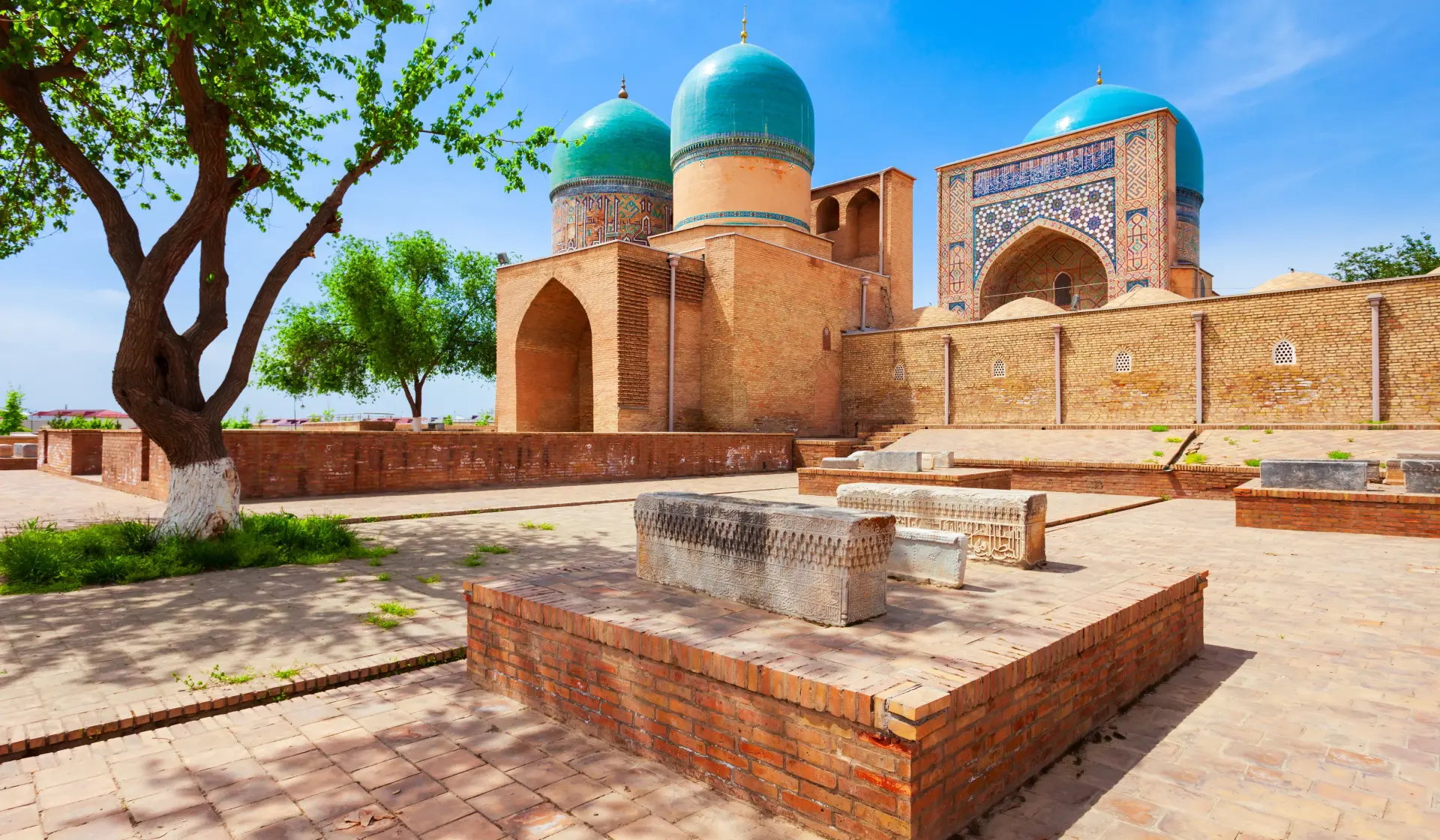
Medieval mausoleum with brick mosaic and Kufic inscriptions
During your visit, it is worth paying attention to the preserved details of the facade. The most noticeable are fragments of brick mosaic with a vertical row of eight-pointed stars made of blue glazed bricks. This type of decoration clearly demonstrates design techniques characteristic of Central Asian architecture, where ornament and inscription formed a unified composition.
Inside and around the mausoleum, it is best not to rush: this place is perceived прежде всего as part of a memorial ensemble rather than as a separate large museum site. Visitors usually examine the tombstone itself, the architectural forms of the building, and the surviving facing elements. To understand the monument, it is useful to take into account its connection with the Sufi tradition and with the history of the sheikh, who was revered as a mentor and religious authority.
The mausoleum is conveniently visited together with the other structures of the Dorut Tilovat complex, as well as with the monuments of the historic center of Shakhrisabz, including Kok Gumbaz and other nearby medieval sites. This makes it possible to see how memorial, religious, and public buildings from different eras coexisted in the city.
You can usually get here on foot or by taxi from the center of Shakhrisabz, since the complex is located within the city's historic zone. For a calm visit, it is better to choose daytime hours, when the details of the brickwork and decorative finishes are clearly visible.
Best tours and travel experiences across the continent


Photos of the mausoleum
Guided tours, popular attractions, and top-rated hotels across the continent


