
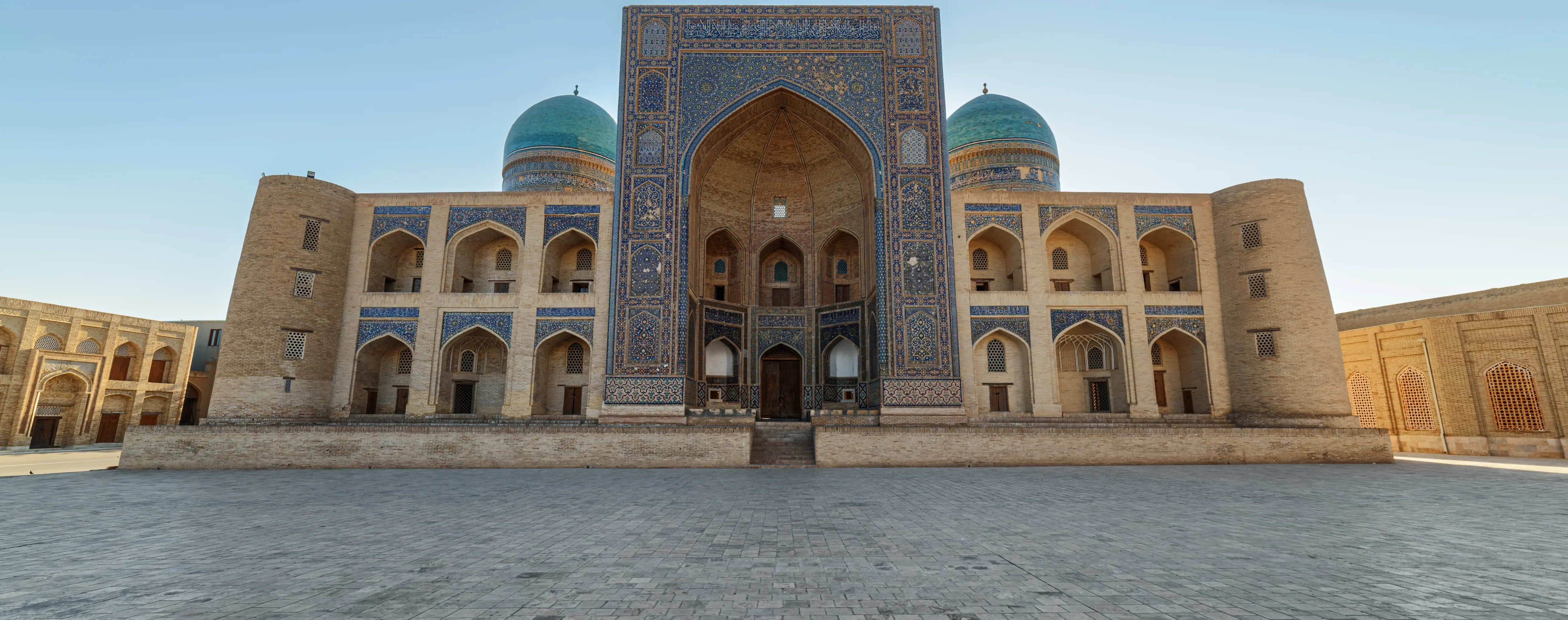
Mir-i-Arab Madrasah
Mir-i-Arab Madrasah in Bukhara, Uzbekistan
The Mir-i-Arab Madrasah is located in the historic center of Bukhara, on Po-i-Kalyan Square, next to the Kalyan Minaret and the Kalyan Friday Mosque. It is one of the city's most recognizable buildings and an important part of its architectural character. The madrasah was built in the 16th century during the reign of Ubaydullah Khan and is associated with the name of Sheikh Abdullah al-Yamani, who was called Mir-i-Arab.
The building is considered one of the outstanding monuments of Bukhara architecture from this period. It is easy to recognize by its tall main portal, symmetrical facade, and two large blue domes. Traditional Bukhara brickwork, majolica, and ornamental decoration were used in its design, which is especially visible on the facade and entrance area.
The madrasah is interesting not only as a historical monument but also as an active religious educational institution. During the Soviet period, it remained one of the few Islamic educational centers that continued operating, and this gives it a special place in the history of the region. Because of its active status, the interior spaces are usually not open to free tourist visits.
For visitors, the madrasah is primarily of interest as part of the Po-i-Kalyan ensemble. From the outside, it is convenient to observe the proportions of the building, the domes, and the decorative details, as well as to photograph it together with the neighboring monuments. This is a good place to become acquainted with historic Bukhara and its religious architecture.
Mir-i-Arab Madrasah on the map
Mir-i-Arab Madrasah and the Po-i-Kalyan Ensemble
From the outside, the facade, domes, and connection to Bukhara's historic center are clearly visible.
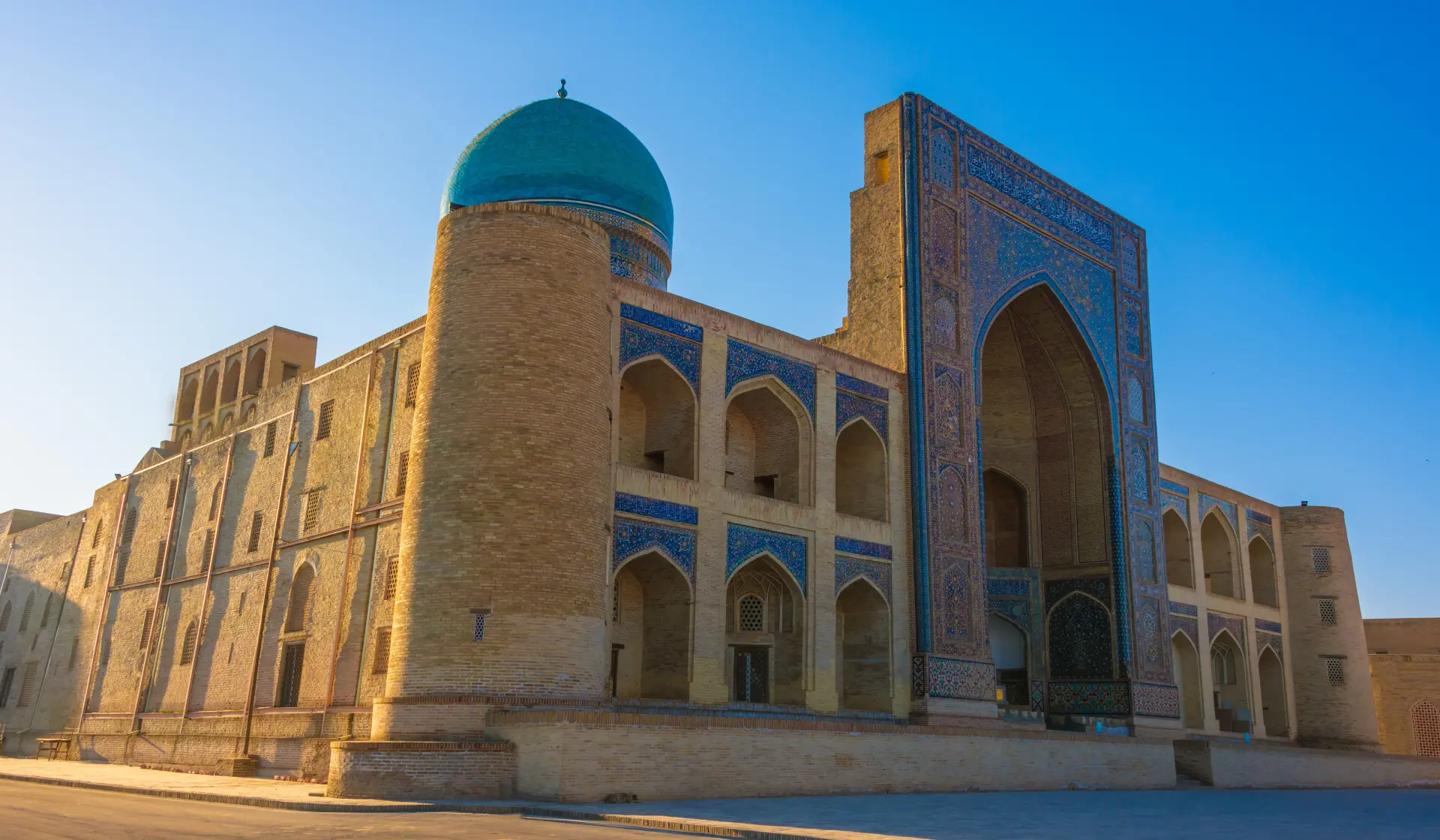
Monumental Facade and Blue Domes of the Po-i-Kalyan Ensemble
Tourists usually view the madrasah from the square, as the building continues to be used for its original purpose. The main portal, arched niches, mosaic decoration, and two domes, which stand out against the surrounding buildings of the old city, are best seen from here. The madrasah looks especially striking in a panoramic view together with the minaret and the mosque opposite.
On closer inspection, you can notice the characteristic features of a Central Asian madrasah: the inner courtyard is hidden behind the monumental facade, and hujras - small rooms for students - are arranged around the perimeter. The complex also includes religious rooms and mausoleums associated with Mir-i-Arab and Ubaydullah Khan, although access to them is generally restricted for regular visitors.
A visit is usually combined with a walk around Po-i-Kalyan Square and the neighboring streets of old Bukhara. Very close by are the Kalyan Minaret, the Kalyan Mosque, and the Amir-Alim Khan Madrasah, while the trading domes and other monuments of the historic center are within walking distance.
The madrasah is easy to reach on foot through the old city from the central part of Bukhara, heading toward the Po-i-Kalyan ensemble, which is well known to locals and marked on tourist maps. Before visiting, it is useful to keep in mind that access inside may depend on the operating schedule of the active educational institution and on religious events.
Best tours and travel experiences across the continent



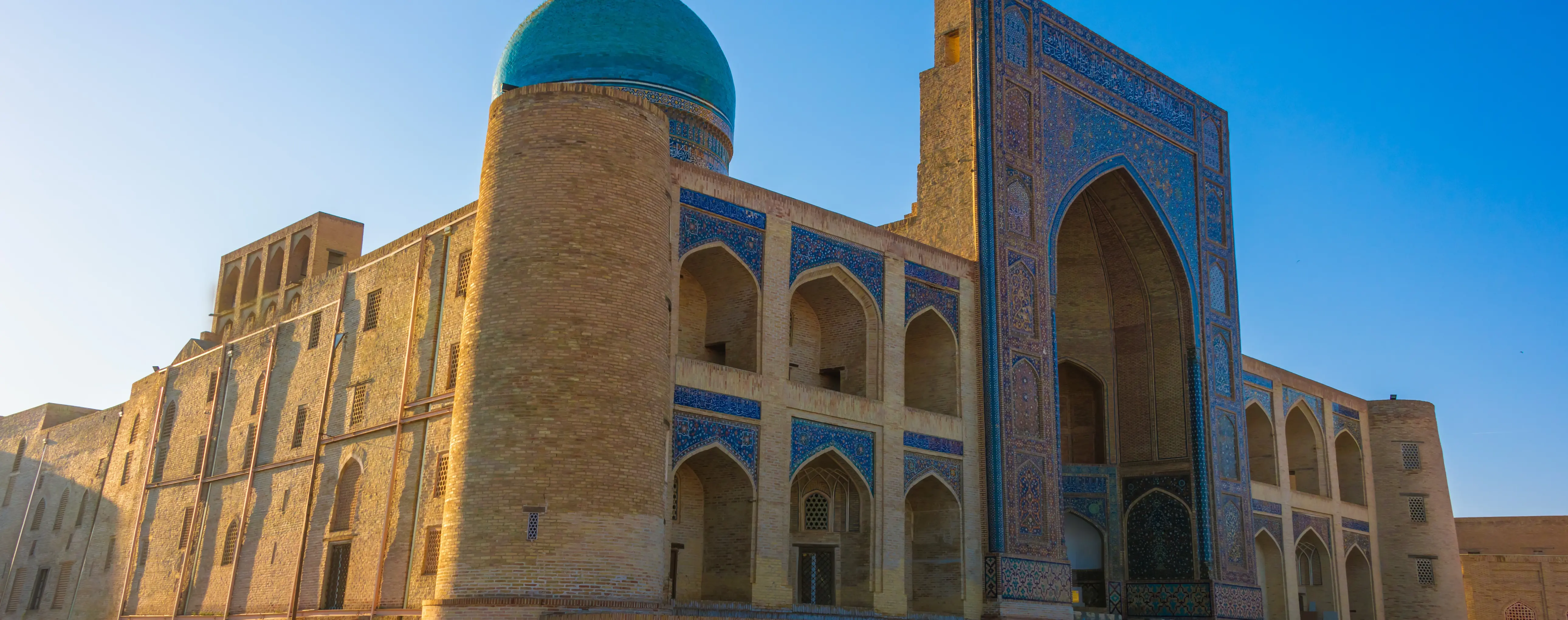
Photos of the madrasah
Guided tours, popular attractions, and top-rated hotels across the continent


