
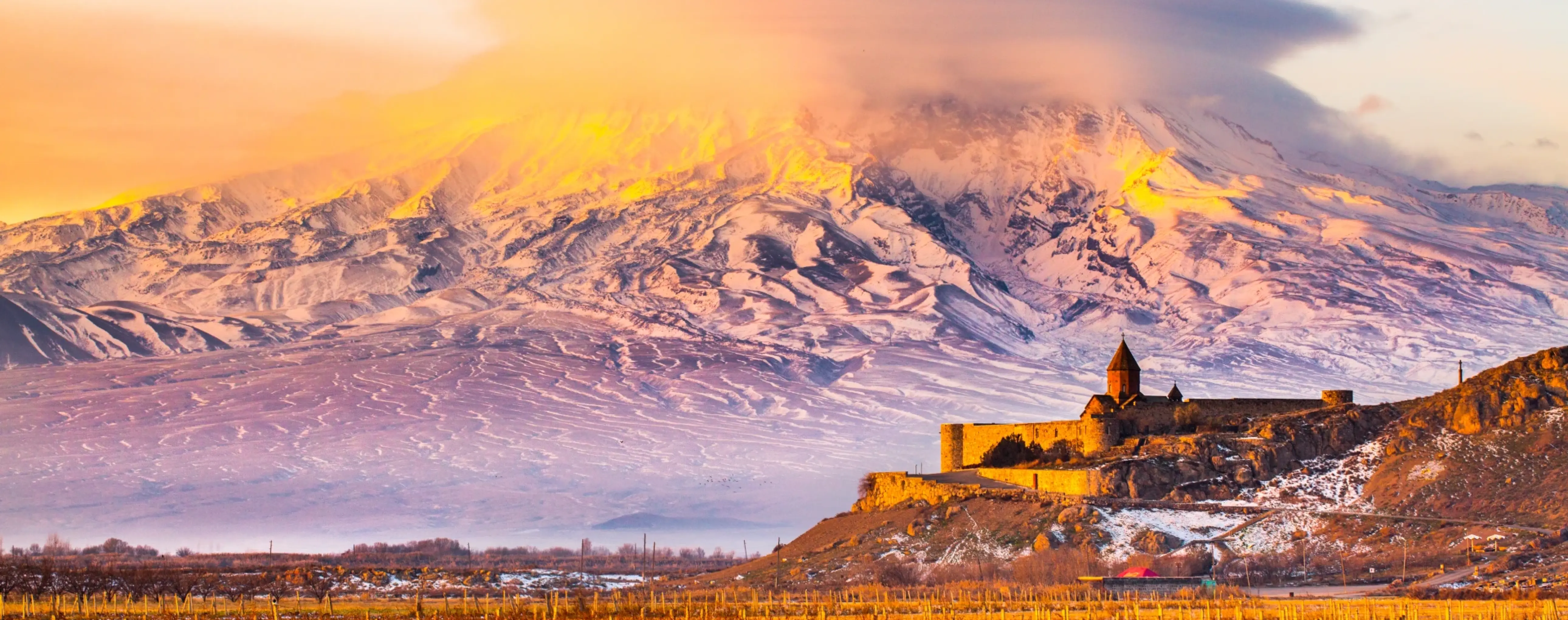
Mount Ararat
Mount Ararat in Igdir, Turkey
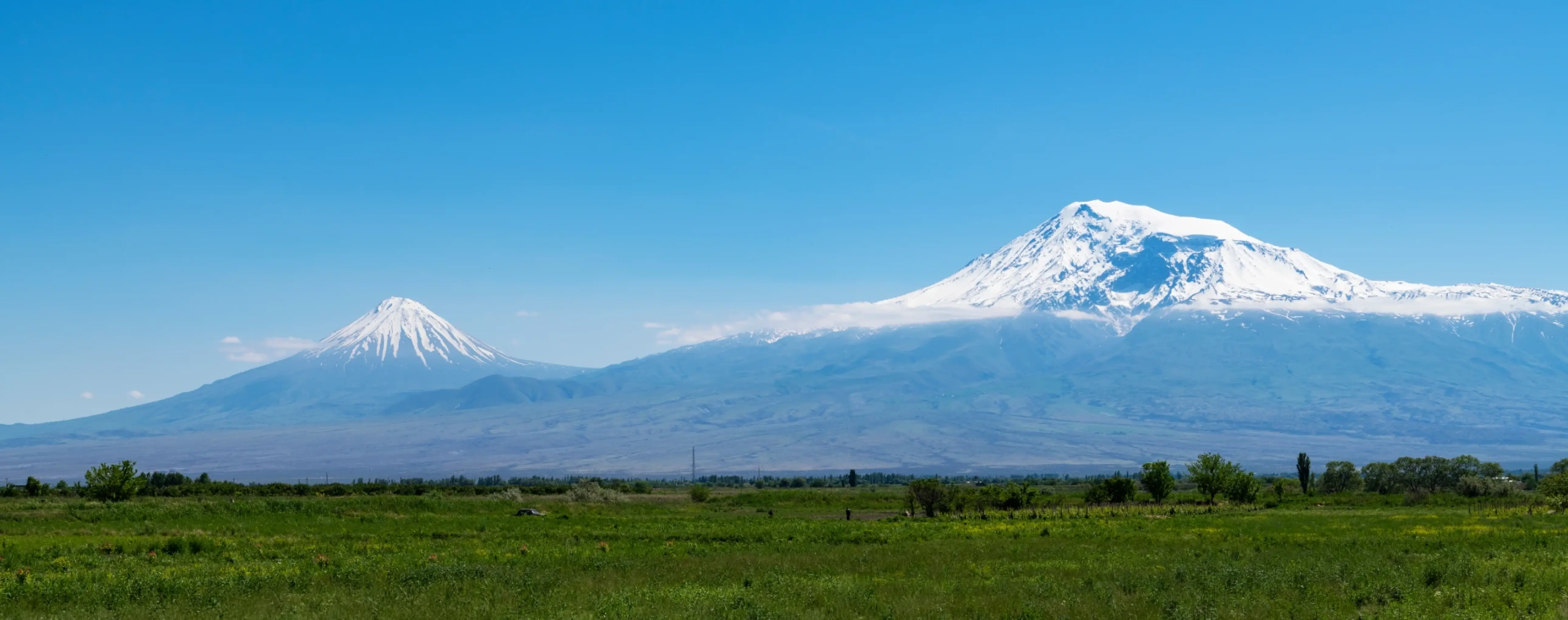
Mount Ararat is located in eastern Turkey, in Igdir Province, near the borders with Armenia and Iran. It is a large volcanic massif with two peaks: Greater Ararat at 5,137 meters and Lesser Ararat at 3,896 meters. Greater Ararat is considered the highest mountain in the country and is easily recognized by its isolated silhouette, which dominates the surrounding plain.
Ararat is traditionally associated with the biblical story of Noah and the Ark. The Book of Genesis mentions the mountains of Ararat, and for this reason the massif has held a prominent place in the religious and historical memory of the region for centuries. At the same time, there is no convincing archaeological evidence confirming that the Ark landed here specifically, but the subject continues to attract the interest of researchers, pilgrims, and travelers.
From a geological point of view, Ararat is a stratovolcano composed of layers of lava and volcanic material. Its upper slopes are covered with snow and ice for most of the year, and the terrain changes from dry foothills to harsher high-mountain areas. The last known volcanic activity in the area of the mountain dates back to the 19th century, when a strong earthquake and landslides caused damage to nearby settlements.
For tourists, Ararat is primarily of interest as a striking natural landmark and one of the best-known mountain massifs in the region. Even without climbing it, it attracts visitors with panoramic views from the plains of Igdir and the border roads. For those interested in the mountain’s history, geography, and cultural significance, a trip to this area helps explain why Ararat holds a special place in the perception of Eastern Anatolia.
Mount Ararat on the map
Mount Ararat and its surroundings in Eastern Anatolia
Here you can see the volcanic massif, border plains, and high-mountain slopes.
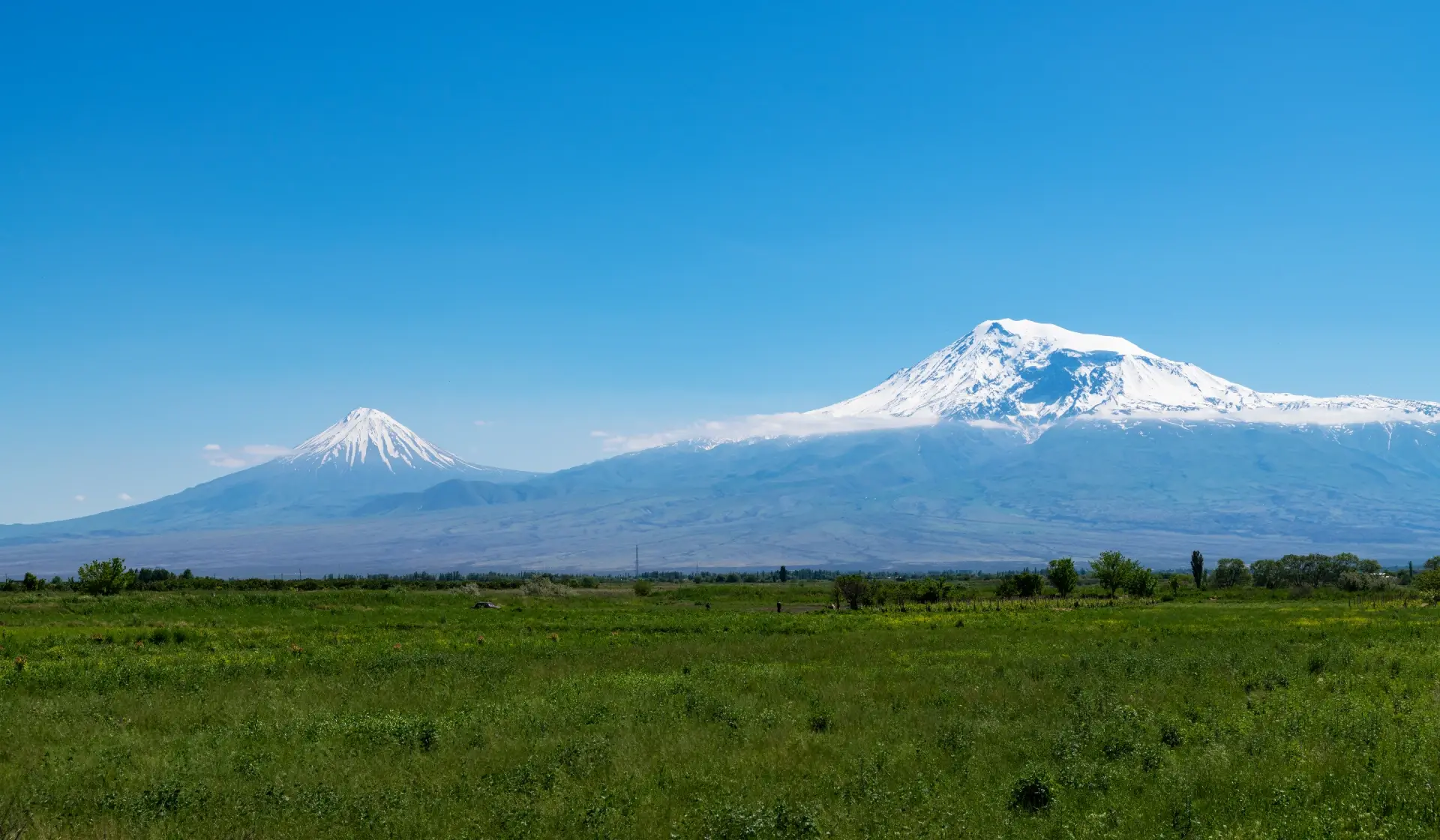
Two volcanic peaks above the plains of Eastern Anatolia
Greater and Lesser Ararat are located side by side, but they look different: the main peak is more massive and higher, while Lesser Ararat has a more compact and clearly defined cone. The lower sections are dominated by dry rocky slopes and steppe landscapes, while higher up there are scree fields, snow patches, and areas of permanent ice. Because of the altitude and weather conditions, the high-mountain part of the massif requires serious preparation.
Visitors usually come here for views of the mountain from the plain and from the surroundings of Igdir. Climbing Greater Ararat is possible only with proper route organization and in accordance with current access regulations, as the area is located near the state border. Even if an ascent is not part of the plan, the surrounding area allows visitors to see the massif from different angles and appreciate its scale in the open landscape.
Nearby are the plains and rural settlements of Igdir Province, as well as the route to Ishak Pasha Palace in Dogubayazit, which is often included in a trip through this region. The most convenient way to get there is to first arrive in the city of Igdir or Dogubayazit, and then continue by car with a local driver or as part of an organized group.
Before traveling, it is worth considering the season, the weather, and restrictions on visiting the border zone. For a sightseeing trip, standard road preparation is sufficient, but for trekking and especially for climbing, suitable equipment, acclimatization experience, and prior confirmation of permits are necessary. This is especially important because of sharp temperature changes and rapidly changing conditions in the high mountains.
Best tours and travel experiences across the continent


Photos of Ararat
Guided tours, popular attractions, and top-rated hotels across the continent


