
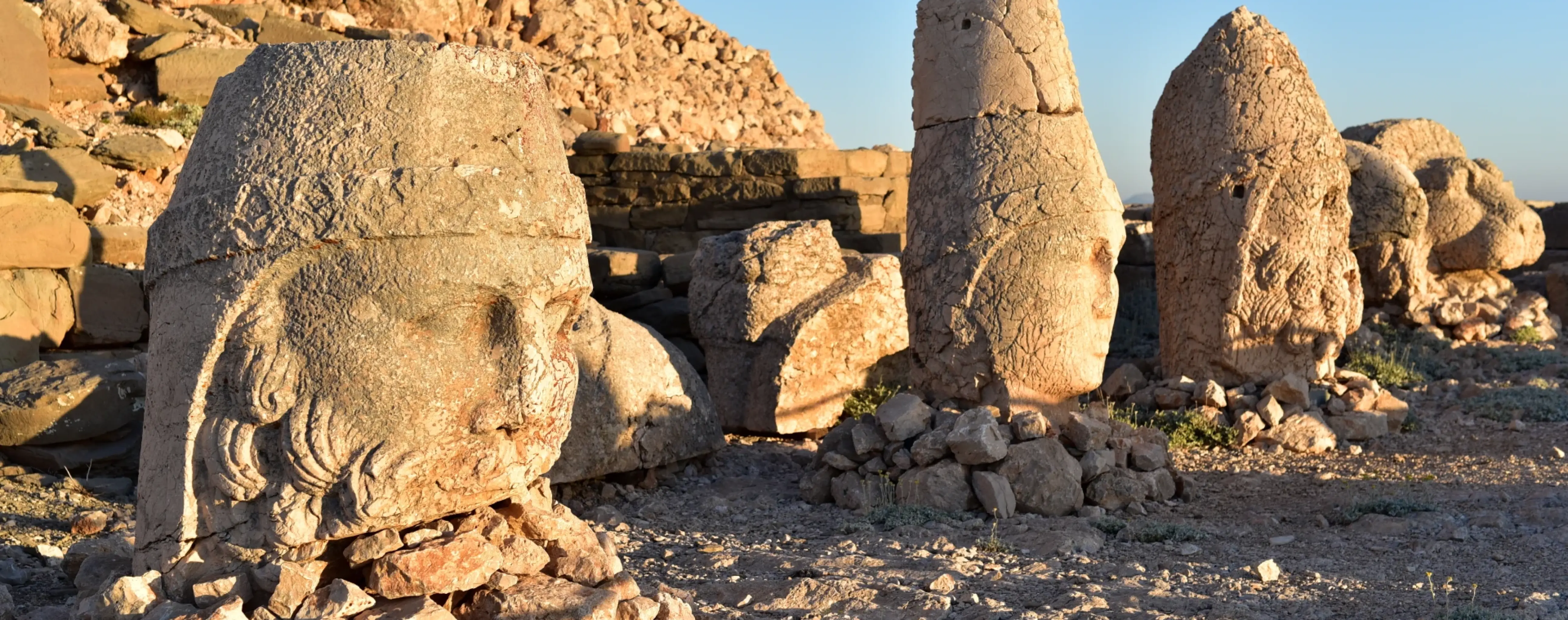
Mount Nemrut
Mount Nemrut in Sanliurfa, Turkey
Mount Nemrut is a high-altitude archaeological complex in southeastern Turkey, associated with the Kingdom of Commagene and the reign of Antiochus I in the 1st century BC. The monument is located not in the city of Sanliurfa itself, but in a neighboring region; however, tourists often consider it together with travel routes across the southeast of the country. The summit's main feature is an artificial tumulus of small stones, around which ceremonial terraces were arranged.
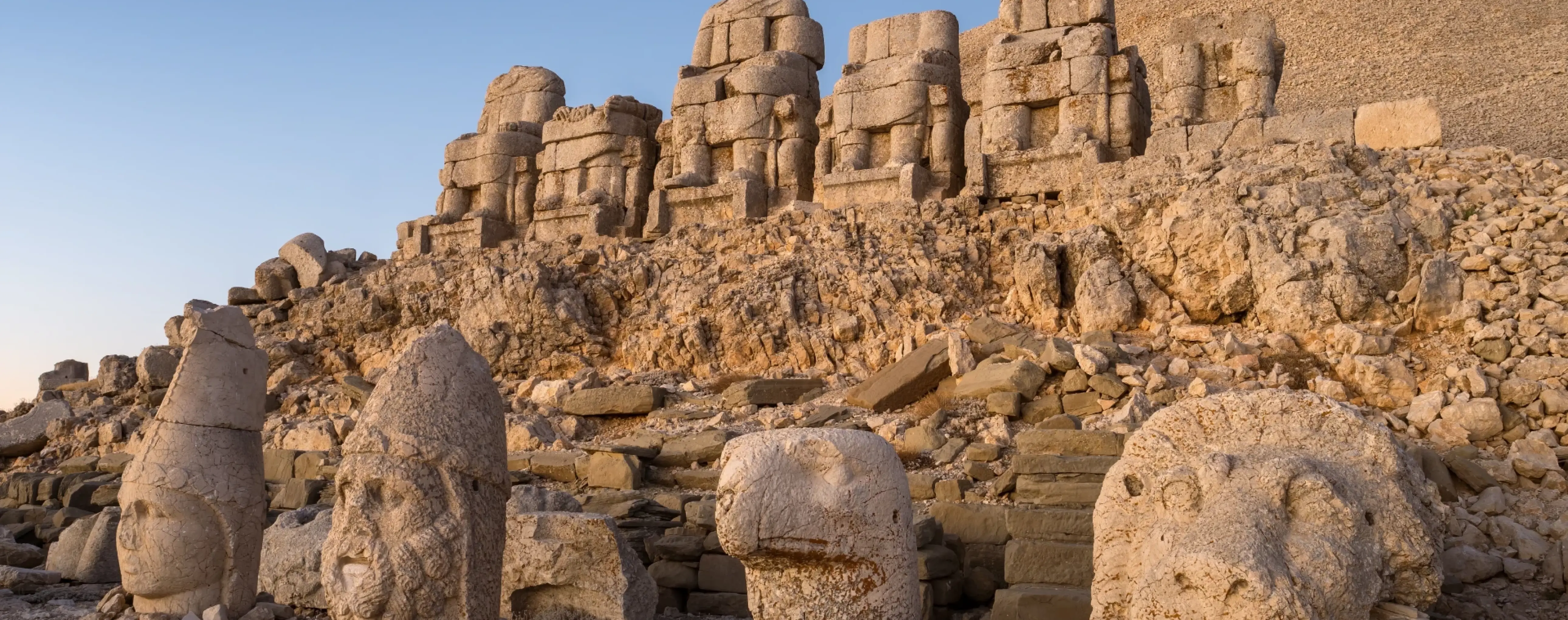
On the eastern and western terraces, fragments of monumental statues have survived, depicting the king and deities that combine Greek and Iranian traditions. Especially famous are the large stone heads lying in front of the pedestals. Nearby, you can see reliefs, inscriptions, and stone slabs that help explain the concept of the complex and the political idea of the ruler, who sought to emphasize his origin and sacred status.
The exact burial place of Antiochus I has still not been confirmed, although the tumulus itself is usually associated with his tomb. Mount Nemrut is included in the UNESCO World Heritage List as an outstanding monument of the Hellenistic period. This place is of interest to those who want to see a rare combination of archaeology, mountain landscape, and monumental sculpture in the open air.
Mount Nemrut on the map
Mount Nemrut: tumulus, terraces, and statues on the summit
Here, mountain landscapes and monuments of the Hellenistic period come together.
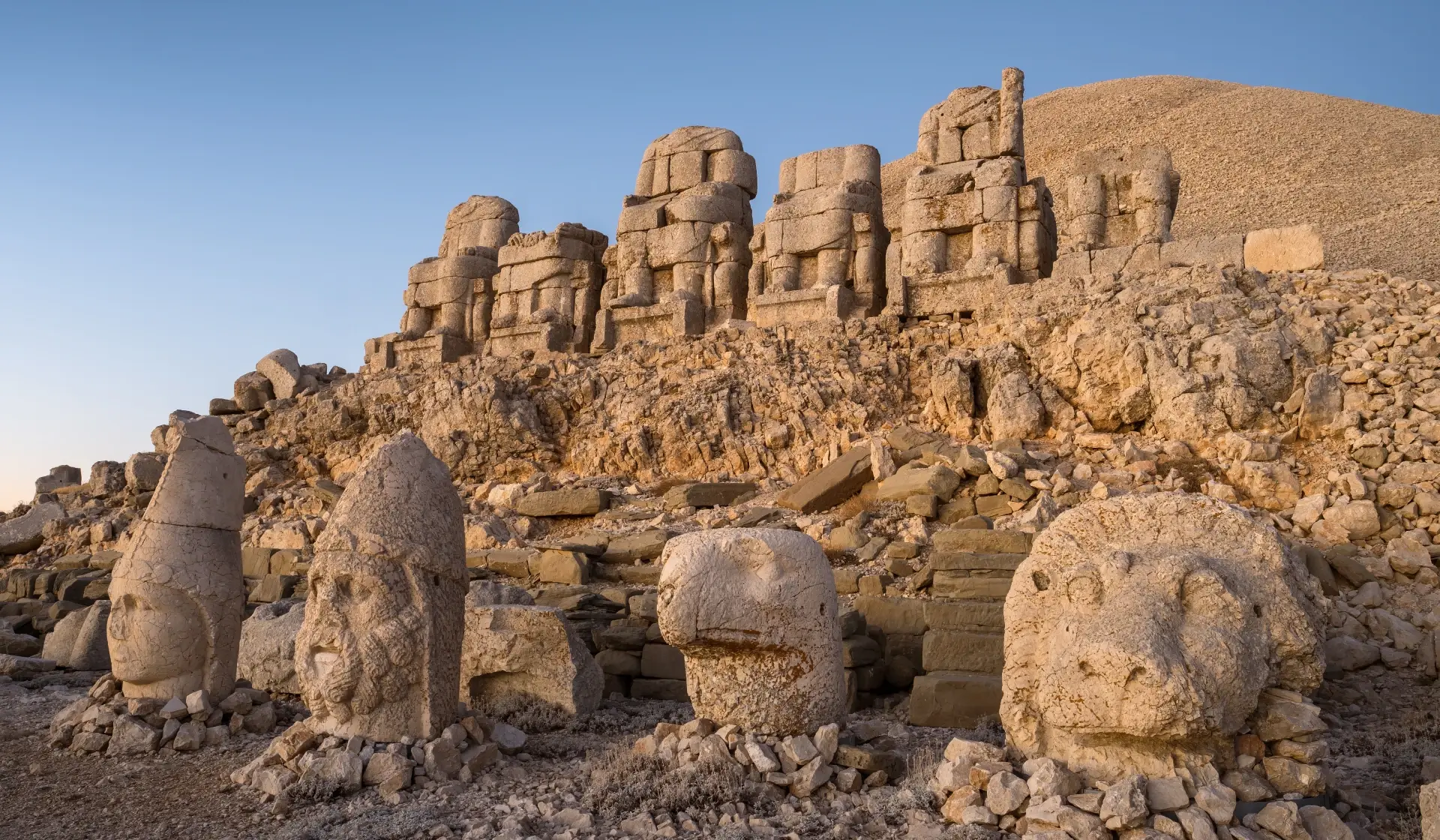
Tumulus, terraces, and colossal heads on a mountain summit
A visit to Mount Nemrut usually involves climbing to the summit, where the tour is centered around several viewing areas. The most famous are the eastern and western terraces: here stand rows of seated statues, partially preserved, while in front of them lie detached heads and carved blocks. At sunrise and closer to sunset, the texture of the stone is especially clear, which is why many people come at these times.
At the site, it is worth paying attention not only to the figures themselves, but also to the decorative details. Reliefs depicting ancestors, an eagle, and a lion have survived, as well as Greek inscriptions connected with the king's cult and ceremonies. The tumulus at the center of the complex covers the summit and still remains an archaeological mystery, since its internal structure has not been fully revealed.
It is worth planning the trip with mountain conditions in mind: at altitude, it can be windy and noticeably cooler than below, and part of the route is covered on foot uphill. People usually get here by car or as part of an excursion through the nearest settlements of Adiyaman Province. If there is time, the route is often complemented by visits to Arsameia, Cendere Bridge, and the Karakus Tumulus.
Best tours and travel experiences across the continent

Photos of Mount Nemrut
Guided tours, popular attractions, and top-rated hotels across the continent


