
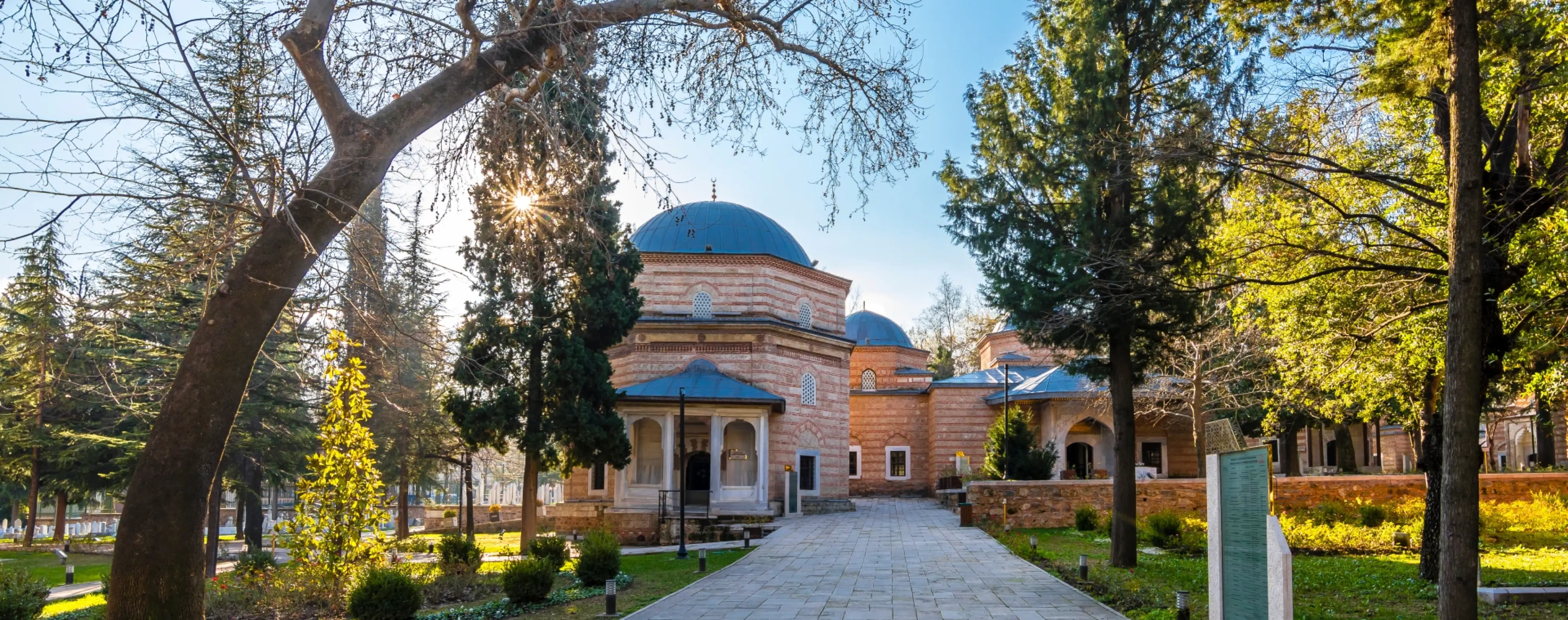
Muradiye Complex
Muradiye Complex in Bursa, Turkey - an early Ottoman ensemble
The Muradiye Complex is located in Bursa, in the Osmangazi district, not far from the city's historic center. It is one of the most complete early Ottoman ensembles formed around a sultan's mosque and the religious, educational, and charitable buildings associated with it. The complex began to take shape under Sultan Murad II in the first half of the 15th century, and today it remains an important historical monument of Bursa as one of the early capitals of the Ottoman state.
The ensemble includes the Muradiye Mosque, former buildings of the madrasa, imaret, school, and hammam, as well as a group of dynastic mausoleums. The main mosque, completed in the 15th century, was built of stone and brick and represents the T-shaped type characteristic of early Ottoman architecture in Bursa. For visitors, this is an opportunity to see the architectural language of a transitional period, when the main features of Ottoman religious architecture were taking shape.
Particular attention is usually drawn to the tomb of Murad II and the other mausoleums of the 15th-16th centuries. Their decoration preserves elements of tilework, painted ornamentation, and carved details that help illustrate the development of Ottoman decorative art. The mausoleum of Murad II is known for the unusual design of the roof above the sarcophagus: part of the space was left open, as the sultan himself wished.
Today, the complex grounds are arranged as a quiet garden with paths between the mausoleums and historic buildings. People come here not only for the architecture, but also for a peaceful walk through one of Bursa's most expressive memorial ensembles. When visiting, it is worth remembering that this is an active religious and memorial site, so silence and accepted rules of dress and photography should be observed inside the buildings and mausoleums.
Muradiye Complex on the map
Muradiye Complex - mosque, tombs, and a walking garden
The grounds are arranged as a garden between the mosque and the tombs.
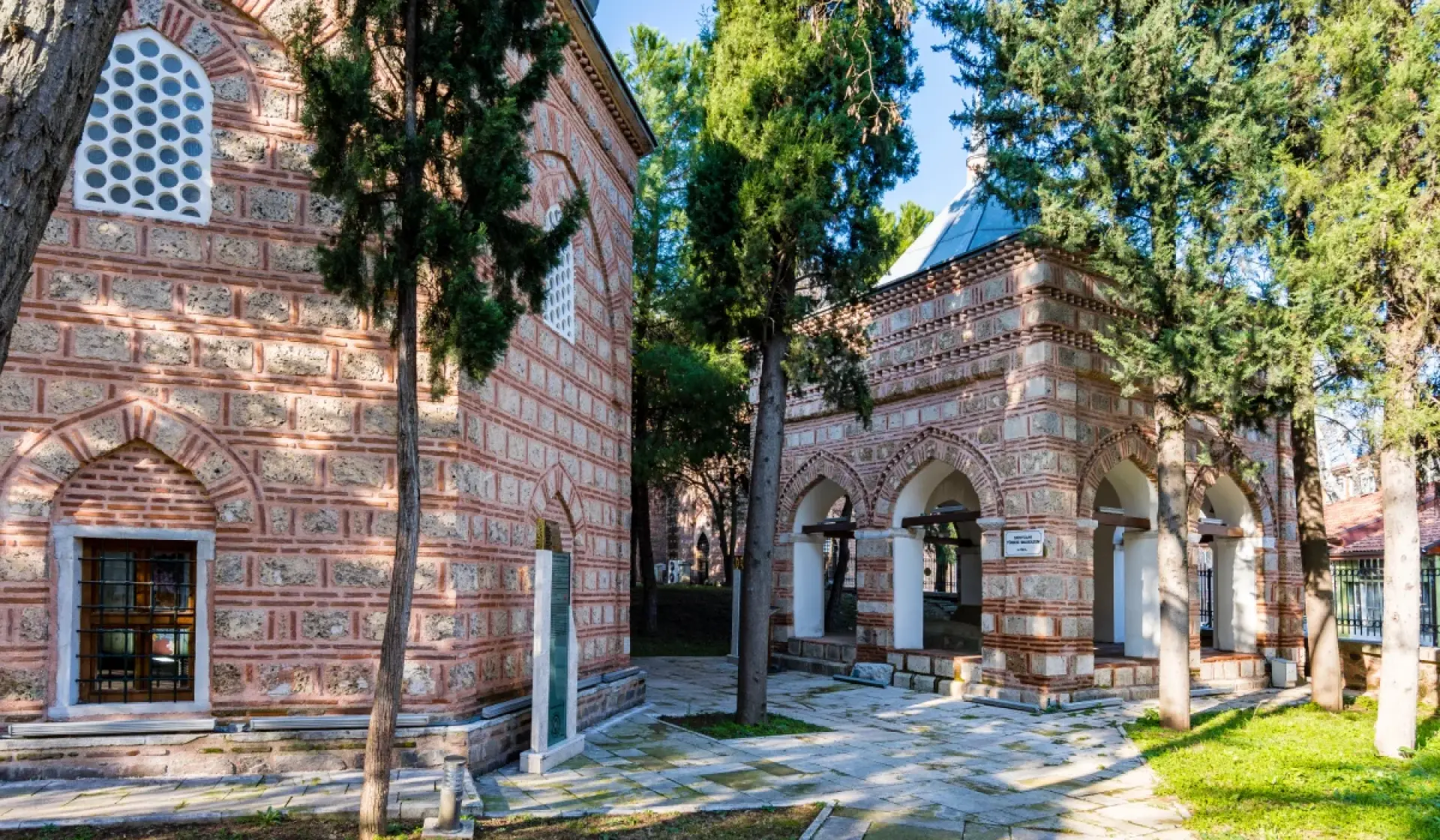
Early Ottoman mausoleums, a mosque, and a garden in one ensemble
Within the complex, visitors usually explore not only the mosque itself, but also the chain of tombs located in the garden behind and beside it. These mausoleums differ in layout and decoration: some show traces of colored tiles, while others feature wall paintings, calligraphic inscriptions, and more restrained stone ornamentation. As a result, a walk through the complex offers a rare opportunity to compare several stages of Ottoman funerary architecture within a single site.
Inside the mosque, it is worth paying attention to the early Ottoman organization of space with a central hall and side rooms, as well as the combination of brick, stone, and plaster decoration. It is best to come at times when there is no large flow of visitors and prayer does not limit sightseeing, as this allows for a calmer look at the details and a walk throughout the entire grounds. The paths and landscaping make the complex convenient for a leisurely stroll, and the site itself is usually perceived as a quieter part of historic Bursa.
For the visit, it is advisable to choose clothing suitable for visiting religious sites; photography may be restricted in some mausoleums. Other monuments of old Bursa are also nearby, including the area with the Grand Mosque, the covered market, and historic streets, so a visit to the complex can easily be included in a walk through the city center.
The complex is usually reached by taxi, city bus, or on foot from the central districts of Bursa if you are already exploring the historic part of Osmangazi.
Best tours and travel experiences across the continent



Photos of the Muradiye Complex
Guided tours, popular attractions, and top-rated hotels across the continent


