
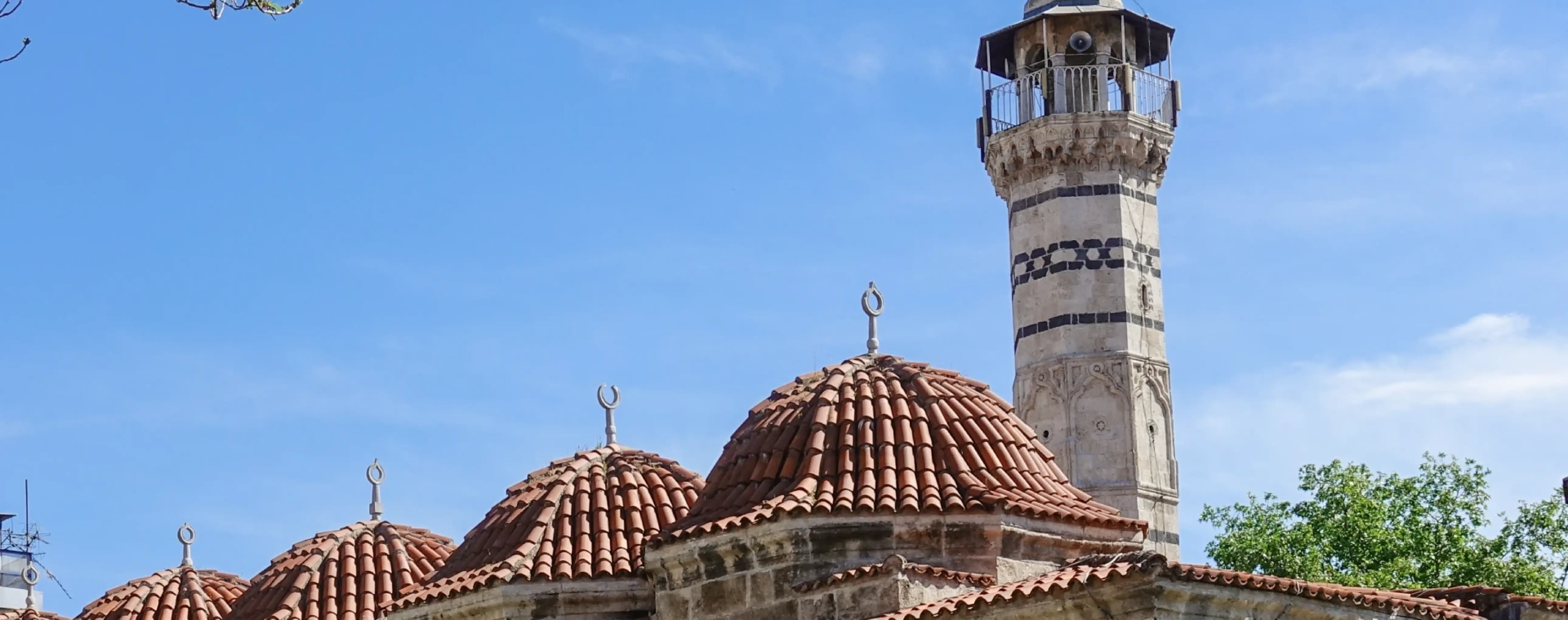
Ulu Cami Mosque
Ulu Cami Mosque in Adana, Turkey
Ulu Cami Mosque is located in the historic part of Adana, near the old quarters and the Seyhan River. It is one of the main monuments of the Ottoman period in the city and an important part of the region's architectural heritage. For tourists, it is interesting not only as an active mosque, but also as a rare example of a building in which the combination of several artistic traditions is clearly visible.
Construction of the complex began in the early 16th century under the rulers of the Ramadanid dynasty and was completed during the period of strengthening Ottoman power in Cilicia. The appearance of the mosque combines features of Mamluk, Seljuk, and early Ottoman architecture. This can be seen in the proportions of the building, the design of the arches, the stone masonry, and the decorative details.
From the outside, the mosque is easy to recognize by the contrasting finish of the facades, where light and dark stone bands alternate. Inside, attention is drawn to the tiles in blue and light blue tones, calligraphic elements, and the calm, austere space of the prayer hall. The minaret stands out in particular, with its polygonal silhouette and dark stone inserts, and is considered one of the most striking details of the entire ensemble.
Nearby is the mausoleum of the Ramadanid family, associated with the founders of the complex. A visit to Ulu Cami is usually included in a walk through the old center of Adana: people come here to see one of the city's most expressive historical monuments and to better imagine its past.
Ulu Cami Mosque on the map
Ulu Cami Mosque and the Ramadanid Turbe in historic Adana
The complex preserves features of Ottoman and earlier architectural traditions.
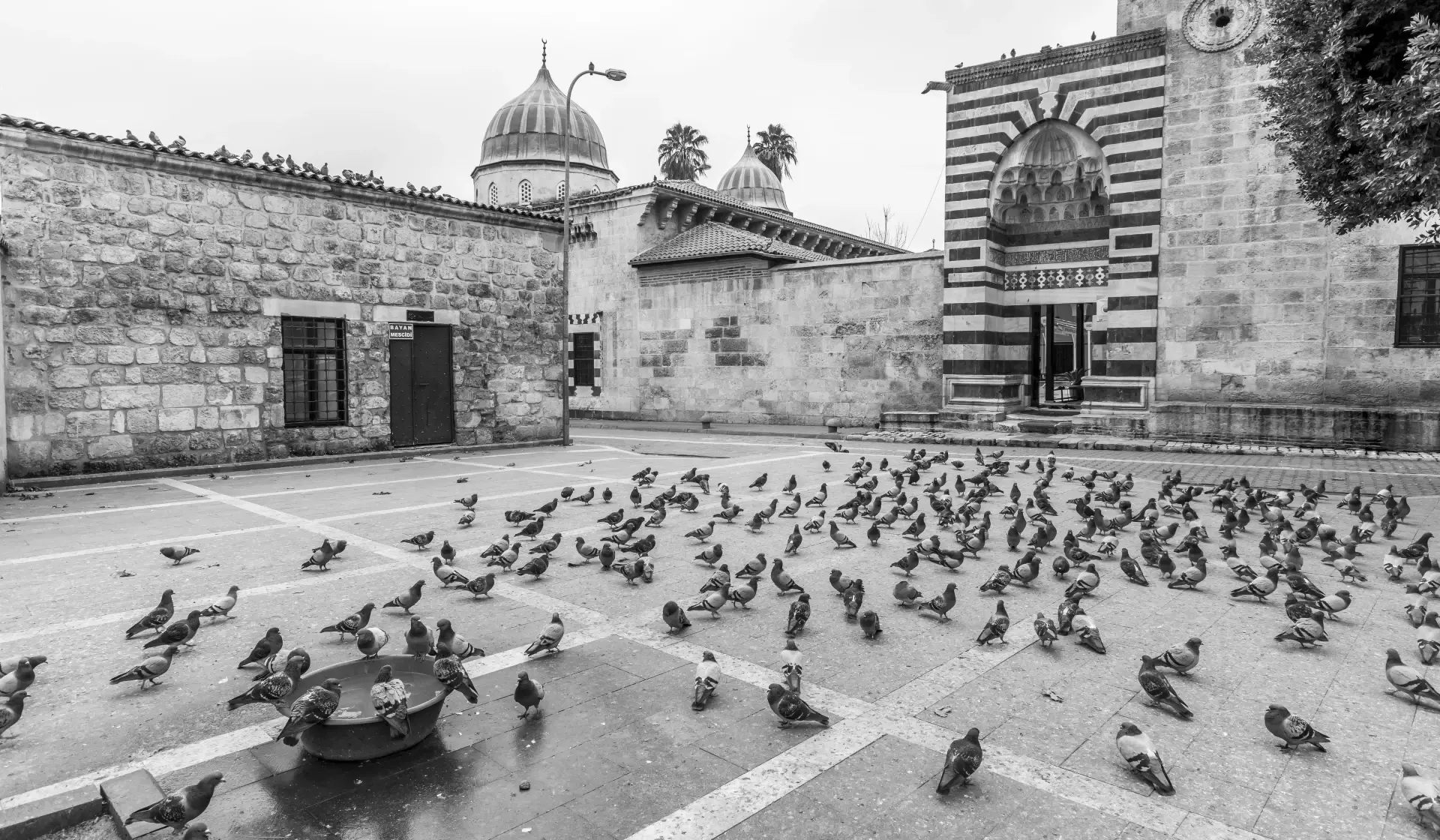
16th-century stone complex with a mausoleum and tile decoration
When visiting Ulu Cami, it is worth paying attention not only to the prayer hall itself, but also to the entire complex. In the courtyard and at the entrances, the features of the stone finish characteristic of southern Turkey and neighboring regions are clearly visible. Inside the mosque, decorative panels, ornaments, and elements of calligraphy have been preserved, and they are best viewed in the calm lighting of the daytime.
Visitors should remember that this is an active religious site. During prayer times, access for sightseeing may be limited, and clothing should be modest; it is customary to remove shoes before entering. Women are usually advised to cover their heads, especially during worship hours. Photography is generally allowed, but it is better to do so without flash and with respect for those who are praying.
Next to the mosque is the Ramadanid turbe, and within walking distance are the old covered bazaar, the Great Clock Tower, and the Taskopru stone bridge over the Seyhan. Therefore, a visit to the mosque can easily be combined with a walk through Adana's historic center and acquaintance with several important city monuments in a single route.
The easiest way to get here is on foot or by taxi from the center of Adana; city buses heading toward the old town are also suitable. Before your visit, it is useful to consider prayer times if you want to explore the interior at a relaxed pace.
Best tours and travel experiences across the continent




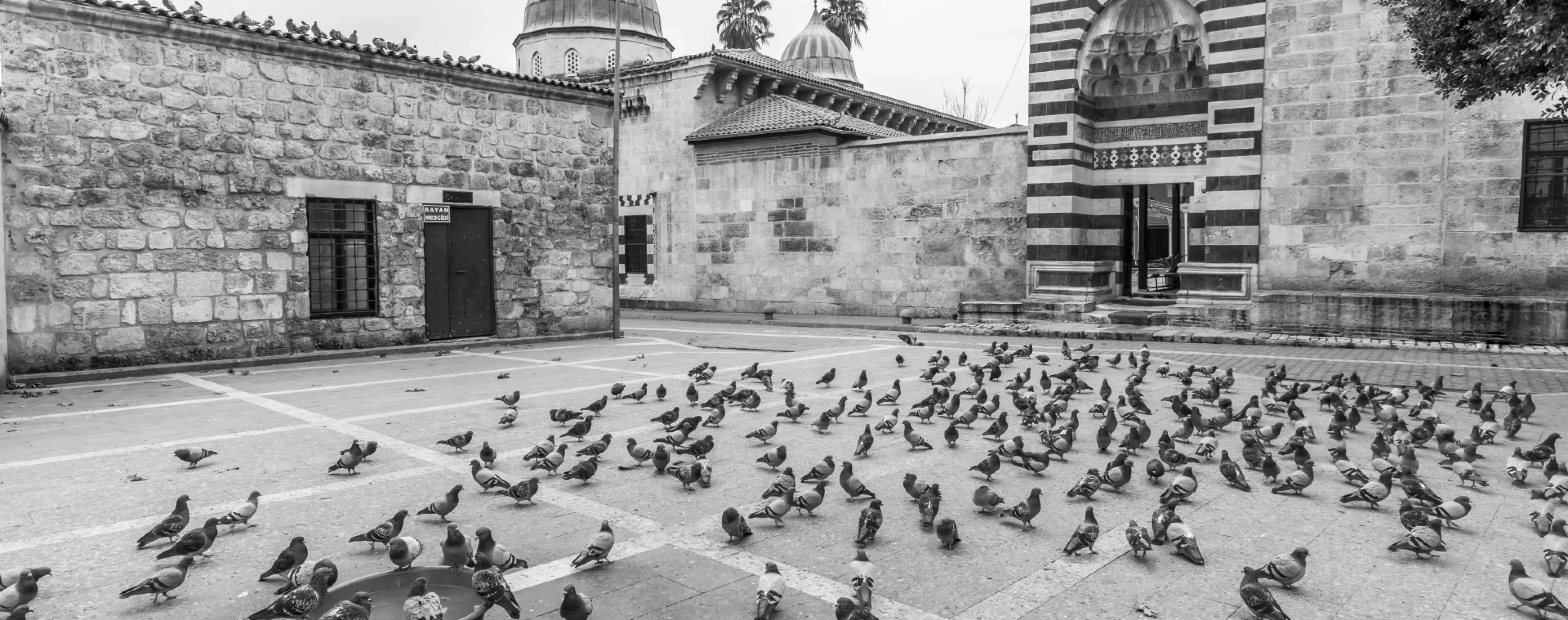
Photos of the mosque
Guided tours, popular attractions, and top-rated hotels across the continent


