
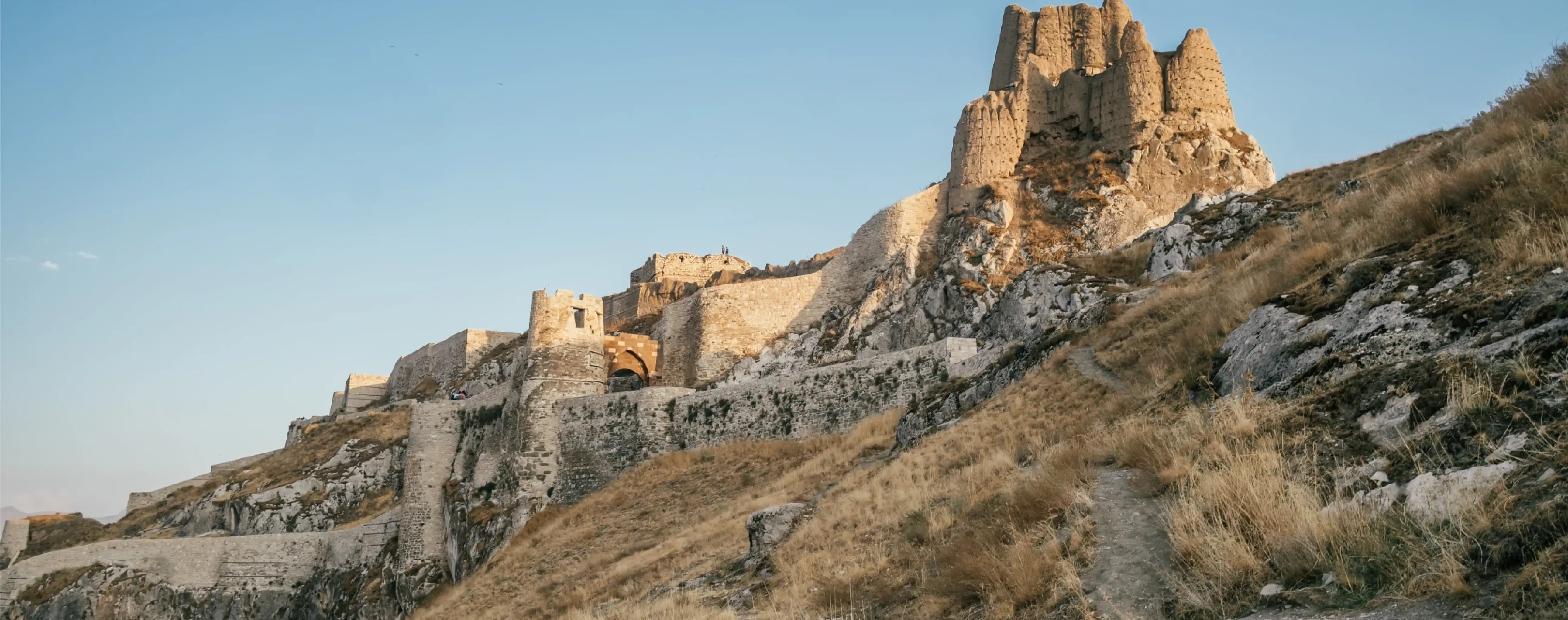
Urartian Fortress of Tushpa
Urartian Fortress of Tushpa in Van, Turkey
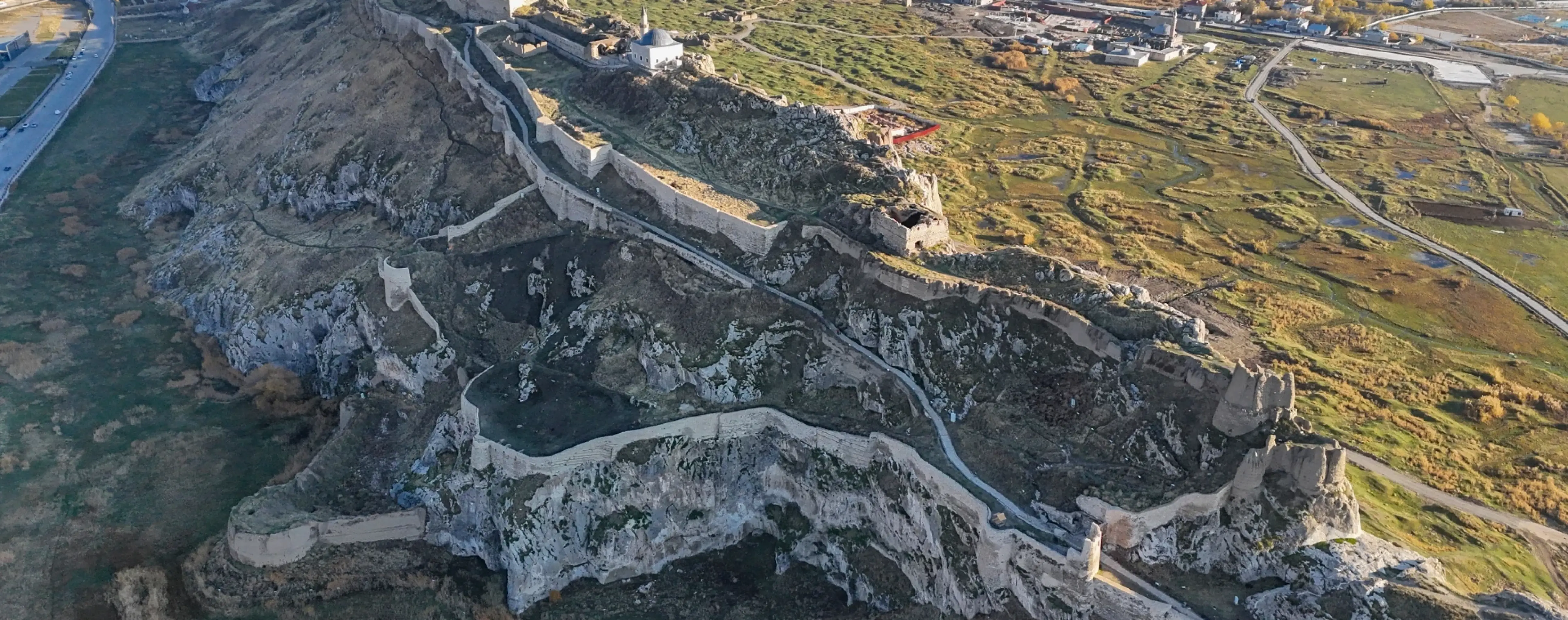
The Urartian Fortress of Tushpa is located in Van, on the eastern shore of Lake Van, next to the modern city center. It occupies an elongated rock that rises noticeably above the plain and is clearly visible from different parts of the city. This position made the fortress convenient for defense and for controlling the surrounding territory.
In ancient times, the capital of the Kingdom of Urartu, which existed from the 9th to the early 6th century BC, was located here. Tushpa was the royal residence, administrative and economic center, and at the foot of the rock there was an urban district connected with the early history of Van. The Menua Canal, also known as the Shamiram Canal, dates from this period and supplied water from mountain springs to the city area.
Today, the fortress is of interest as a major archaeological monument, where sections of walls, rock-cut chambers, rock tombs, and ancient inscriptions have been preserved. The inscription of the Persian king Xerxes I, which appeared after the Urartian period, is especially famous. Thanks to traces from different eras, Tushpa is perceived not only as a fortress of Urartu, but also as a multi-layered historical complex.
For tourists, this place is important primarily because it offers the opportunity to see one of the most famous monuments associated with the history of Urartu without going far from the center of Van. A visit to the fortress is often combined with seeing the ruins of Old Van and a walk around the surroundings, where the scale of the ancient settlement and the significance of this area in the history of Eastern Anatolia are better understood.
Urartian Fortress of Tushpa on the map
Van: Fortresses and castles
Cavustepe Fortress, Hosap Castle
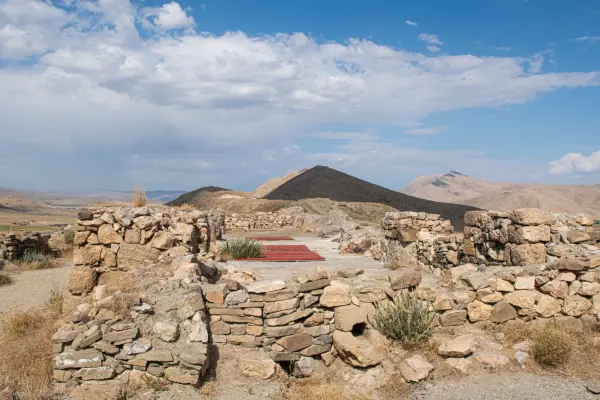
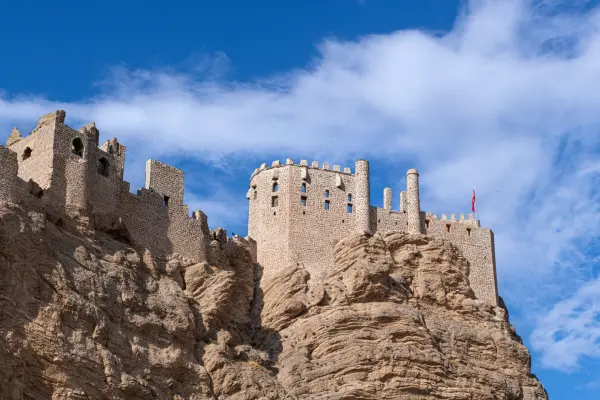
Urartian Fortress of Tushpa: rock, inscriptions, and ruins
Traces of the Urartian, Persian, and later periods have been preserved here.
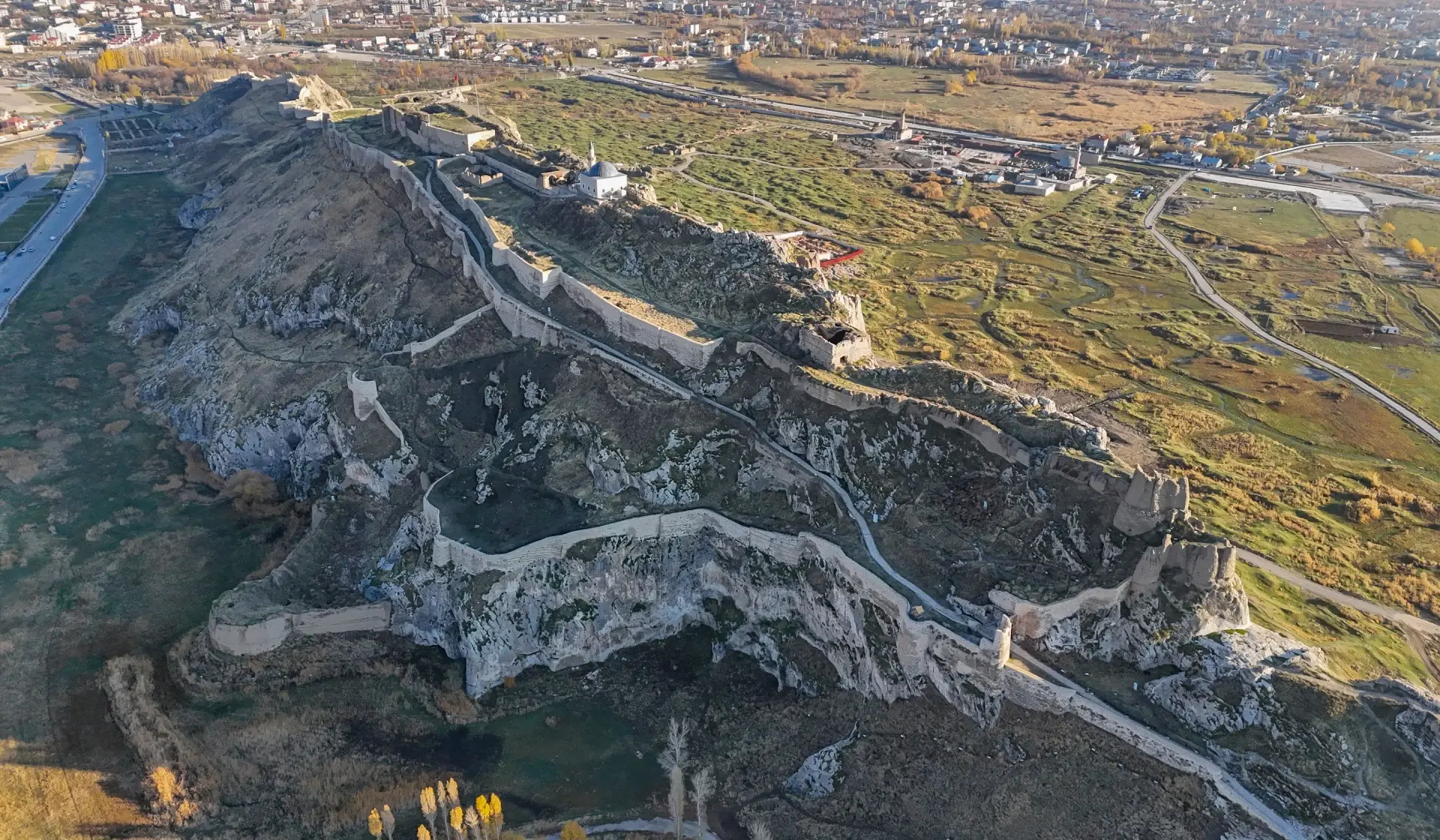
Rock citadel with tombs and ancient inscriptions
When visiting Tushpa, attention is usually drawn to the rock itself, into which chambers and burial rooms were carved. On the site, you can see the remains of fortifications, passages in the rock mass, and sections of ancient masonry. The climb and visit require comfortable shoes, as the surface is uneven in places, and some areas are archaeological ruins without modern amenities.
One of the most famous features of the fortress is the Achaemenid inscription of Xerxes I, carved into the rock. It shows that the importance of this place remained even after the fall of Urartu. For those interested in the ancient history of the Near East, Tushpa is especially valuable for its combination of Urartian, Persian, and later traces gathered in one space.
From the upper and middle sections of the fortress, there are views of modern Van, Lake Van, and the old town area. Nearby are the ruins of Old Van, which are usually visited together with the fortress, and a little farther away is the Van Museum, where you can learn more about finds from the Urartian period.
You can get here from the center of Van by taxi, public transport, or on foot if you are staying near the fortress area. It is better to plan your visit during daylight hours so that you can more comfortably explore the rock elements and viewpoints.
Best tours and travel experiences across the continent




Photos of Tushpa
Guided tours, popular attractions, and top-rated hotels across the continent


