
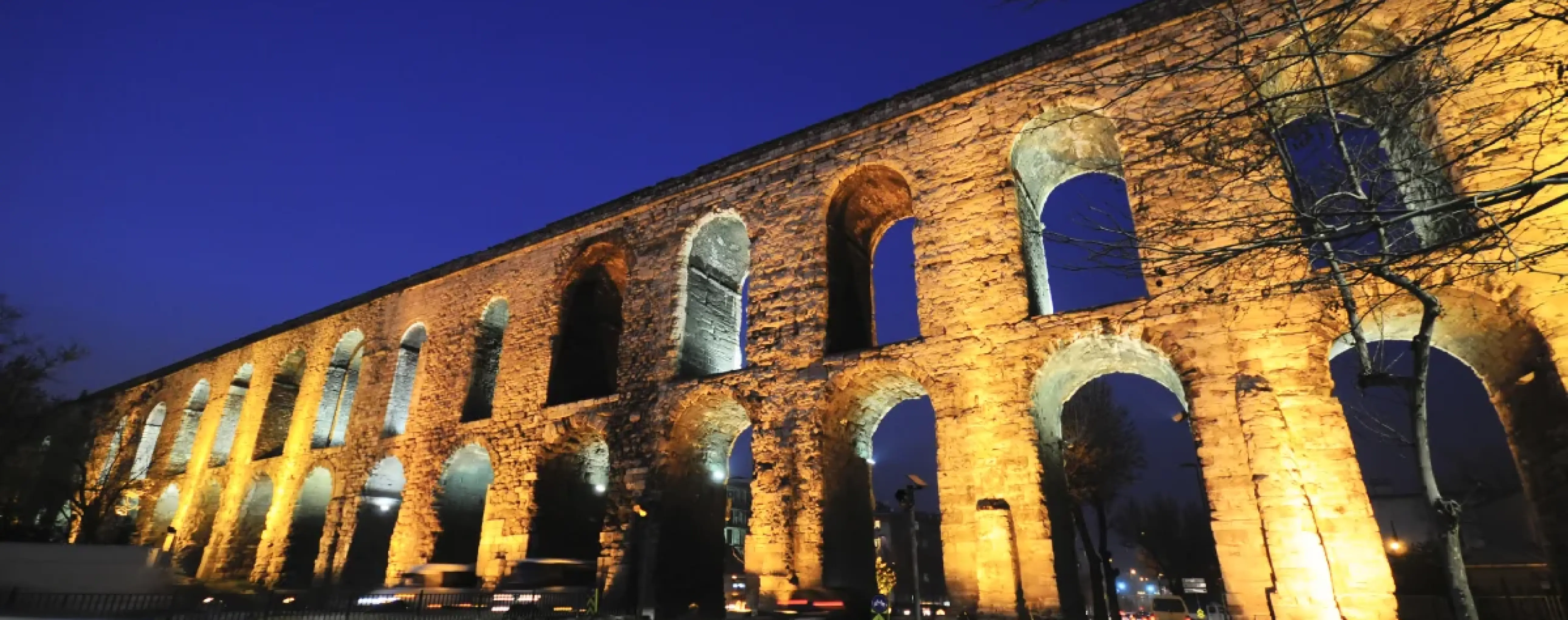
Valens Aqueduct
Valens Aqueduct in the Fatih District, Istanbul, Turkey
The Valens Aqueduct is located in the Fatih district, in the historic part of Istanbul, and crosses Ataturk Boulevard. It is one of the most prominent surviving fragments of the ancient water supply system of Constantinople. The structure was built in the second half of the 4th century under Emperor Valens, when the capital of the Eastern Roman Empire required a reliable water supply.
The aqueduct was built between two of the city's hills and formed part of a complex network of channels, reservoirs, and conduits. The preserved section stretches for about 900 meters, and in some places its height reaches around 20 meters. Over its long history, the structure was repaired and partially rebuilt several times, so traces of different eras can be seen in its masonry, including the Byzantine and Ottoman periods.
For tourists, the aqueduct is interesting not only because of its age, but also because of how organically it is integrated into the modern urban landscape. The arches of the ancient waterway pass above a busy thoroughfare, clearly showing how closely the ancient and the modern are intertwined in Istanbul. It is a convenient stop during a walk through Fatih, especially for those interested in the city's history and engineering monuments.
Valens Aqueduct on the map
Valens Aqueduct in Fatih - Visit and Architecture
This architectural monument shows the connection between the ancient and the modern city.
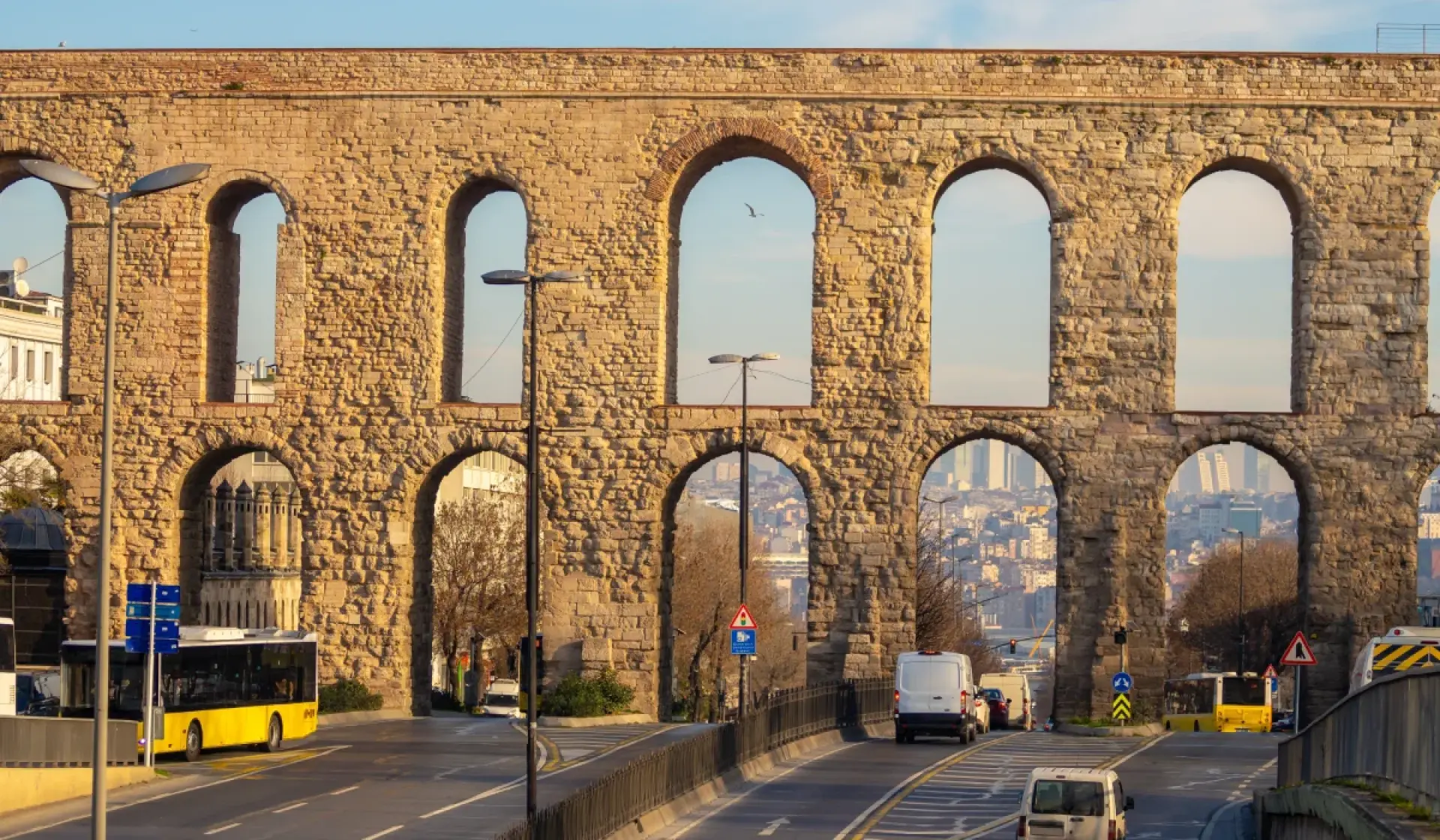
A Late Roman waterway above a busy street in Fatih
The aqueduct is best appreciated from street level, where its massive arches, rows of stone masonry, and changes in height are clearly visible. Water no longer runs through it today, but the structure itself makes it possible to imagine the scale of the urban infrastructure of late Roman and Byzantine Constantinople. The contrast between the ancient supports and the heavy traffic on Ataturk Boulevard is especially striking.
During the visit, it is worth paying attention to the unevenness of the material: both large stone blocks and reused elements from earlier buildings were used in the masonry. This was common practice for large structures of that time and is an important detail for those interested in construction history. The aqueduct is easier to view from different points along the street, as it does not fully reveal itself from a single spot.
Nearby are the Sehzade Mosque, the Suleymaniye Mosque, and part of the old city with other Byzantine and Ottoman monuments, so a visit to the aqueduct can easily be combined with a walking tour of the area. You can get here by tram or metro, getting off in the central part of Fatih, after which it is usually convenient to walk to the aqueduct.
Best tours and travel experiences across the continent




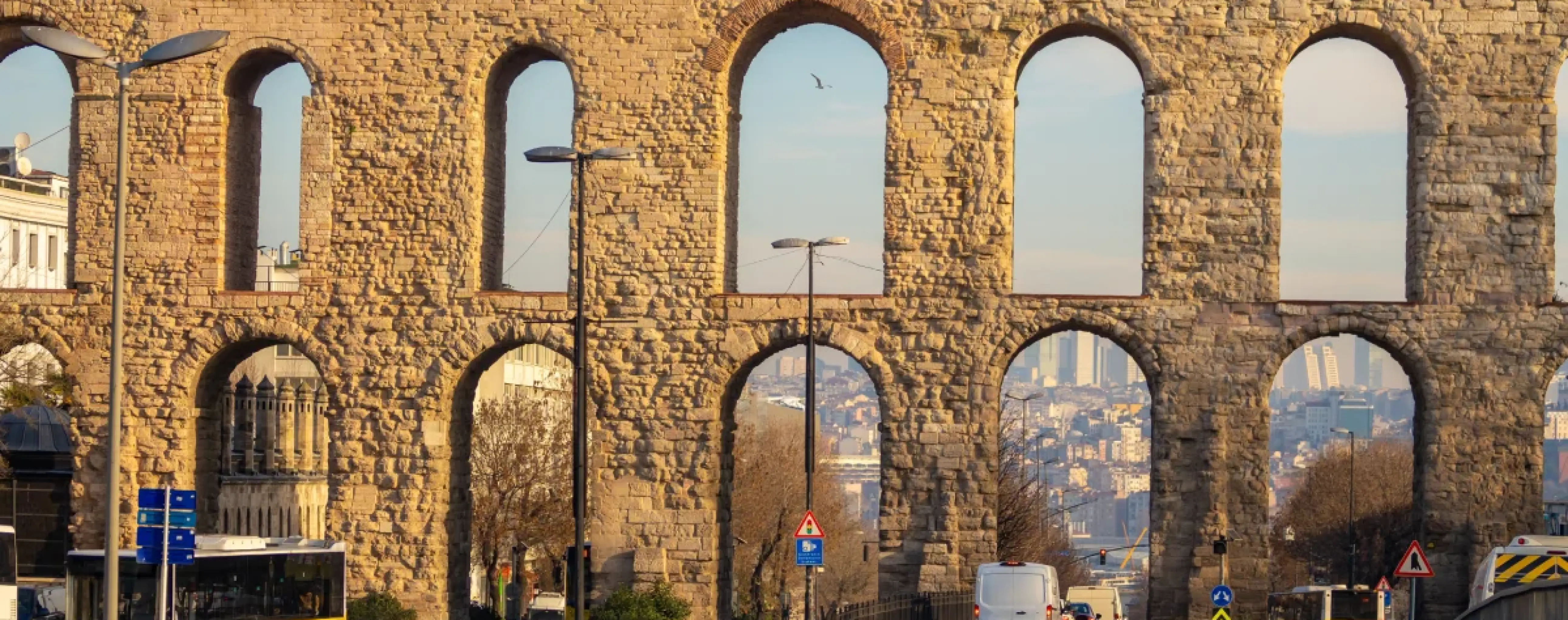
Photos of the Valens Aqueduct
Guided tours, popular attractions, and top-rated hotels across the continent


