
Ancient City of Tripolis
Ancient City of Tripolis in Denizli, Turkey
The Ancient City of Tripolis is located in Denizli Province, about 40 km north of Denizli city center, near Buldan and modern Yenicekent. The archaeological site lies in the Buyuk Menderes River valley, at a point where the territories of Lydia, Caria, and Phrygia once met in antiquity. This location made the city a convenient stop on the overland routes of western Anatolia.
Tripolis took shape in the Hellenistic period and achieved significant development during the Roman and Byzantine eras. The city was connected with trade, craft production, and the daily life of a large agricultural region. Like many settlements in this part of Turkey, it experienced repeated earthquakes, after which some districts were rebuilt and the layout changed in part.
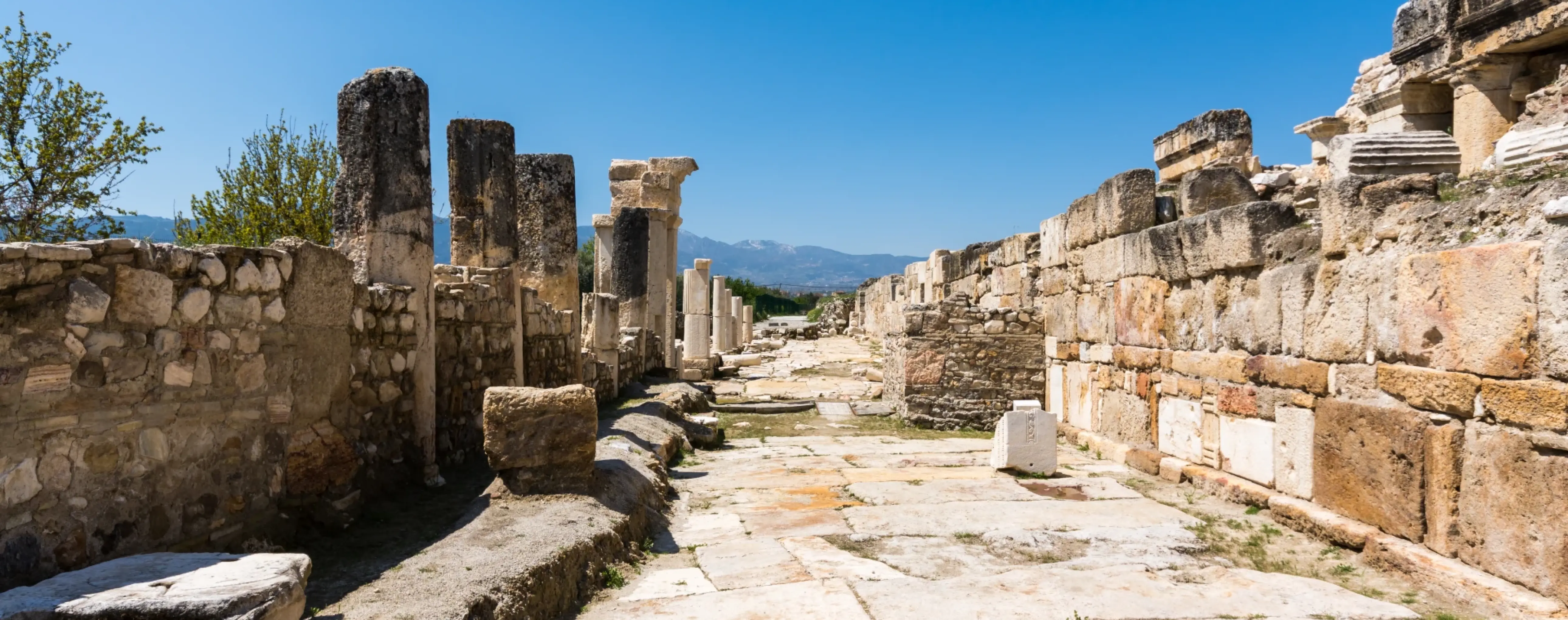
Today, Tripolis is of interest as a major open-air archaeological monument. Here, visitors can see a colonnaded street, a theater, baths, an agora, sections of fortifications, residential quarters, a necropolis, and the remains of Late Antique church structures. Excavations have also uncovered mosaics and elements of urban infrastructure that help illustrate the layout of the ancient city.
This site is usually chosen by travelers interested in ancient ruins away from the busiest routes of Denizli. A visit here makes it possible to see not just a single building, but an entire urban environment with streets, public structures, and residential areas. Before visiting, it is useful to keep in mind that excavations and conservation work are ongoing, so the areas open to visitors may change.
Ancient City of Tripolis on the map
The Ancient City of Tripolis and Its Archaeological Ruins
Here, the streets, baths, and residential quarters of an ancient city have been preserved.
The Colonnaded Street, Theater, and Residential Quarters of the Ancient City
At Tripolis, it is the structure of the ancient city itself that is most clearly perceived. During a walk through the site, visitors can follow the line of the main colonnaded street, explore public spaces, and imagine how the market, baths, houses, and religious buildings were connected. Part of the ruins lies in an open area without dense modern development around it, so the layout is fairly easy to read.
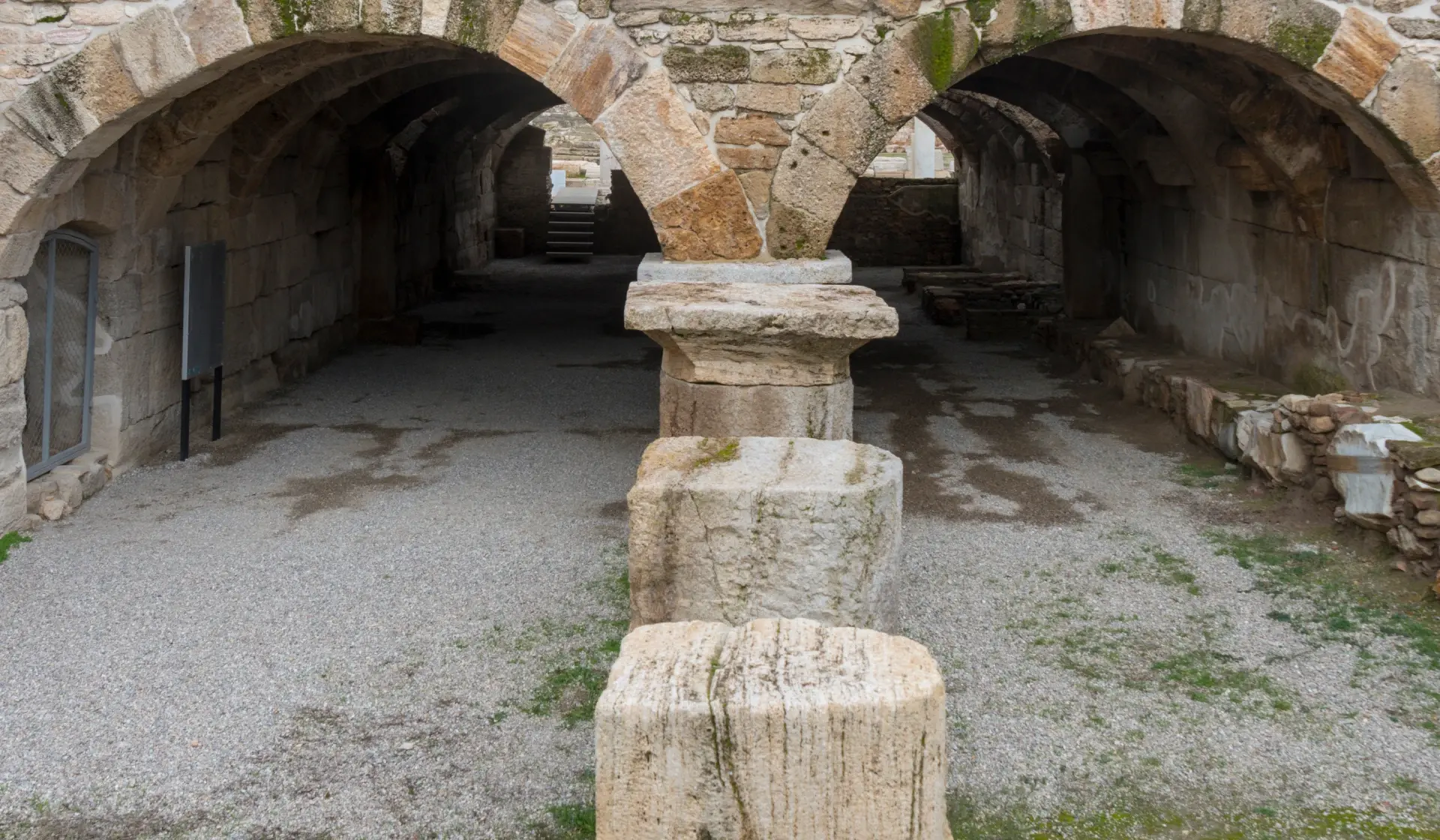
Especially interesting for visitors are the remains of the theater, baths, and agora, as well as residential houses where mosaic floors were discovered during excavations. Such finds are important not only as decorative elements, but also as a source of information about the city's daily life. In some areas, engineering details and fragments of streets are visible, helping visitors understand how the urban infrastructure was organized.
A visit usually takes place on foot through the archaeological zone, so comfortable footwear and sun protection are especially useful in warm weather. Since excavations are ongoing, some sectors may be temporarily closed or, on the contrary, opened after new work, and the route through the monument sometimes changes.
A trip to Tripolis is often combined with a visit to Buldan or other historical sites in Denizli Province, including areas in the Buyuk Menderes valley. The most convenient way to get here is by car from central Denizli toward Buldan and Yenicekent, then following local signs to the archaeological site.
Best tours and travel experiences across the continent




Photos of Tripolis
Guided tours, popular attractions, and top-rated hotels across the continent


