
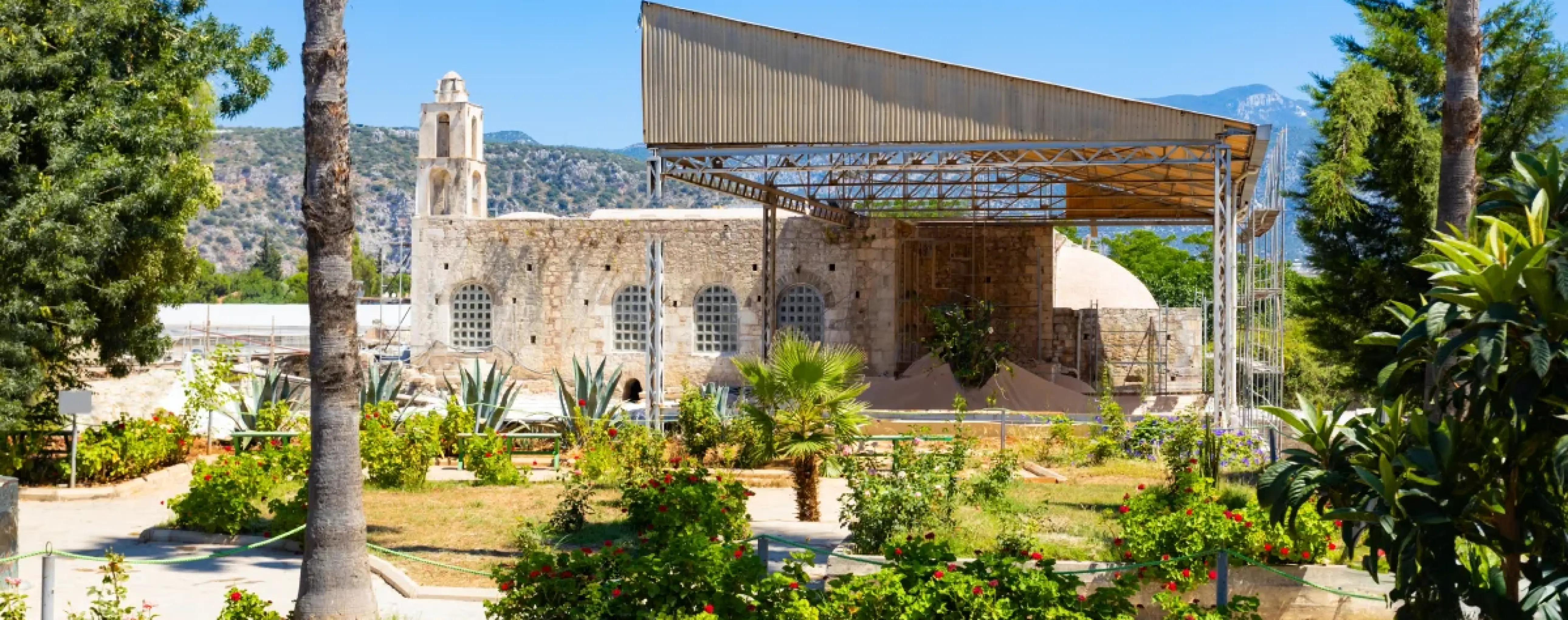
Church of Saint Nicholas the Wonderworker
Church of Saint Nicholas the Wonderworker in Demre, Antalya, Turkey
The Church of Saint Nicholas the Wonderworker is located in the town of Demre, west of central Antalya, on Turkey’s Mediterranean coast. The church is associated with Saint Nicholas of Myra, Bishop of Myra in Lycia, who lived in the 4th century and is venerated in both the Orthodox and Catholic traditions. Today, it is one of the best-known Christian monuments in the region and an important stop for pilgrims and travelers interested in Byzantine history.
The church was built on the site of an earlier sanctuary and was rebuilt several times over the centuries. The current appearance of the complex largely dates to the Byzantine period: naves, side chambers, a narthex, and inner courtyards took shape inside and around the church. Over time, the building suffered from earthquakes, floods, and layers of sediment, so part of the structure ended up below the modern ground level.
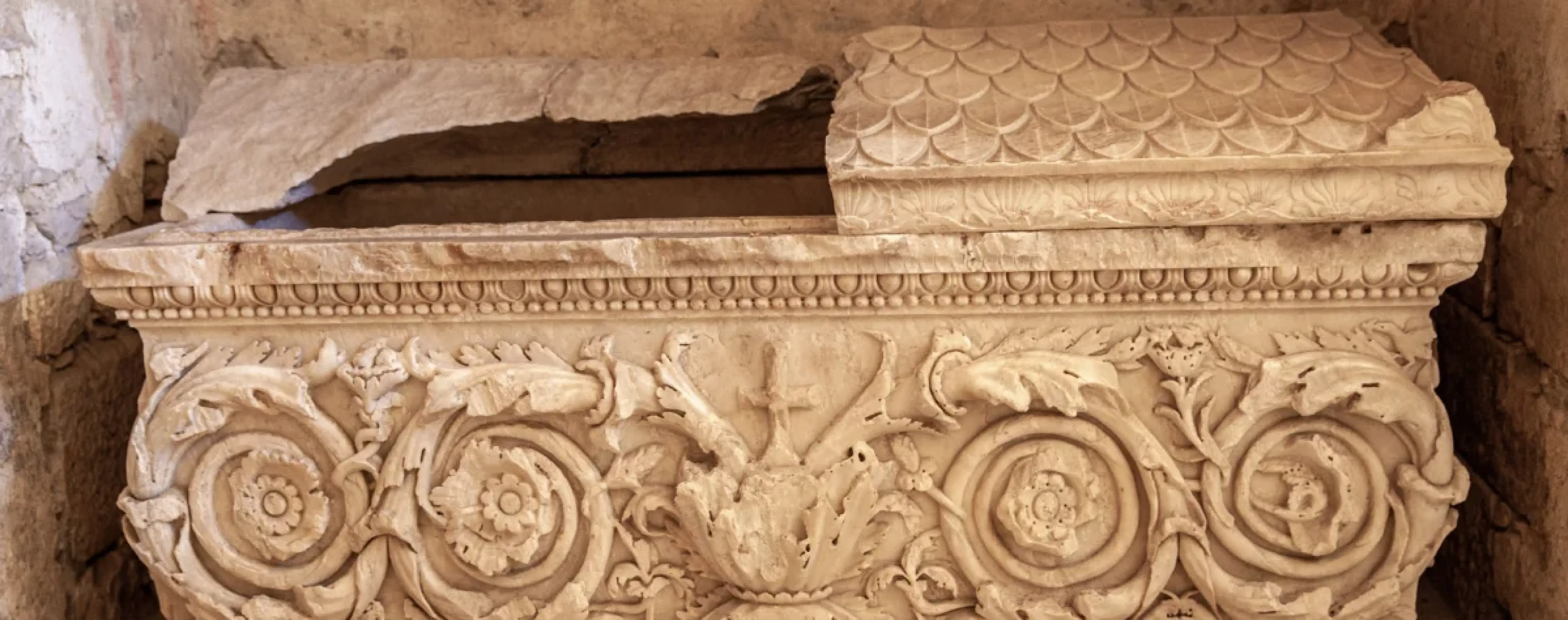
Inside, fragments of wall paintings, mosaic floors, and architectural details have been preserved, making it possible to imagine the decoration of a Byzantine church. There is also a marble sarcophagus traditionally associated with Saint Nicholas. At the same time, a significant part of his relics was transferred in the 11th century to the Italian city of Bari, as recorded in historical sources.
For tourists, the church is interesting both as a monument of early Christianity and as a place closely connected with the history of ancient Myra. A visit to the church is often combined with seeing the nearby ruins of the ancient city, including the rock-cut tombs and the ancient theater. The distance from central Antalya to Demre is about 145-150 km along the D400 highway, and the journey usually takes around 2.5-3 hours.
Church of Saint Nicholas the Wonderworker on the map
Church of Saint Nicholas the Wonderworker and the archaeological complex of Myra
The site combines religious significance and archaeological value.
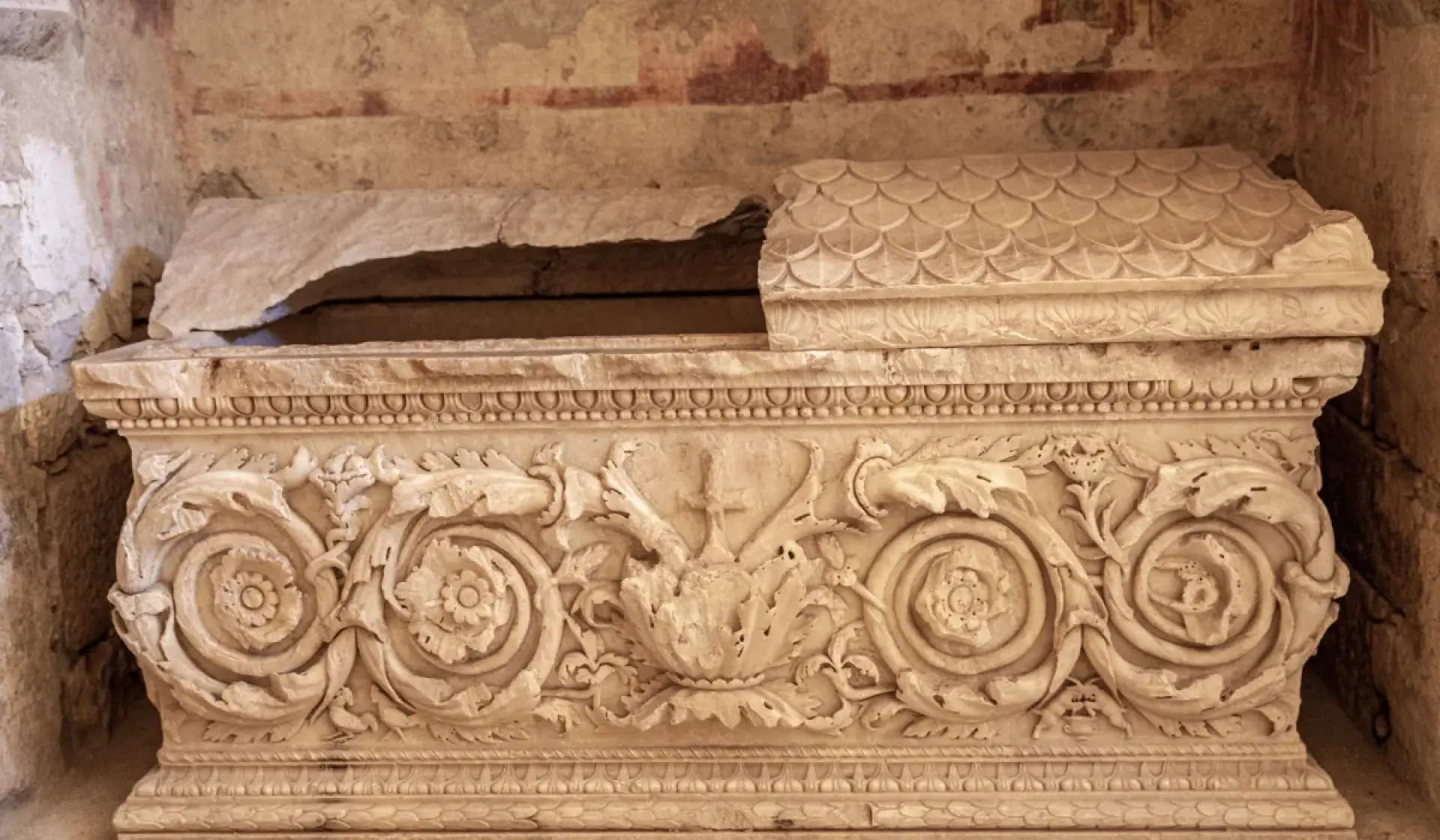
Byzantine church with frescoes, mosaics, and the saint’s sarcophagus
During the visit, you can explore the interior of the church, where traces of several construction phases are visible. Preserved in the interior are sections of frescoes, stone carvings, columns, and mosaic floor coverings. Some elements have not survived in full, but even these clearly reveal the layout of the Byzantine church and its later alterations.
The marble sarcophagus, traditionally associated with Saint Nicholas, usually attracts special attention. For many visitors, this is the main part of the route, especially if the trip is connected with pilgrimage. It is important to keep in mind that this is прежде всего a historical monument and a religiously significant space, so it is customary to behave calmly and respectfully inside.
Exploring the site usually does not take too much time, but it gives an idea of the Christian history of Lycia and of how the church changed under the influence of time and natural conditions. Nearby are the ruins of ancient Myra with its Roman theater and Lycian rock-cut tombs, so both locations can easily be combined in one trip.
You can get here from central Antalya by car or excursion transport along the D400 highway toward Demre. Before visiting, it is worth checking the opening hours of the museum site and entry conditions in advance, as they may change depending on the season.
Best tours and travel experiences across the continent


Photos of the church and Myra
Guided tours, popular attractions, and top-rated hotels across the continent


