
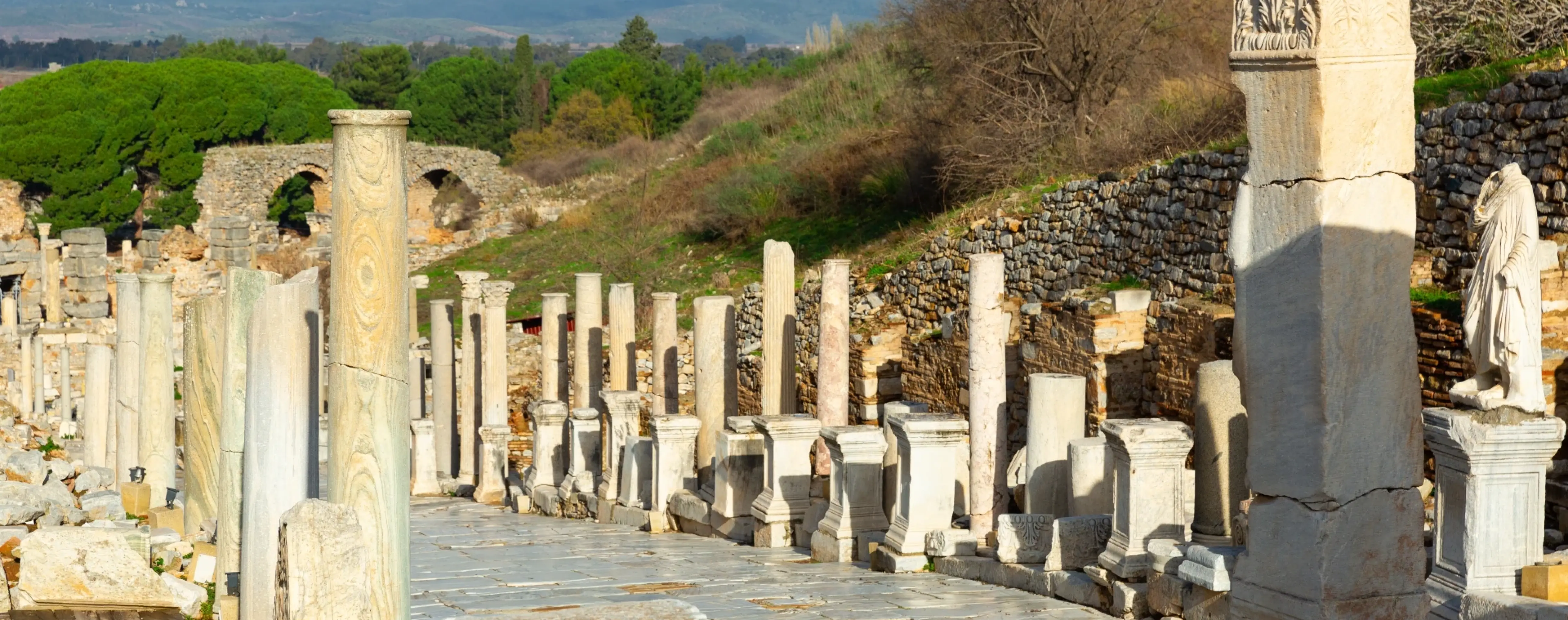
Curetes Street
Curetes Street in Ephesus, Izmir, Turkey
Curetes Street is located in the archaeological area of Ephesus, near Selcuk in Izmir Province. It is one of the most famous streets of the ancient city, running along the slope between the upper and lower quarters and connecting important public spaces. Today, it is part of the main route through the ruins and offers a view of Ephesus as a major urban center of the Roman period.
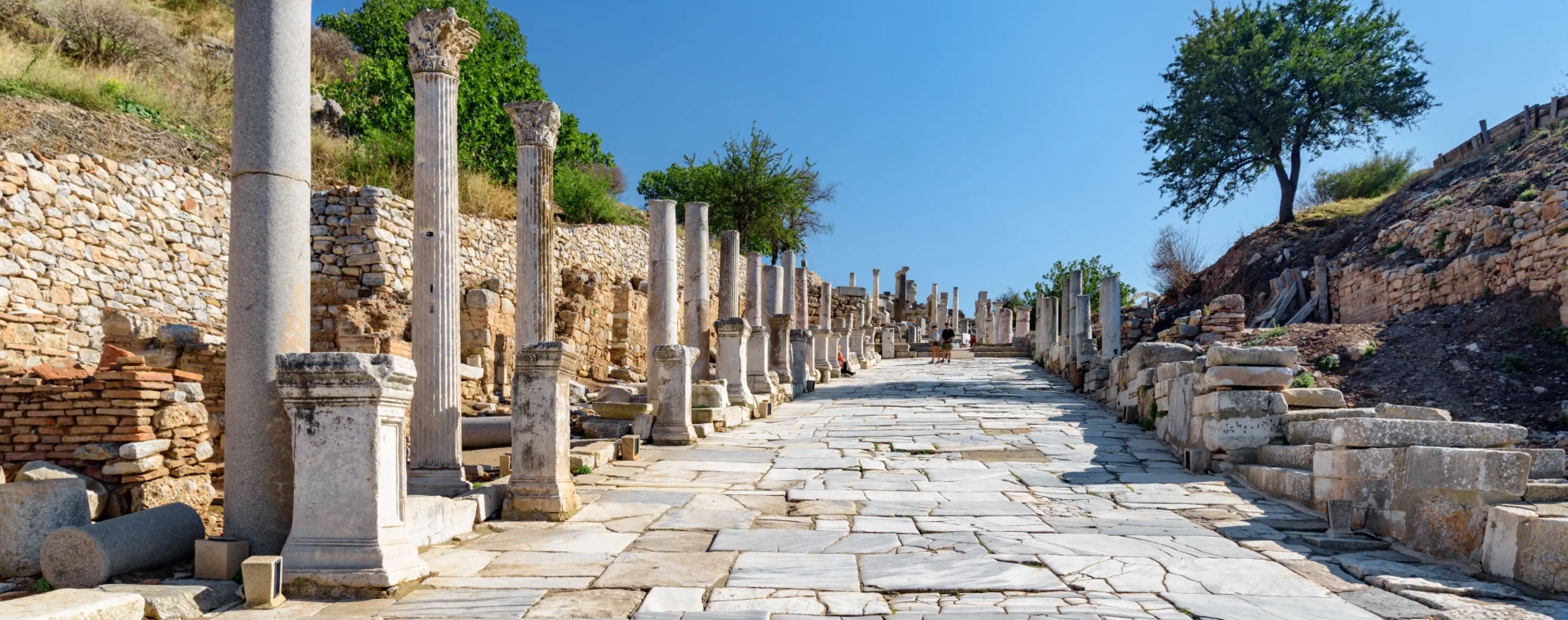
The street acquired its present appearance in the Late Roman era, when after destruction and rebuilding it was repaved and lined with monumental facades. On both sides stood residential and public buildings, monuments, colonnades, and commercial premises. Preserved on site are marble paving slabs, pedestals, architectural fragments, inscriptions, and decorative details that make it possible to imagine the dense and elegant urban development.
The name of the street is associated with the Curetes - a group of priests and participants in ceremonial processions who played a role in the religious life of Ephesus. It is not just a passage between monuments, but an important part of the urban structure where everyday life, official functions, and cult traditions intersected. For visitors, the street is especially interesting because it clearly reveals the scale of the ancient city, the quality of the stonework, and the connection between individual monuments of Ephesus.
Curetes Street on the map
Izmir, Ephesus: City districts and streets
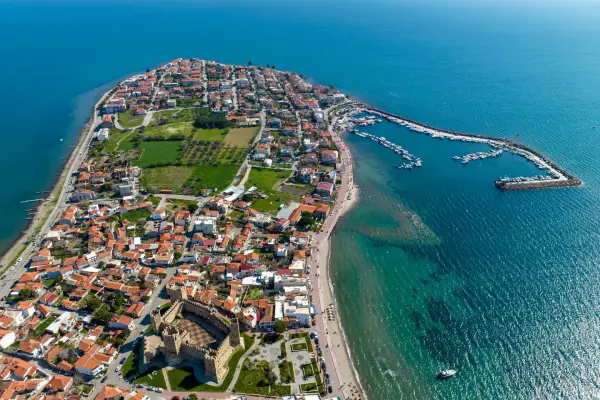
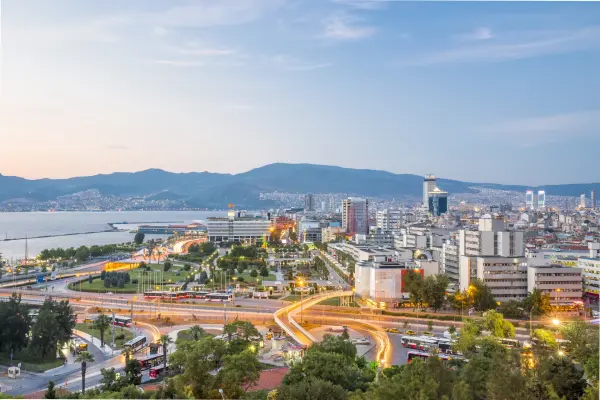
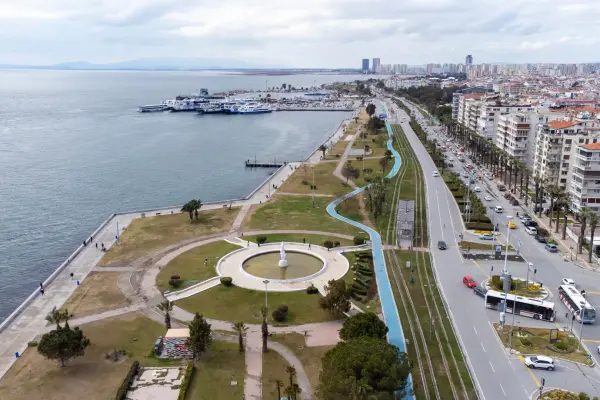
Dikili Promenade, Konak Square, Karsiyaka District, Foca Old Town and Harbor

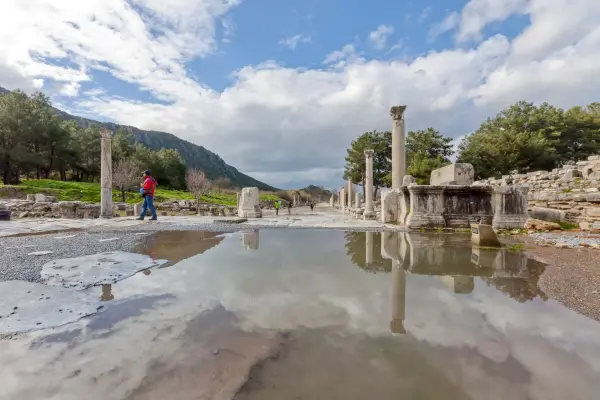
Curetes Street in Ephesus and Its Monuments
It connects important parts of the ancient city and preserves traces of Roman urban development.
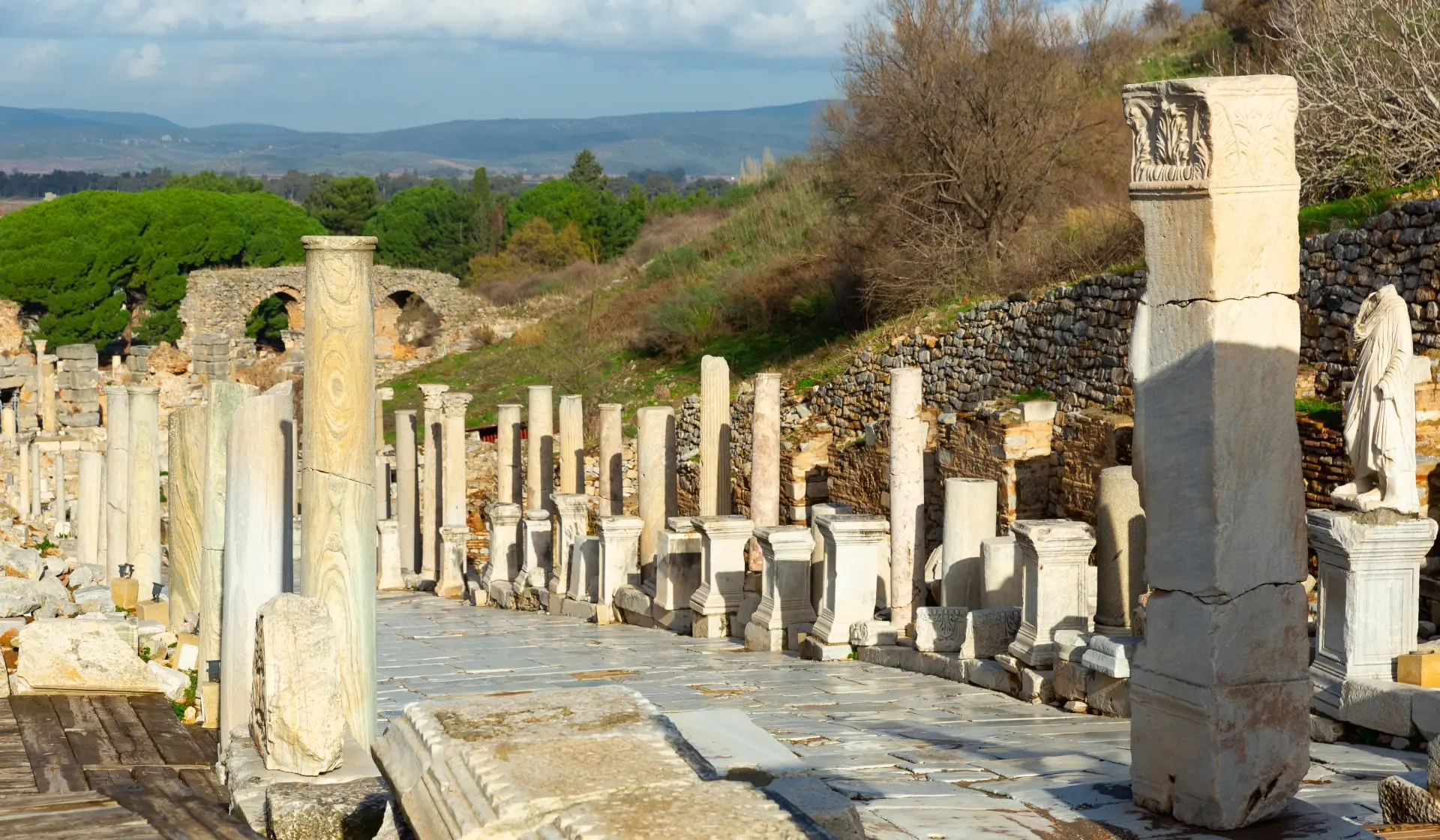
A marble street with facades, reliefs, and traces of urban life
While walking along Curetes Street, visitors can observe not only the pavement itself, but also the preserved elements of its design: statue bases, columns, capitals, fragments of reliefs, and sections of monumental facades. The change in elevation makes the route slightly sloping, so from different points there are convenient views of architectural details and the neighboring ruins. It is best to walk slowly, paying attention to inscriptions and stone blocks incorporated into later reconstructions.
Some of the notable monuments of Ephesus are located on this street, including the Fountain of Trajan, the Temple of Hadrian, and the entrances to the Terrace Houses, where mosaics and wall paintings have been preserved. Closer to the lower part of the route is the area of the Library of Celsus, while the State Agora and other public structures are located nearby. Thanks to this concentration of monuments, the street is convenient for a sequential visit to several key parts of the archaeological complex.
It is worth choosing comfortable footwear for the visit: marble and polished stone can be slippery, especially in hot weather. There is little shade in the open sections, so water and a hat are useful. Ephesus is usually reached via Selcuk, from where you can get to the archaeological area by taxi, car, or on foot from the entrance along the pedestrian route.
Best tours and travel experiences across the continent

Street Photos
Guided tours, popular attractions, and top-rated hotels across the continent


