
Diyarbakir City Walls
Diyarbakir City Walls in Diyarbakir, Turkey
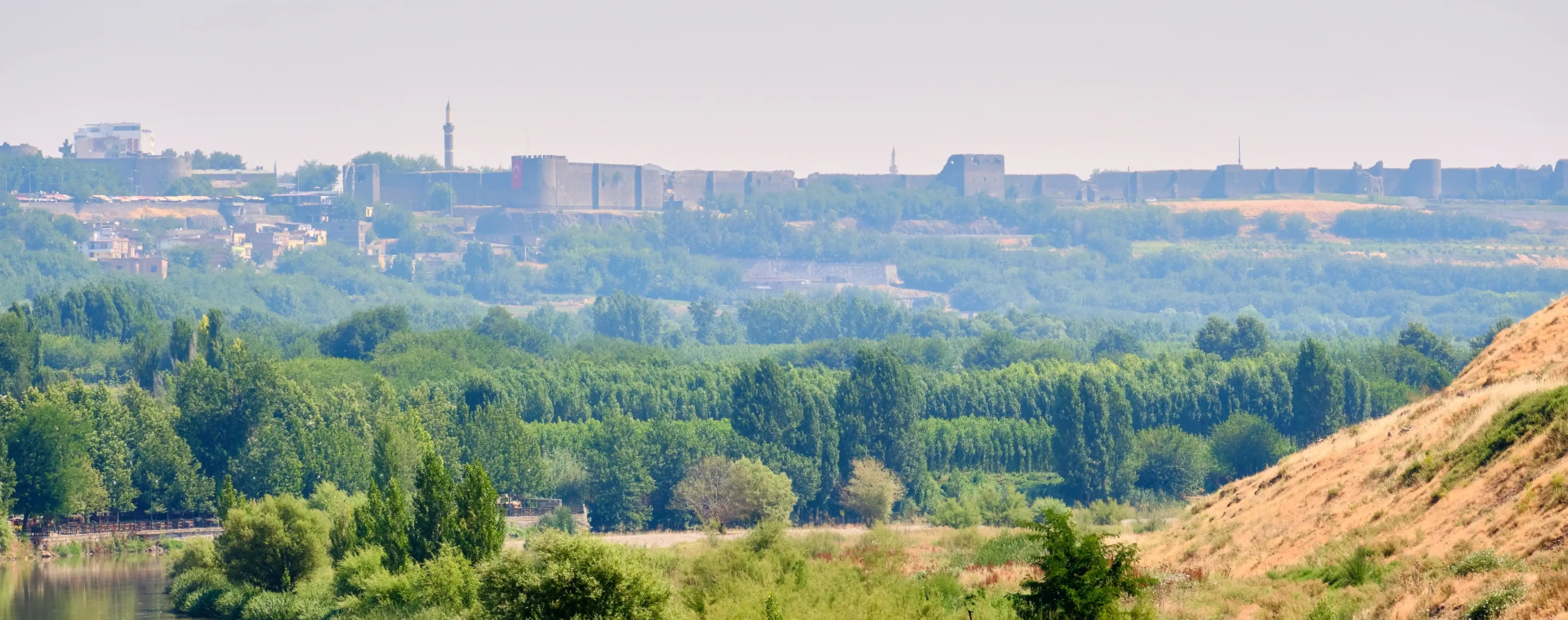
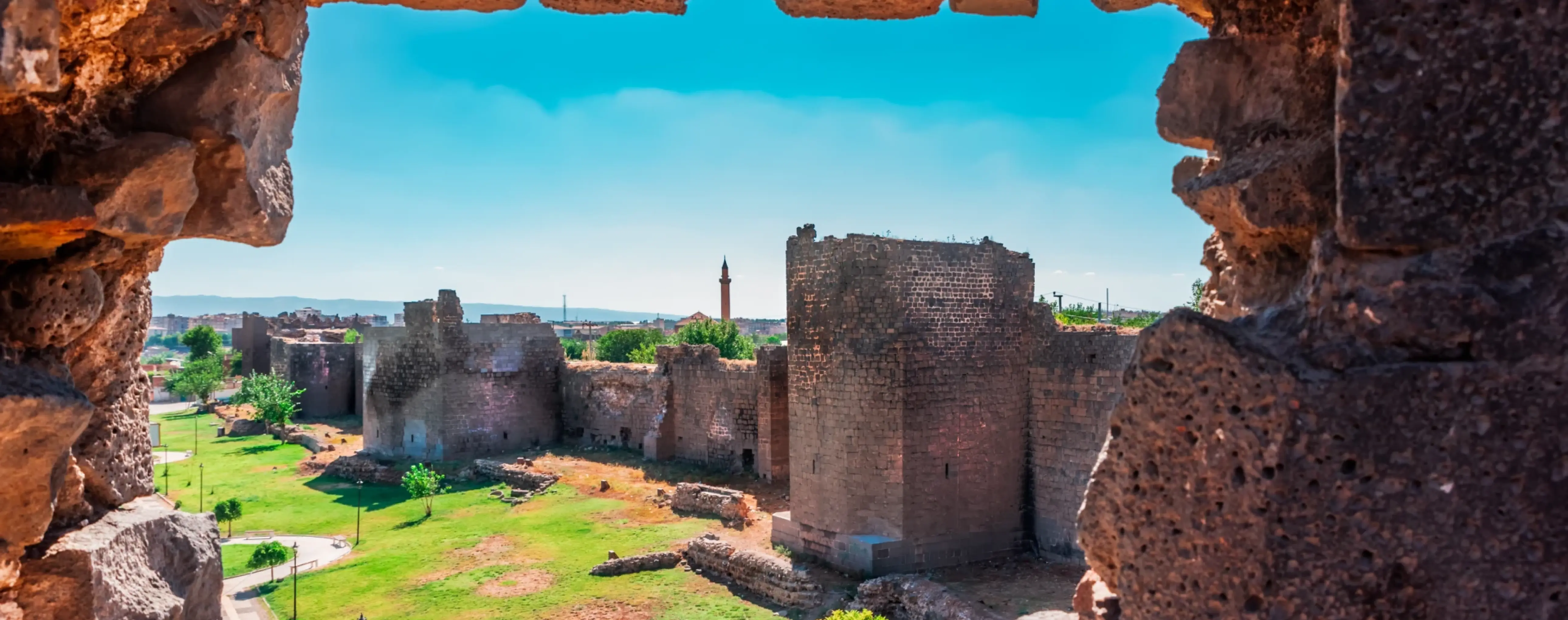
The Diyarbakir City Walls are located in the historic center of Diyarbakir in southeastern Turkey. They are one of the city's most prominent landmarks: powerful dark basalt fortifications stretch around the old quarter and stand out clearly in the urban landscape. In terms of preservation and length, the walls are often regarded as among the largest ancient urban fortifications in the region.
The basis of the walls' current appearance is usually associated with the Late Roman period, although the city itself is much older. Over the centuries, the fortifications were rebuilt and expanded under the Byzantines, Muslim rulers, the Seljuks, the Artuqids, and the Ottomans. As a result, traces of several eras can be seen in the masonry, towers, and decorative elements, and inscriptions and carved images have survived in some sections.
A significant part of the defensive ring with its towers and gates has survived to the present day, although some fragments were damaged or restored. Together with the Hevsel Gardens, the walls are inscribed on the UNESCO World Heritage List, highlighting their historical and cultural value. For tourists, they are a convenient starting point for discovering old Diyarbakir and its layered history.
The best time for a walk along the walls is in the morning or evening, especially in the warm season, when the city can be very hot during the day. A visit is usually combined with a walk through the old quarters, visiting the gates and lookout points, from which the scale of the fortifications and the layout of the historic center can be better understood.
Diyarbakir City Walls on the map
Diyarbakir City Walls and their historic sections
Here, the traces of different eras and the layout of the old city are visible.
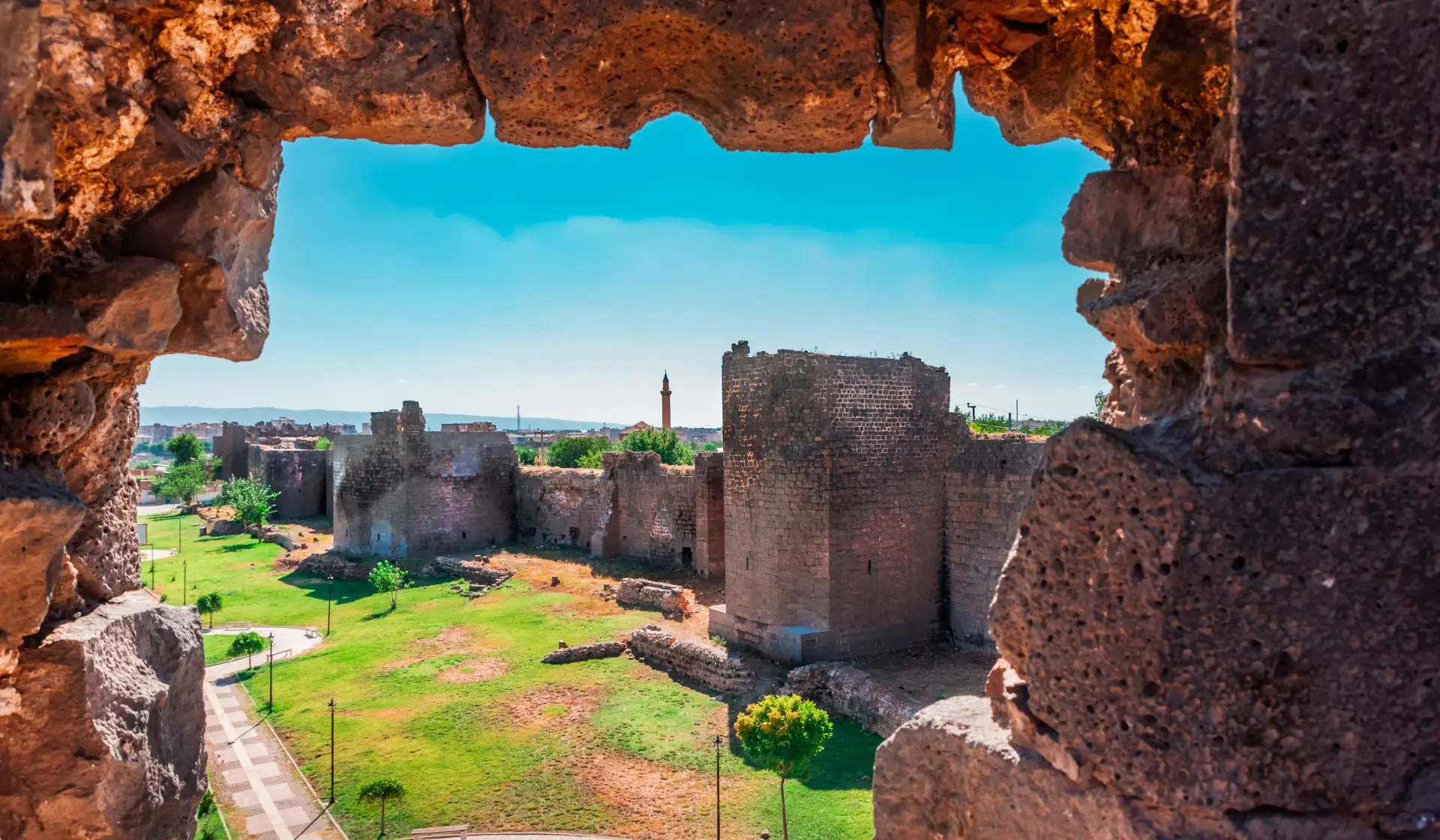
Black basalt fortifications around the old city
During a walk, you can examine the massive basalt masonry, numerous towers, and city gates through which routes historically passed to different parts of the city. In some sections, stone reliefs, ornaments, and inscriptions from different periods of history are visible. It is precisely these decorative details that make the walls not only a defensive structure, but also an important monument of urban culture.
The route usually runs along the outer or inner side of the fortifications within the old center of Diyarbakir. Not all sections can be climbed or walked continuously, so it is more convenient to think of the walls as a series of separate points for viewing rather than as a single walking line. For a visit, it is worth choosing comfortable shoes, bringing water, and using sun protection, as the open spaces heat up considerably.
Near the walls are the historic quarters of Diyarbakir, the Great Mosque of Diyarbakir, and the Hevsel Gardens, which are often included in the same walk. The easiest way to get here is by taxi or public transport to the center of Diyarbakir, after which the main sections of the walls are accessible on foot.
Best tours and travel experiences across the continent


Photos of the walls
Guided tours, popular attractions, and top-rated hotels across the continent


