
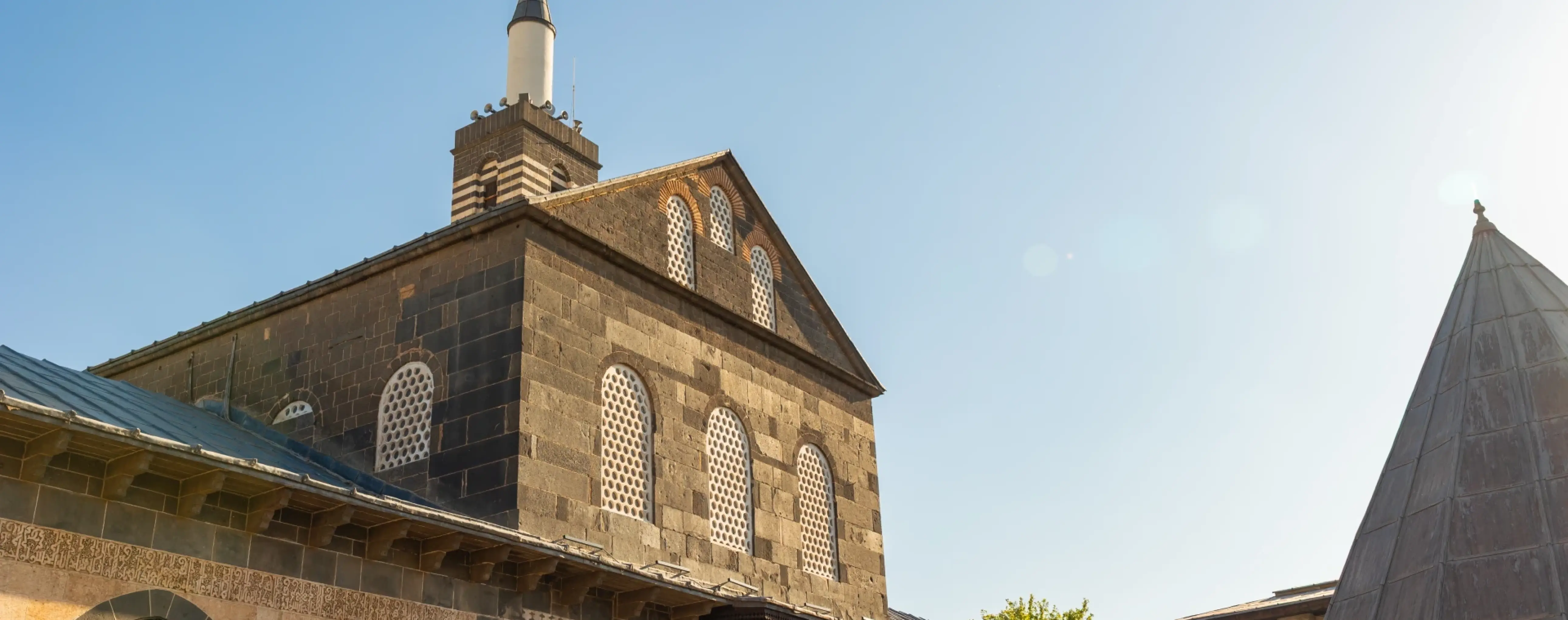
Grand Mosque of Diyarbakir
Grand Mosque of Diyarbakir in Diyarbakir, Turkey
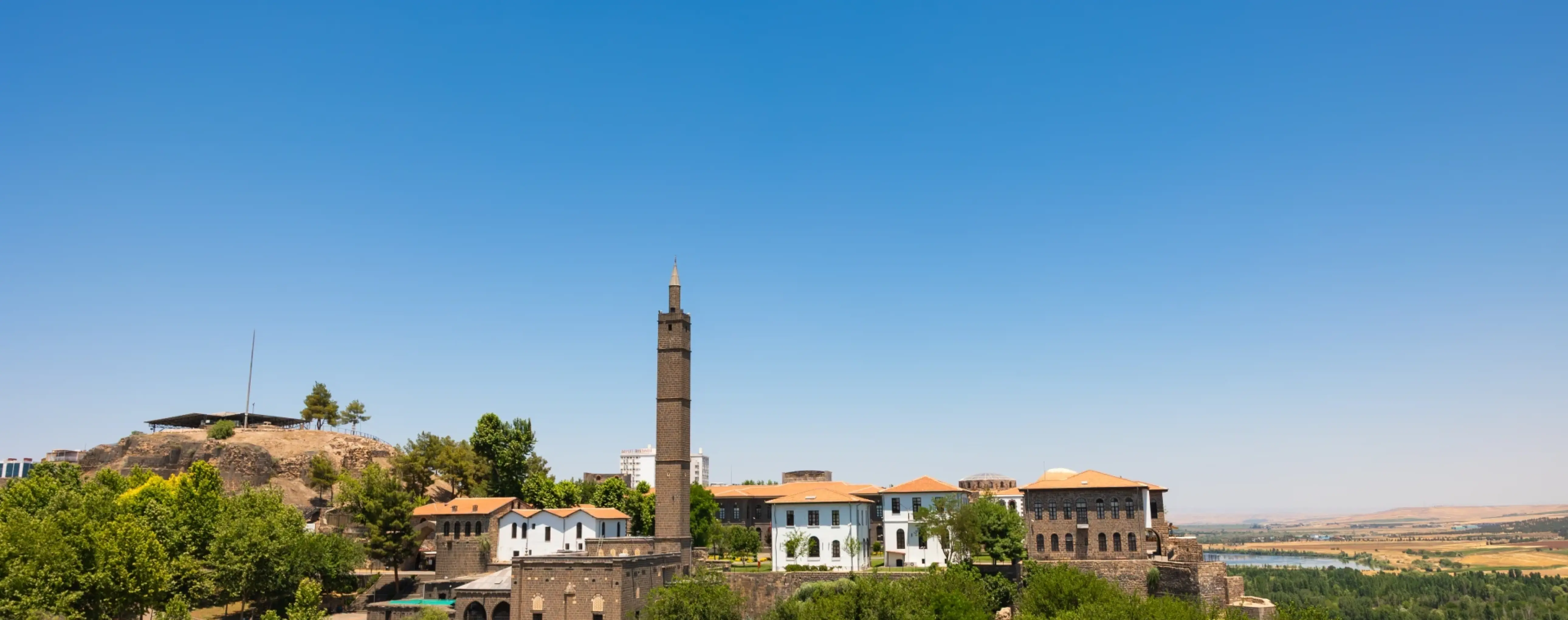
The Grand Mosque of Diyarbakir is located in the historic center of Diyarbakir, inside the old city walls. It is one of the city's most famous landmarks and one of the oldest continuously active mosques in Turkey. The present appearance of the complex was largely formed in the medieval period, after reconstructions and restorations related to earthquakes and fires.
The mosque occupies the site of an earlier Christian structure, reflecting the layered history of Diyarbakir. The complex is arranged around a rectangular courtyard with arcades and prayer halls. Particularly notable in the architecture are the dark local stone, carved details, columns, and elements reused from ancient and earlier buildings.
For tourists, this place is interesting not only as a functioning mosque, but also as an important architectural monument of Upper Mesopotamia. Here, you can see how Islamic, Late Antique, and local building traditions came together in a single ensemble. The facades, inner courtyard, and the overall character of the old city around it are especially striking.
A visit to the Grand Mosque is usually included in a walk through the historic center of Diyarbakir. It offers a better understanding of the city's past, where different religious and cultural communities coexisted for centuries. When entering, it is worth remembering that this is an active place of worship, so visitors should observe dress rules and prayer times.
Grand Mosque of Diyarbakir on the map
Grand Mosque of Diyarbakir: courtyard, basalt, and traces of different eras
A functioning mosque in the historic center with layered architecture.
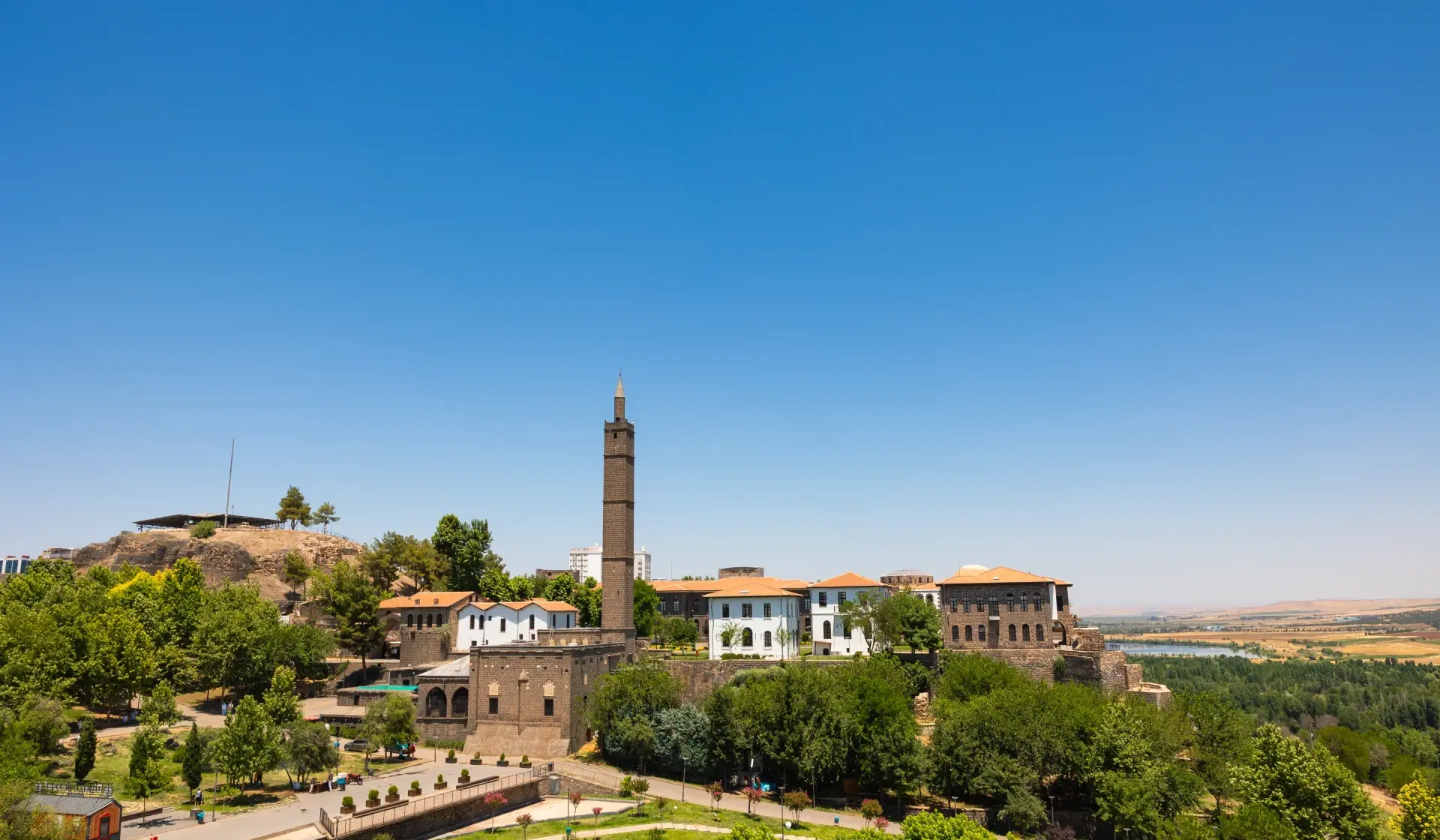
Medieval courtyard, black basalt, and traces of different eras
The main things visitors notice are the spacious inner courtyard and the facades made of dark basalt, characteristic of Diyarbakir. The arcades, columns, and carved stone decoration clearly show how the complex changed in different periods. In the details, you can notice reused architectural elements that connect the mosque to the earlier history of this place.
Inside and in the courtyard, it is worth paying attention not only to the overall layout, but also to the inscriptions, ornamental fragments, and differences in the masonry. They help reveal which parts were rebuilt after destruction and how craftsmen combined old materials with new ones. It is best to come outside prayer times, when it is easier to quietly explore the architecture and courtyard.
For visiting, modest clothing and respectful behavior are appropriate, as in any functioning mosque. Nearby are the Diyarbakir fortress walls, old city gates, caravanserais, and the traditional streets of the historic center, so the visit can easily be combined with a walking tour of this area.
The easiest way to get here is on foot or by taxi from any part of central Diyarbakir. If you are already in the old city, the mosque can easily be included in an itinerary together with other nearby historic monuments.
Best tours and travel experiences across the continent


Photos of the mosque
Guided tours, popular attractions, and top-rated hotels across the continent


