

Green Mausoleum
Green Mausoleum in Bursa, Turkey
The Green Mausoleum, or Yesil Turbe, is located in Bursa on a slope east of the city center, in the Yesil district, next to the Green Mosque. It is one of the most recognizable buildings of the early Ottoman period and an important part of the historic ensemble associated with Sultan Mehmed I Celebi.
The mausoleum was built in the first half of the 15th century as the burial place of Mehmed I. It is usually associated with the circle of craftsmen who worked on the Green Complex. The monument was damaged during a major 19th-century earthquake and was later restored, preserving its main architectural and decorative features.
The building stands out for its octagonal shape, high domed structure, and cladding of green and turquoise tiles, which gave the mausoleum its name. Inside, the tiled decoration, ornaments, and calligraphic inscriptions attract attention. For visitors, this is an opportunity to see one of the characteristic examples of 15th-century Ottoman architecture and to better understand the artistic traditions of Bursa at that time.
The mausoleum is interesting not only as a historic tomb, but also as a monument of decorative art. When visiting, it is worth keeping in mind that this place is connected with religious and memorial tradition: visitors usually observe silence here and choose modest clothing.
Green Mausoleum on the map
Green Mausoleum - architecture and decorative details
A quiet memorial space with examples of early Ottoman tilework.
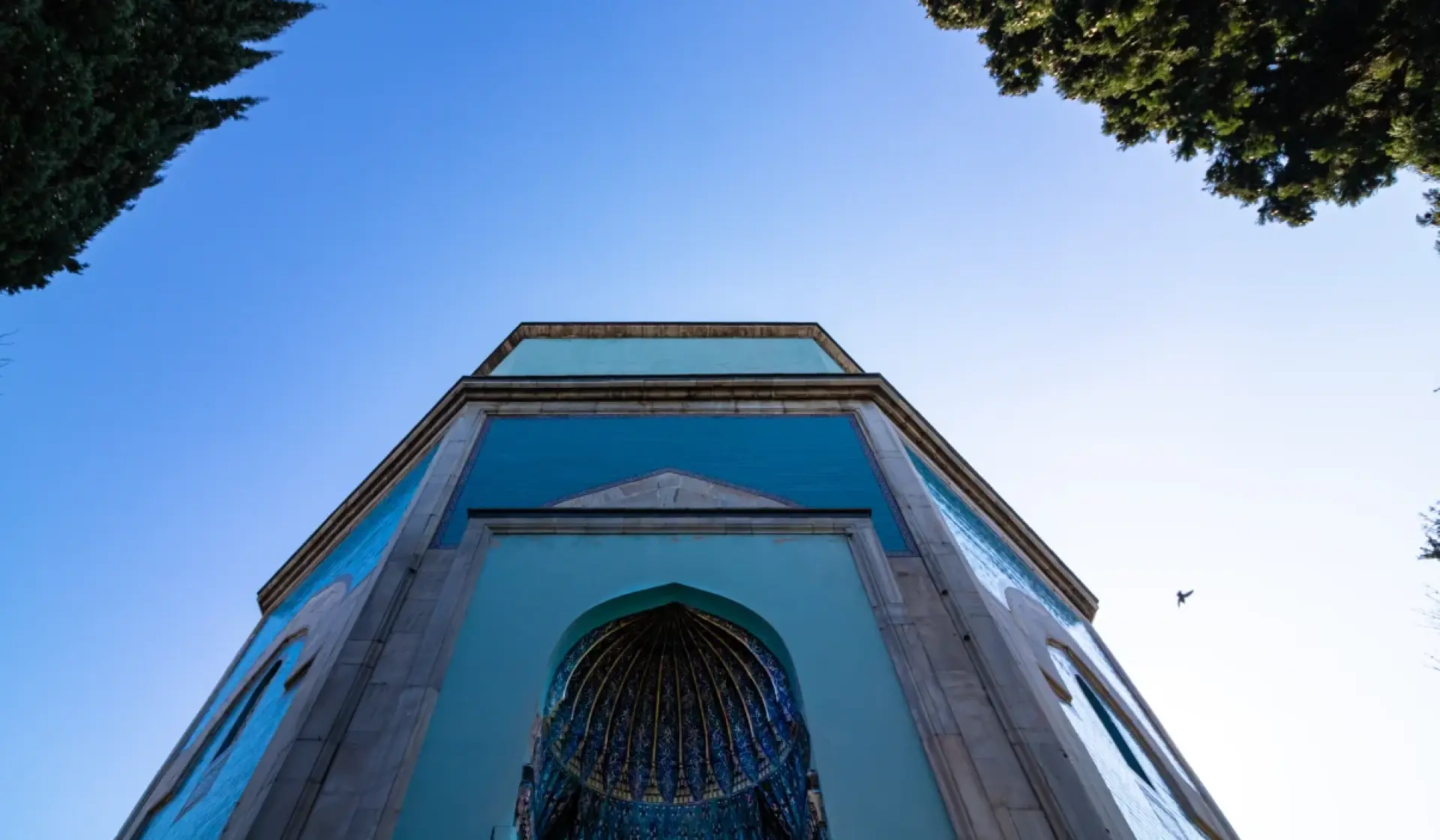
Ottoman tomb with 15th-century tile decoration
Inside the mausoleum is the sarcophagus of Sultan Mehmed I Celebi and several other burials associated with the dynasty. Visitors are usually most drawn to the wall decoration and the mihrab niche: here, the green, blue, and turquoise tiles characteristic of early Ottoman art are clearly visible, along with ornamental and calligraphic elements.
Outside, it is worth paying attention to the proportions of the building and the combination of stone construction with ceramic decoration. The mausoleum is situated on elevated ground, so the approach offers views over the urban quarters of Bursa. A visit usually does not take much time, but it is better not to rush in order to appreciate the details of the decoration and inscriptions.
Nearby are the Green Mosque and other elements of the Green Complex, which are convenient to visit in a single walk. The mausoleum is usually reached by taxi, bus, or on foot from the central part of Bursa if you are planning a walk through the historic districts.
Before entering, it is worth checking the current visiting hours, as they may change. Inside, visitors are usually asked to behave calmly, avoid making noise, and show respect for the monument and other visitors.
Best tours and travel experiences across the continent



Photos of the Green Mausoleum
Guided tours, popular attractions, and top-rated hotels across the continent


