
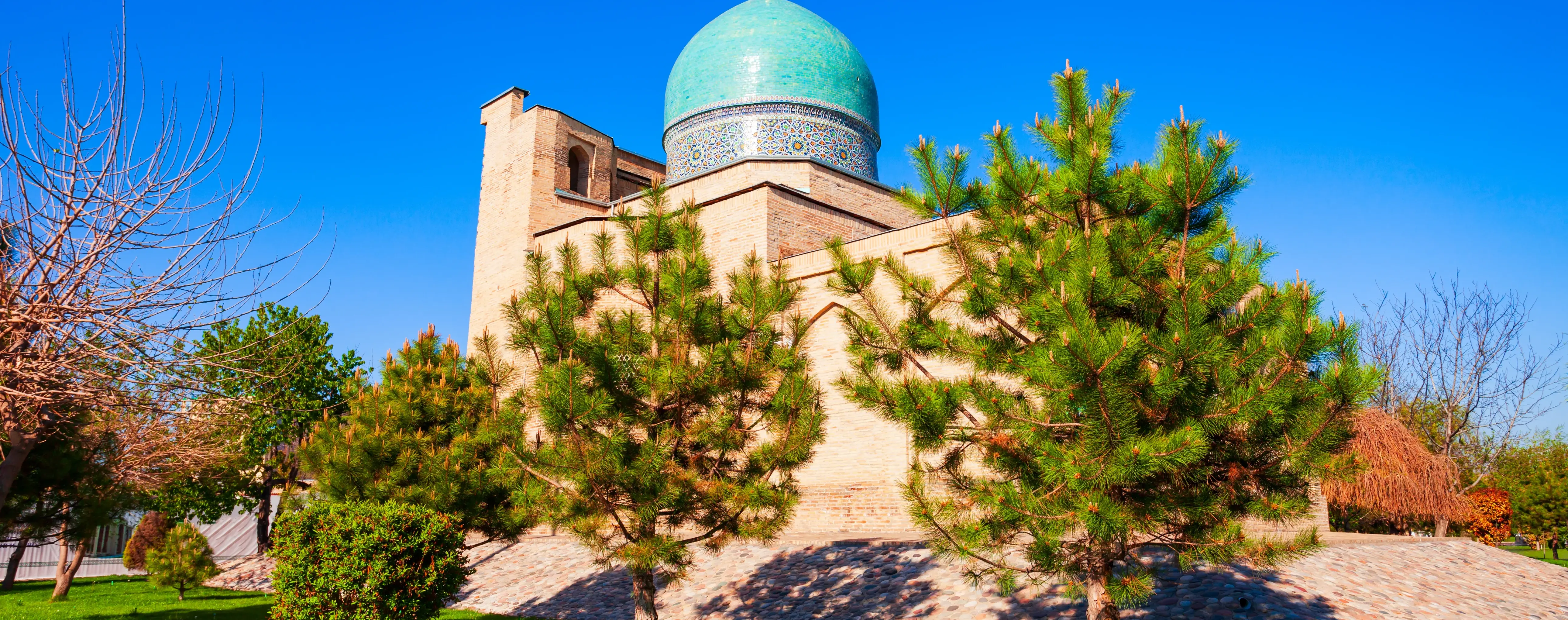
Kaffal ash-Shashi Mausoleum
Kaffal ash-Shashi Mausoleum in Tashkent, Uzbekistan
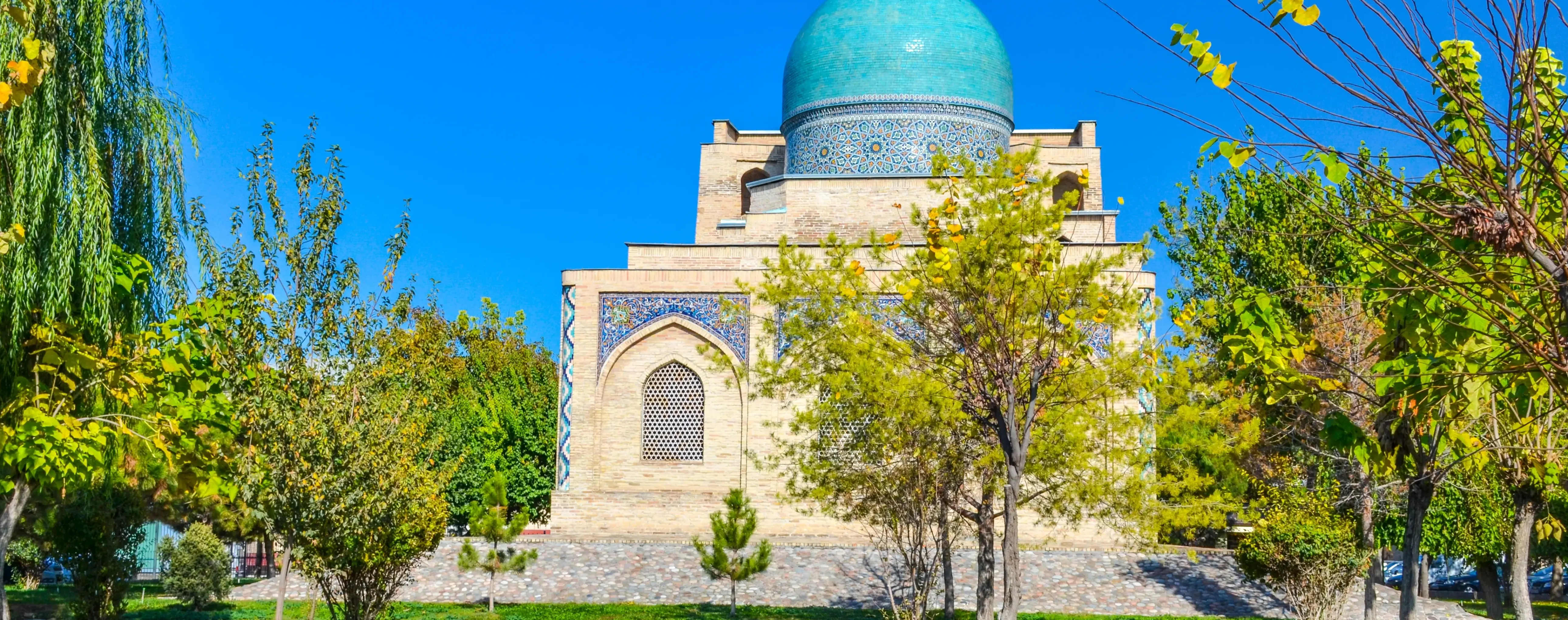
The Kaffal ash-Shashi Mausoleum is located in the old part of Tashkent, on the grounds of the Hazrati Imam religious and historical ensemble. It is one of the city's most revered memorial monuments, associated with the name of Abubakr Muhammad Kaffal ash-Shashi, a renowned Islamic theologian and scholar whom tradition regards as one of the most respected spiritual figures of Shash, historical Tashkent.
The original structure above his burial site has not survived. The building that can be seen today dates back to the 16th century and was erected during the Shaybanid era on the site of an earlier mausoleum. The monument is important not only as a burial place, but also as part of a large religious complex that for centuries played a significant role in the spiritual life of the city.
The architecture of the mausoleum is restrained and characteristic of the Central Asian tradition. The building has a rectangular plan, is covered by a dome on a drum, and wooden grilles, panjara, are used in the openings. Inside is the enclosed burial site of the sheikh, and at the entrance you can see old stone tombstones associated with his students and followers.
For tourists, the mausoleum is of interest as a monument of Islamic architecture and as an important part of the historical image of Tashkent. A visit is usually combined with viewing other structures of the Hazrati Imam ensemble, which makes it possible to better understand the religious and cultural history of the city.
Kaffal ash-Shashi Mausoleum on the map
Kaffal ash-Shashi Mausoleum in the Hazrati Imam Ensemble
The monument preserves the memory of the theologian and the city's old religious center.
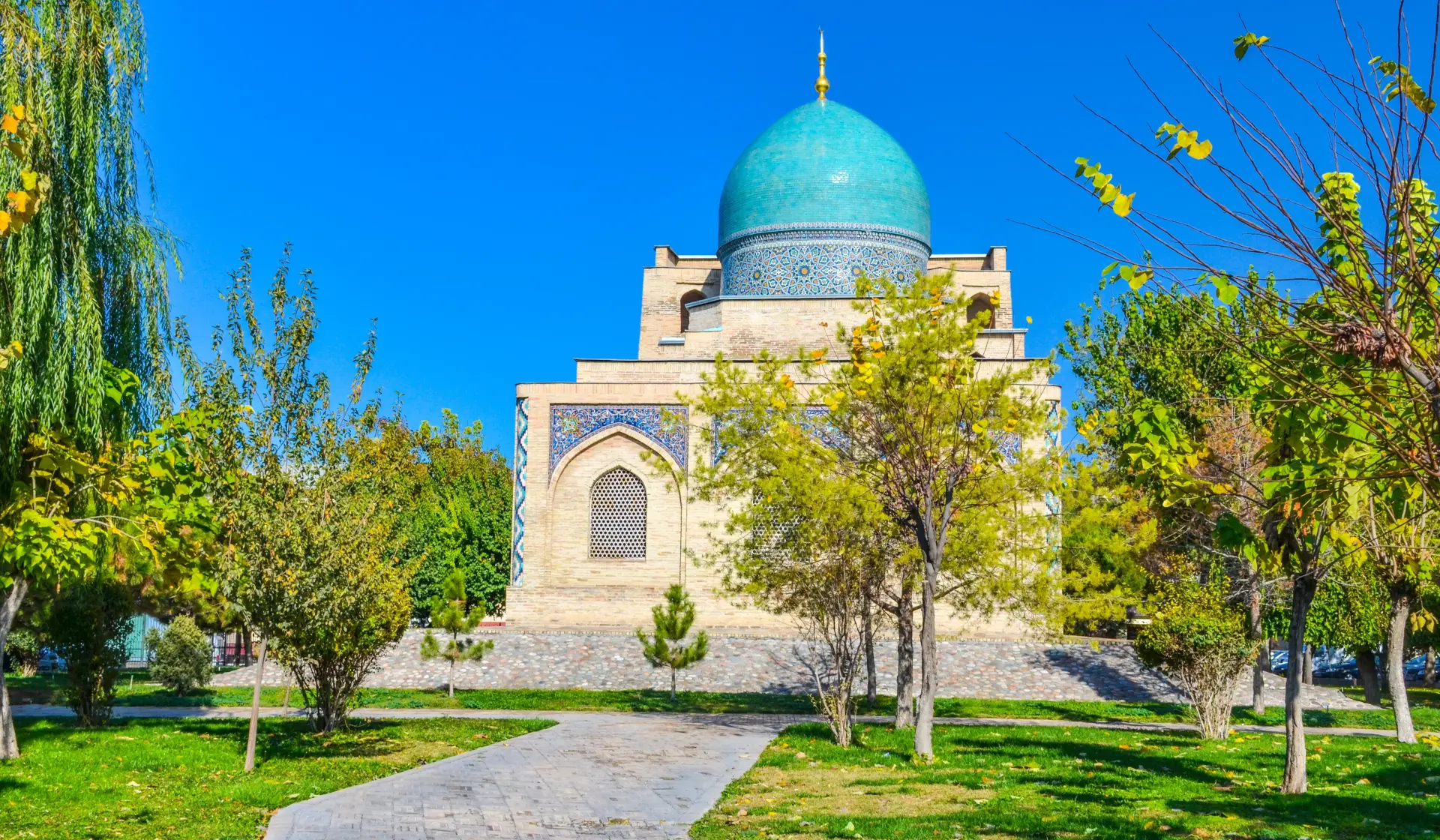
A Revered Tomb in the Hazrati Imam Ensemble
During a visit, it is worth paying attention not only to the building itself, but also to its place within the structure of the complex. The mausoleum is perceived as part of Tashkent's old religious center, where mosques, madrasahs, and other historical buildings are concentrated nearby. Thanks to this, viewing the monument usually becomes part of a broader acquaintance with the old city.
Outside, you can observe the proportions of the domed volume, the shape of the drum, and the remains of decorative elements on the entrance portal. Inside, attention is drawn to the wooden grilles separating the burial site and the calm interior, almost devoid of excessive decoration. This place is more often perceived not as a museum object, but as an active memorial and religious space, so visitors should keep quiet and respect local norms of behavior.
Nearby are other monuments of the Hazrati Imam ensemble, including the Barak-Khan Madrasah, the Tillya-Sheikh Mosque, and library and museum facilities associated with the Islamic heritage of Uzbekistan. It is convenient to get here by taxi or public transport, heading for the Hast-Imam area in the old part of Tashkent.
The mausoleum is especially interesting for those who want to see not a separate architectural object, but a living part of the historical urban environment. Here you can better understand how religious shrines have been preserved in Tashkent and how the medieval memory of theologians continues to remain part of the modern city.
Best tours and travel experiences across the continent


Photos of the mausoleum
Guided tours, popular attractions, and top-rated hotels across the continent


