
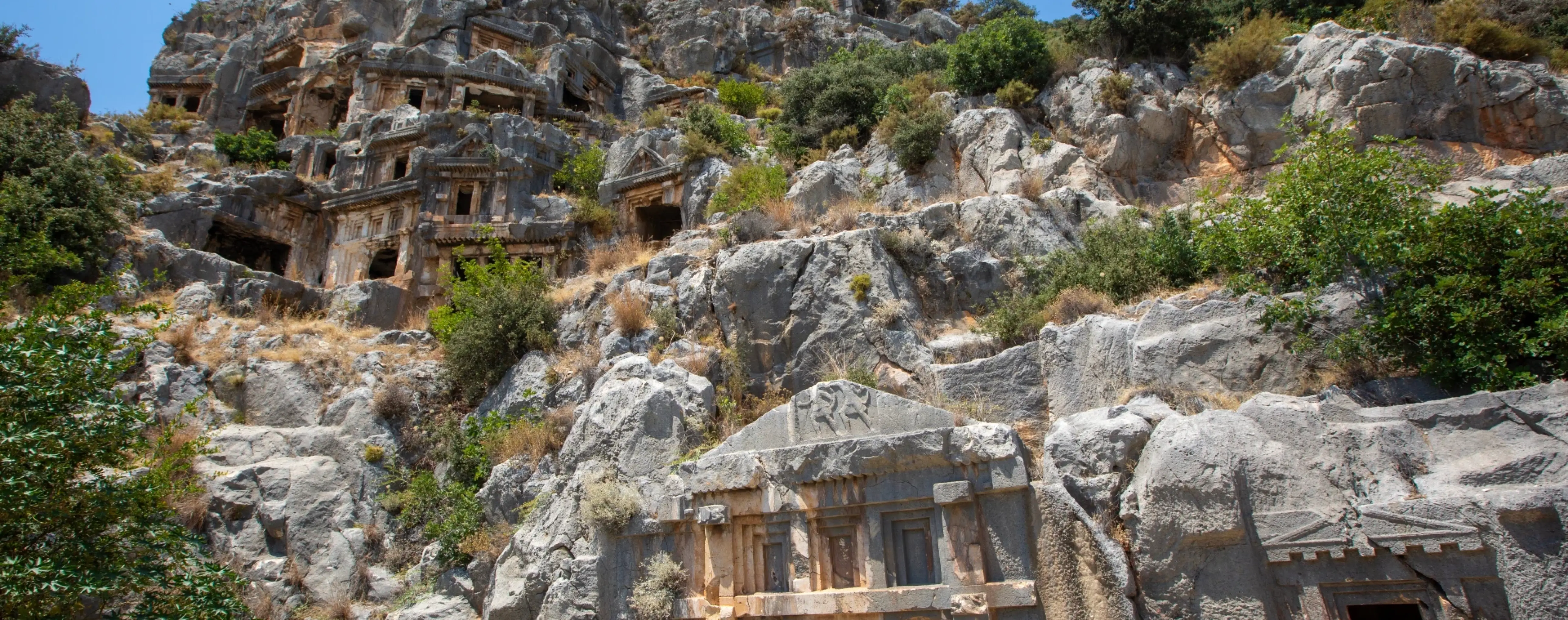
Lycian Tombs
Lycian Tombs in Antalya, Turkey - funerary architecture of Lycia
The Lycian tombs in Antalya are monuments of the funerary architecture of ancient Lycia, a region in the southwest of Asia Minor. Such tombs were created mainly in the 6th-4th centuries BC, and some of them continued to be used in later periods. Today they can be seen in different parts of the province, especially in archaeological zones associated with ancient cities.
Several types are characteristic of Lycian tombs. Some were carved directly into the rocks, with facades designed in the form of houses or temples, while others were built as freestanding stone monuments, including sarcophagi and pillar tombs. Inside there were usually burial chambers with stone benches, and some monuments have preserved inscriptions and decorative elements that help convey local traditions and features of the art.
The best-known complexes within Antalya are located in Myra near Demre, as well as in Limyra, Arycanda, Olympos, Phaselis, and Termessos. These places differ in their state of preservation and in the type of tombs, so becoming familiar with them provides a more complete picture of how the funerary architecture of Lycia changed over different periods.
For tourists, such monuments are interesting not only as archaeological sites but also as part of the historical landscape. The tombs are often located on slopes, near rock formations, and next to the ruins of ancient cities, so viewing them is usually combined with a walk through the ancient settlement. Visits take place along the routes of archaeological parks, where it is important to follow the rules for protecting the monuments.
Lycian Tombs on the map
Lycian tombs in the archaeological zones of Antalya and the surrounding area
A visit combines archaeology and the natural landscape.
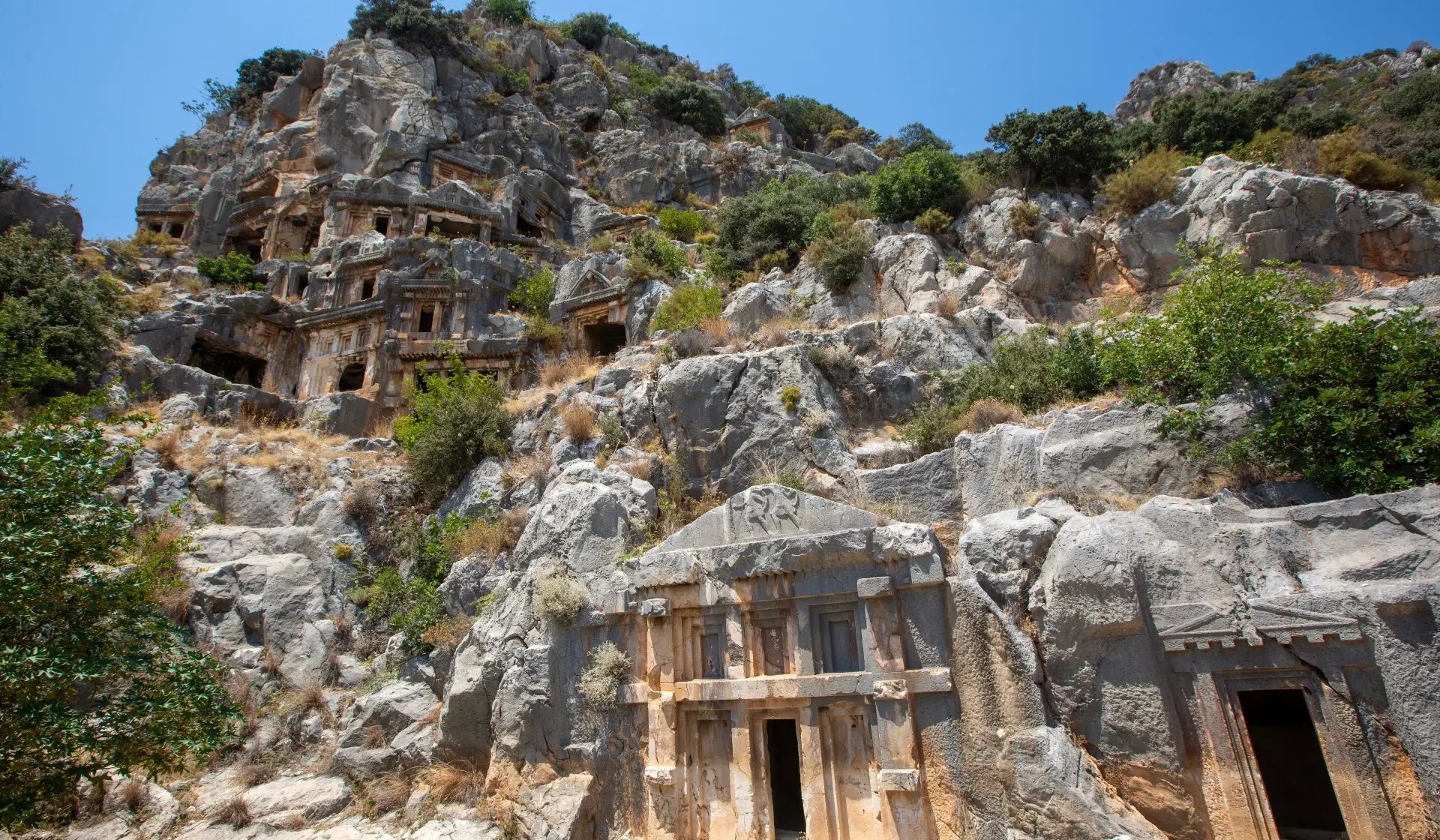
Rock-cut facades, sarcophagi, and necropolises of ancient Lycia
When visiting the Lycian tombs, you can usually see not just a single monument, but an entire necropolis or group of tombs associated with an ancient city. The best-preserved facades are visible in rock-cut complexes, where the entrances to the burial chambers were carved at height. Freestanding sarcophagi and monumental tombs are more often found in open areas near the ruins of streets, walls, and public buildings.
The visit offers an opportunity to notice differences in form and decoration. Rock-cut tombs feature pediments, columns, relief details, and the imitation of wooden architecture in stone. The interior spaces are usually small, so for visitors the outward appearance of the monuments, their position in the landscape, and their connection with the layout of the ancient city are more important. Some sites have preserved inscriptions, but their condition and accessibility depend on the specific archaeological area.
Most often, tourists visit such monuments in Myra near Demre, where the necropolis is especially famous, but interesting examples can also be found in Olympos, Phaselis, Limyra, Arycanda, and Termessos. Nearby there are often ancient theaters, sections of city walls, agoras, and the remains of temples, so it is convenient to plan the trip as an introduction to several monuments at once.
Access to the Lycian tombs is not to one general point, but to specific archaeological zones of Antalya Province - by car, excursion transport, or intercity buses to the nearest towns and settlements, such as Demre, Tekirova, or the area of Gulluk-Termessos National Park. For a visit, it is worth considering climbs along rocky paths, hot weather, and restrictions on entering certain sections.
Best tours and travel experiences across the continent



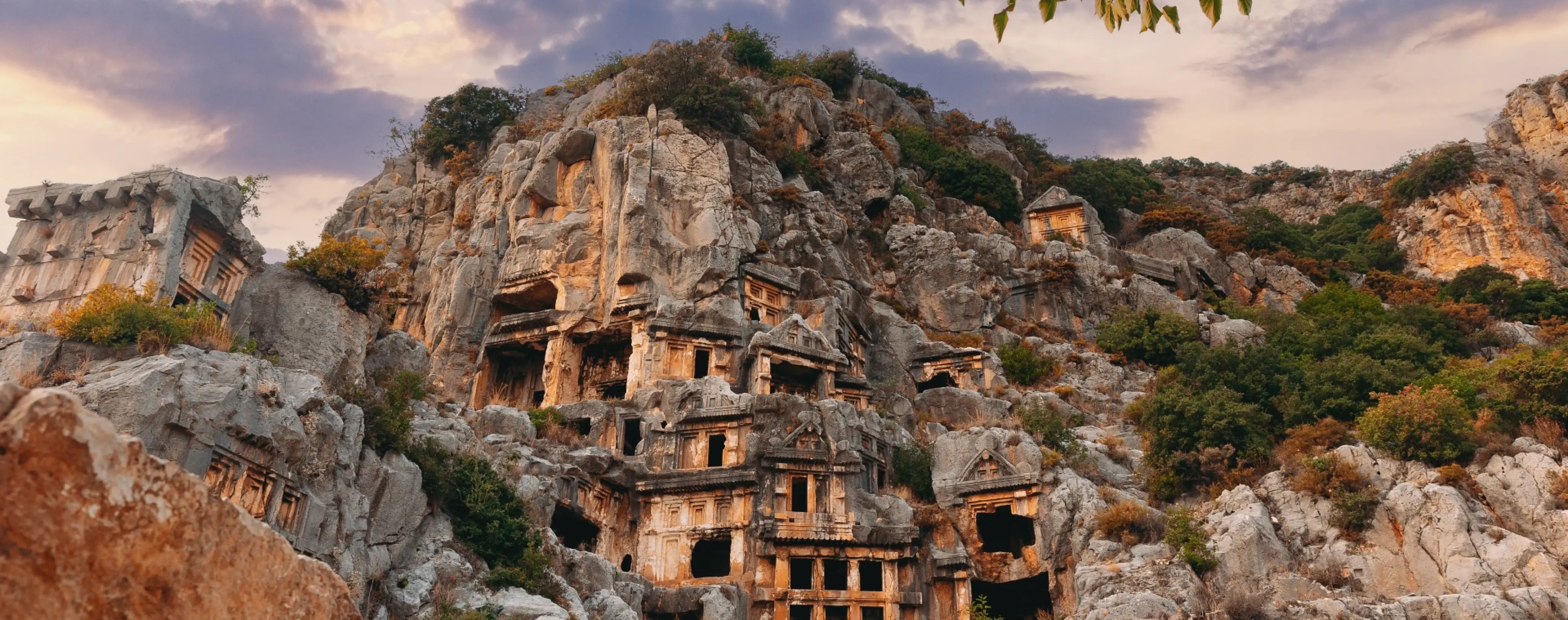
Photos of the Lycian tombs
Guided tours, popular attractions, and top-rated hotels across the continent


