
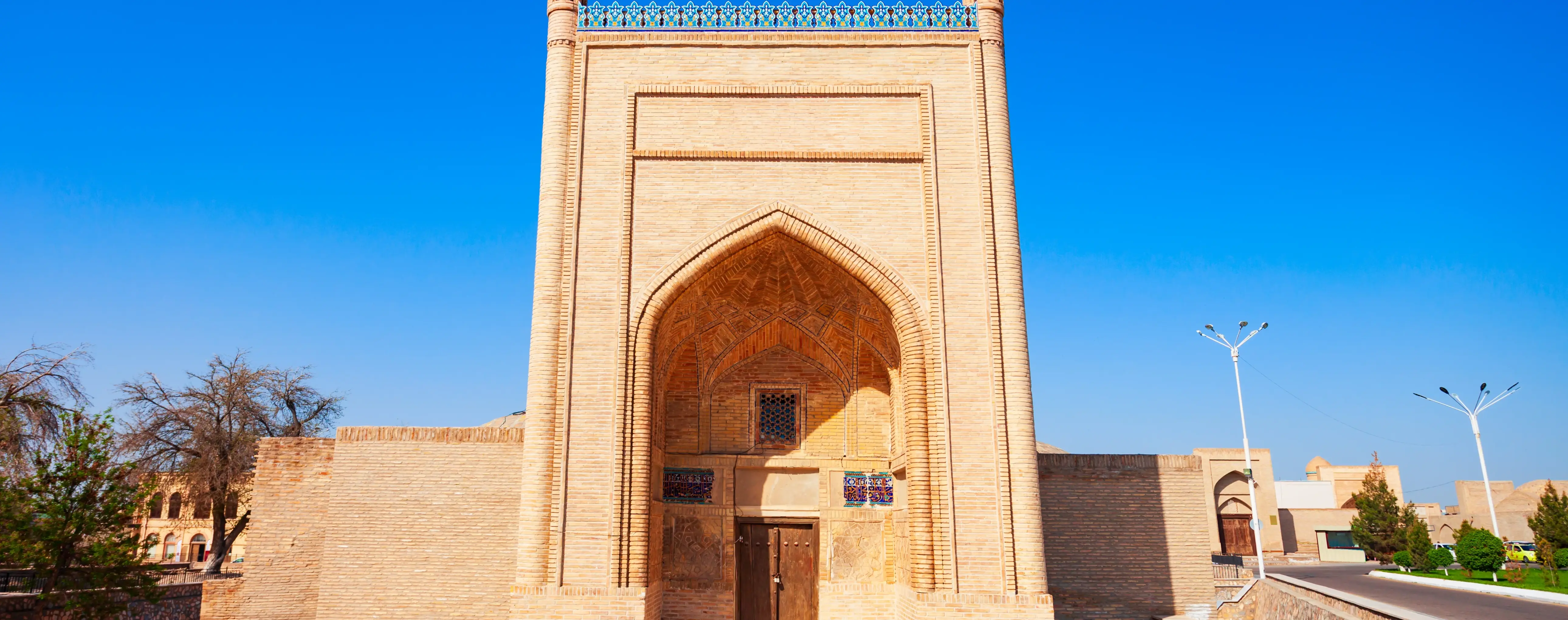
Magoki-Attari Mosque
Magoki-Attari Mosque in Bukhara, Uzbekistan
The Magoki-Attari Mosque is located in the center of Bukhara, within the historic part of the city included on the UNESCO World Heritage List. It is one of the oldest surviving Muslim monuments in Bukhara, whose architecture took shape gradually over several eras. The building's present appearance is primarily associated with reconstructions from the 12th-16th centuries, although its early history goes back to the pre-Mongol period.
The name of the mosque is usually explained by its unusual position: it is located below the current street level, since a cultural layer has accumulated around it over many centuries. That is why the building appears as if sunken into the ground. This feature is clearly noticeable on approach and immediately sets the monument apart from other historic structures in old Bukhara.
Of particular interest is the facade with its delicate brickwork and carved decoration, characteristic of Bukhara's architectural tradition. The mosque is valued not only as a religious structure of the past, but also as an important architectural monument that makes it possible to see how Bukhara's urban appearance changed over the centuries. Local legends are also associated with this place, although not all of them have reliable confirmation in written sources.
Today, the building functions as a museum site. Visitors come here to view the ancient architecture, pay attention to the details of the portal, and explore the exhibition devoted to carpets and decorative applied arts. For tourists, this is a convenient stop during a walk through the old city, especially if they are interested in Bukhara's historic setting and its craft traditions.
Magoki-Attari Mosque on the map
Bukhara, Old City of Bukhara: Mosques
Jami Mosque, Kalyan Mosque
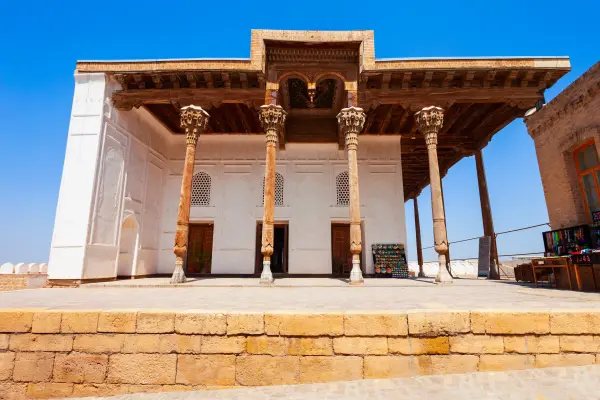
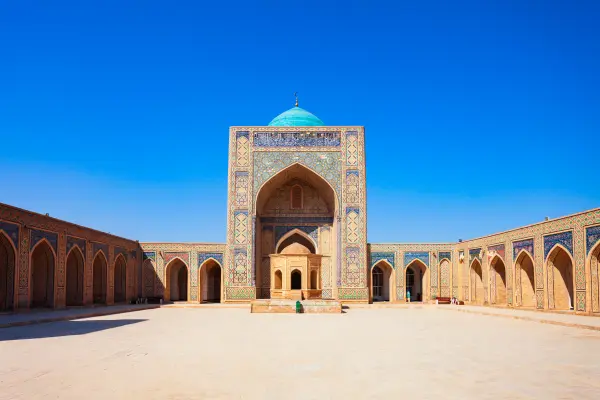
Magoki-Attari Mosque and its museum exhibition
A monument of old Bukhara that preserves traces of different eras.
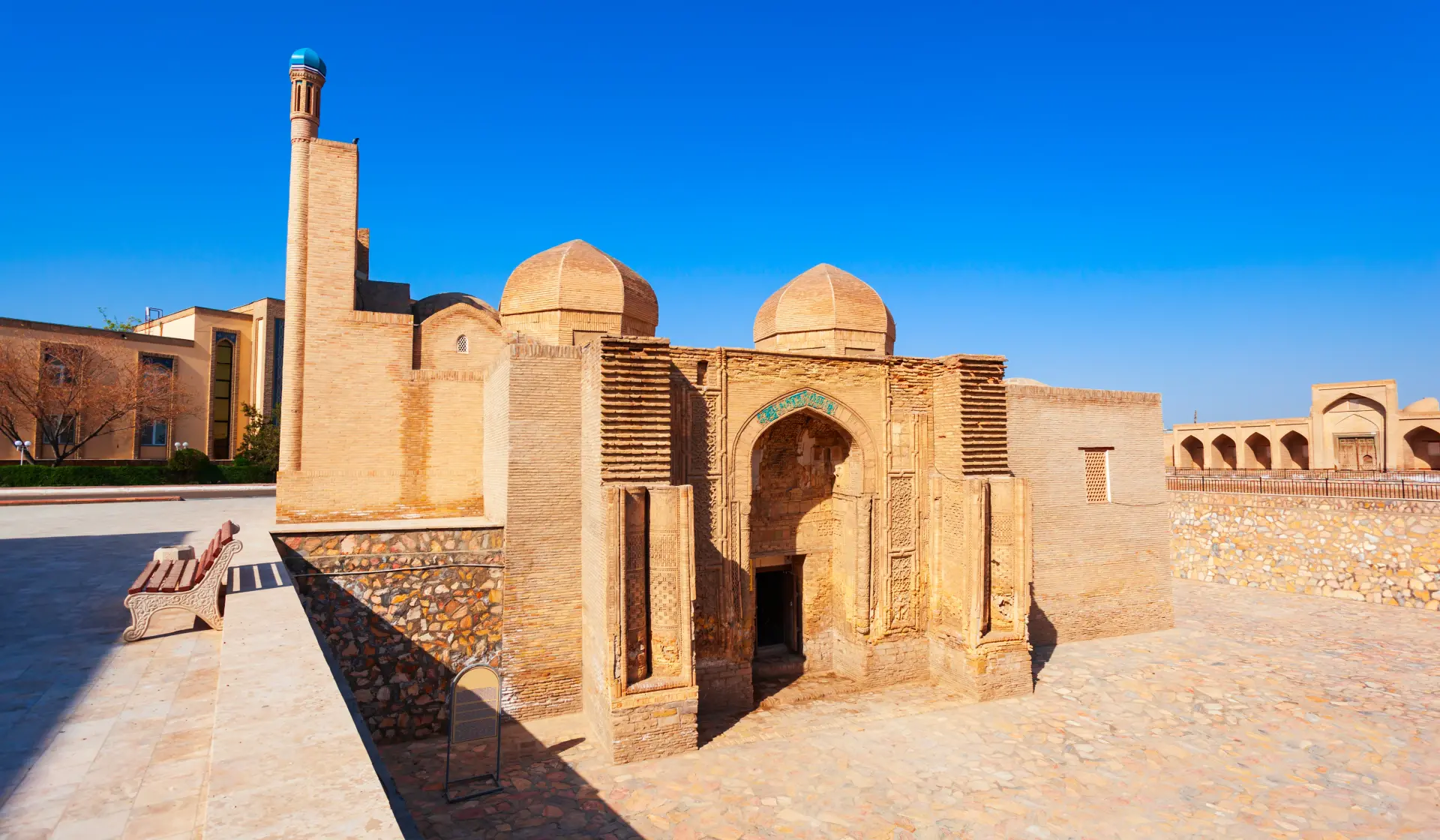
An ancient sacred monument hidden below street level
The main feature of this place is its lower position in relation to the surrounding buildings. During a visit, it is easy to see how centuries of urban buildup changed the street level, while the mosque itself preserved an earlier elevation. Thanks to this, one can clearly imagine how deeply the historical layers of old Bukhara are hidden beneath the modern pedestrian level.
Inside and around the entrance, attention is usually drawn to the ancient brickwork, the decorative treatment of the facade, and the proportions of the building, which differ from the later madrasahs and mosques of Bukhara. The museum exhibition features carpets, fabrics, and traditional craft items, complementing the experience not only of the architecture but also of the region's material culture. This format of visit is suitable for those who want to combine viewing a monument with a small museum program.
The mosque can easily be included in a route through central Bukhara: nearby are the trading domes, the Lyabi-Khauz ensemble, and other monuments of the old city. Therefore, a visit here often becomes part of a walking tour through the historic quarters, where the main sights are located relatively close to one another.
The easiest way to get here is on foot from any part of Bukhara's historic center. If you are coming from the newer districts of the city, it is usually convenient to take a taxi to the old city and continue on foot through the narrow streets.
Best tours and travel experiences across the continent


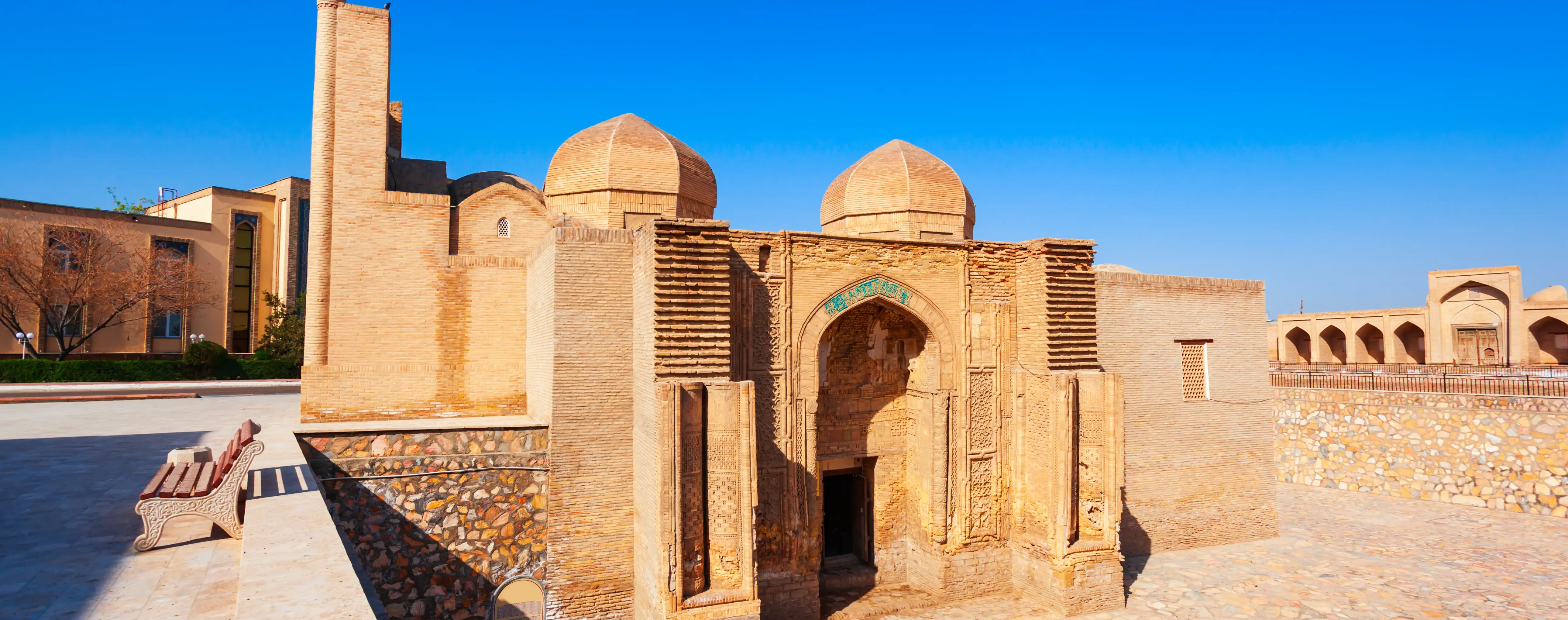
Photos of the mosque
Guided tours, popular attractions, and top-rated hotels across the continent


