
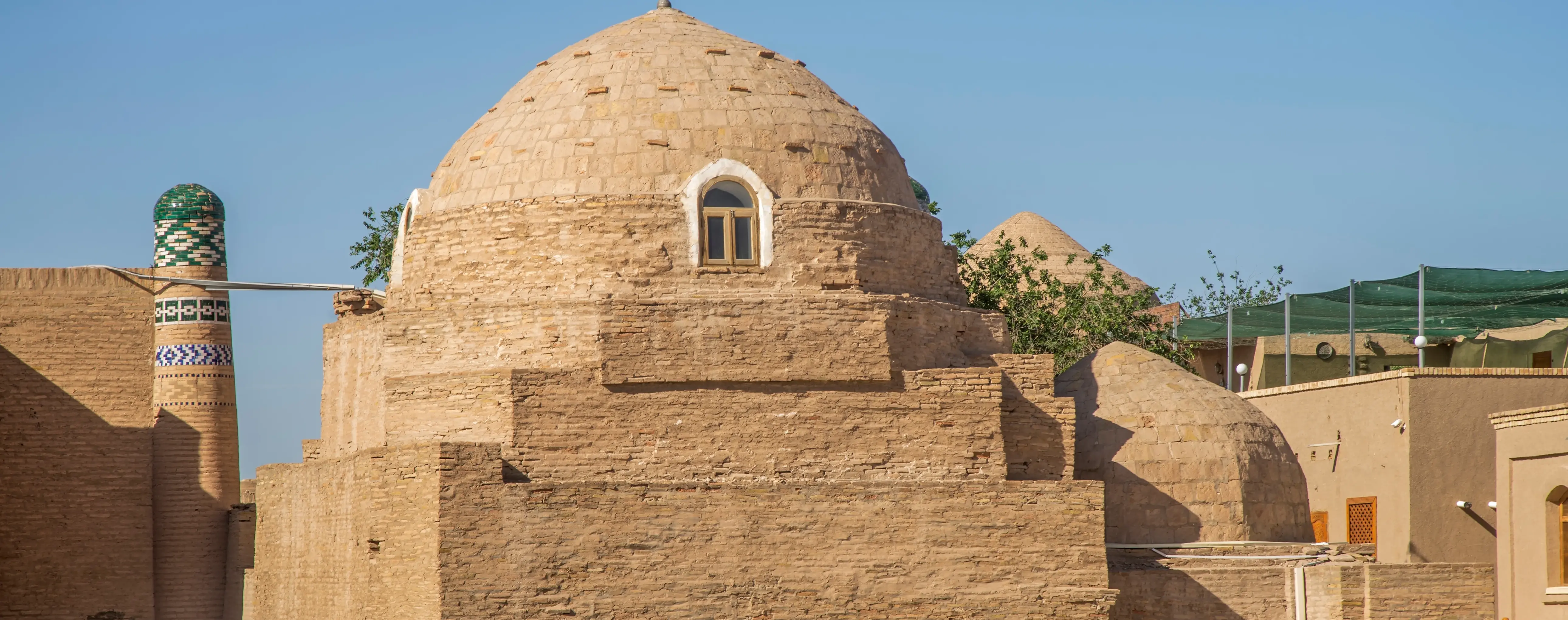
Said Alauddin Mausoleum
Said Alauddin Mausoleum in Khiva, Uzbekistan
The Said Alauddin Mausoleum is located in Itchan Kala, the historic center of Khiva, within the fortress walls of the old city. It is one of the earliest surviving memorial monuments in Khiva, associated with the revered Sufi sheikh Said Alauddin, who died at the beginning of the 14th century. For visitors, this place is interesting not only for its religious history, but also for the opportunity to see one of the ancient layers of Khorezm architecture.
Originally, the mausoleum was relatively small and included a burial chamber. Later, a ziaratkhana was added - a room where people came to pray and honor the memory of the saint. Because of later reconstructions, the monument has not survived in its original form, but its composition makes it possible to understand how memorial buildings in Khiva developed over several centuries.
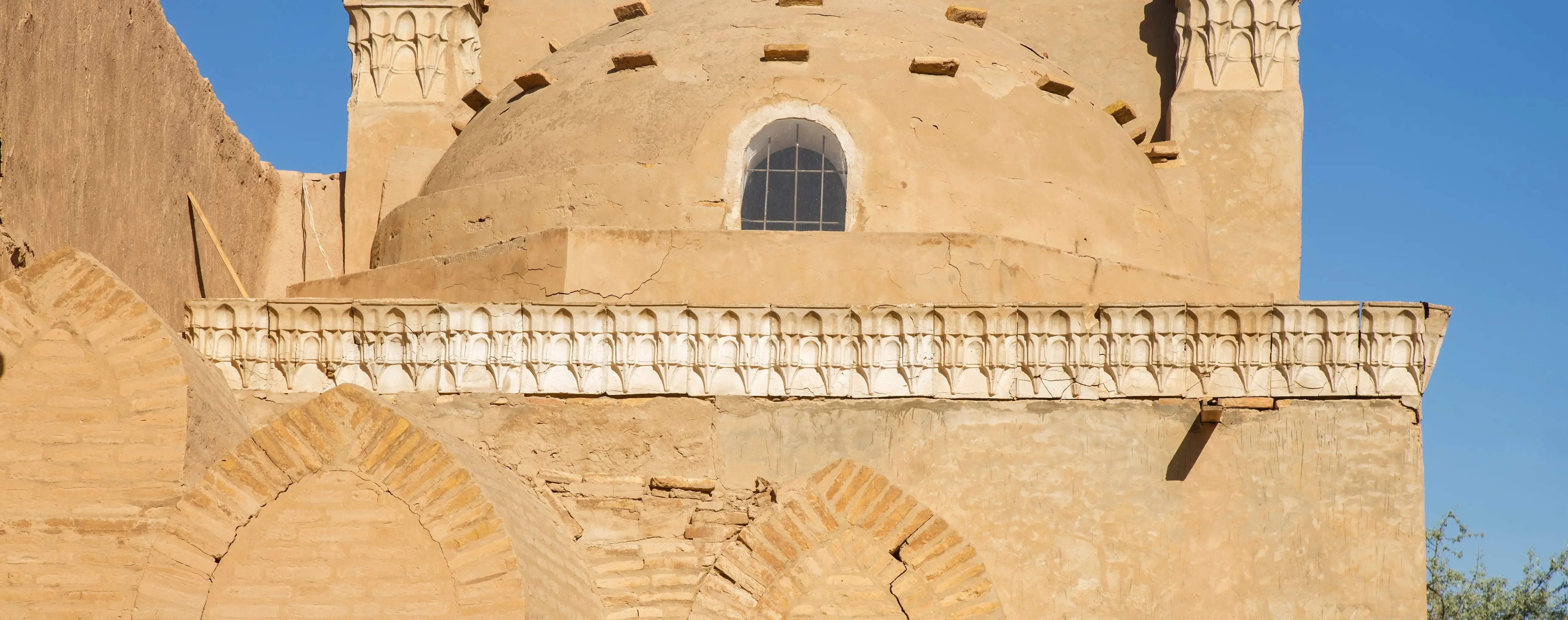
The exterior of the building is restrained: the walls and domed structures are made of fired brick, and the architectural forms are governed not by decoration, but by function and stability. The most notable artistic element is inside - the tombstone faced with majolica. It is this feature that most often attracts the attention of those interested in the decorative arts of Khorezm and the traditions of local ceramics.
A major reconstruction of the mausoleum took place in the first half of the 19th century, when the building was renovated by order of Allakuli Khan. Therefore, today the monument is perceived as a combination of an earlier shrine and later architectural additions. For tourists, it is a calm and meaningful place that helps them better understand the history of Itchan Kala beyond its most famous madrasas and minarets.
Said Alauddin Mausoleum on the map
The Said Alauddin Mausoleum and Its Architecture in Itchan Kala
The monument helps reveal the early layers of Khiva's history.
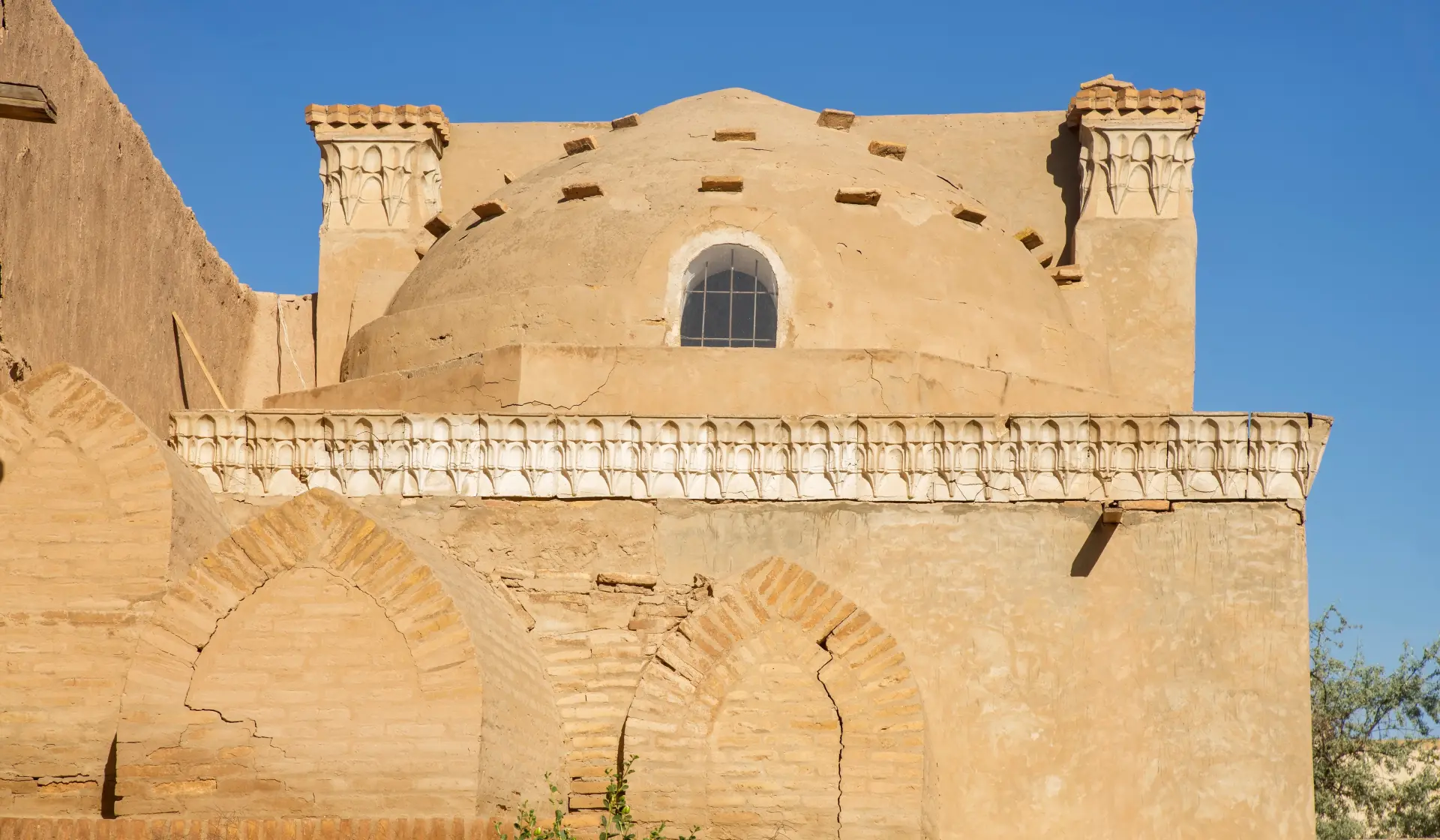
Medieval tomb with a majolica-covered tombstone
Inside the mausoleum, attention is usually focused on the tombstone of Said Alauddin. It is considered one of the most expressive details of the monument: the majolica facing shows the characteristic techniques of Khorezm decoration, where what matters is not an abundance of patterns, but precision of design, color, and treatment of the surface. Viewing the interior takes little time, but it gives an idea of how revered burials were decorated in Khiva.
The building itself is interesting for the way its space is arranged. Visitors can see the difference between the older burial section and the later-added ziaratkhana intended for visits. The architecture features brick vaults, domed ceilings, and transitions to them through squinches - a characteristic technique of the region's medieval architecture.
The mausoleum is easy to include in a walk through Itchan Kala: other monuments of the old city are nearby, including madrasas, mosques, and palace buildings. Thanks to its small size and quiet character, this place is often perceived as a short but meaningful stop between visits to larger ensembles.
The easiest way to get here is on foot through the streets of Itchan Kala after entering the old city through one of its gates. Since the mausoleum is located in the center of historic Khiva, it is usually visited during a general walk through the inner city.
Best tours and travel experiences across the continent


Photos of the mausoleum
Guided tours, popular attractions, and top-rated hotels across the continent


