Khiva Uzbekistan travel guide Itchan Kala
Khiva, Uzbekistan
Khiva stands in western Uzbekistan, in the Khorezm Region, within the flat oasis zone near Urgench. It is an inland city rather than a coastal one, and no body of water is identified in the source facts. The setting is defined by the flat oasis landscape of western Uzbekistan.
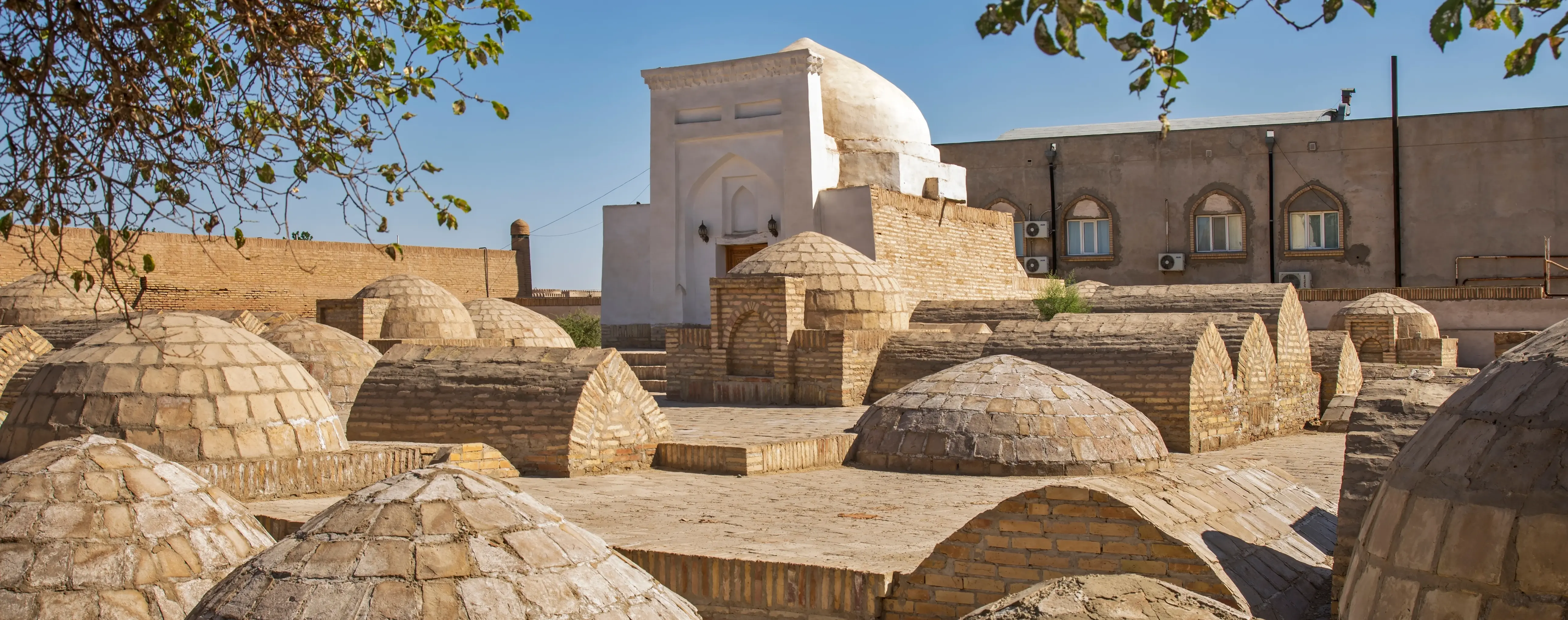
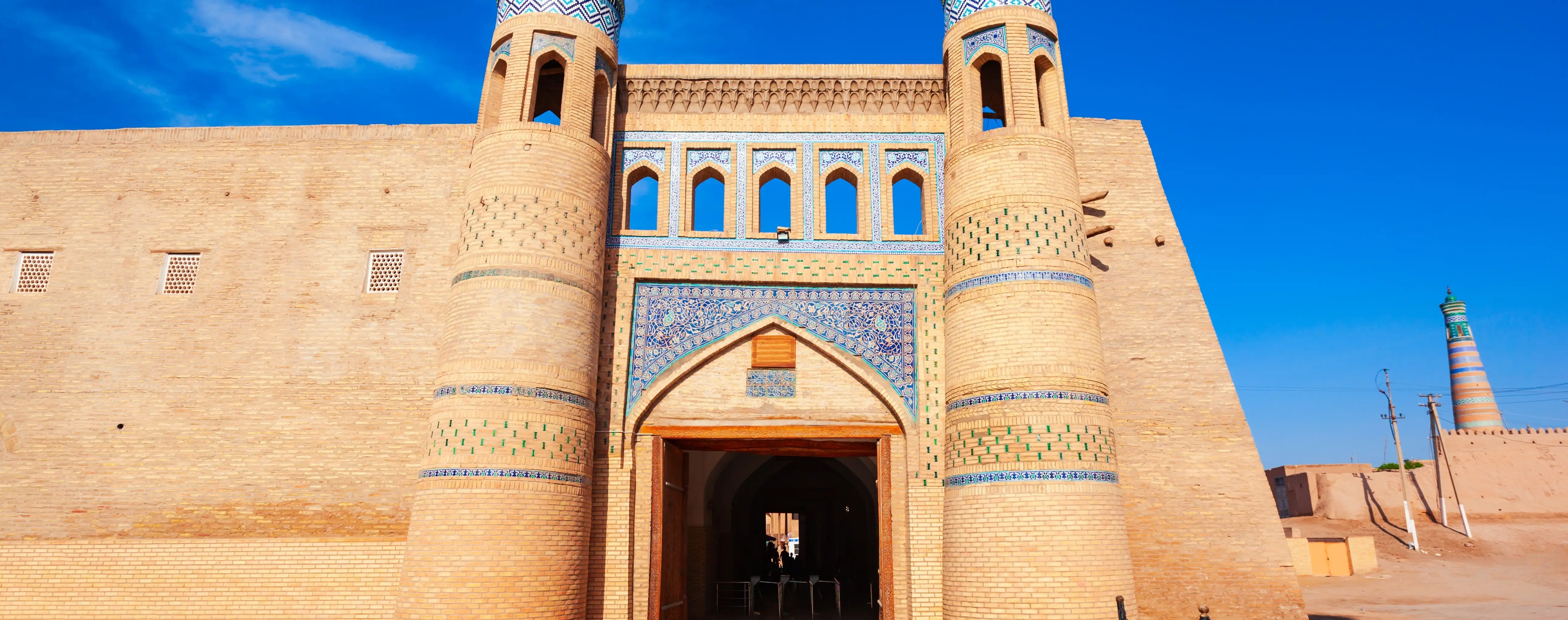
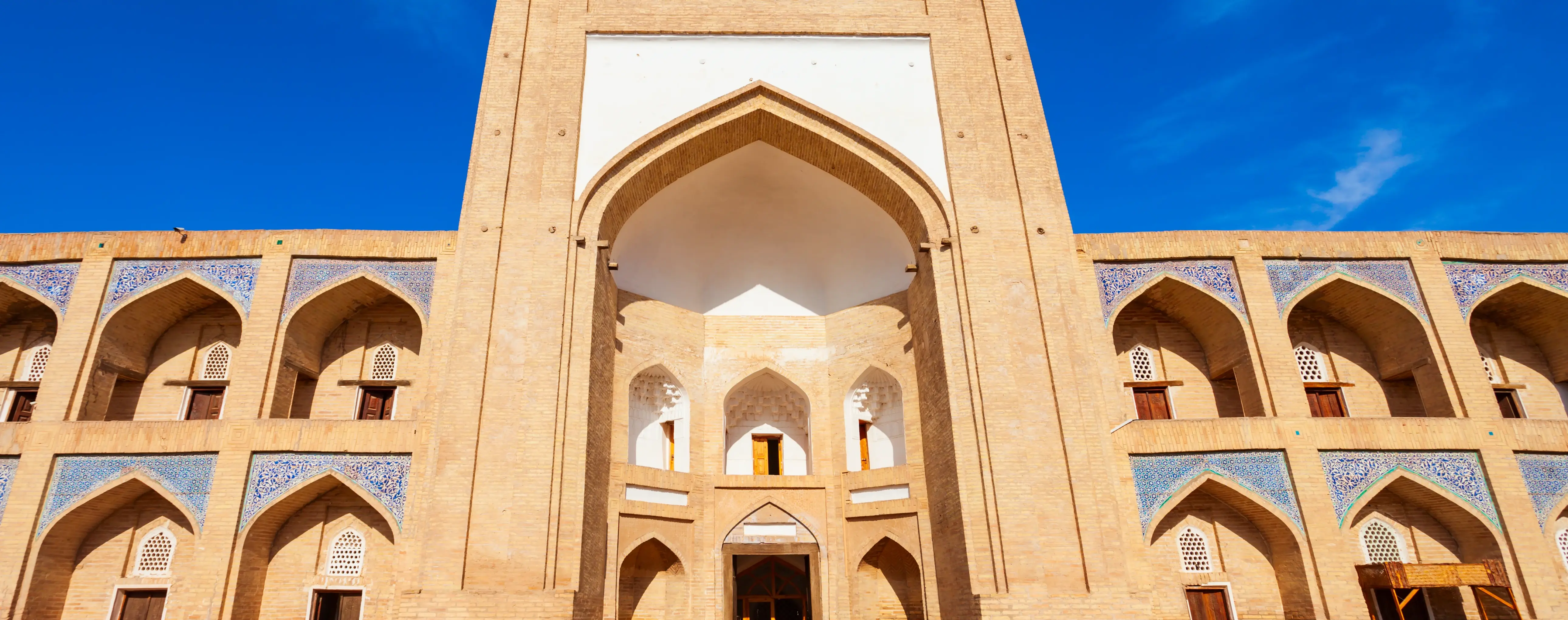
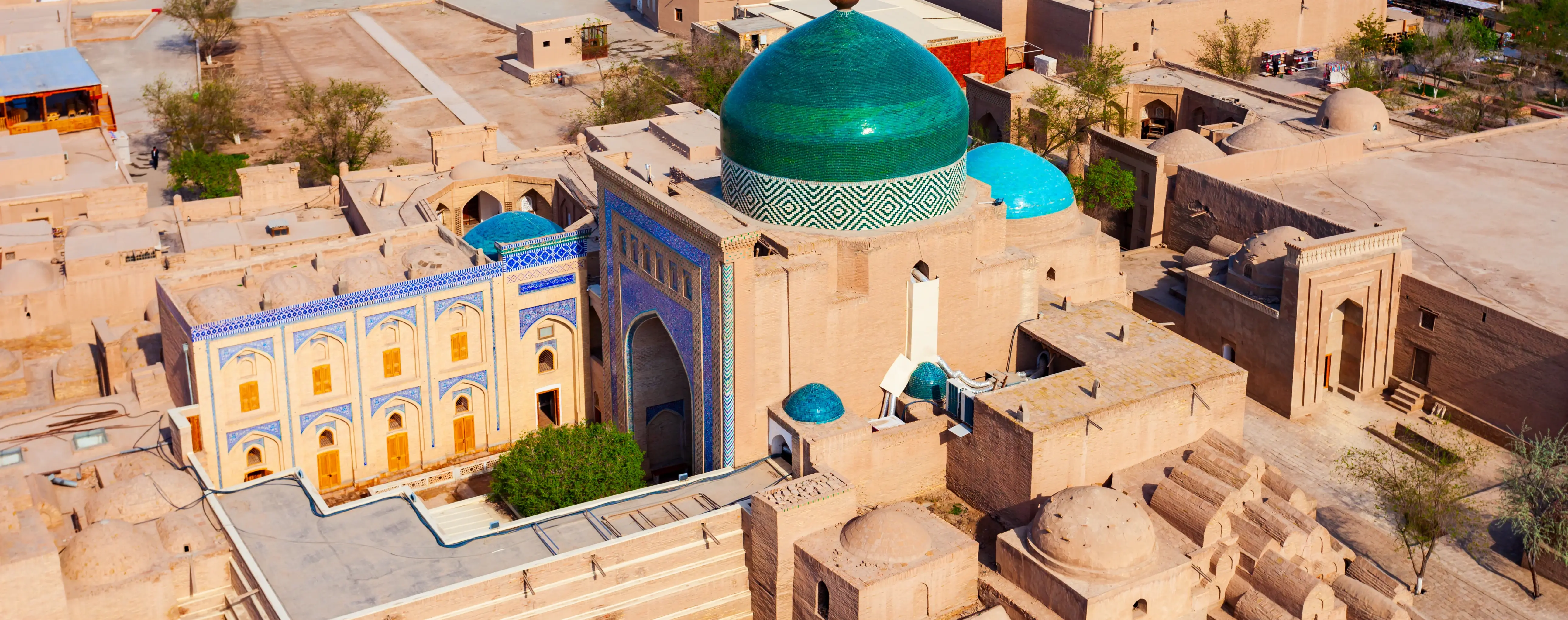
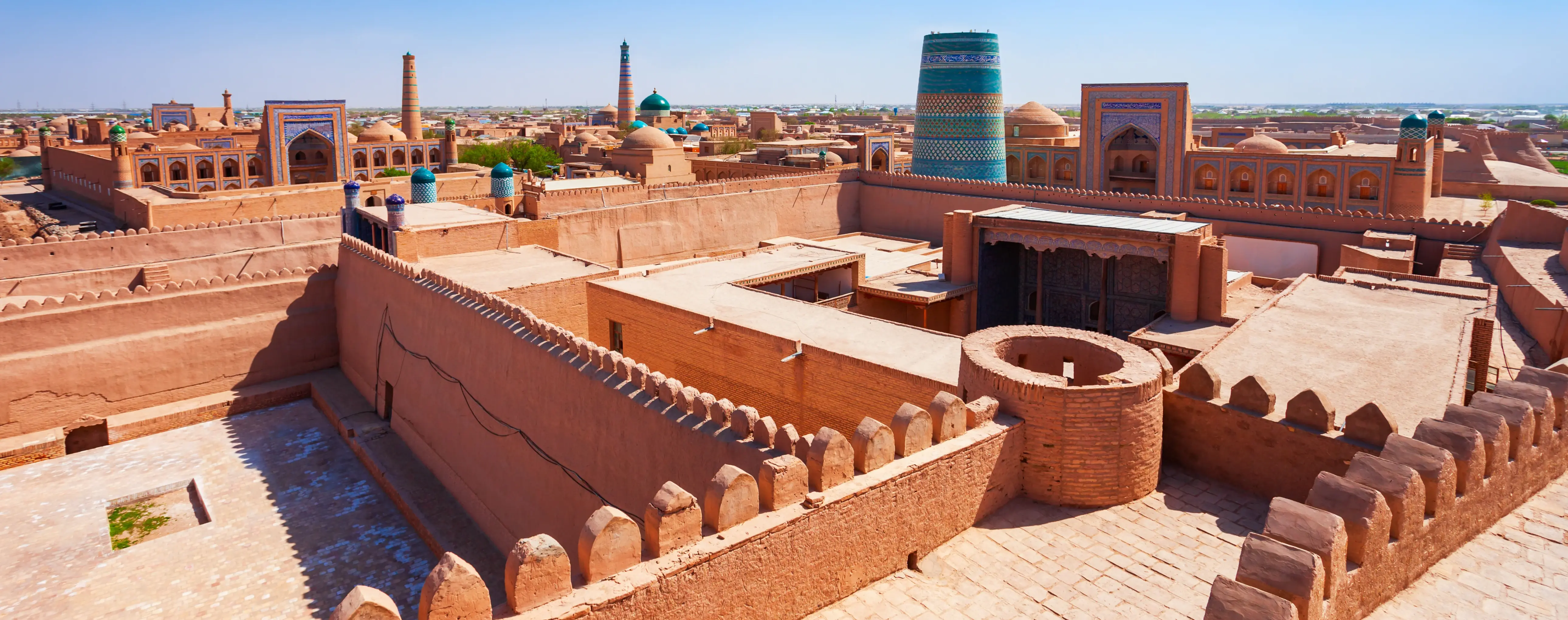
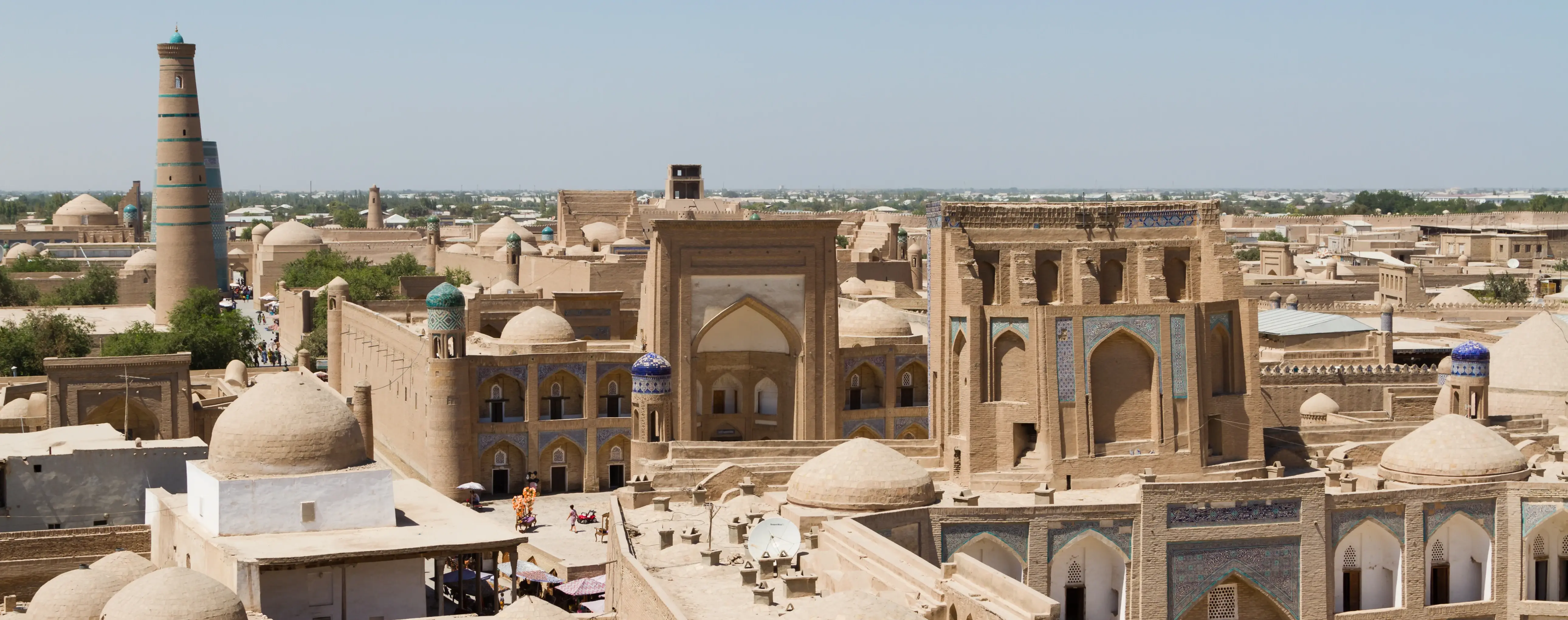
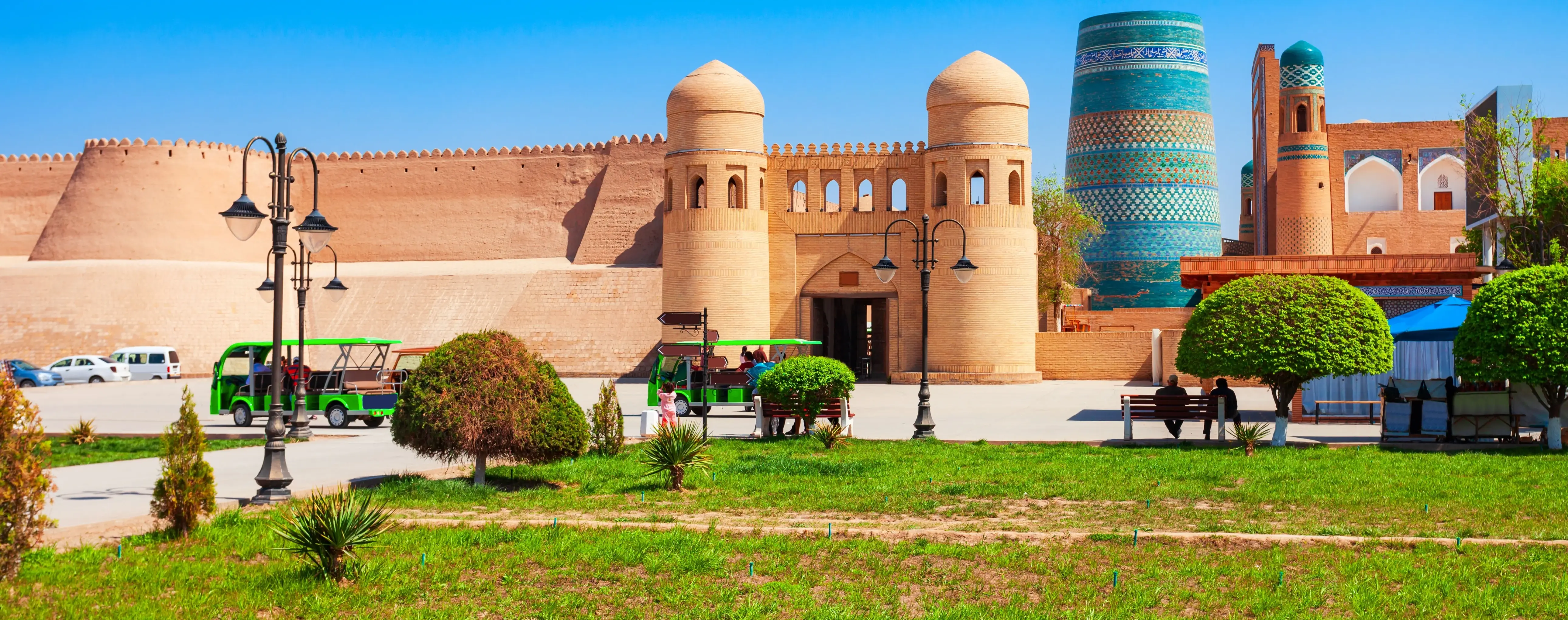
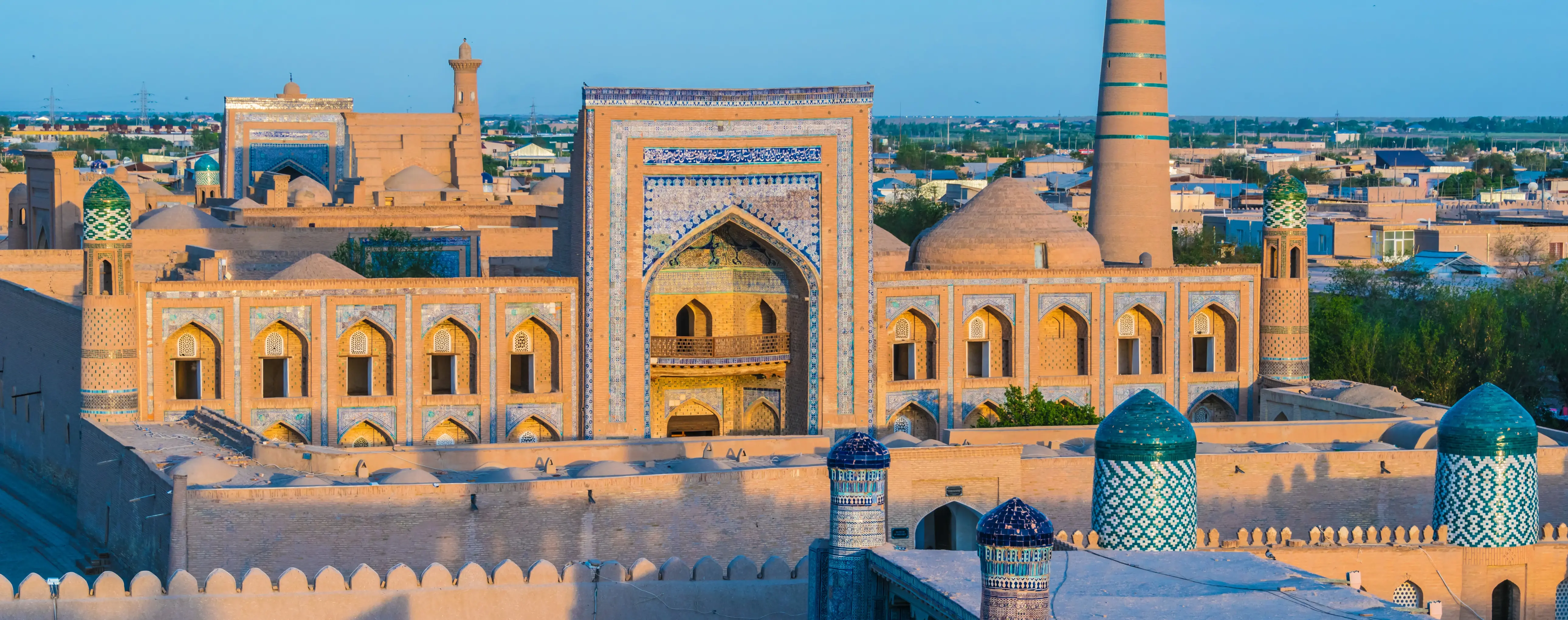
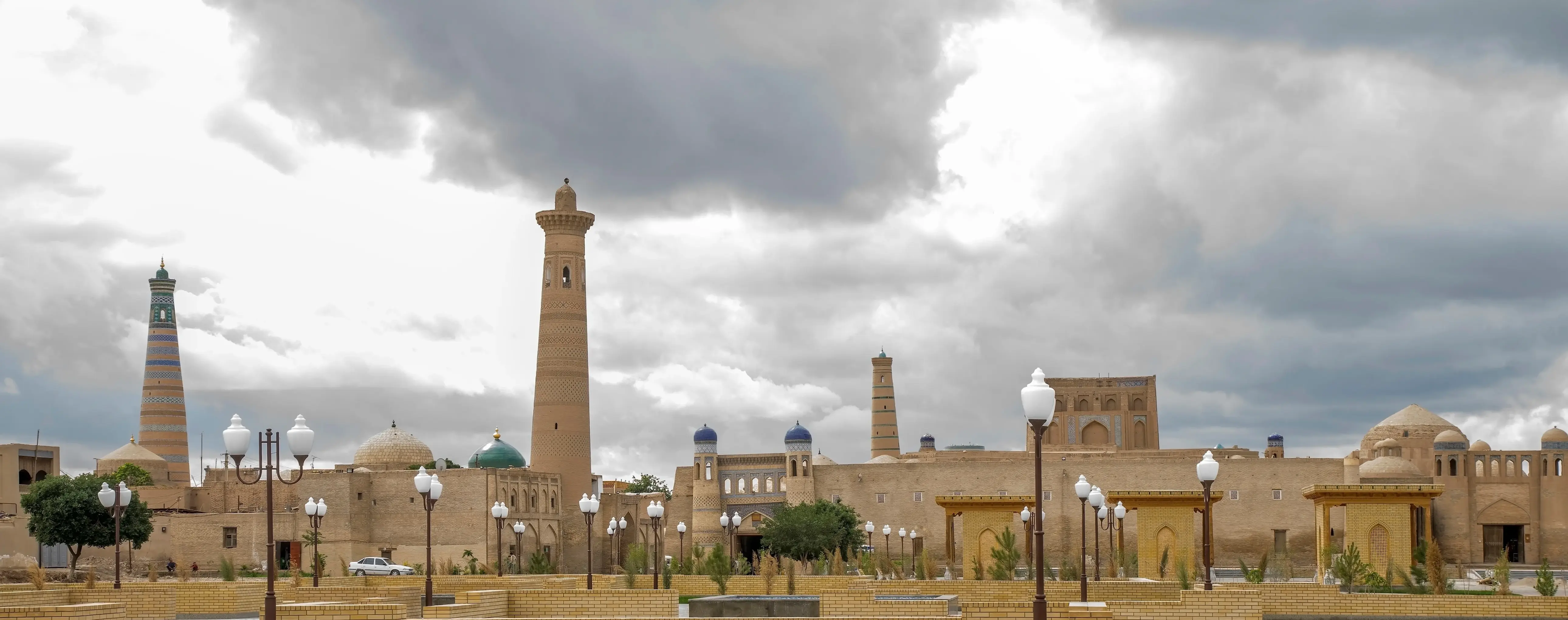
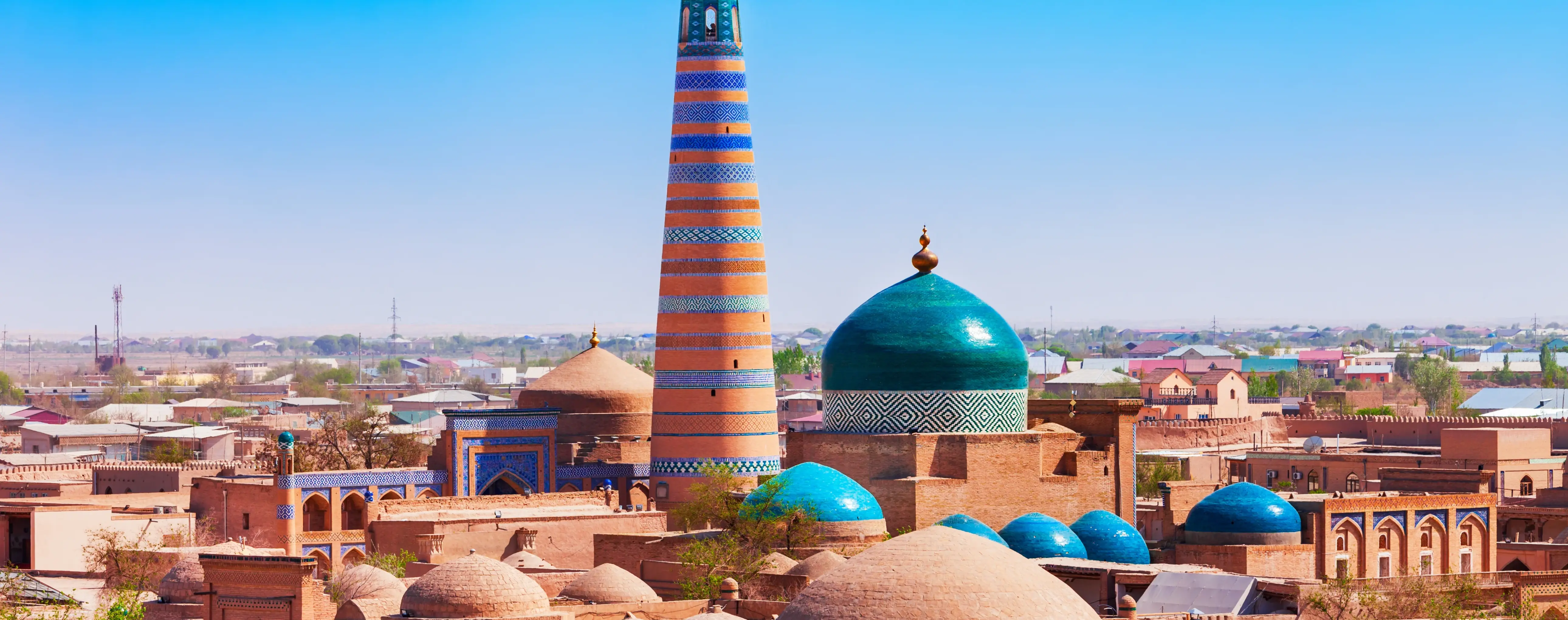
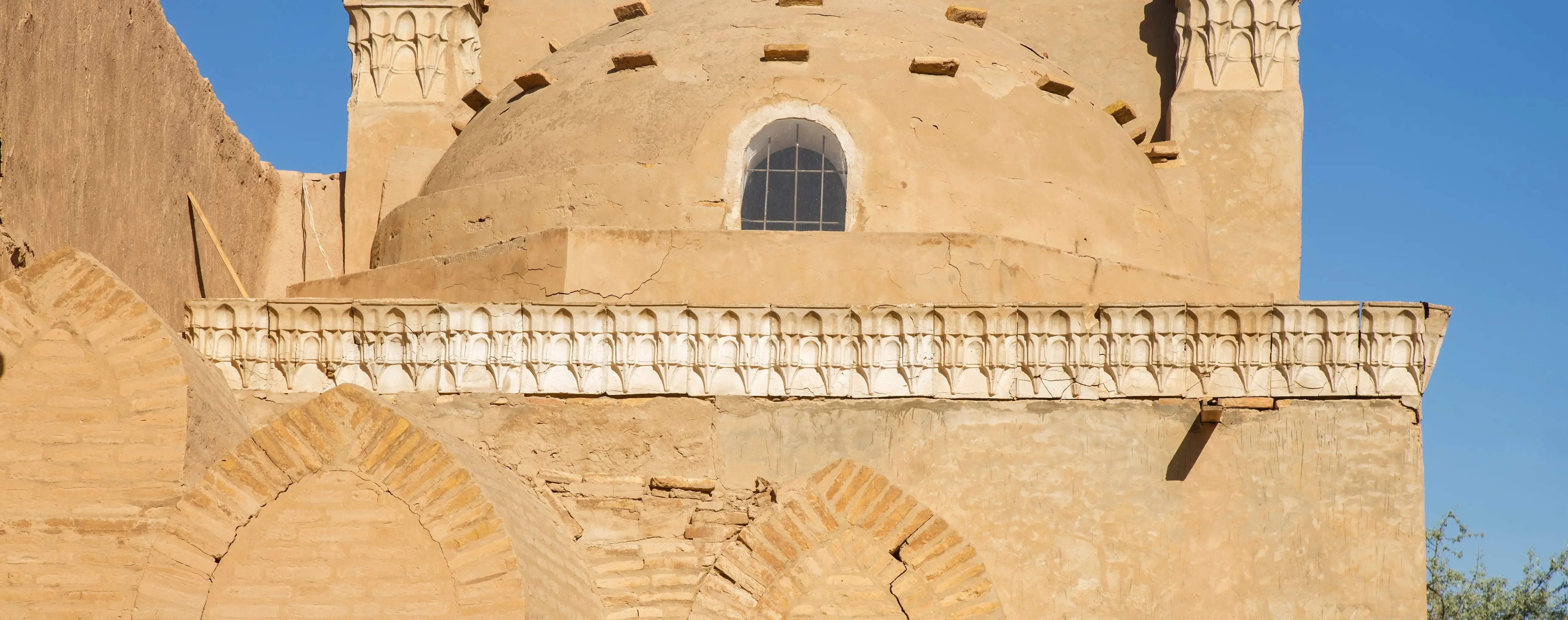
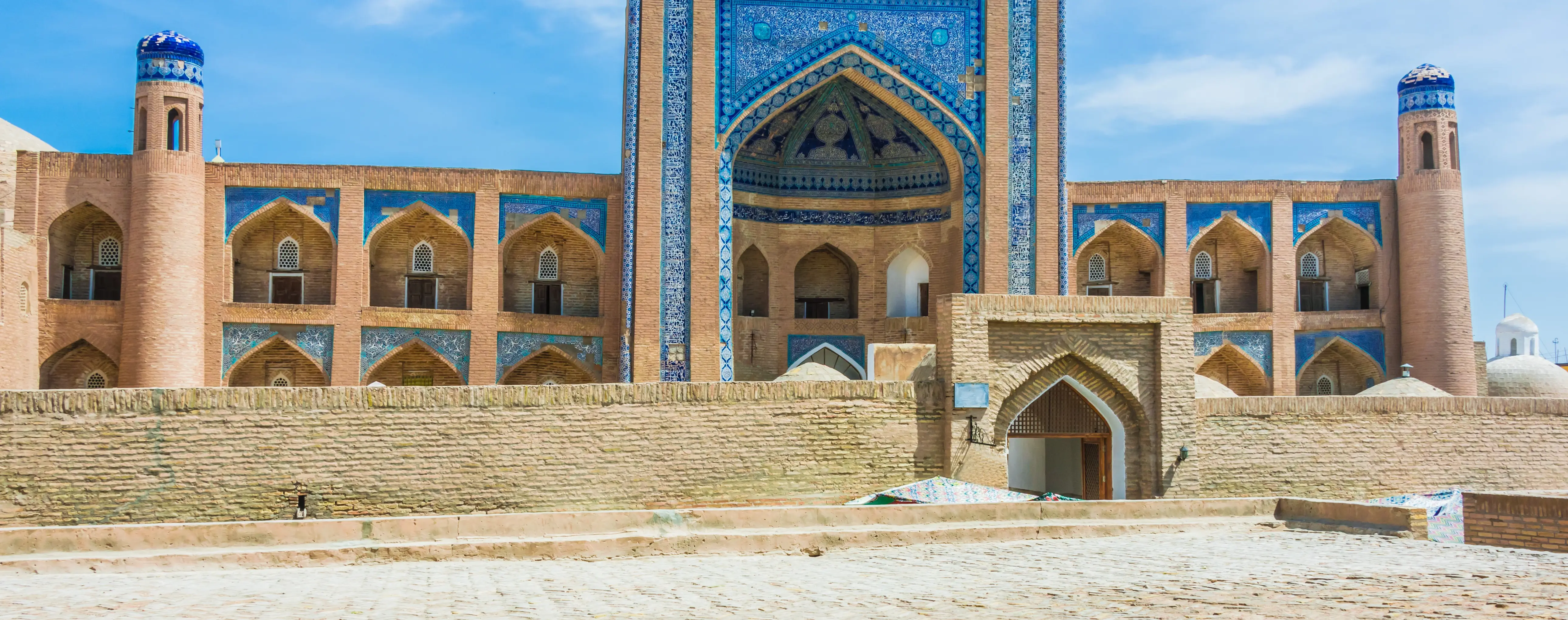
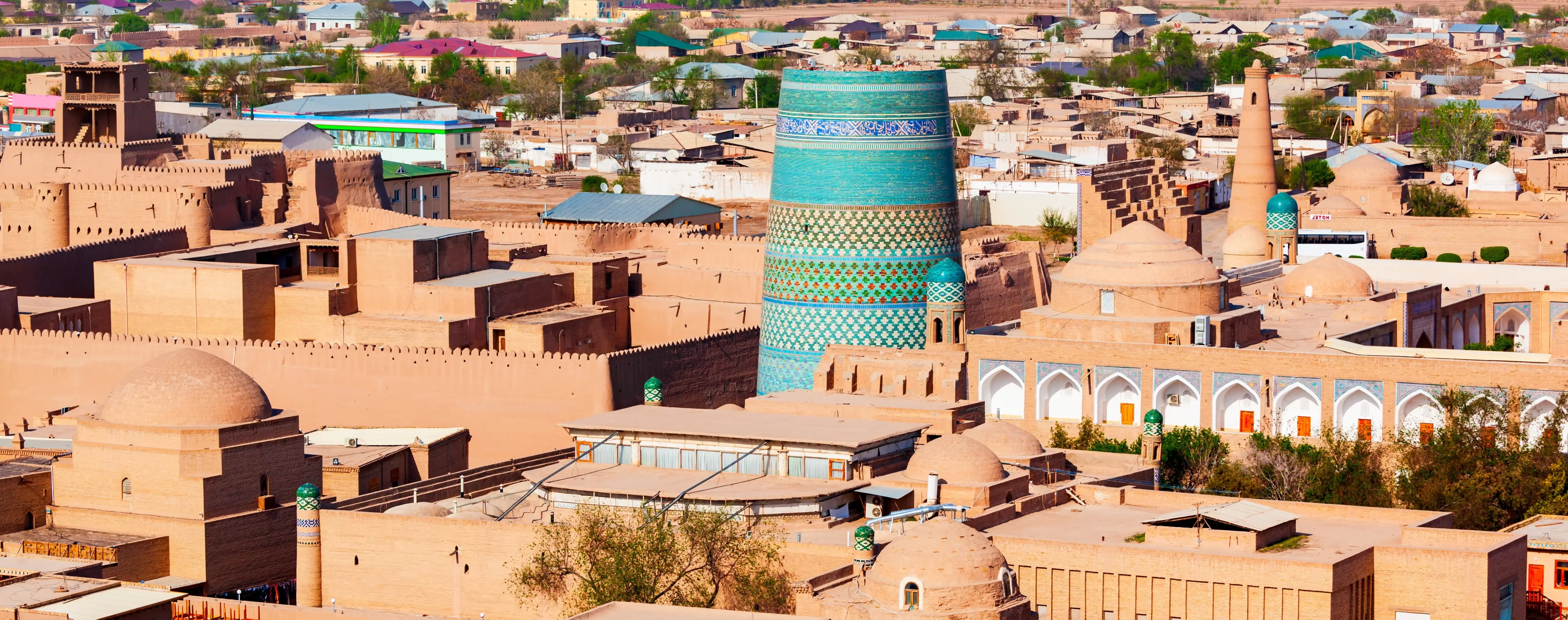
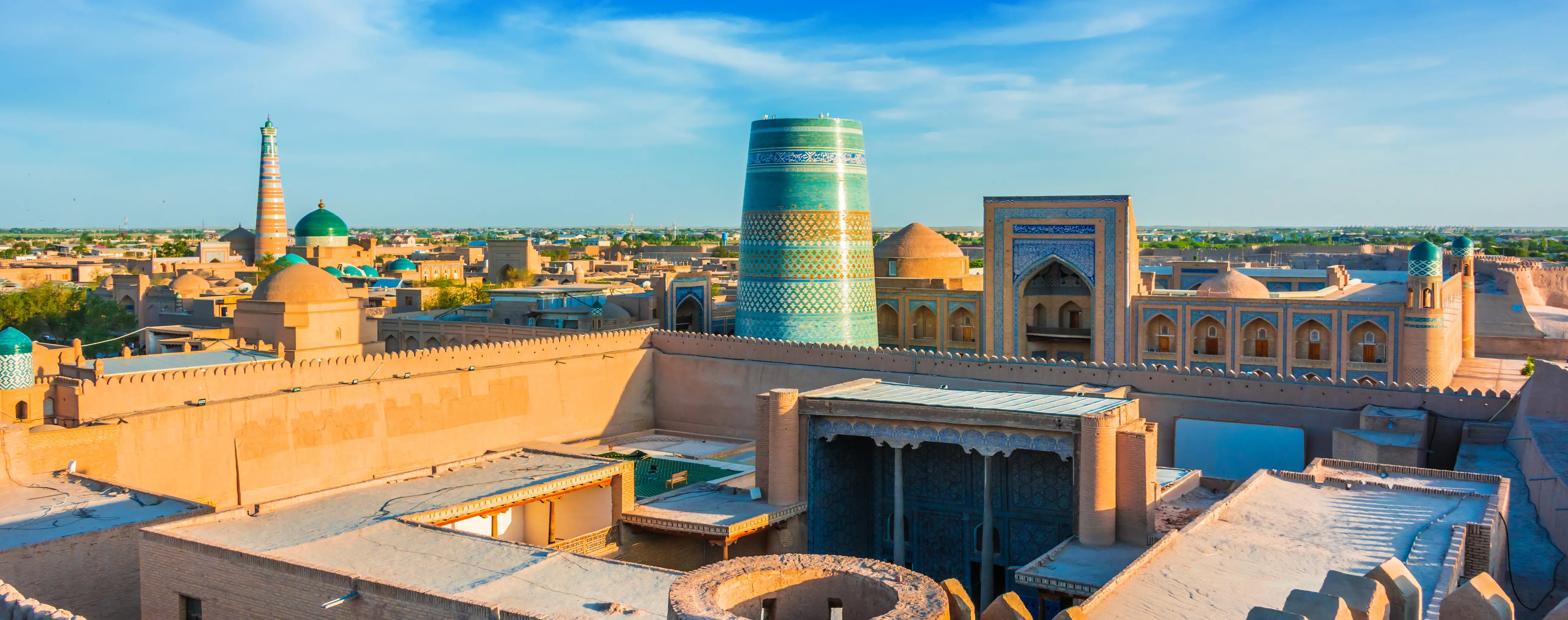
The city is historically tied to the Khorezm oasis and later to the period when it served as the capital of the Khanate of Khiva. Its main surviving historical layer is concentrated in Itchan Kala, the walled inner town that forms the historic core and is a UNESCO World Heritage Site with a dense concentration of Islamic monuments. Among the key sites are Kalta Minor, Kunya-Ark, Tash Khauli Palace, Juma Mosque, the Islam Khoja Minaret, and the Pakhlavan Mahmoud Mausoleum. Together, they preserve Khiva's historic urban past through its inner city, religious and political monuments, defensive walls, and architecture.
Khiva is well suited to a trip centered on culture and walking in a compact historic setting. The experience focuses on exploring a self-contained old city on foot, moving easily between monument interiors, courtyards, walls, and viewpoints within a concentrated area. Compared with larger Silk Road cities in Uzbekistan, it offers a more enclosed experience shaped by monuments and the structure of the old city, which works well for a vacation or travel guide itinerary.
Itchan Kala is the main visitor zone, serving as Khiva's historic core and holding the principal monuments and walking routes. Although the wider city extends beyond the inner walls, tourism is centered on the preserved walled area. Urgench International Airport is the main air gateway, and Khiva is reached from there by road. Inside the historic core, walking is central, while taxis, shared taxis, and local buses serve the broader urban area.
Khiva has a continental desert climate, with very hot summers and cold winters. Spring and autumn are generally the most comfortable seasons for sightseeing. July and August bring peak summer heat, while winter brings cold conditions. Because of these seasonal extremes, spring and autumn are the preferred periods, while summer and winter are less comfortable times to visit.
Khiva on the map
Khiva: Attractions, interesting places for excursions
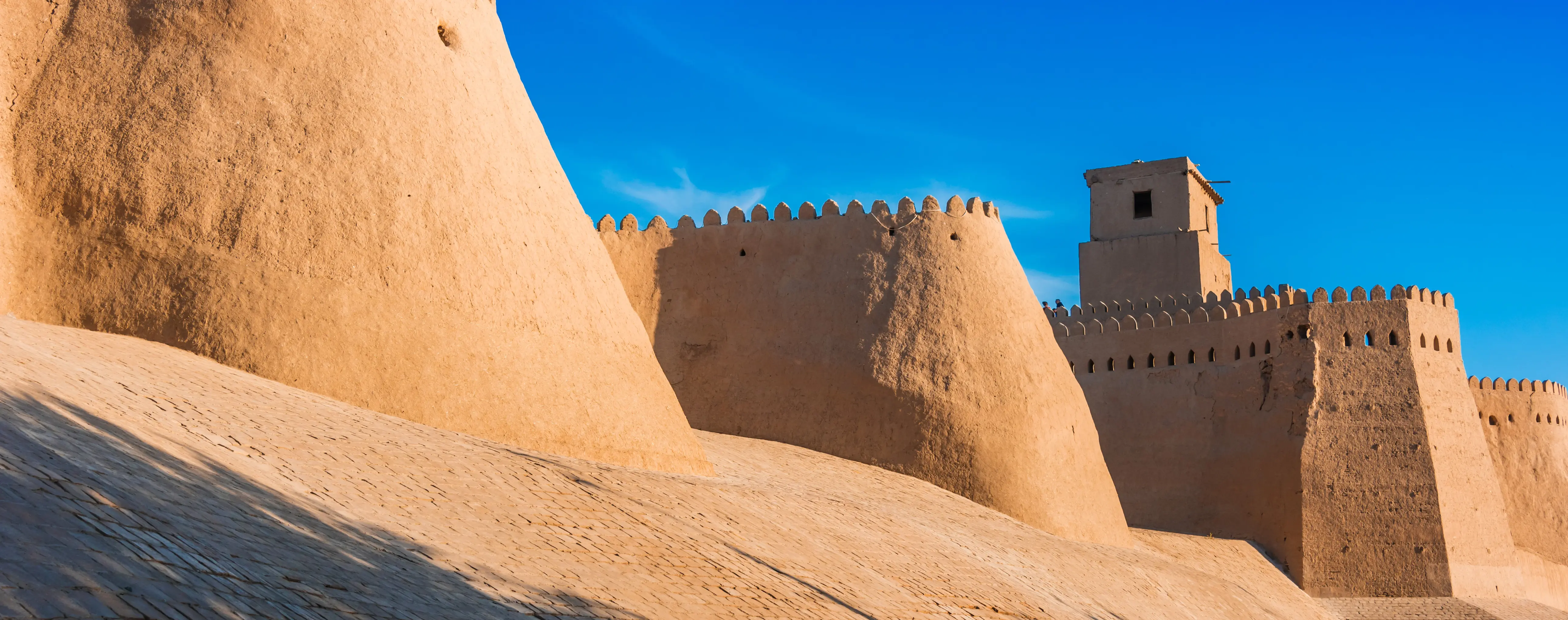
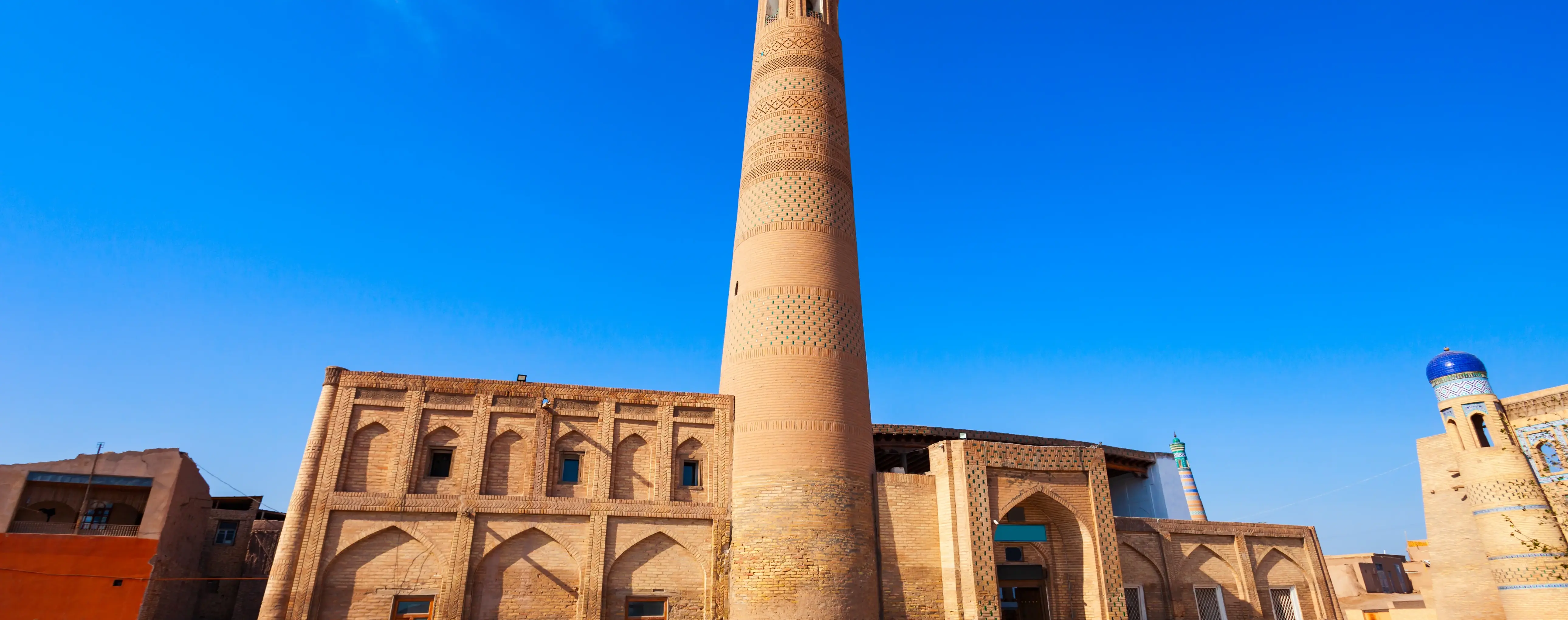
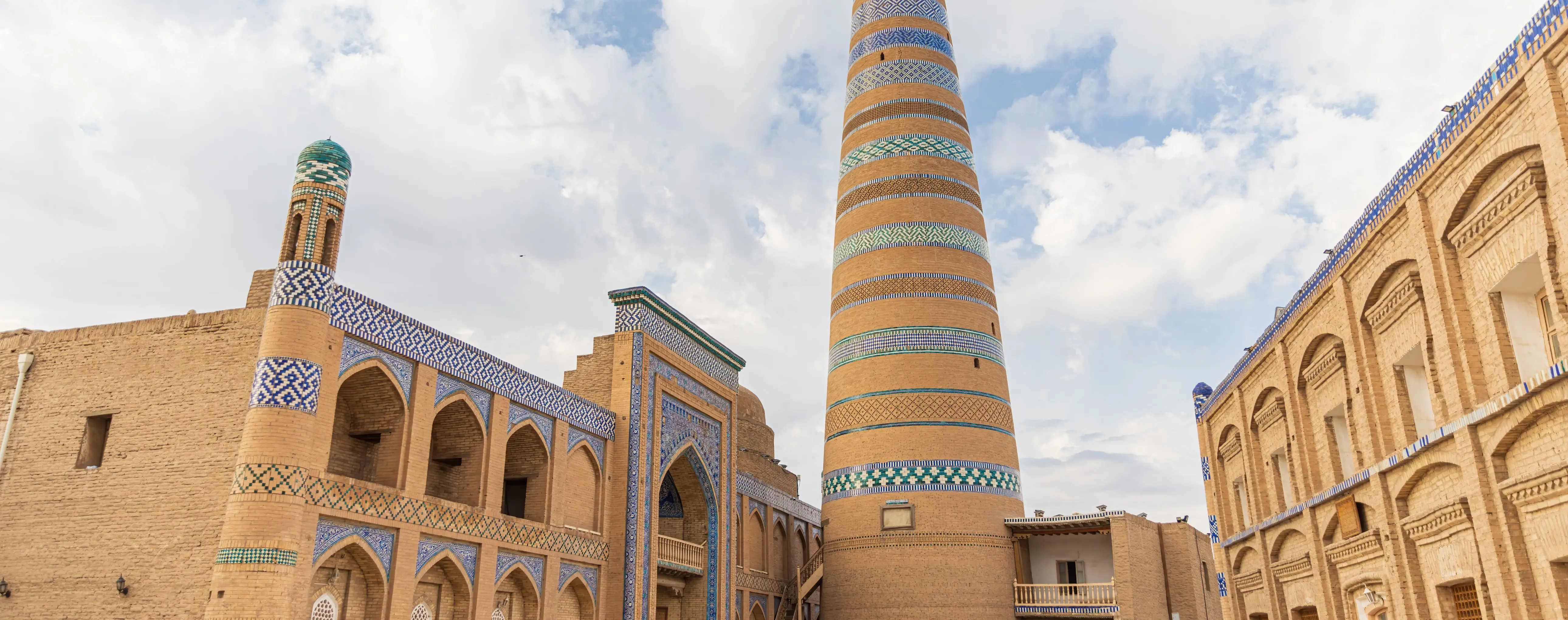
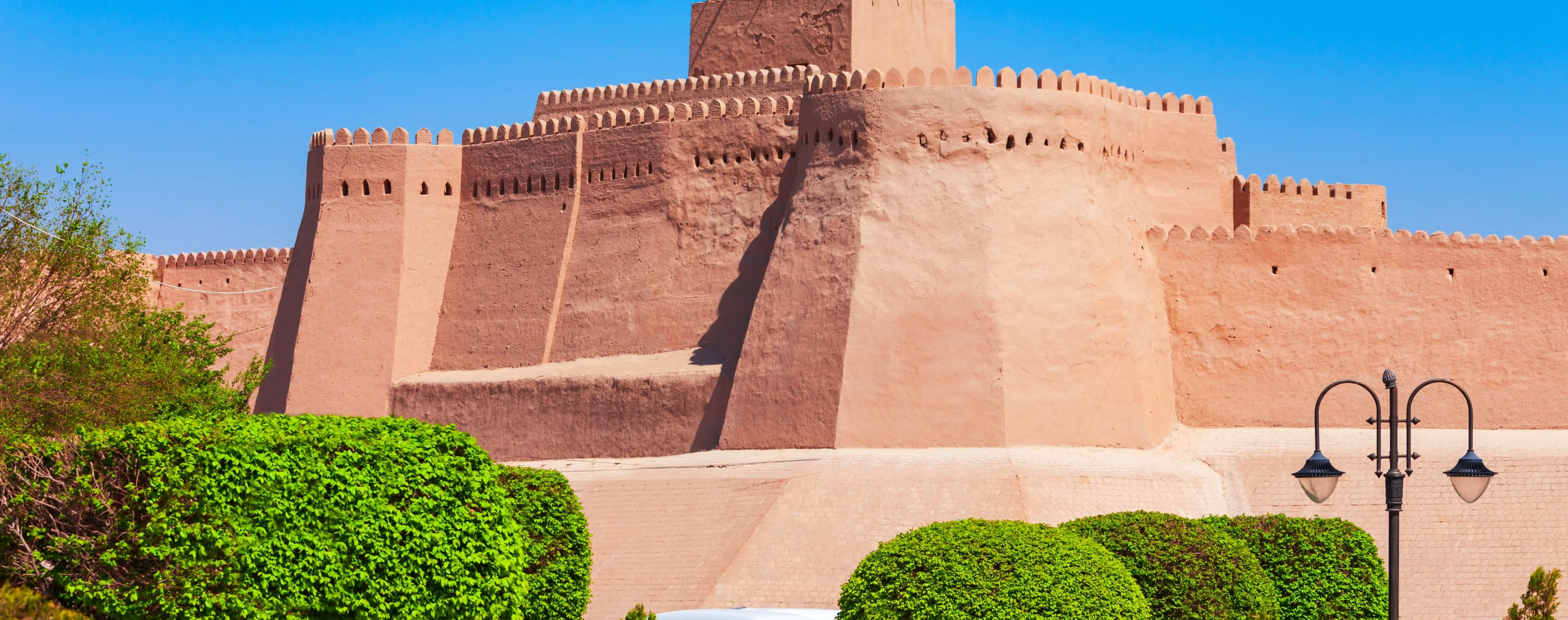
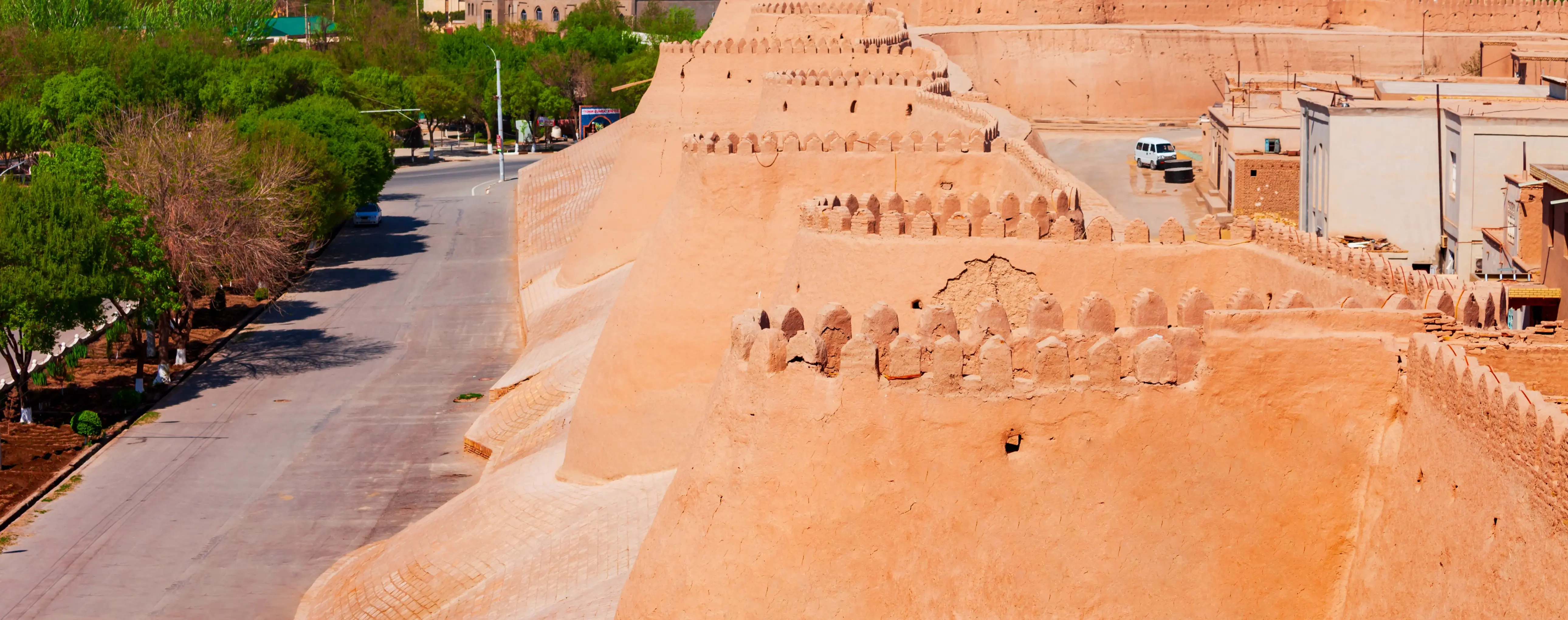
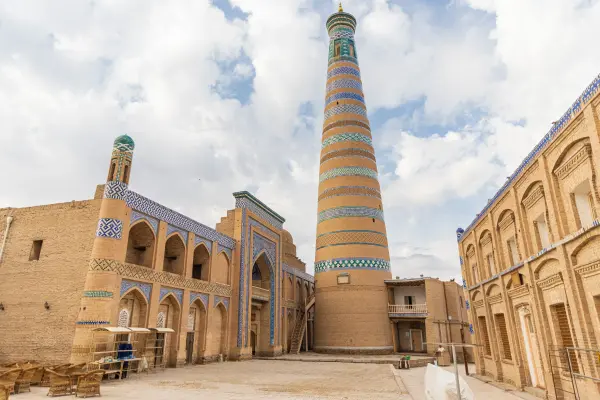
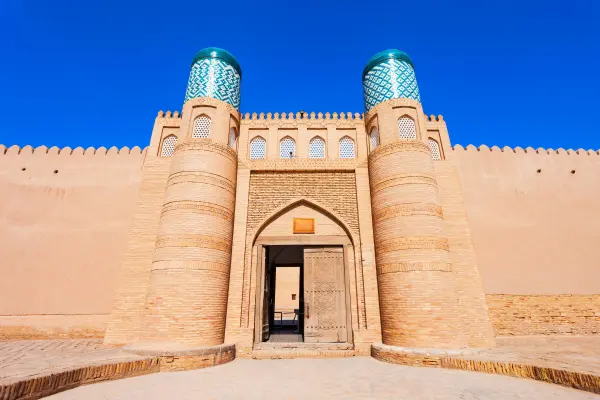
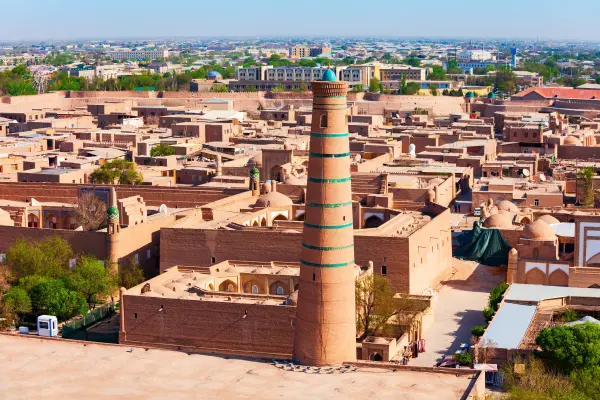
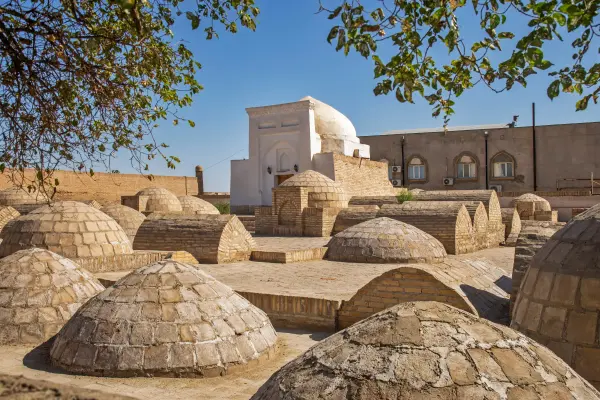
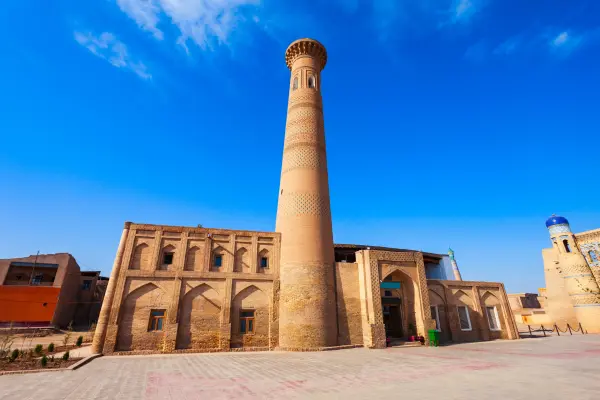
Ichan Kala Walls, Islam Khoja Madrasah, The Zindan in Khiva, Minaret of the Juma Mosque
Khiva: Popular Districts
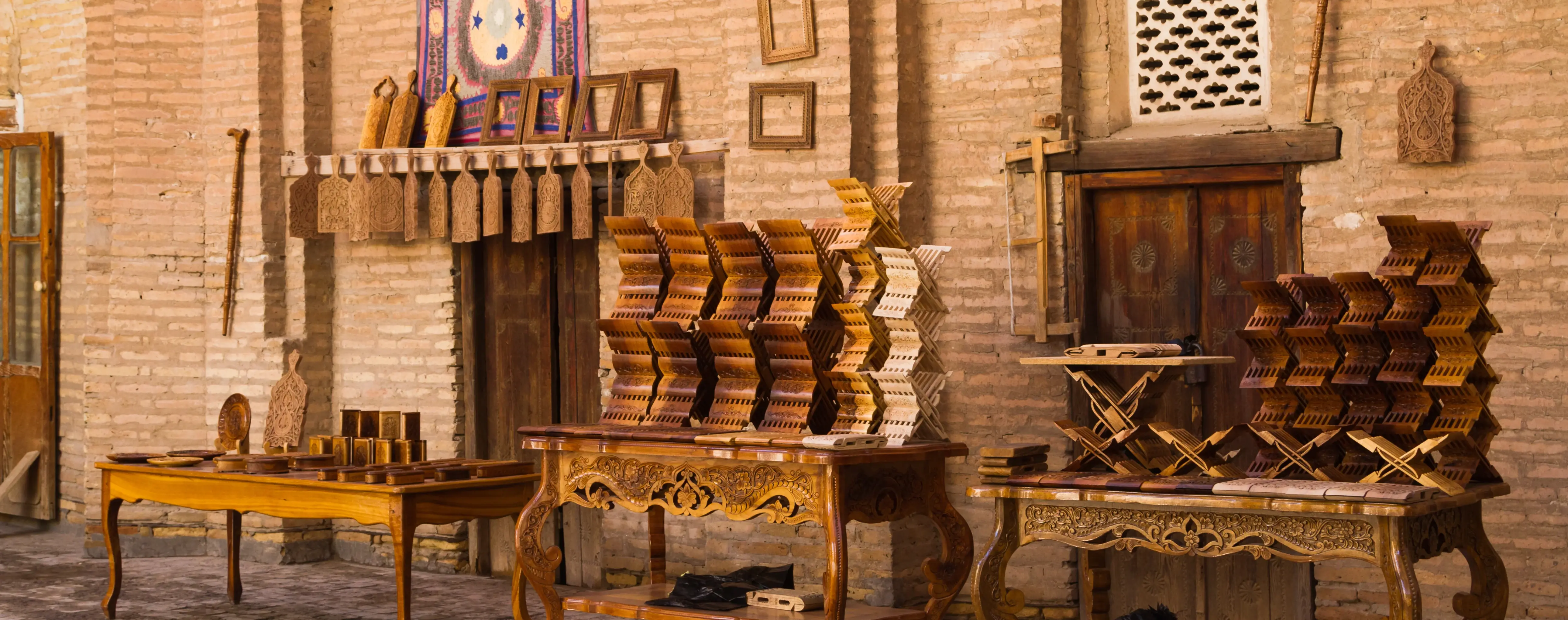
West-Central Part of Itchan Kala, Southern part of Itchan Kala, Central Part of Itchan Kala, East-Central Craft Quarter of Itchan Kala, Northwestern part of Itchan Kala
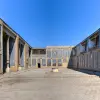
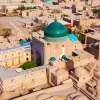
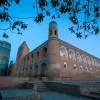
What to see in Khiva, from Itchan Kala to Kalta Minor
Mud-brick walls, tiled minarets, and Khorezm dishes in quiet lanes
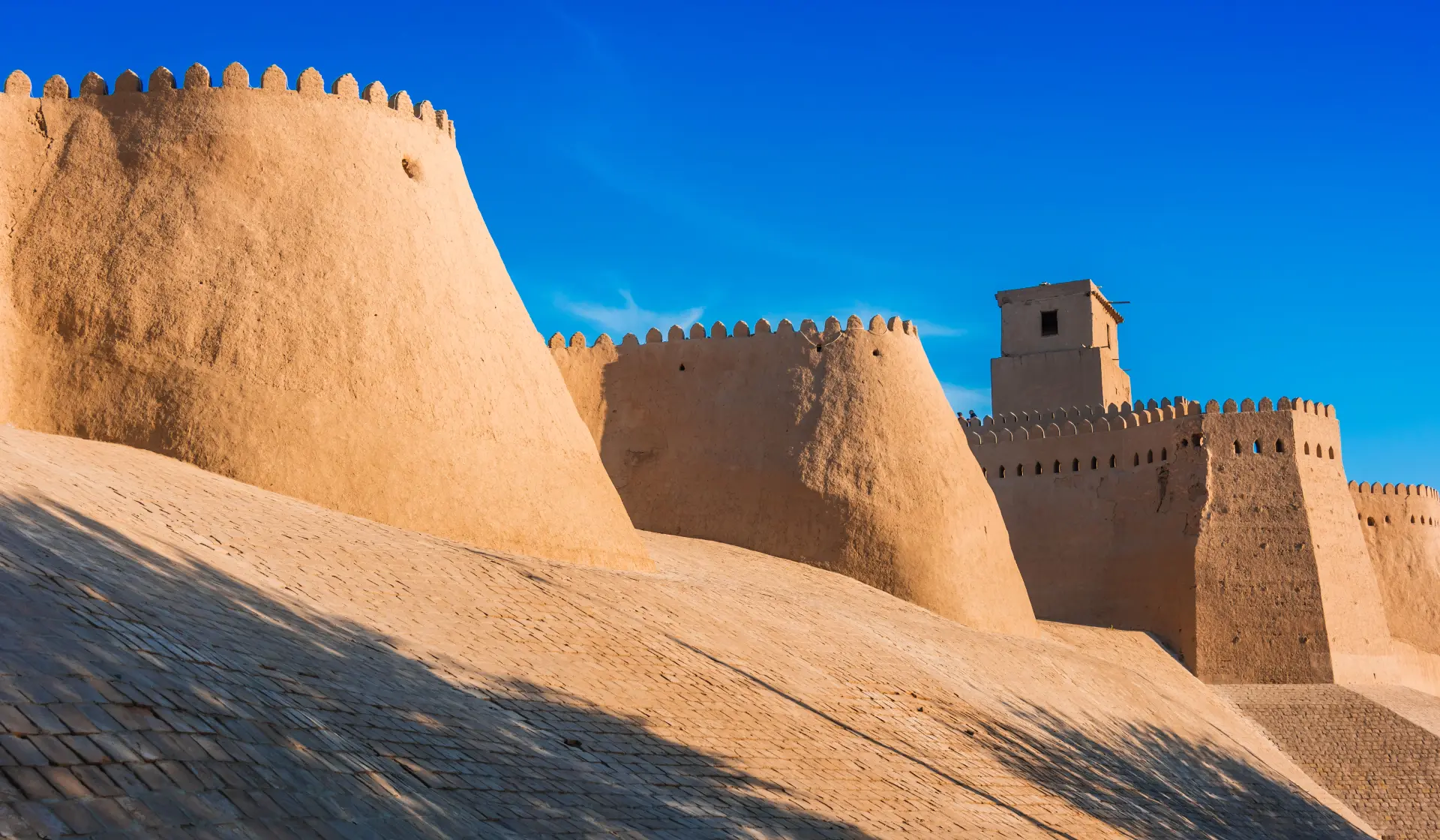
Inside Itchan Kala: walls, minarets, and palace courtyards
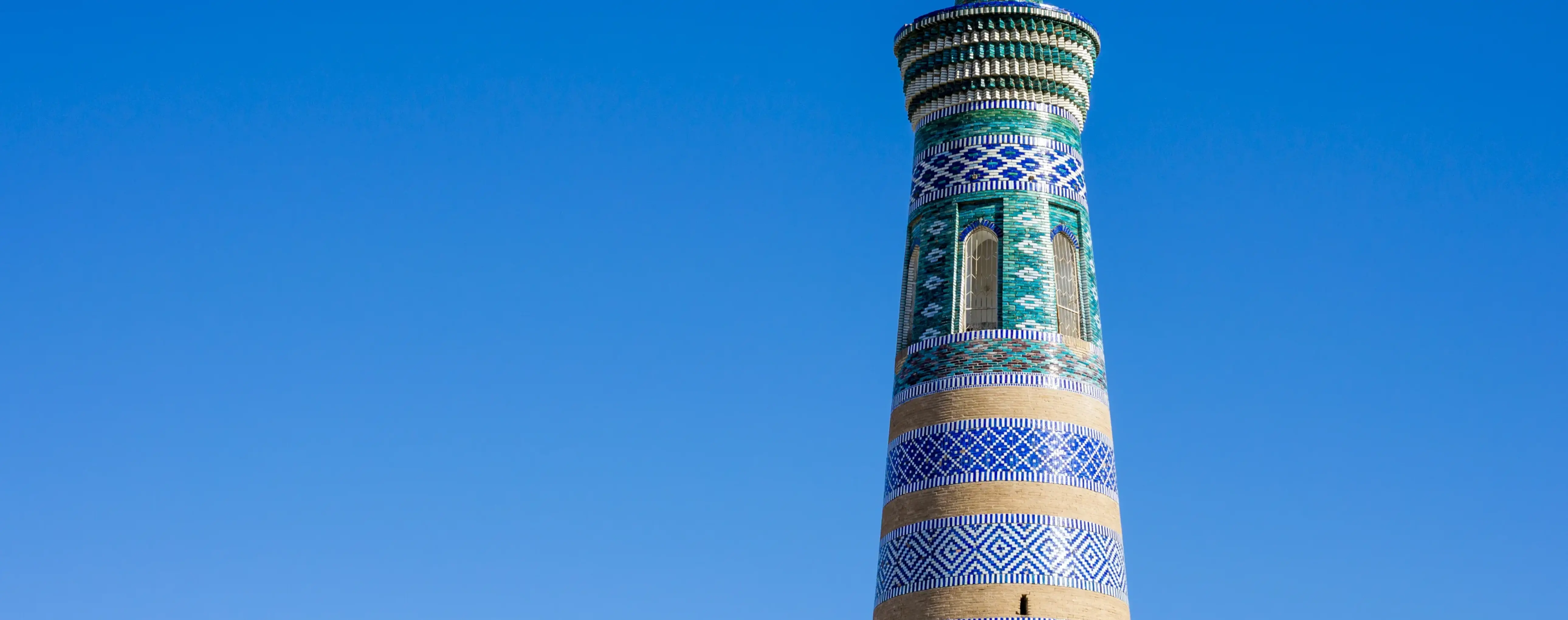
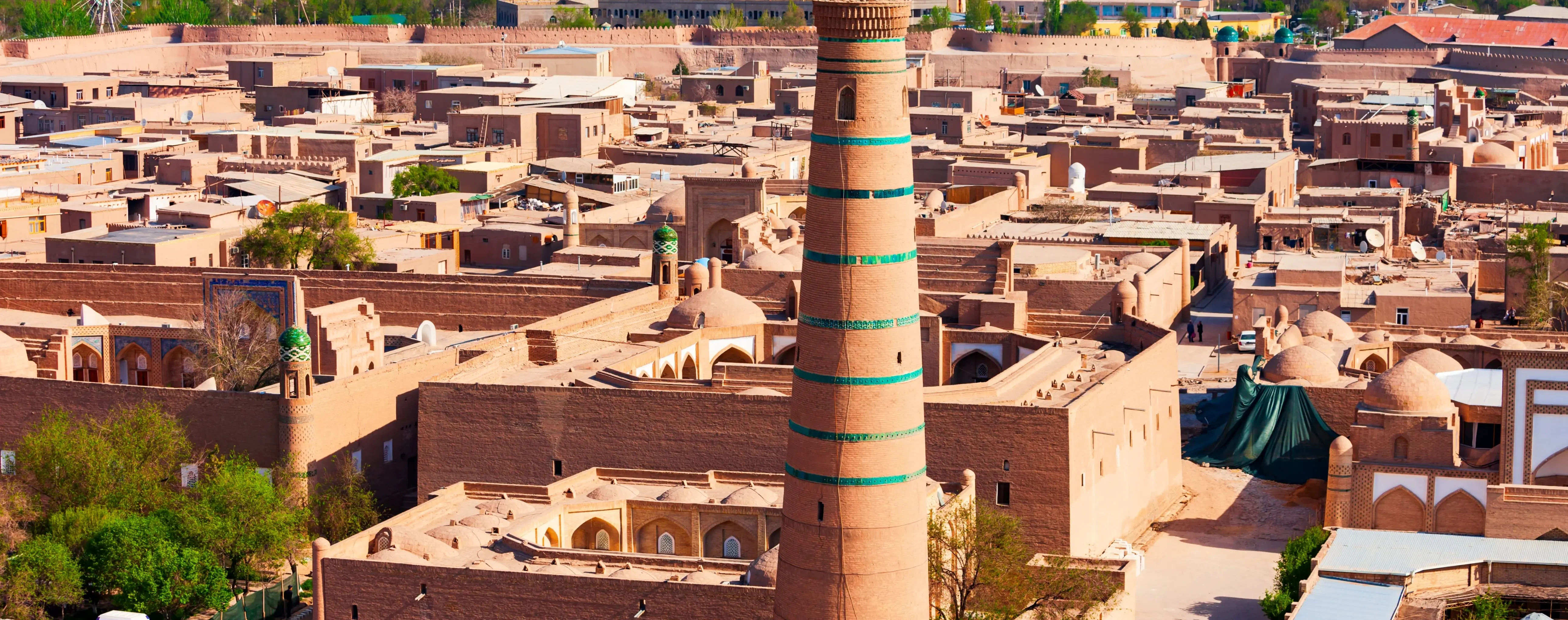
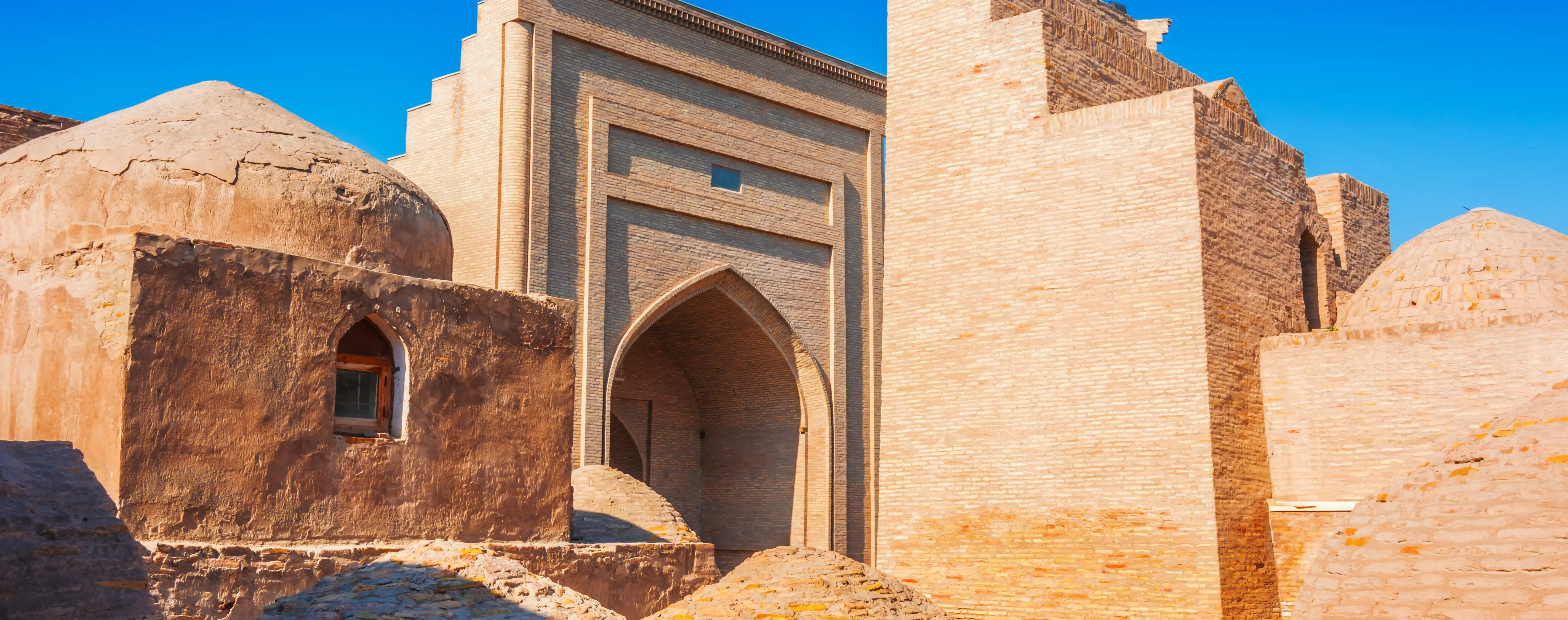
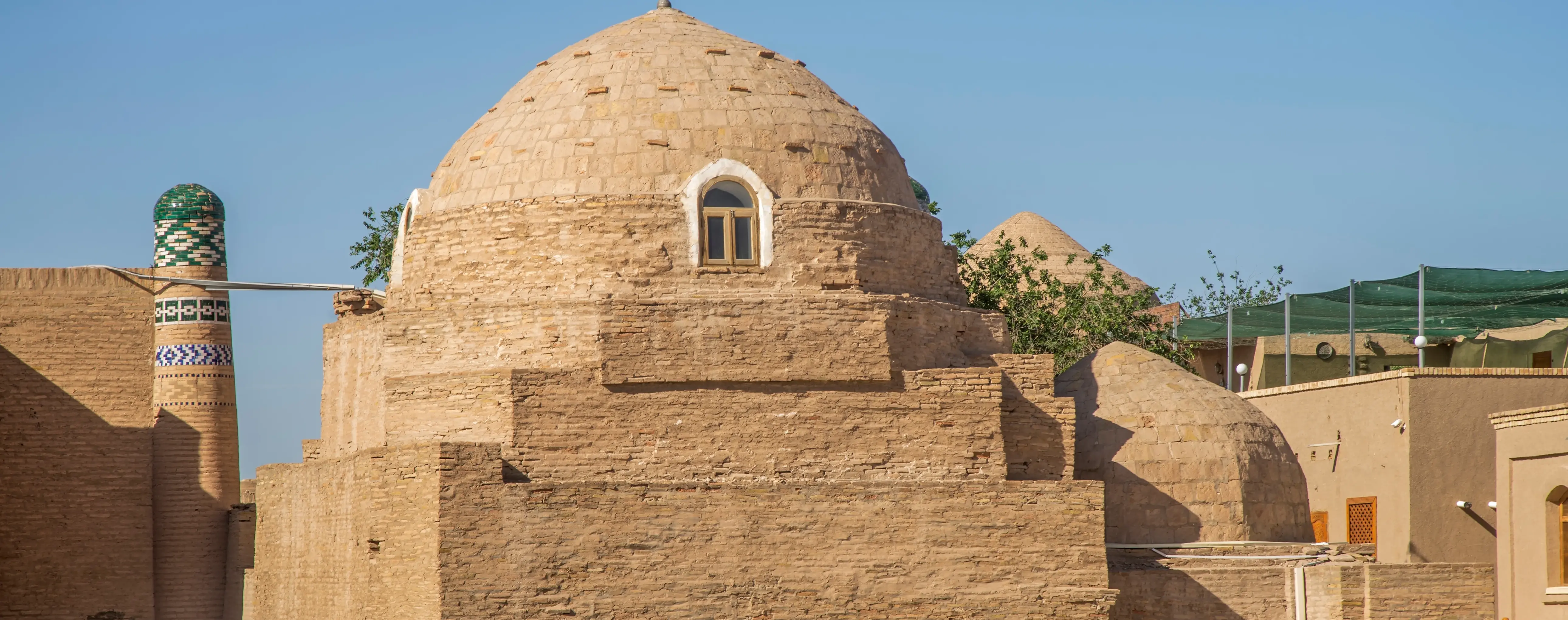
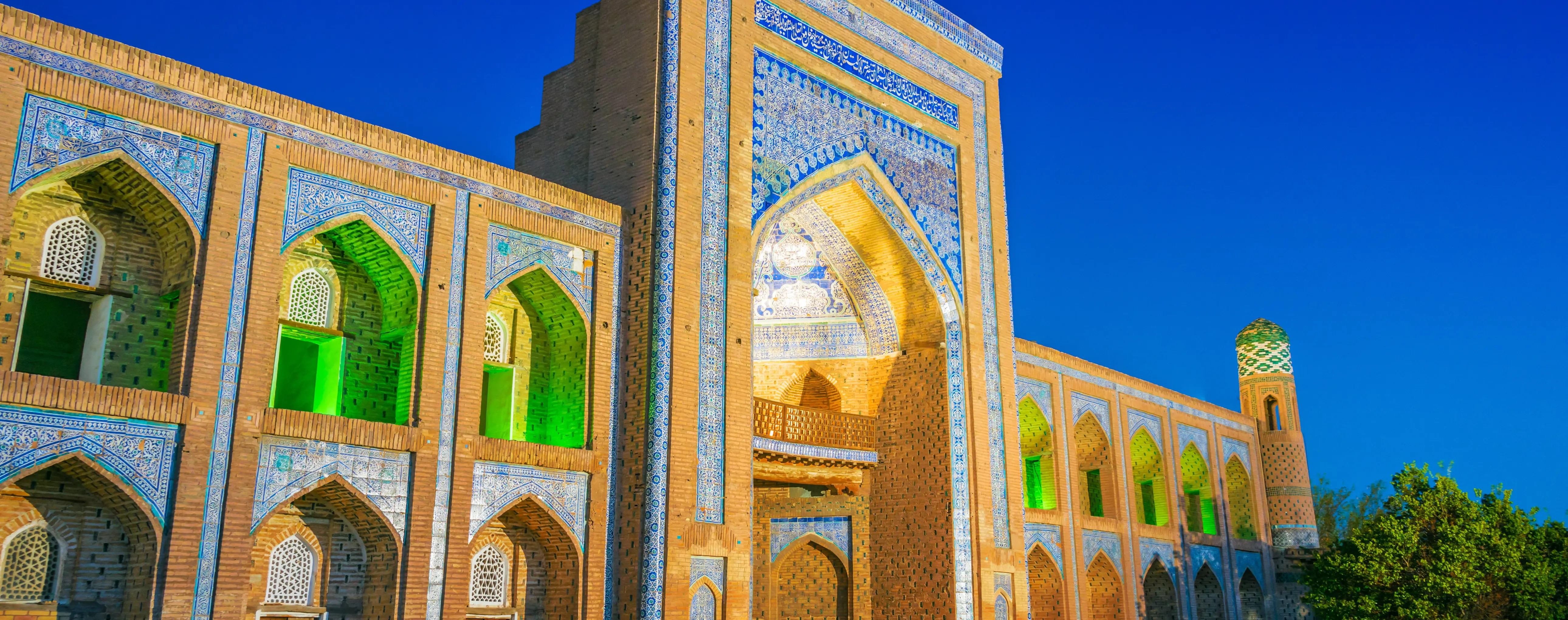
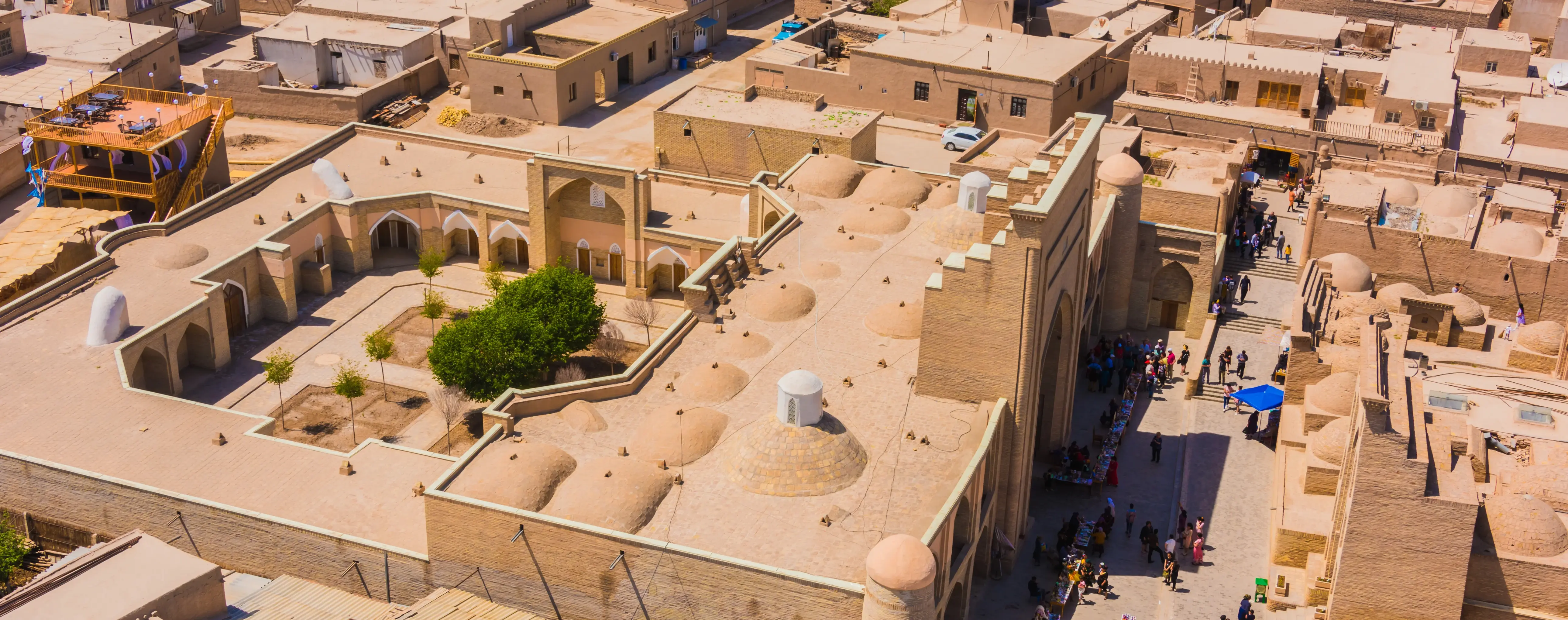
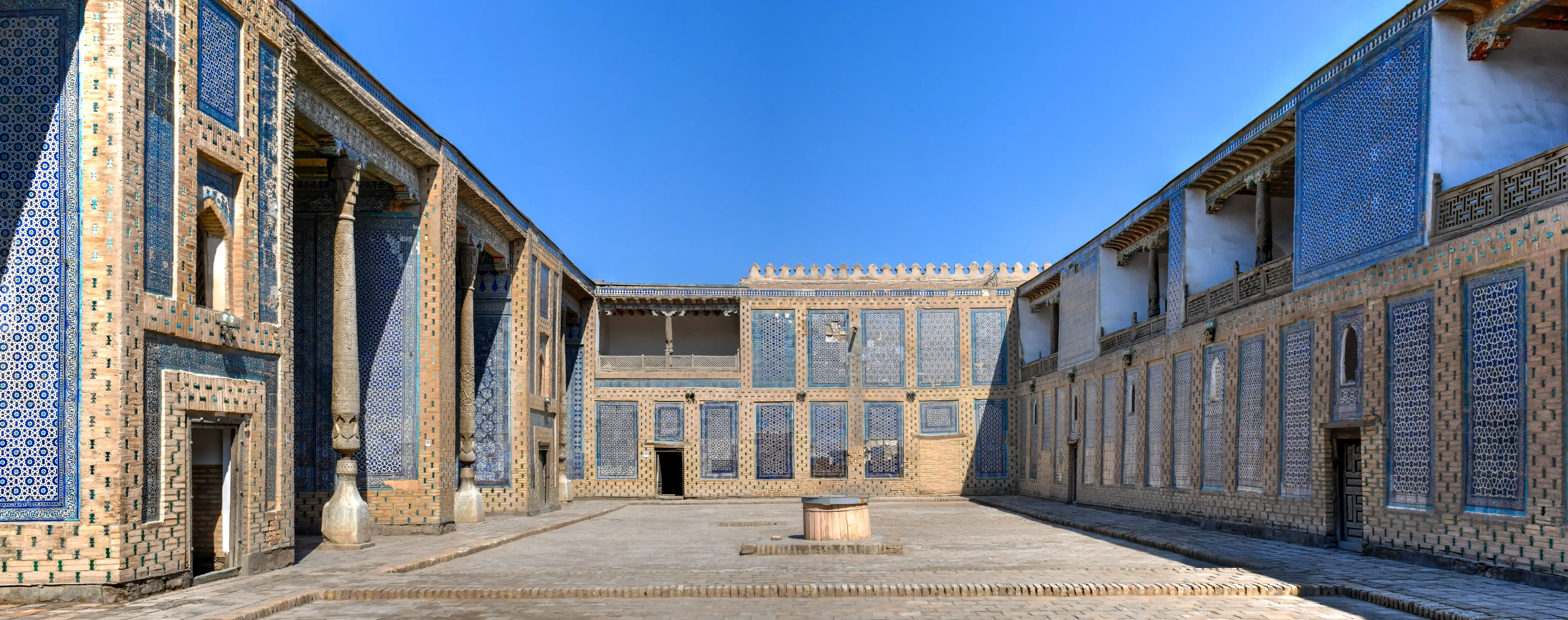
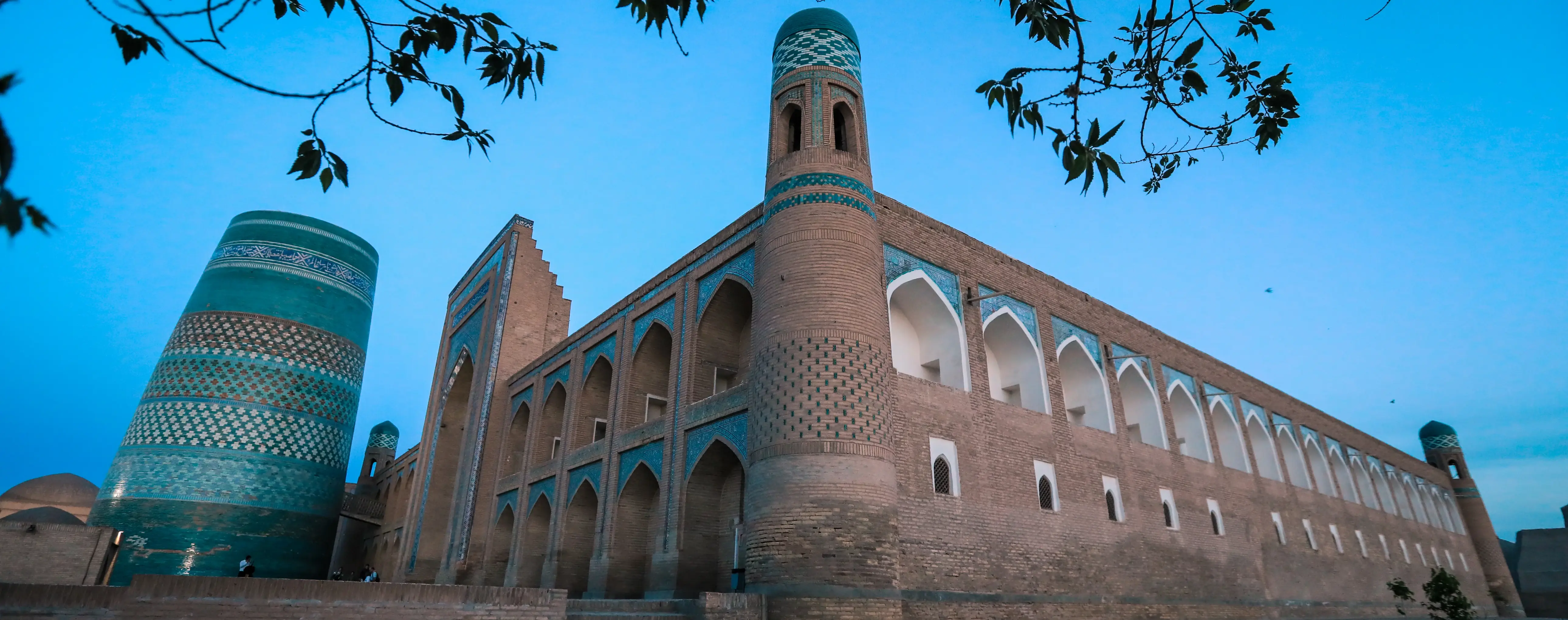
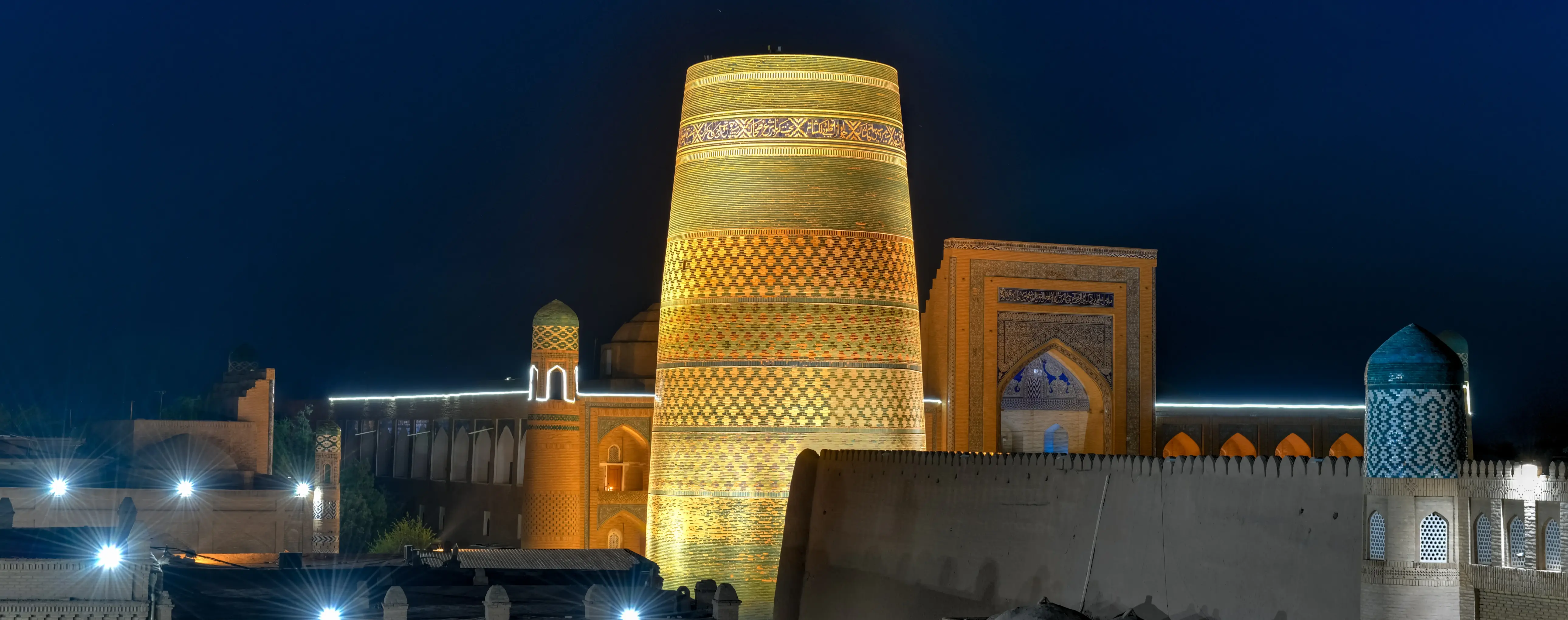
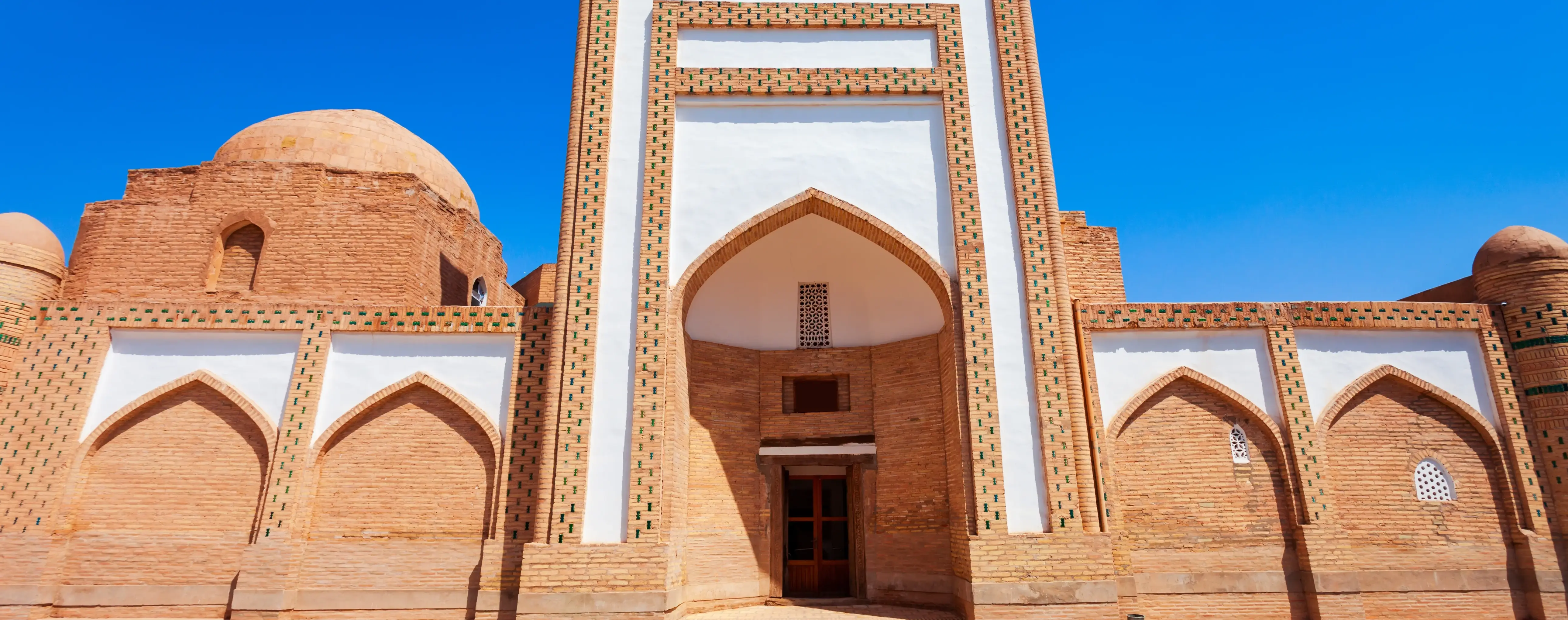
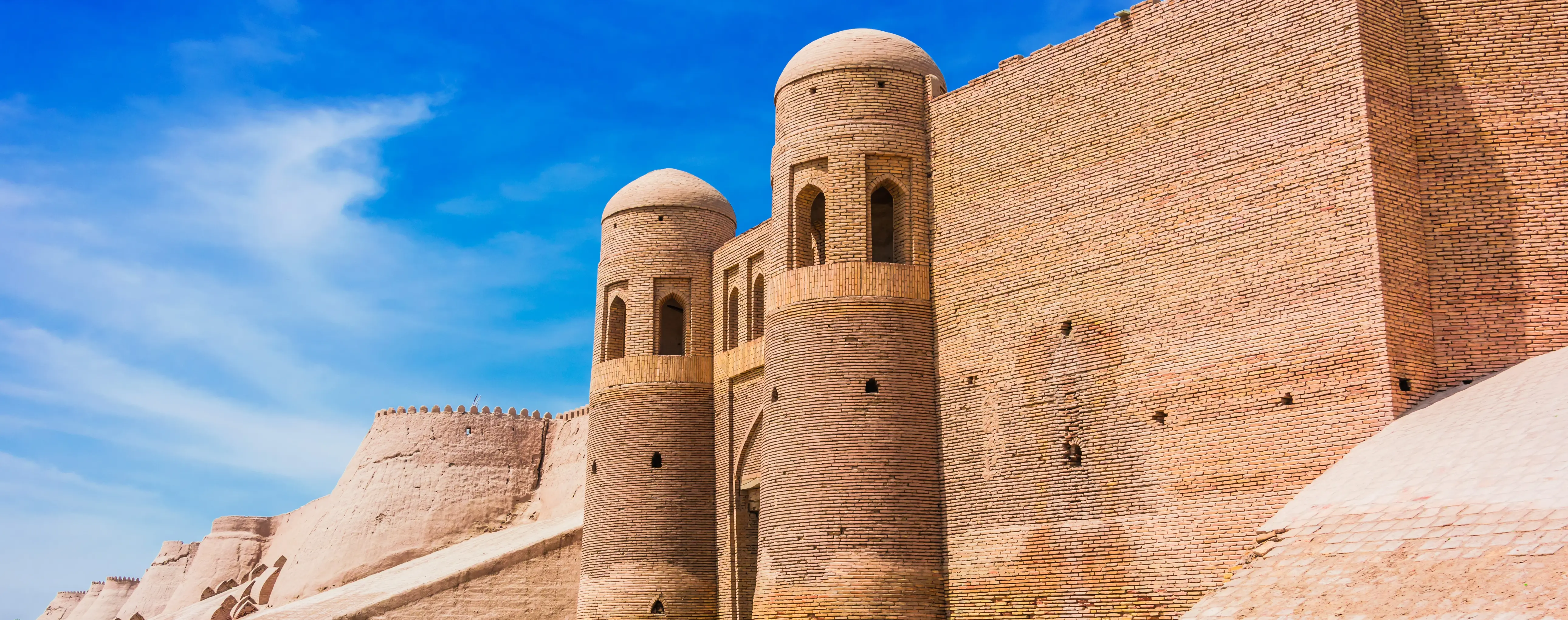
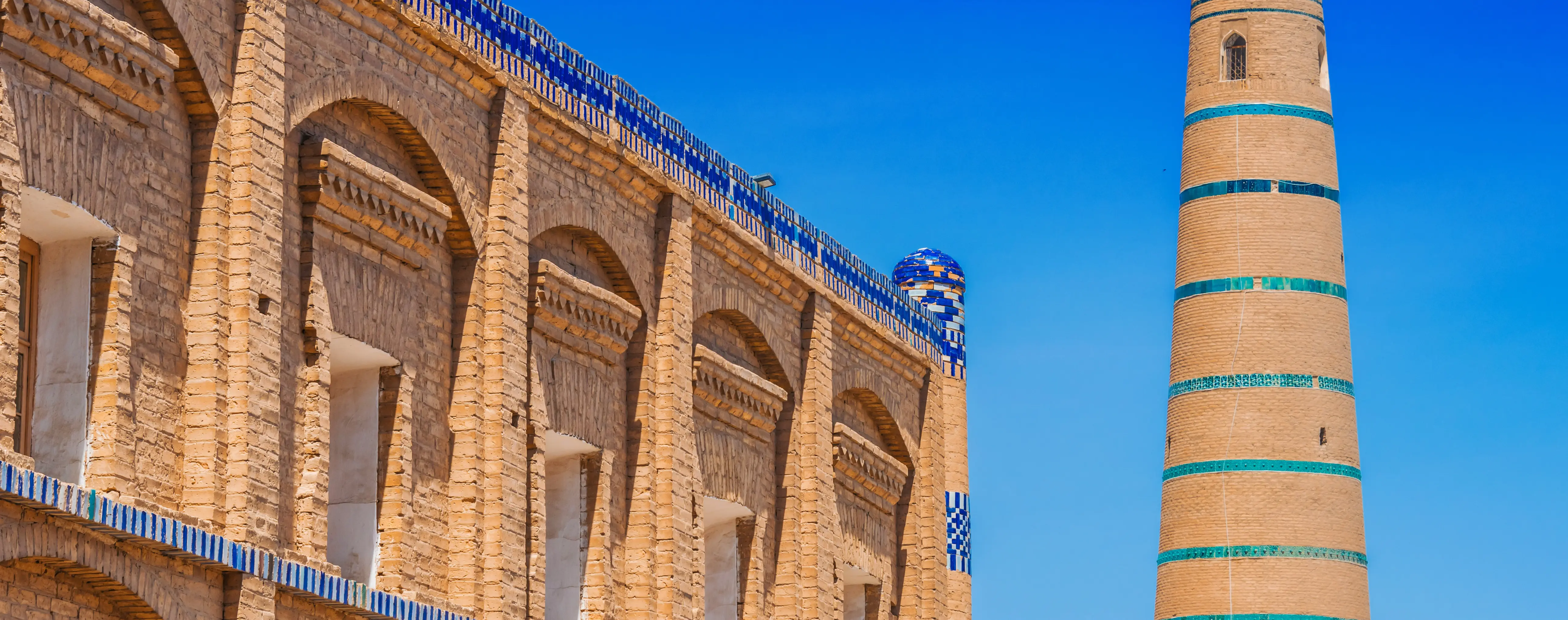
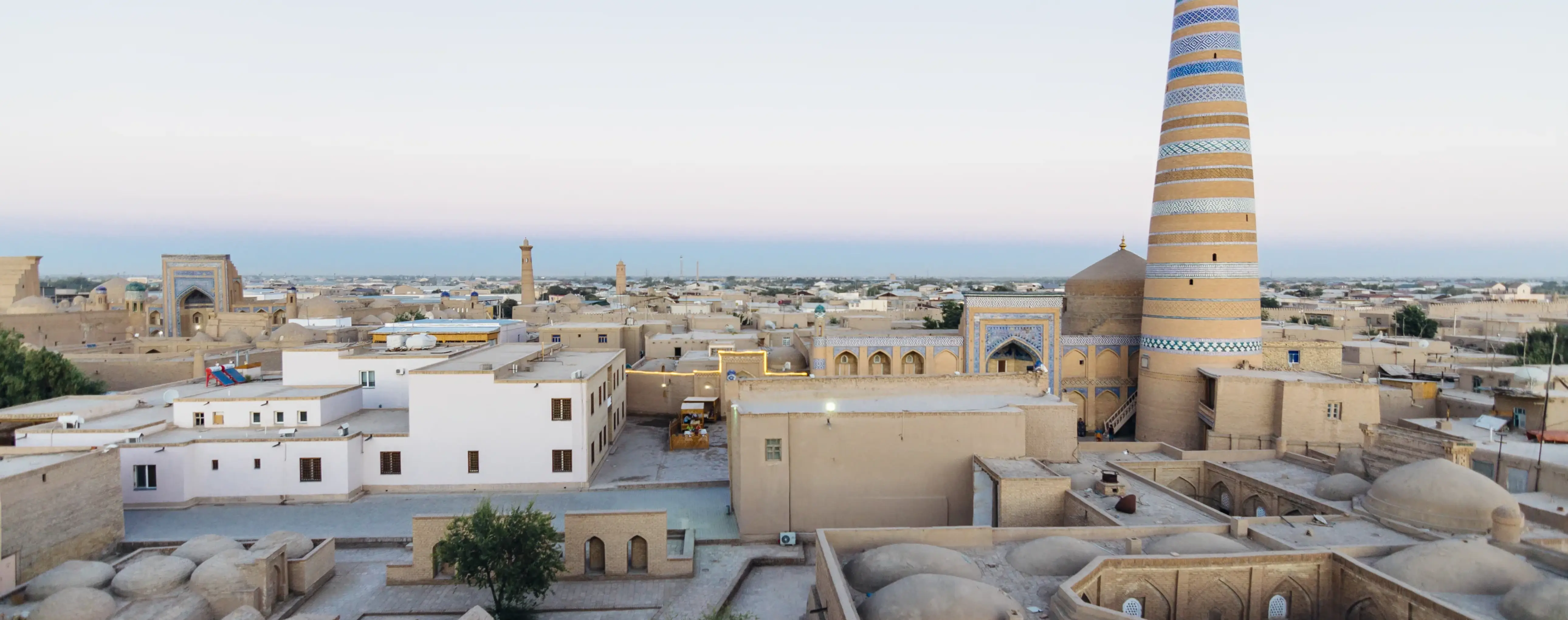
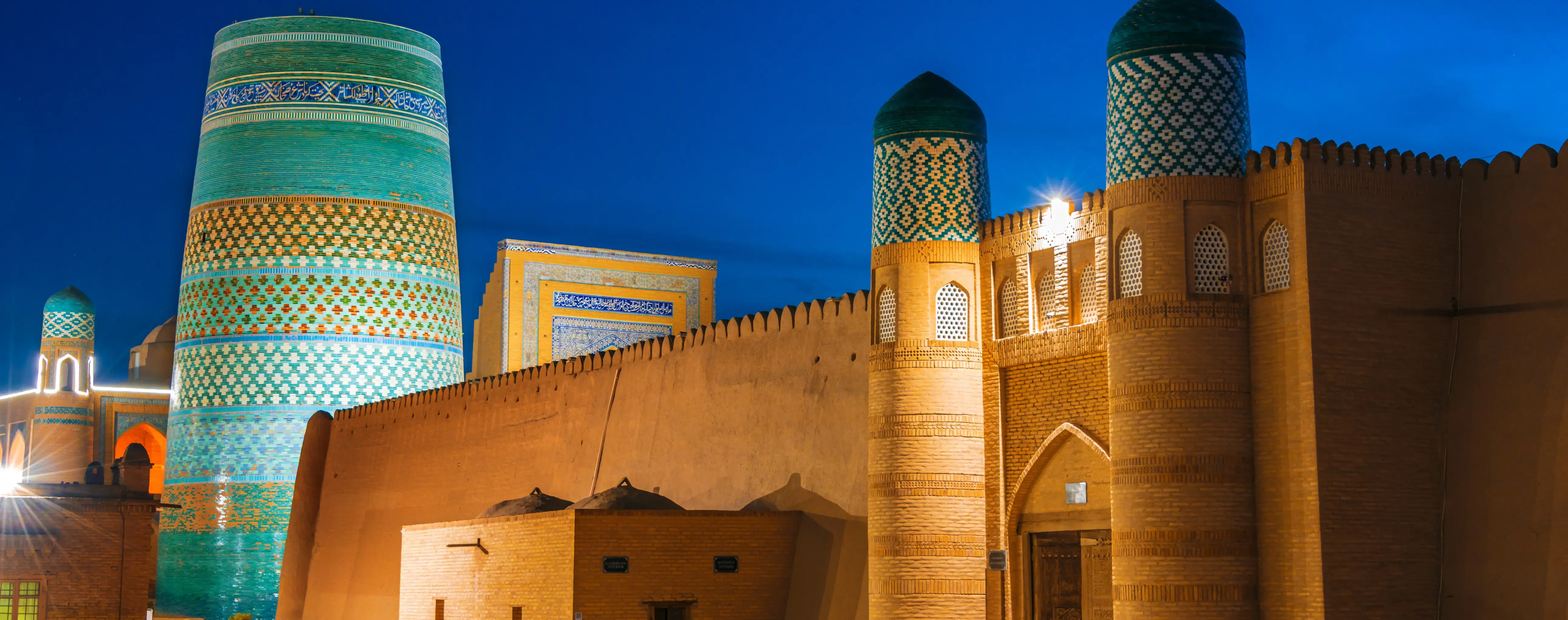
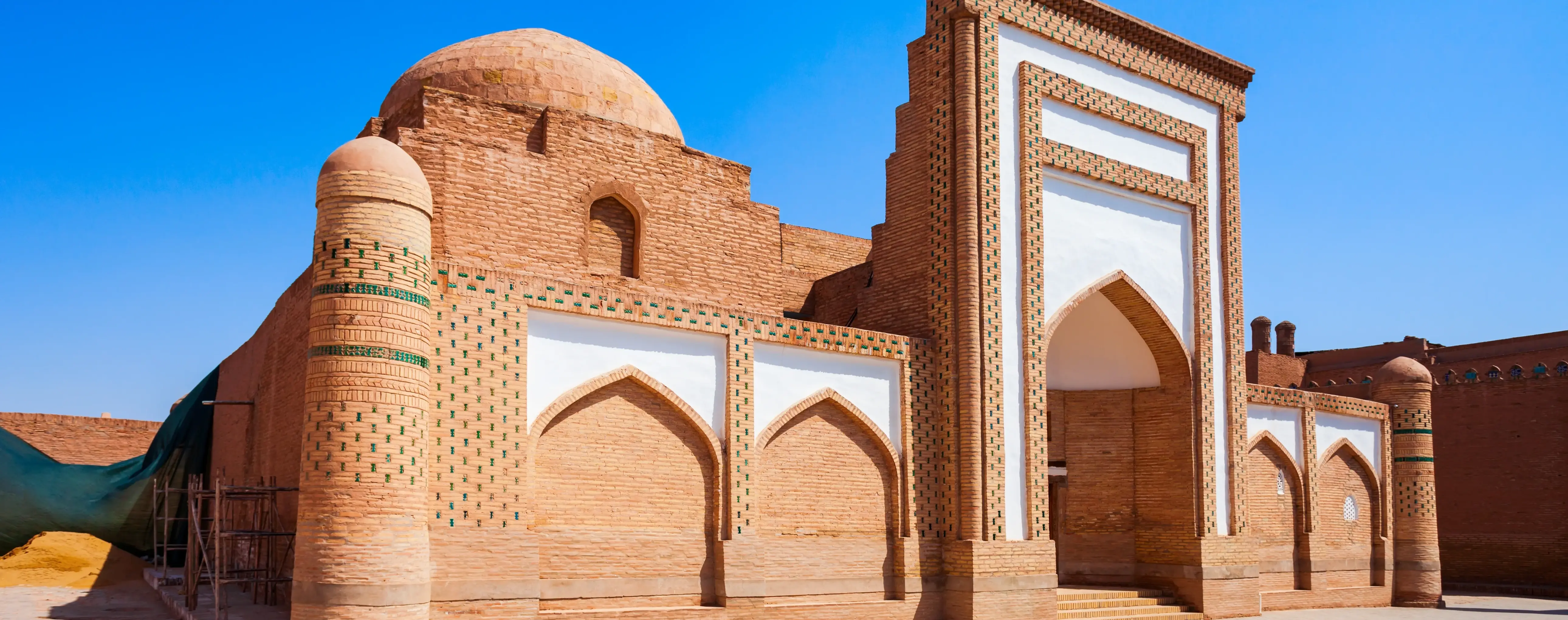
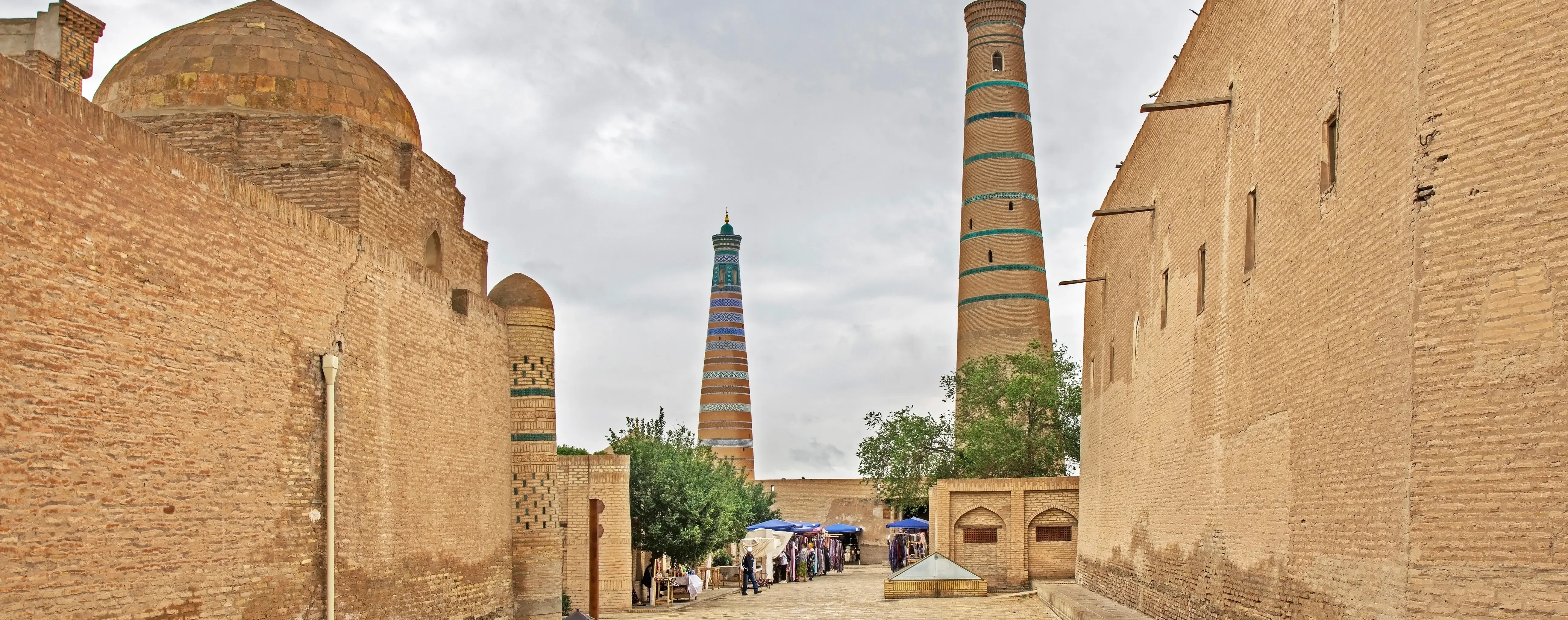
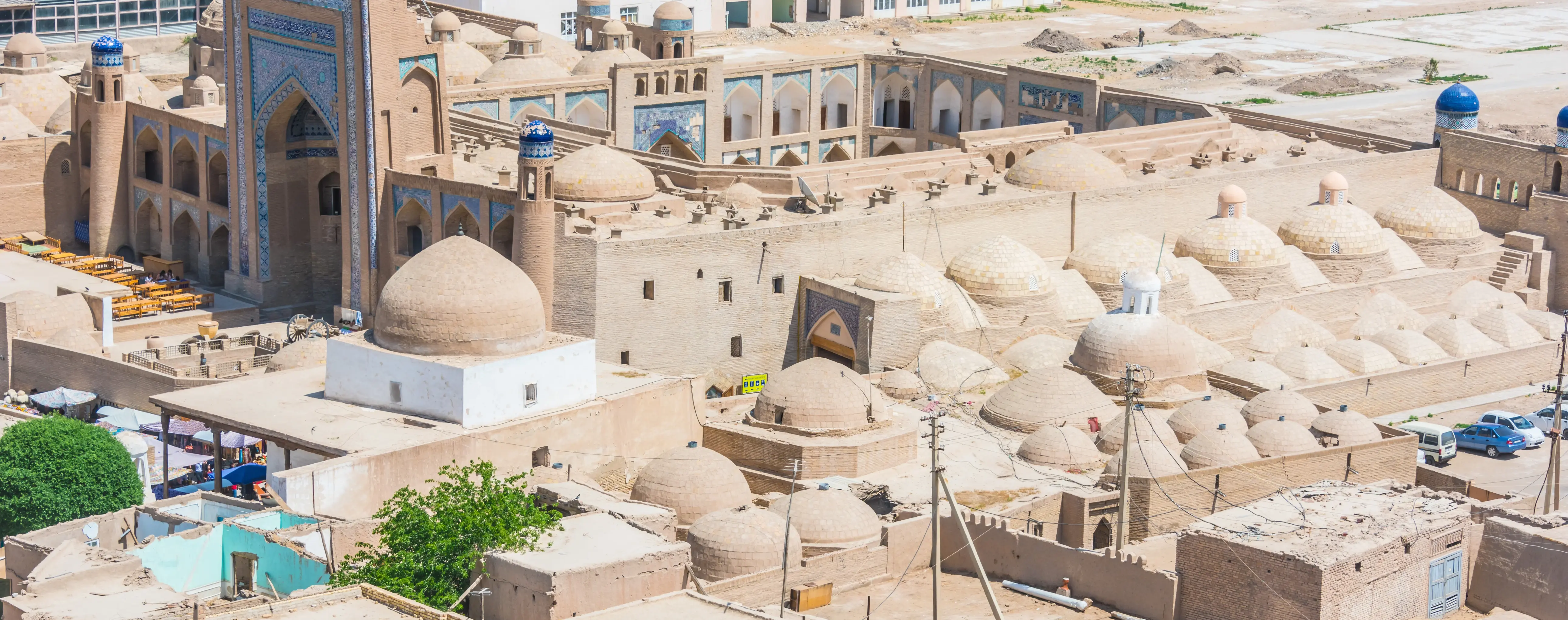
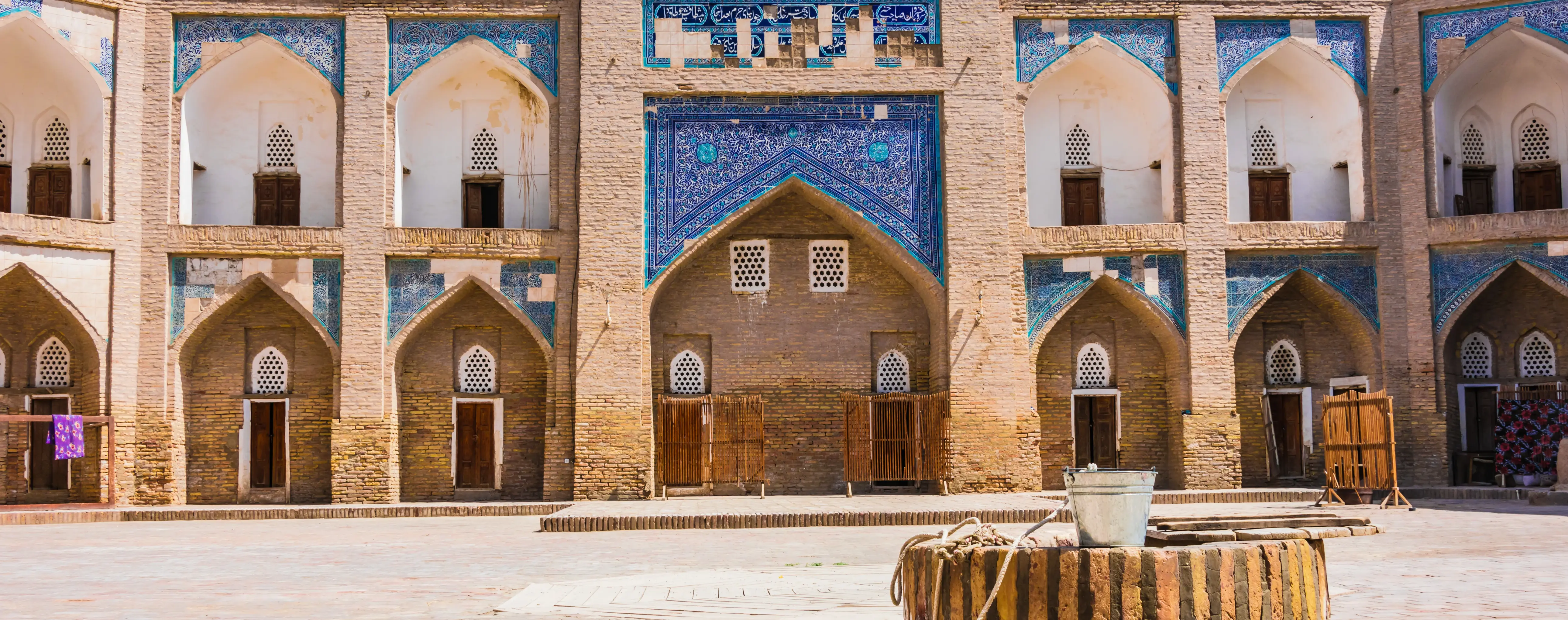
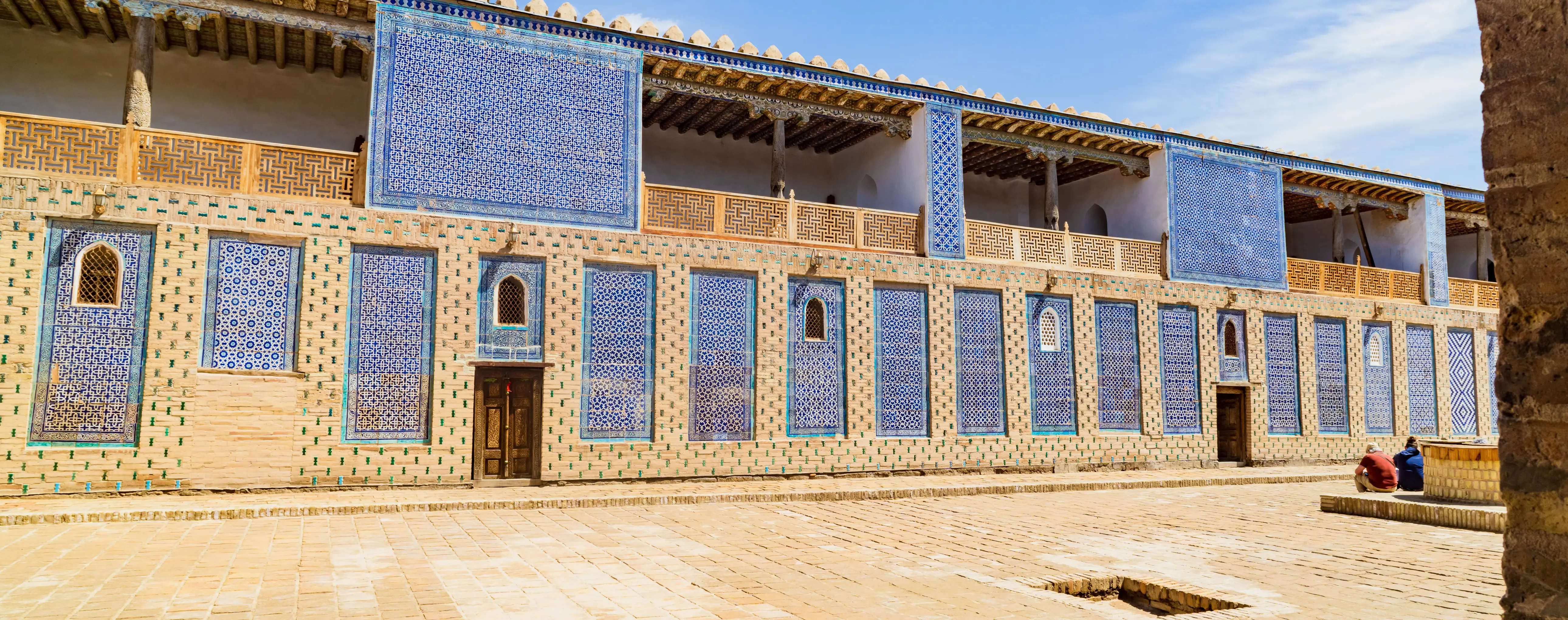
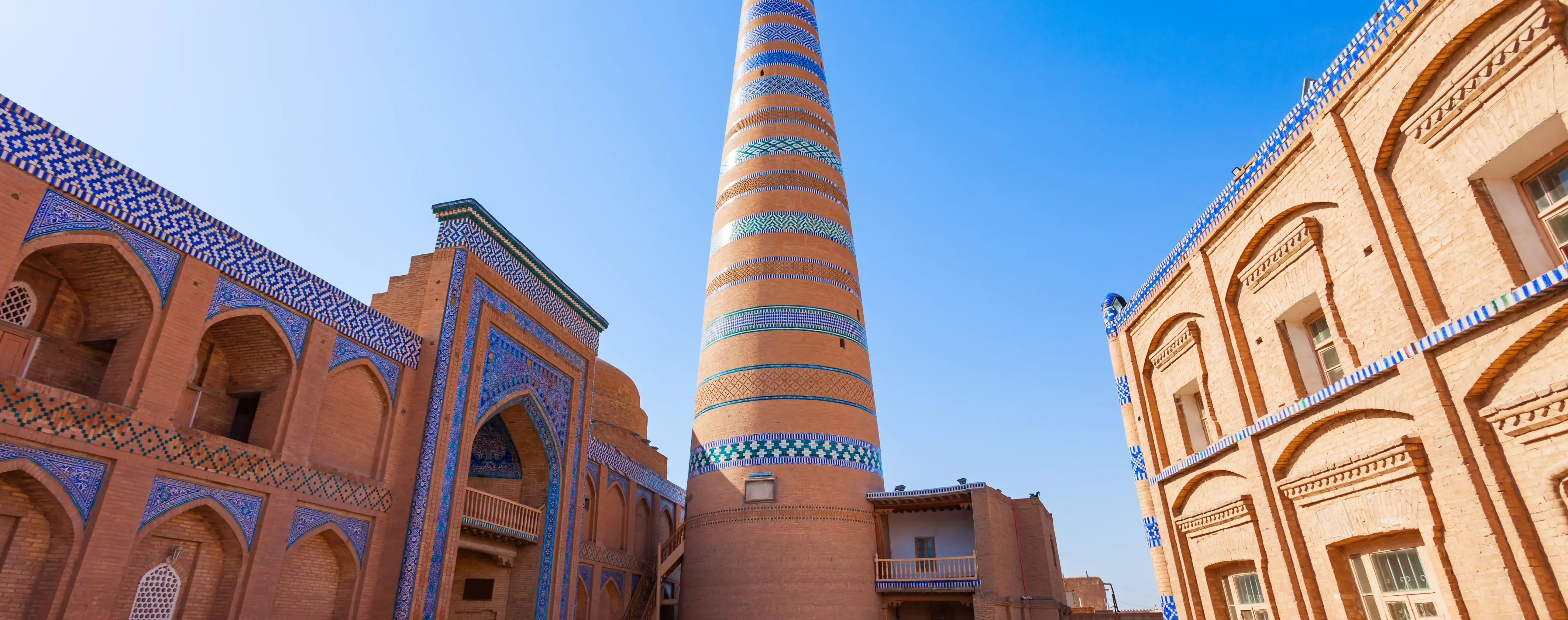
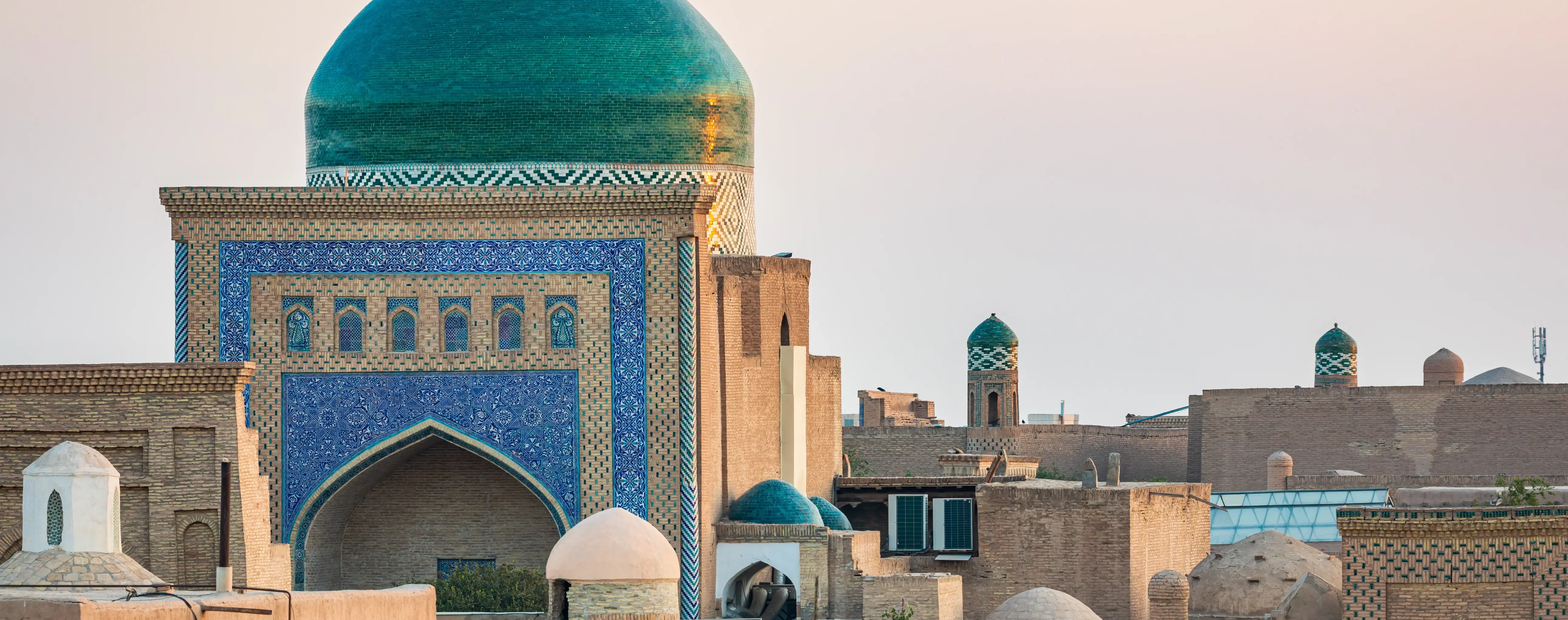
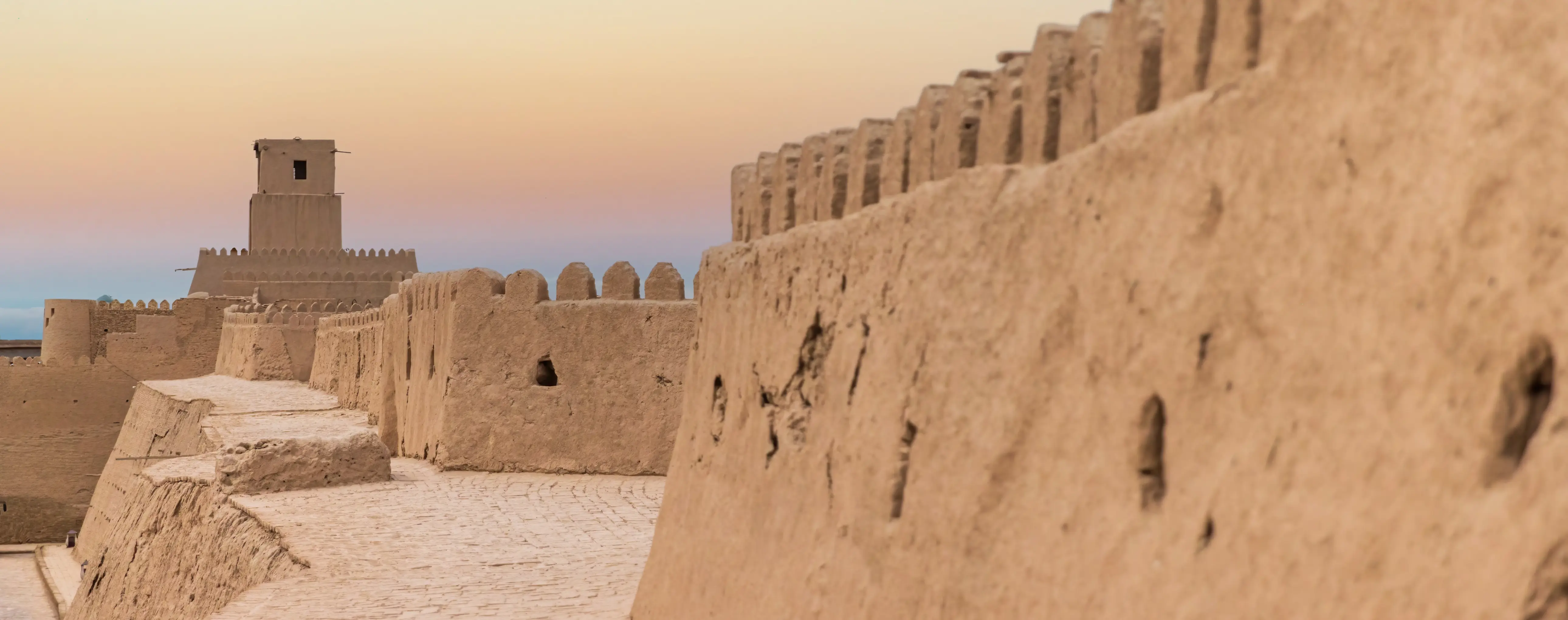
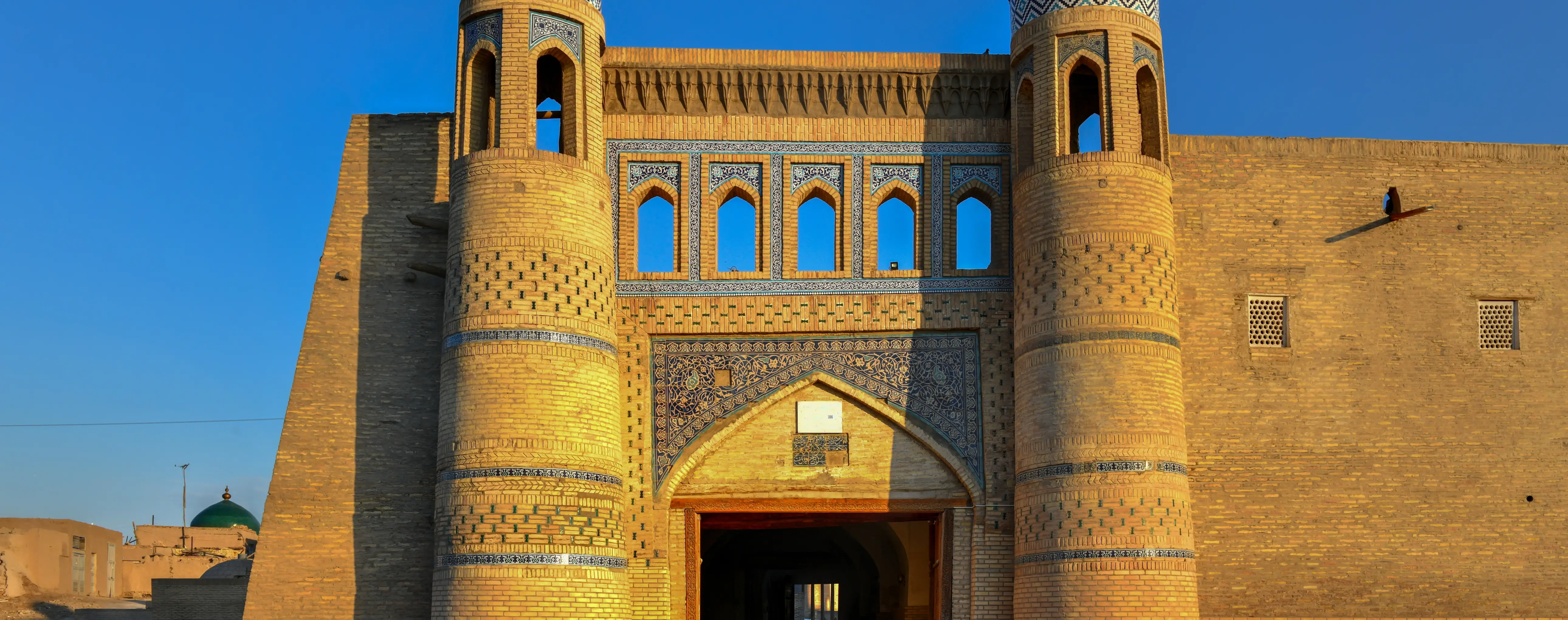
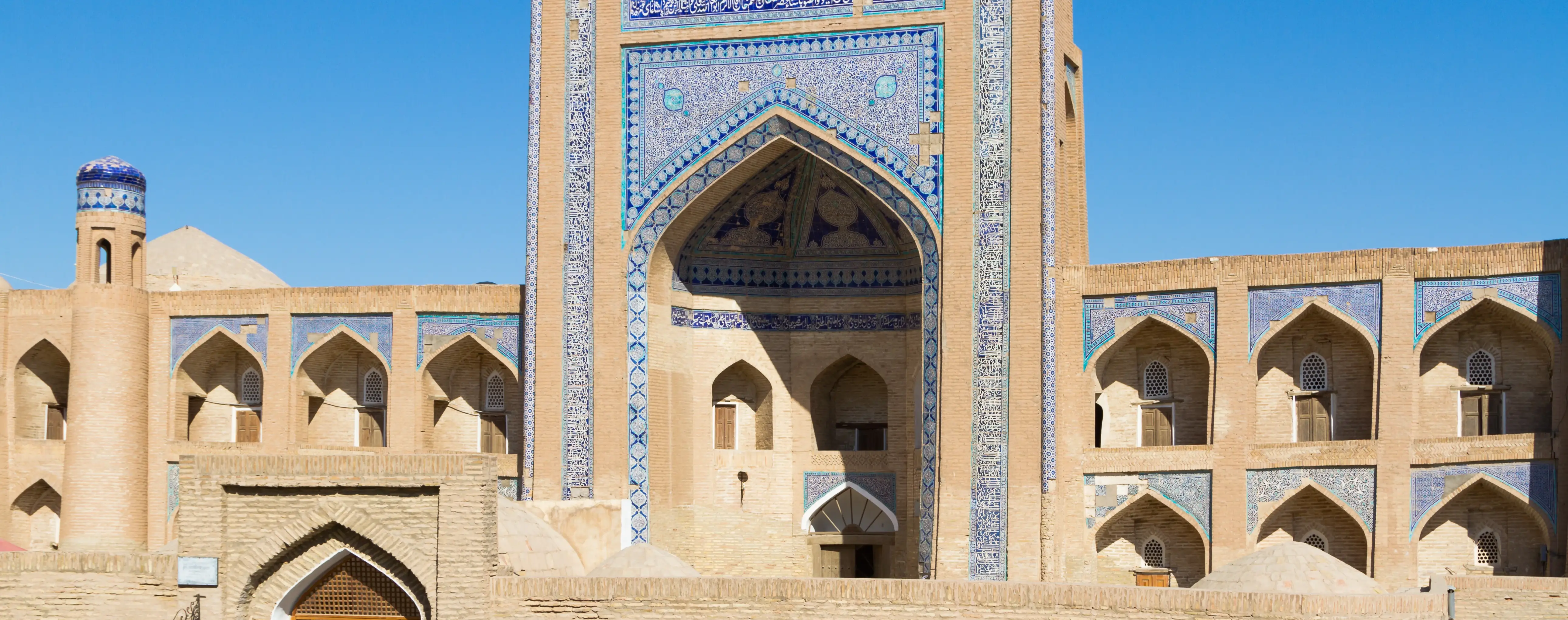
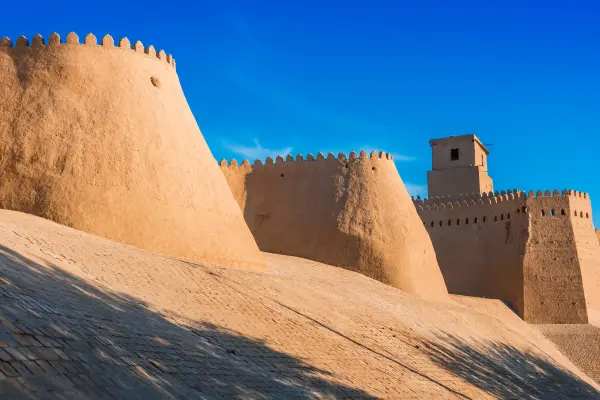
Within the historic core, visitors pass through a compact walled city of mud-brick defensive walls, gates, narrow lanes, courtyards, minarets, and Islamic monuments. Itchan Kala holds the city's densest concentration of heritage attractions and places to visit. Its major monuments include the unfinished Kalta Minor; Kunya-Ark, the fortified residence and administrative center of Khiva's rulers; Tash Khauli Palace, known for its courtyards, reception spaces, and decorative tilework; Juma Mosque, with its large hall supported by many carved wooden columns; the Islam Khoja Minaret, a major viewpoint; and the Pakhlavan Mahmoud Mausoleum, an important pilgrimage and architectural site. Taken together, these places reveal the political, religious, and defensive layers of Khiva's historic core.
The source facts note museum spaces and museum exhibits housed in historic buildings, but they do not name any specific museum or describe a collection in detail. They also do not identify natural features such as coastline, waterfront, marina, waterfalls, or parks. The main elevated and open-air viewing points mentioned are the city walls and the Islam Khoja Minaret, both of which provide views over the old city.
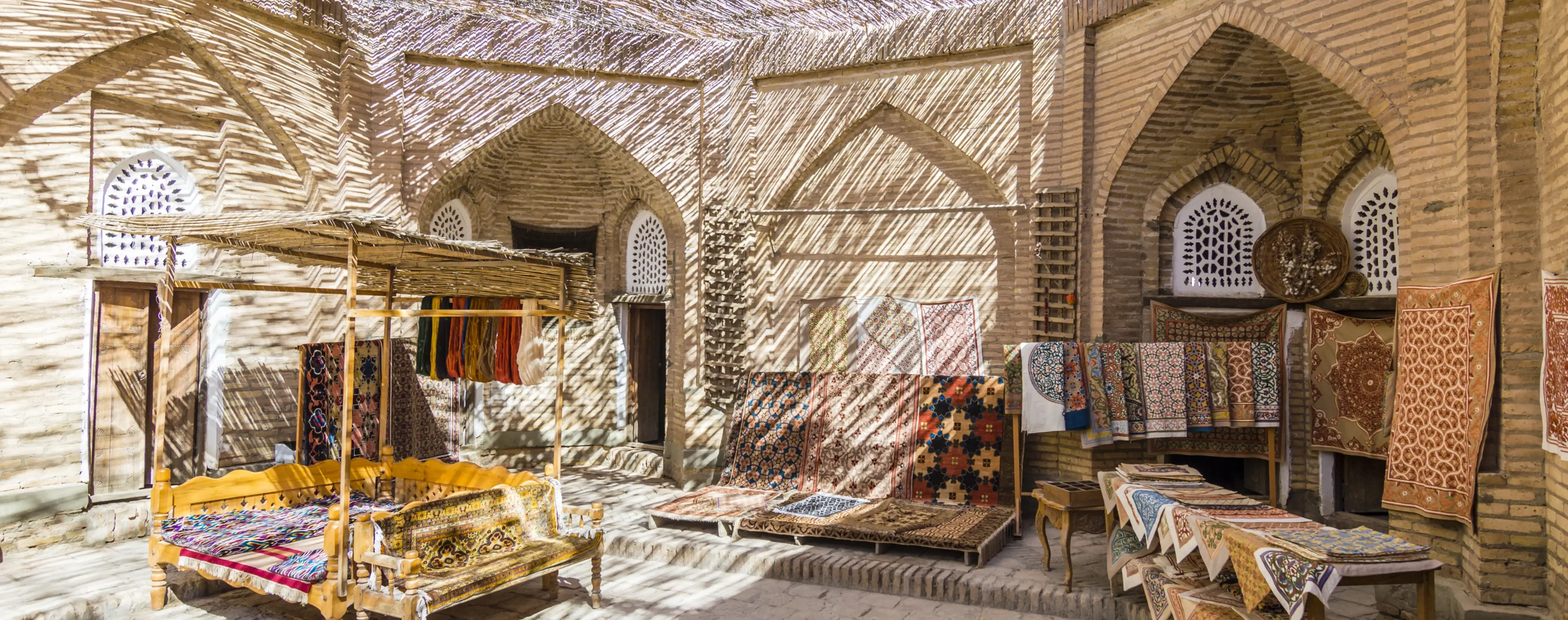
Beyond moving from one monument to the next, visitors spend time walking the lanes of Itchan Kala, entering interiors and courtyards, climbing minarets or wall sections where access is permitted, and photographing tiled facades and adobe streets, especially at sunrise or sunset. The main things to do are concentrated within the walled city, and some visitors stay overnight inside or near the old city to begin exploring early in the morning. Dining is associated with Uzbek cuisine and Khorezm regional cuisine, including shivit oshi and tukhum barak.
City Details
City overview – facts & data for travelers
Best tours and travel experiences across the continent
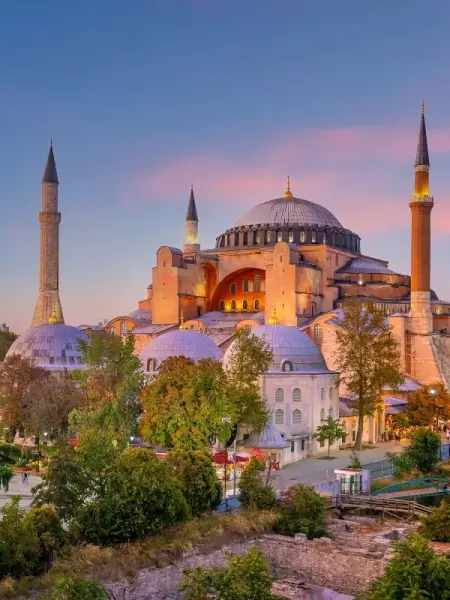

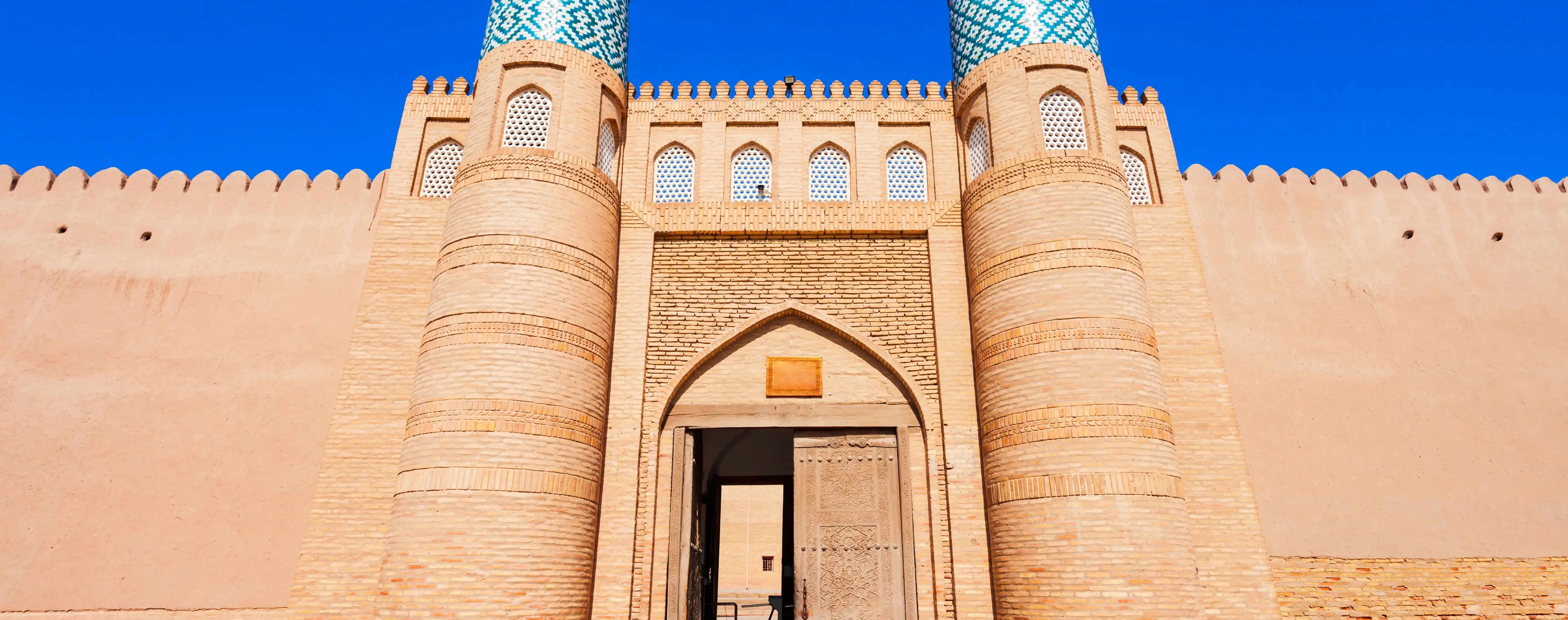
Khiva gallery
Guided tours, popular attractions, and top-rated hotels across the continent