
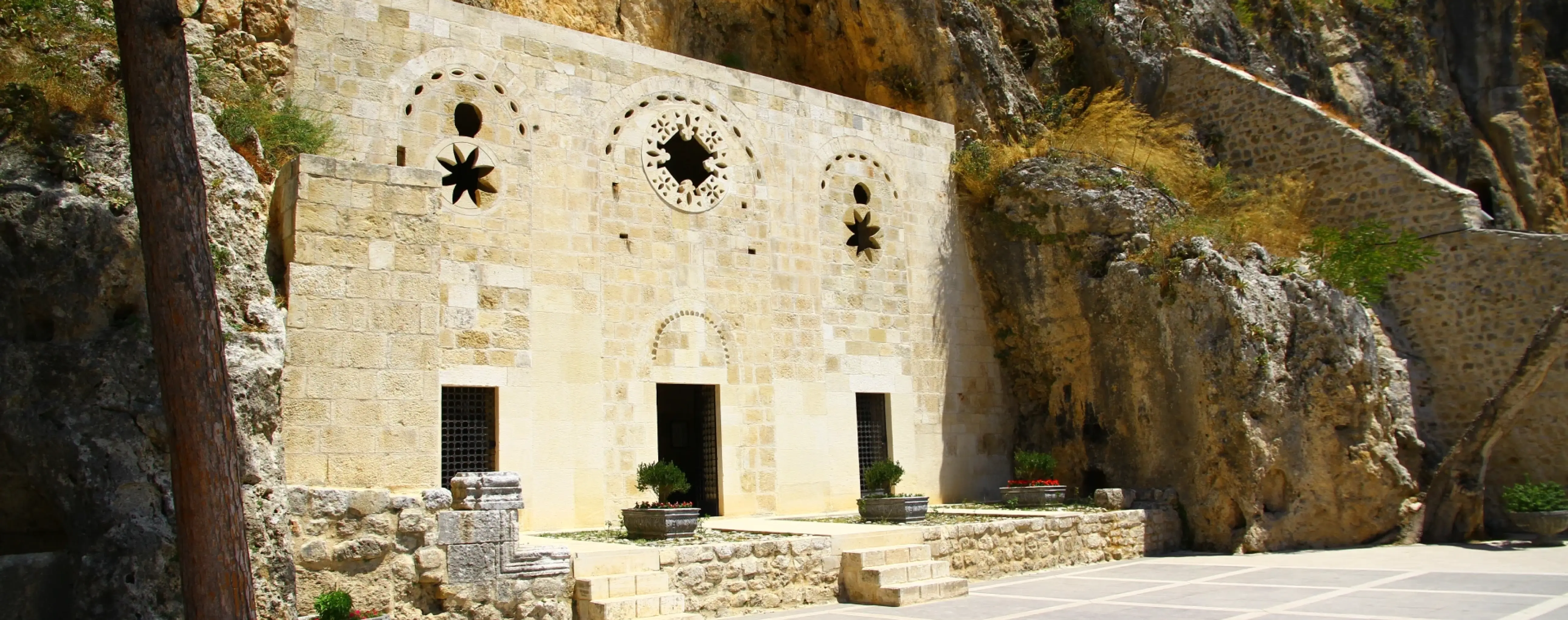
St. Peter's Grotto
St. Peter's Grotto in Hatay, Turkey
St. Peter's Grotto is located in Antakya, near the historic center of Hatay, at the foot of Mount Staurin. It is a natural cave that Christian tradition associates with the Apostle Peter and the early community of ancient Antioch. The site is known as one of the oldest Christian shrines in the region, although many early accounts of its foundation belong specifically to church tradition.
The modern stone facade at the entrance appeared much later than the cave itself and is usually associated with the time of the Crusades; it was later rebuilt and renovated several times. The interior of the grotto is relatively small, but it preserves elements that recall its long religious use: an altar area, stone seats, individual fragments of a mosaic floor, and traces of old painting.
One of the features of the grotto is a natural water runoff passing along the wall. In the past, this water was associated with rituals and pilgrimage practice. A narrow passage, traditionally called a secret tunnel, is also shown here; it is usually explained as a possible emergency exit, although precise information about its structure and use is limited.
Today, St. Peter's Grotto is of interest not only to believers but also to those who want to better understand the history of Antakya as one of the important centers of early Christianity. It is worth visiting for its historical context, unusual cave interior, and connection with the city's layered past.
St. Peter's Grotto on the map
St. Peter's Grotto and its details in Antakya
Traces of early Christian history and later reconstructions have been preserved here.
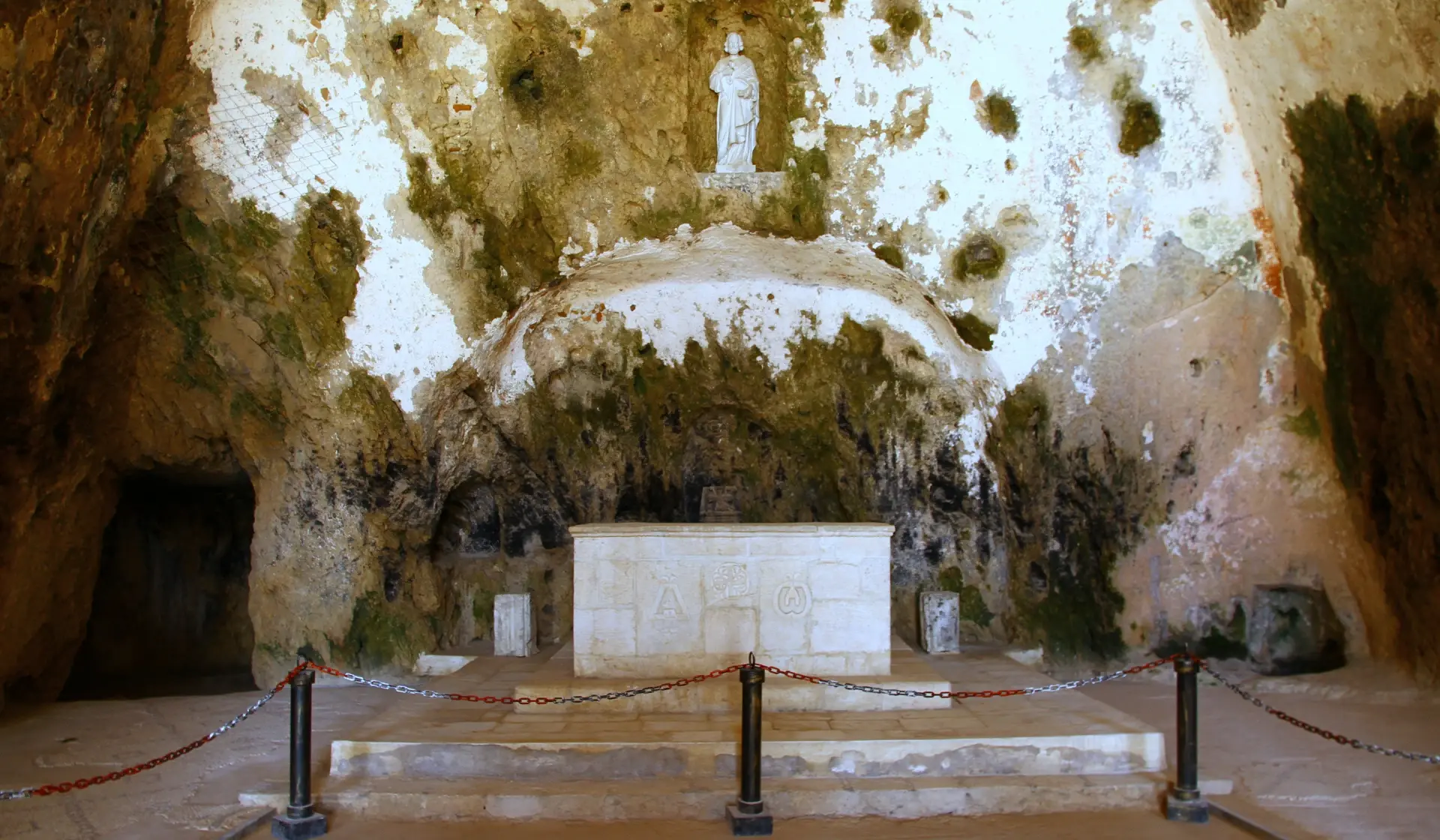
Cave sanctuary of early Christian Antioch
A visit to the grotto usually takes little time, but inside it is worth paying attention to details that are easy to miss. In the back, the altar area is visible, and traces of later alterations related to the cave's long use as a place of worship can be seen on the walls and floor. A small statue of Saint Peter and preserved architectural elements help to imagine how the space was adapted for religious gatherings.
The main feature of this place is the combination of a natural cave and man-made design. Visitors can see the stone facade at the entrance, walk inside beneath the vaults of the grotto, and examine sections of the old floor and wall covering. The narrow passage associated with a possible route of exit usually attracts particular interest, although it is better understood as part of local tradition rather than as a precisely established historical fact.
The grotto is located on a slope, so a short uphill walk leads to it. People usually come here from the center of Antakya by taxi or public transport toward the eastern part of the city, and then walk the remaining section on foot. Nearby are the Hatay Archaeological Museum and the historic quarters of Antakya, so a visit to the grotto can easily be combined with a walk around the city.
Best tours and travel experiences across the continent




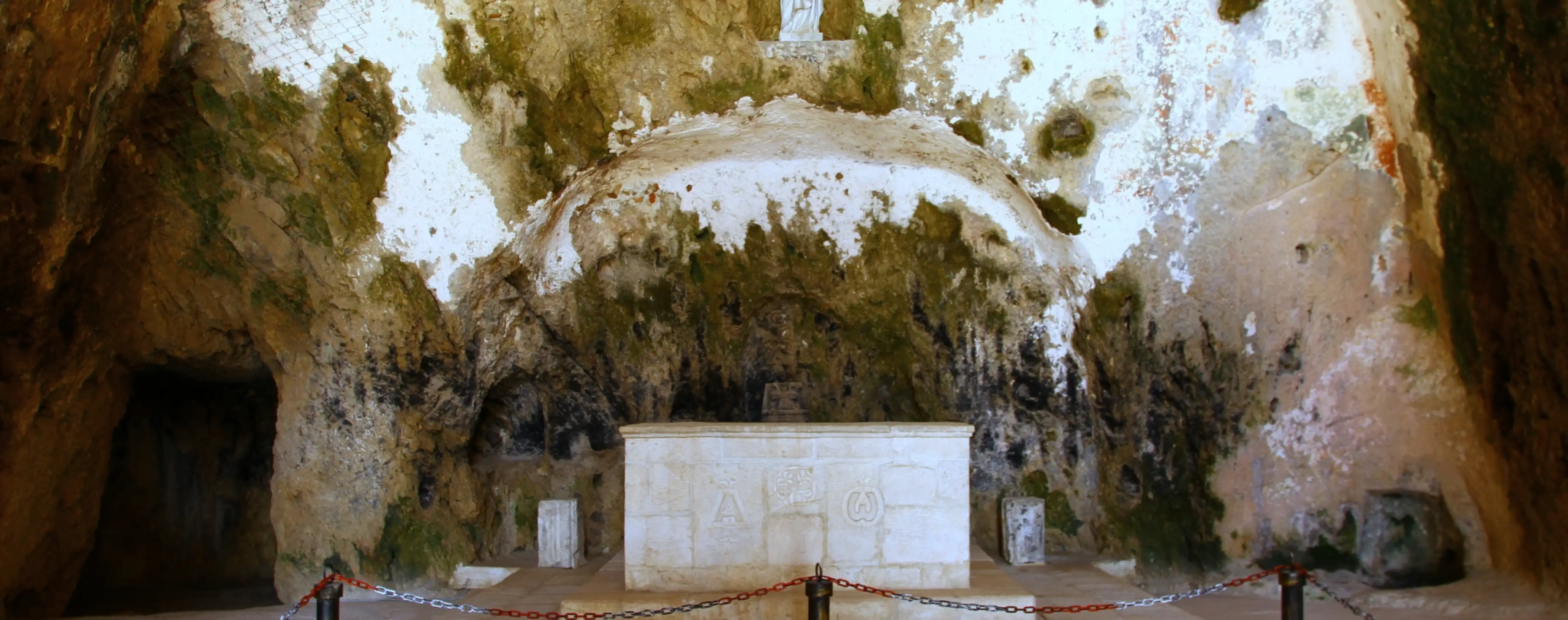
Photos of the grotto
Guided tours, popular attractions, and top-rated hotels across the continent


