
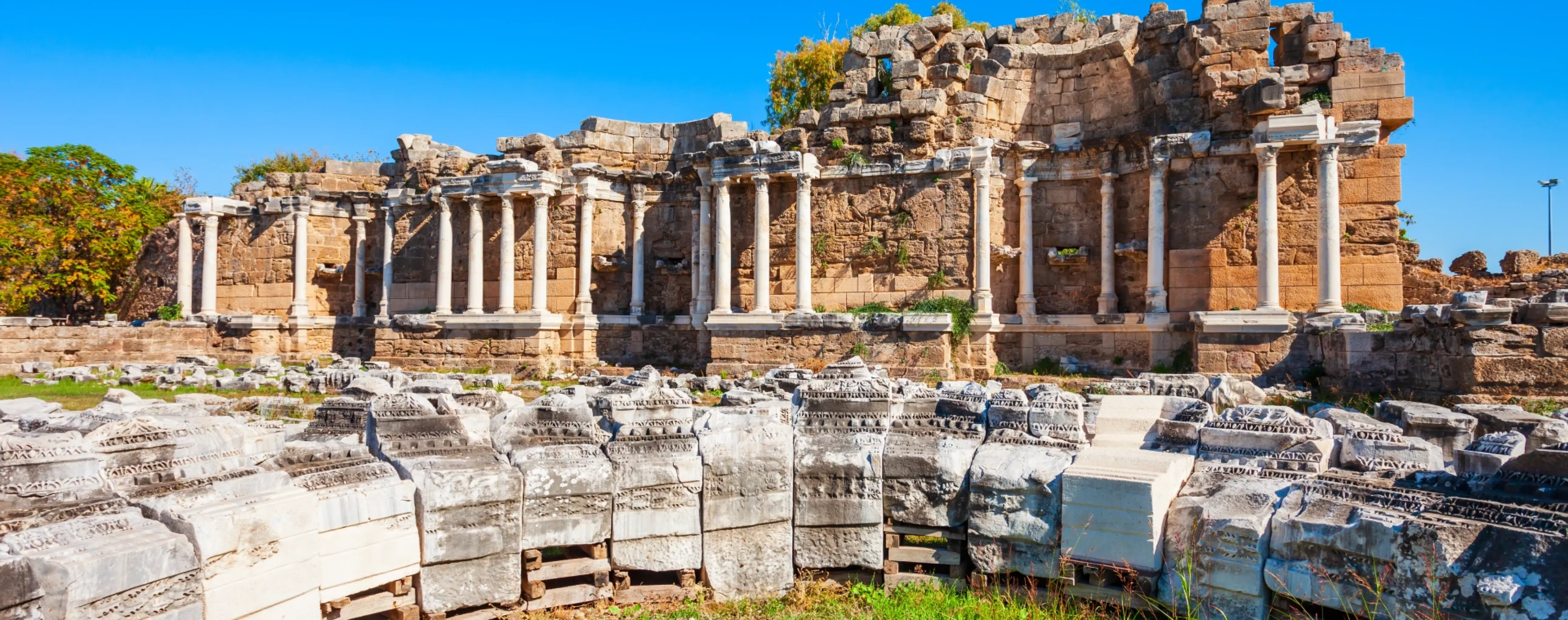
Three Pools Fountain / Monumental Nymphaeum
Three Pools Fountain / Monumental Nymphaeum in Side, Turkey
The Three Pools Fountain, also known as the monumental Nymphaeum, is located at the entrance to ancient Side, next to the main gate of the ancient city. It is situated in the northern part of the archaeological zone, not far from the modern center of Side, and is usually one of the first ancient structures visitors see on their way to the main monuments.
The structure dates back to the Roman period and is generally dated to the 2nd century AD. It was a ceremonial city fountain connected to the water supply system: water arrived here via the aqueduct and was then distributed to different parts of the city. In Roman Side, such structures had two functions at once - practical and public, since they served as an important element of the city's infrastructure while also framing the entrance to the city.
Originally, the Nymphaeum was a large multi-tiered structure with a wide facade. It was decorated with columns, niches, statues, and marble cladding, while the pools and water cascades emphasized the status of this place. Today, ruins remain, but they still allow visitors to imagine the monument's original scale and see the characteristic features of Roman architecture.
For tourists, the fountain is interesting not only as a striking architectural object, but also as part of the engineering system of the ancient city. It is convenient to explore at the beginning of a walk through the archaeological area of Side, combining the visit with the city walls, the ancient street, the gate, and other nearby ruins.
Three Pools Fountain / Monumental Nymphaeum on the map
Side: Archaeological monuments
State Agora in Side, Ancient Hospital in Side, Roman Theatre in Side, The Colonnaded Streets of Side
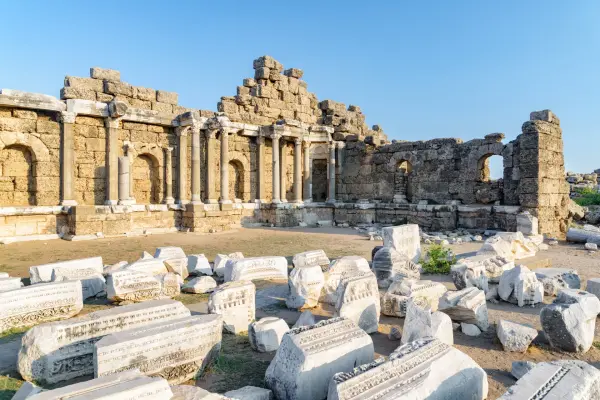
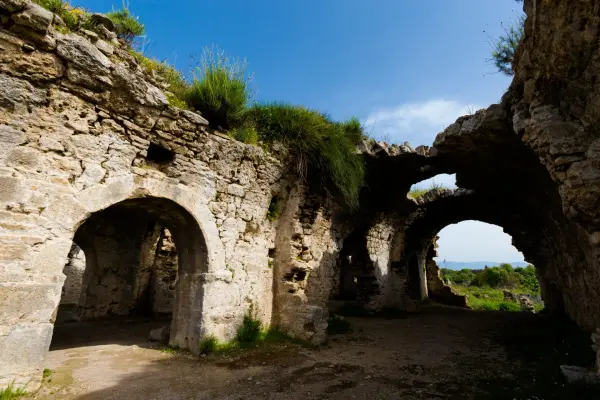
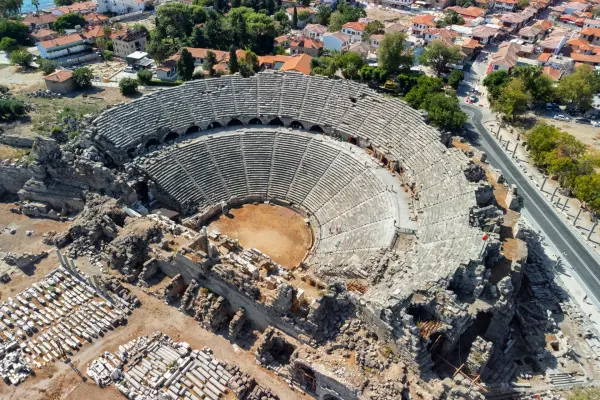
Three Pools Fountain / Monumental Nymphaeum in Side
A Roman fountain at the entrance to the ancient city, connected to Side's water supply.
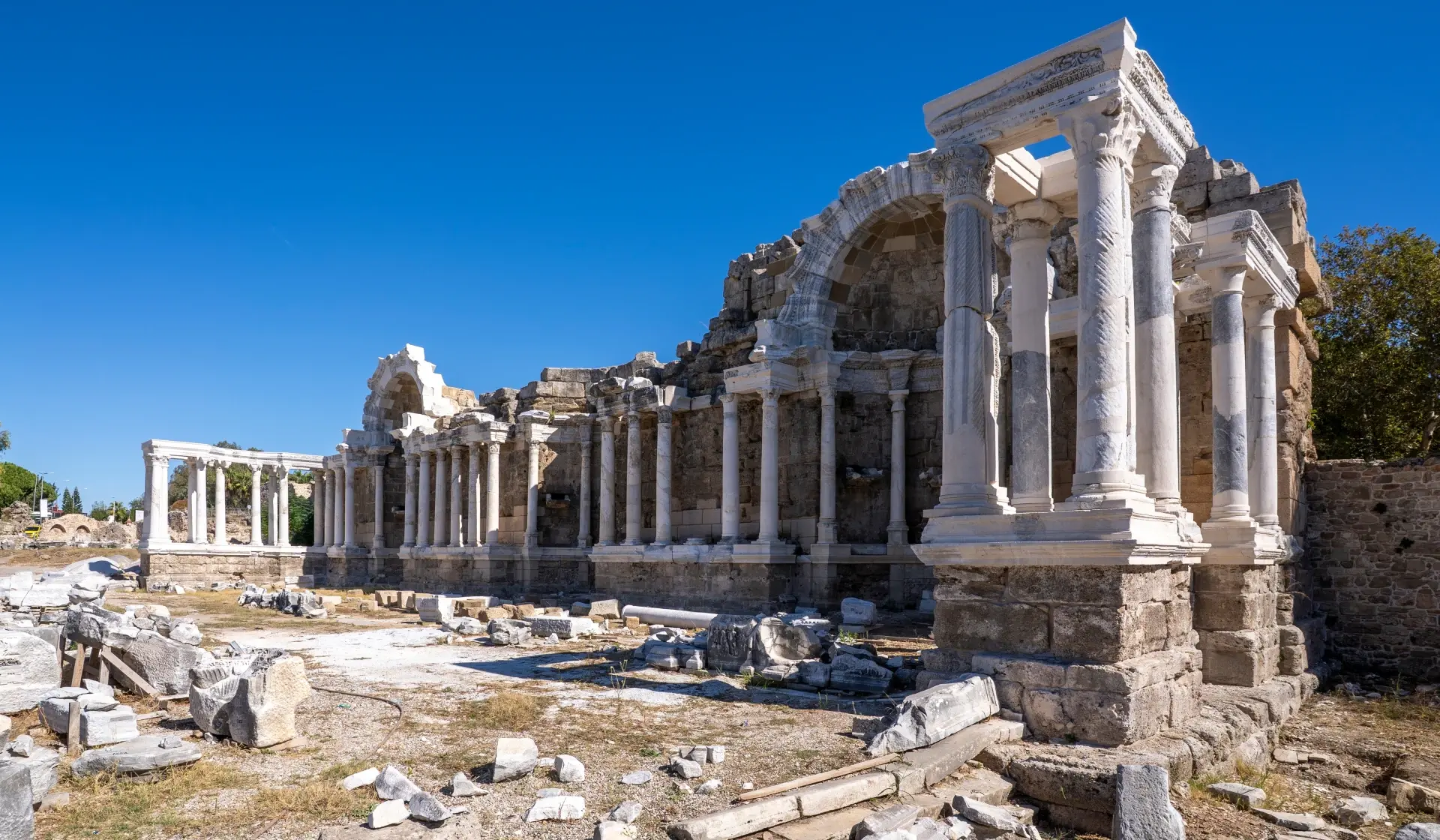
Roman ceremonial fountain at the main entrance to the ancient city
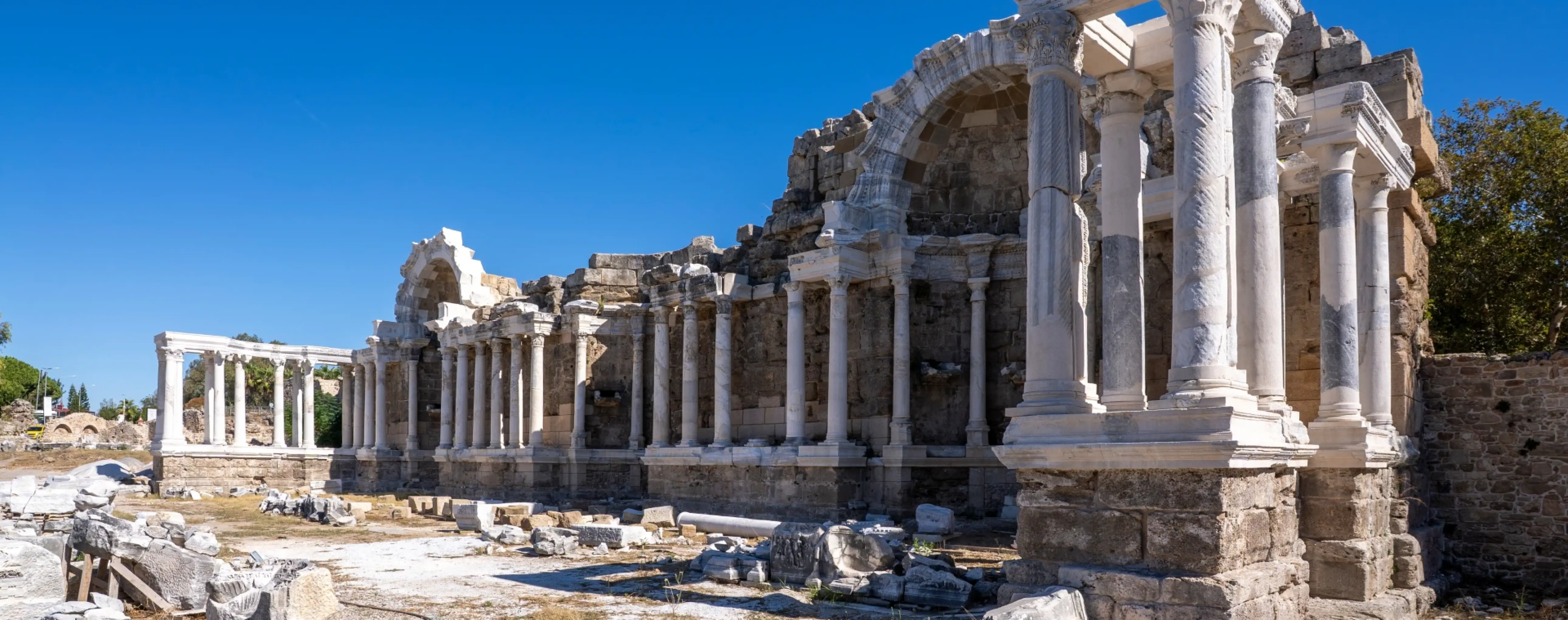
Today, visitors primarily see the massive remains of the facade and stone elements of a large public structure that once greeted those entering Side. What stands out most here are the scale of the building, the thickness of the walls, the niches, and fragments of the decorative design. Even in its ruined state, the Nymphaeum helps illustrate how thoughtfully architecture, water supply, and the design of public spaces were combined in a Roman city.
A visit usually does not take much time, but it is a convenient point from which to begin exploring the ancient city and to pay attention to the layout of the entrance part of the archaeological zone. The fountain is especially interesting for those who want to see not only temples and the theater, but also elements of everyday urban infrastructure. On site, it is worth examining the preserved masonry and imagining how water flowed into the pools and was then distributed further through the city.
Nearby are the main city gate, sections of the ancient walls, the colonnaded street, and other ruins from the Roman period, so the visit can easily be combined with a longer walk through the historic center of ancient Side. You can get here on foot from the center of Side by heading toward the entrance to the archaeological zone.
Best tours and travel experiences across the continent




Photos of the Nymphaeum
Guided tours, popular attractions, and top-rated hotels across the continent


