
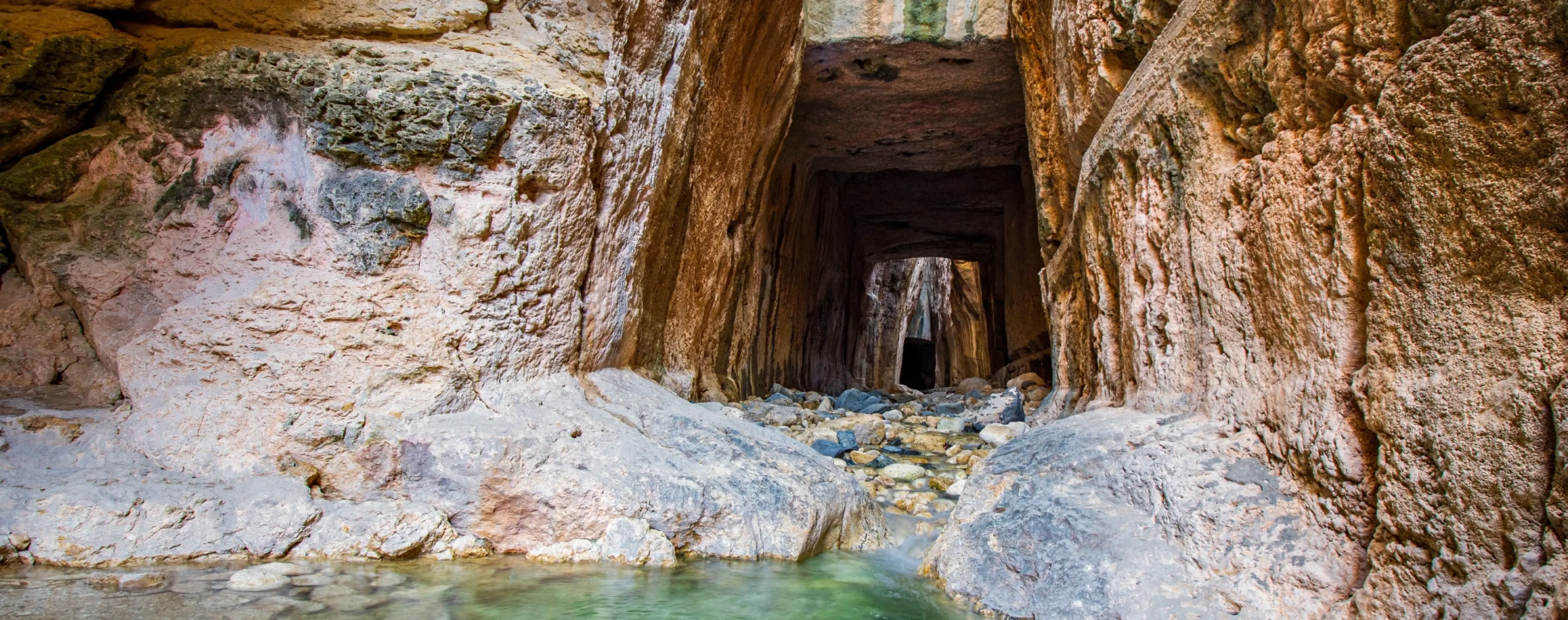
Titus Tunnel
Titus Tunnel in Hatay, Turkey
Titus Tunnel is located in the Samandag district, southwest of central Antakya in Hatay Province, near the ruins of ancient Seleucia Pieria. It is an ancient hydraulic engineering structure created by the Romans to divert water from the mountain slopes and protect the harbor from silting. Thanks to its well-preserved sections, the complex makes it possible to imagine how practical challenges were solved in a major port city during Roman times.
Construction of the structure began in the 1st century AD under Emperor Vespasian, then work continued under Titus and was completed later, as evidenced by the surviving inscriptions. The complex consists of an open channel cut into the rock and a short tunnel section. The total length of the system is about 1.4 km, and the carved section itself is impressive for the scale of manual work in hard stone.
Today, people come here to walk along the ancient channel, see traces of engineering work on the rock, and feel the scale of Roman construction beyond the usual urban ruins. The route is not difficult, but in places it runs over uneven stone surfaces, and lighting is limited in the tunnel section. Therefore, closed shoes are more convenient for visiting, and in hot weather it is worth bringing water.
Nearby is Besikli Cave, a burial complex with niches carved into the rock, which is often visited together with the tunnel. The site will be especially interesting to those interested in ancient history, archaeology, and engineering monuments, not only classical temples and theaters.
Titus Tunnel on the map
Titus Tunnel and the Roman drainage channel near Seleucia Pieria
Here you can see the Roman engineering response to water flowing down from the mountains.
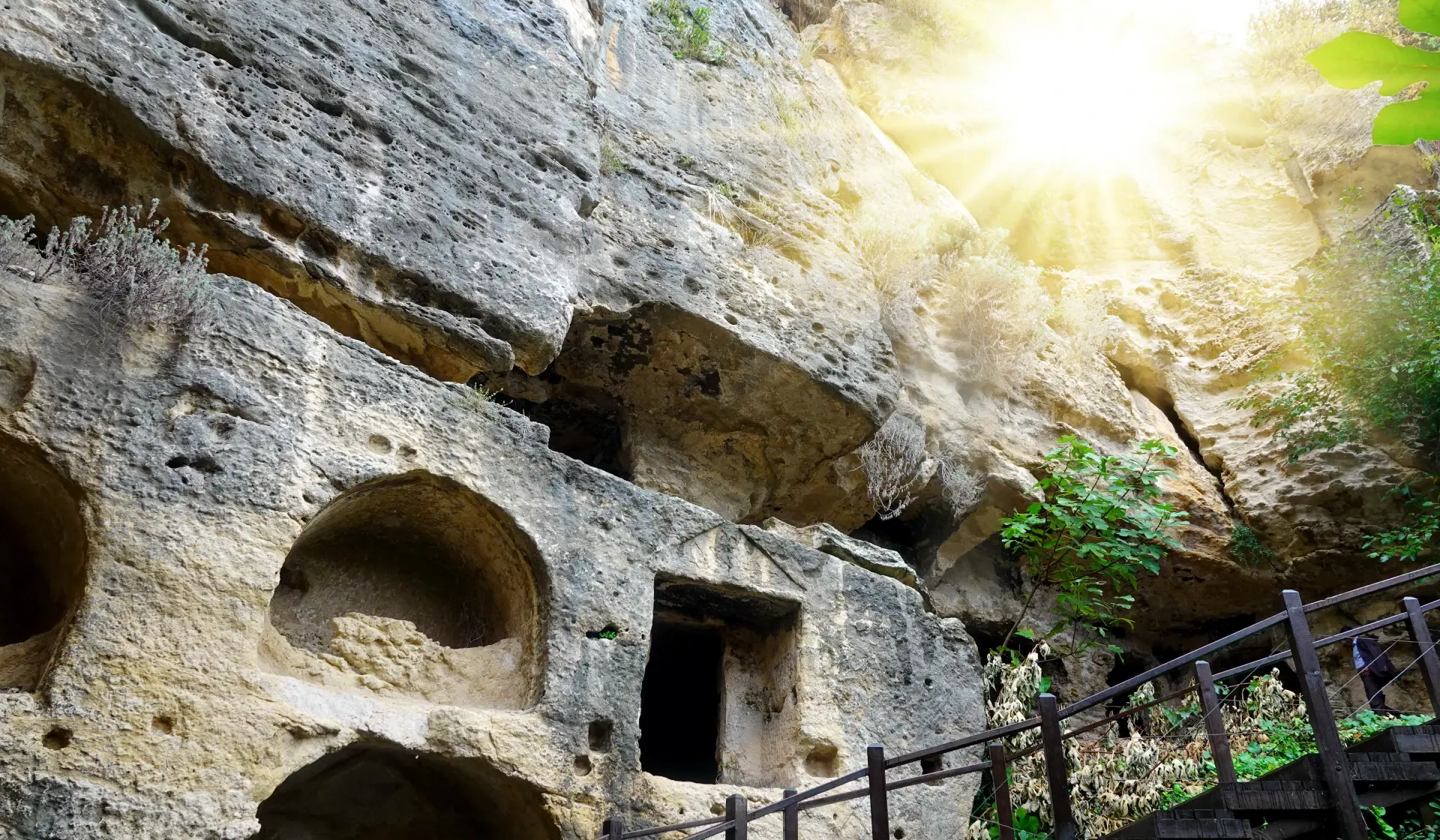
A Roman drainage channel carved into the rock near Seleucia Pieria
During a walk through the complex, the different parts of the structure are clearly visible: the open channel, the rock walls with even traces of workmanship, and the passage through the cut section itself. Even without special knowledge, it is easy to understand the purpose of the site - it diverted water flows that descended from the mountains after heavy rains and threatened the ancient port. This is a rare case where the engineering function of the monument can be understood directly on site.
Visitors usually walk along the stone channel on foot, observe the scale of the excavation, and take photos of the narrow passage between the high rock walls. In some sections, the surface may be slippery or uneven, especially after rain, and inside the tunnel there is noticeably less light than outside. Comfortable shoes and careful attention on turns and stepped stones are helpful for a comfortable visit.
Nearby, you can see Besikli Cave, known for its rock-cut burial chambers, and also explore the remains of ancient Seleucia Pieria. These places are easy to combine into one trip if you are interested in the history of ancient Antioch and its surroundings.
You can usually get here by car or taxi from central Antakya toward Samandag, and then walk to the archaeological area through the marked entrance. Before your trip, it is worth checking visiting hours, as access conditions may change.
Best tours and travel experiences across the continent




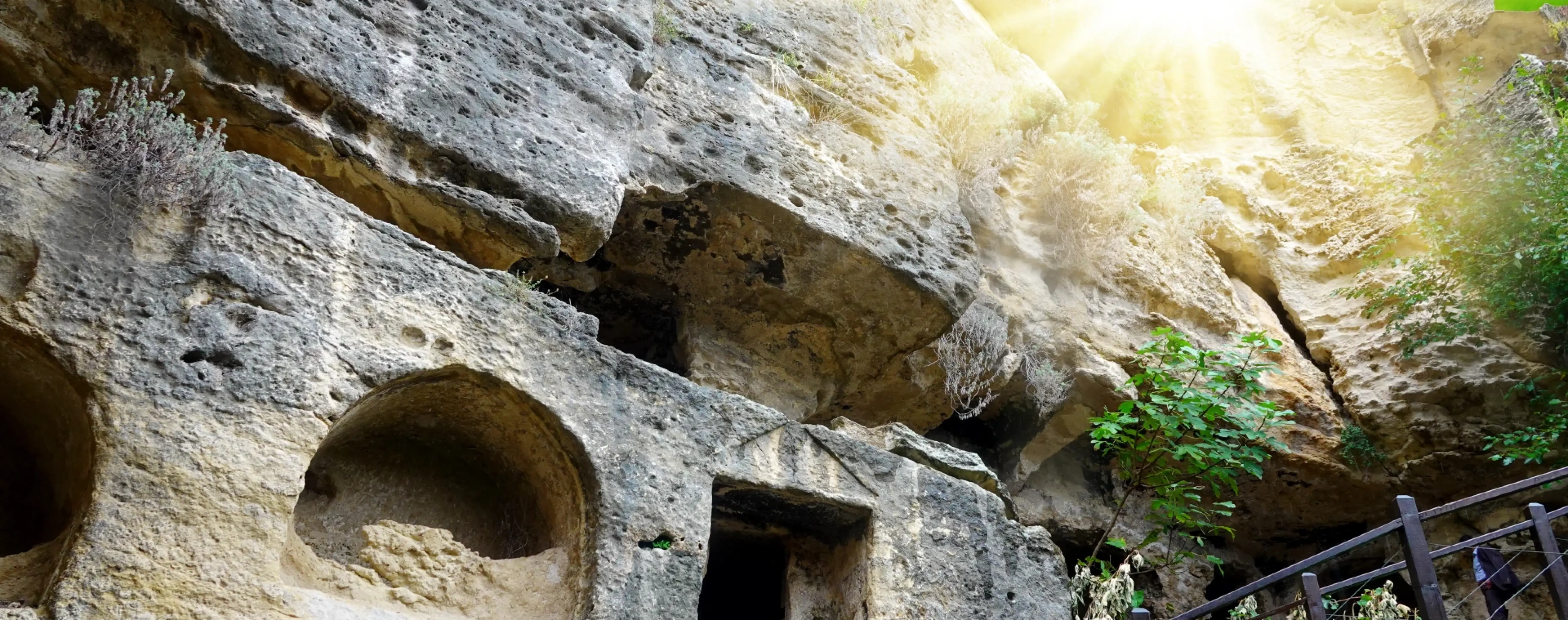
Tunnel photos
Guided tours, popular attractions, and top-rated hotels across the continent


