

The Tombs of Suleiman the Magnificent and Roxelana
The Tombs of Suleiman the Magnificent and Roxelana in Istanbul, Turkey
The tombs of Suleiman the Magnificent and Hurrem Sultan, known as Roxelana, are located within the Suleymaniye complex in the Fatih district, not far from the center of Istanbul. They stand in the hazire - a traditional Ottoman cemetery garden attached to a mosque - and are among the most famous memorial structures of the Ottoman period in the city.
The turbe of Sultan Suleiman I was built after his death in 1566. It is a large domed building of polygonal form with an ambulatory colonnade, associated with the architectural school of Mimar Sinan. Inside, visitors can see Iznik tiles, calligraphic inscriptions, stained glass, and a richly decorated space characteristic of 16th-century sultanic mausoleums.
Nearby stands the tomb of Hurrem Sultan, Suleiman's wife and one of the most prominent figures at the Ottoman court. Her turbe is smaller in size, but it also stands out for its carefully designed decorative interior: marble finishes, tiles, and Quranic inscriptions. Both mausoleums offer insight into the court culture and funerary architecture of the Ottoman Empire.
For tourists, this place is interesting not only for its history, but also for the opportunity to see an important part of the Suleymaniye ensemble beyond the main prayer hall. A visit is usually combined with seeing the mosque, the inner courtyard, and the panoramic viewpoints around the complex. Before visiting, it is worth considering the opening hours of the religious site and possible restrictions during prayer times.
The Tombs of Suleiman the Magnificent and Roxelana on the map
Istanbul: Mausoleums and tombs
Tomb of the Architect Mimar Sinan, Mausoleum of Mehmed III, Eyup Sultan Cemetery
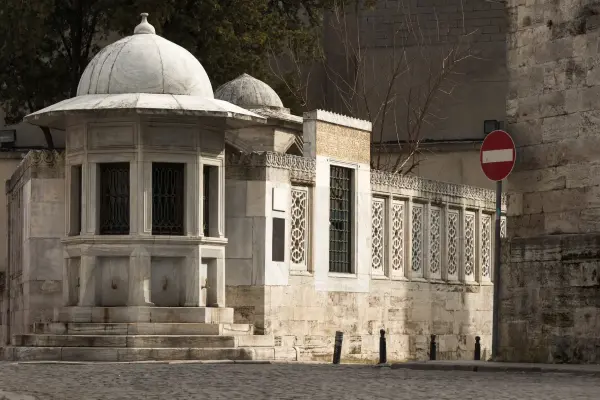
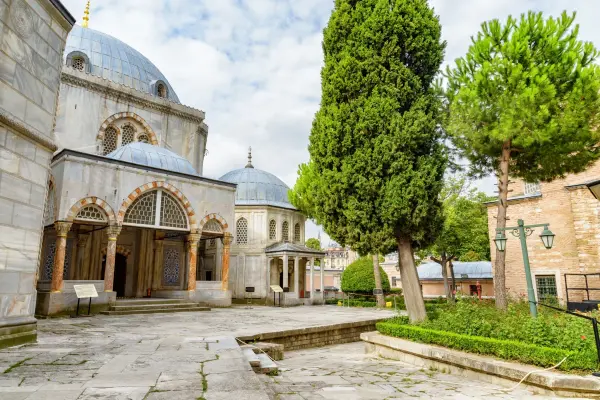
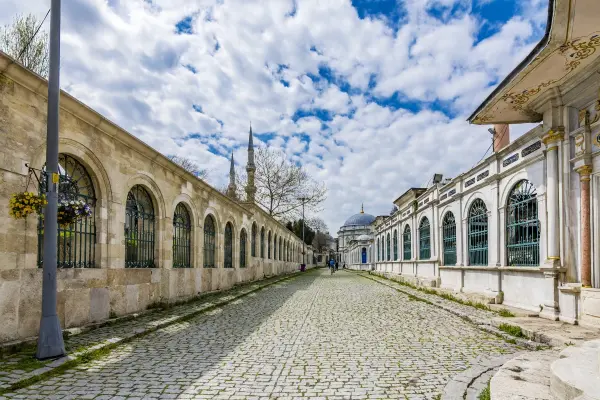
The Tombs of Suleiman the Magnificent and Roxelana - architecture and visiting
A place to explore Ottoman funerary architecture
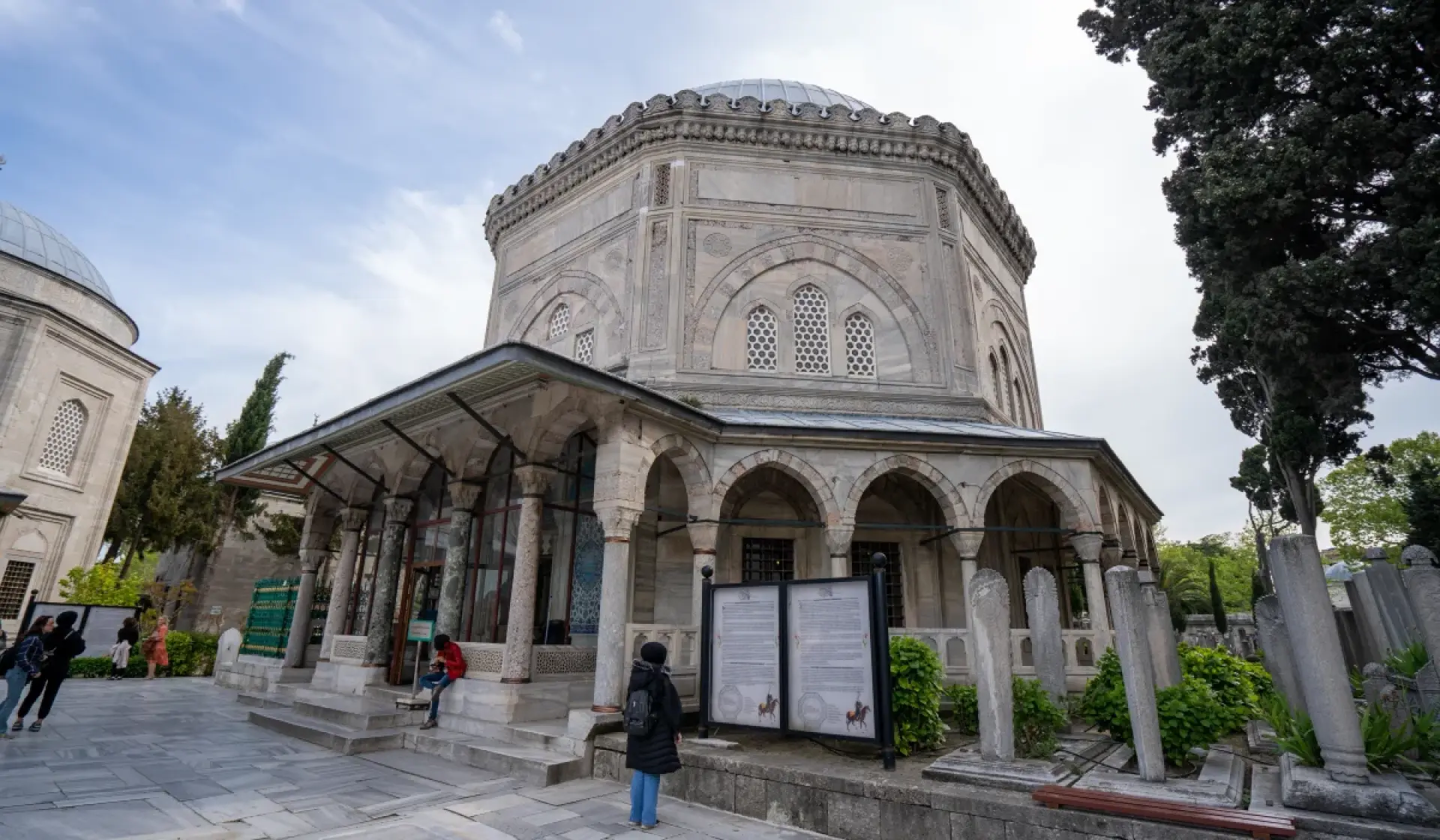
16th-century Ottoman turbes in the garden of the Suleymaniye complex
Visitors reach this place through the grounds of the Suleymaniye Mosque, where the tombs stand among old gravestones, trees, and paved paths. Inside Suleiman's turbe, attention is usually drawn to the domed space, colored windows, ornamental panels, and the central placement of the sarcophagus. In the mausoleum of Hurrem Sultan, the interior is more intimate, and the decorative details are best viewed up close.
This place is suitable for a quiet appreciation of architecture and decorative art without a museum exhibition or display cases. It is important to observe the rules of the active religious complex here: speak quietly, do not disturb worshippers, and when entering the mosque grounds, choose modest clothing. Photography is usually allowed, but restrictions may apply in certain rooms or during services.
Nearby are the Suleymaniye Mosque itself, the inner courtyards of the complex, madrasas, and viewpoints overlooking the Golden Horn. The most convenient way to get there is by tram to the Eminonu or Beyazit area, and then walk uphill toward Suleymaniye.
Best tours and travel experiences across the continent


Photos of the tombs
Guided tours, popular attractions, and top-rated hotels across the continent


