
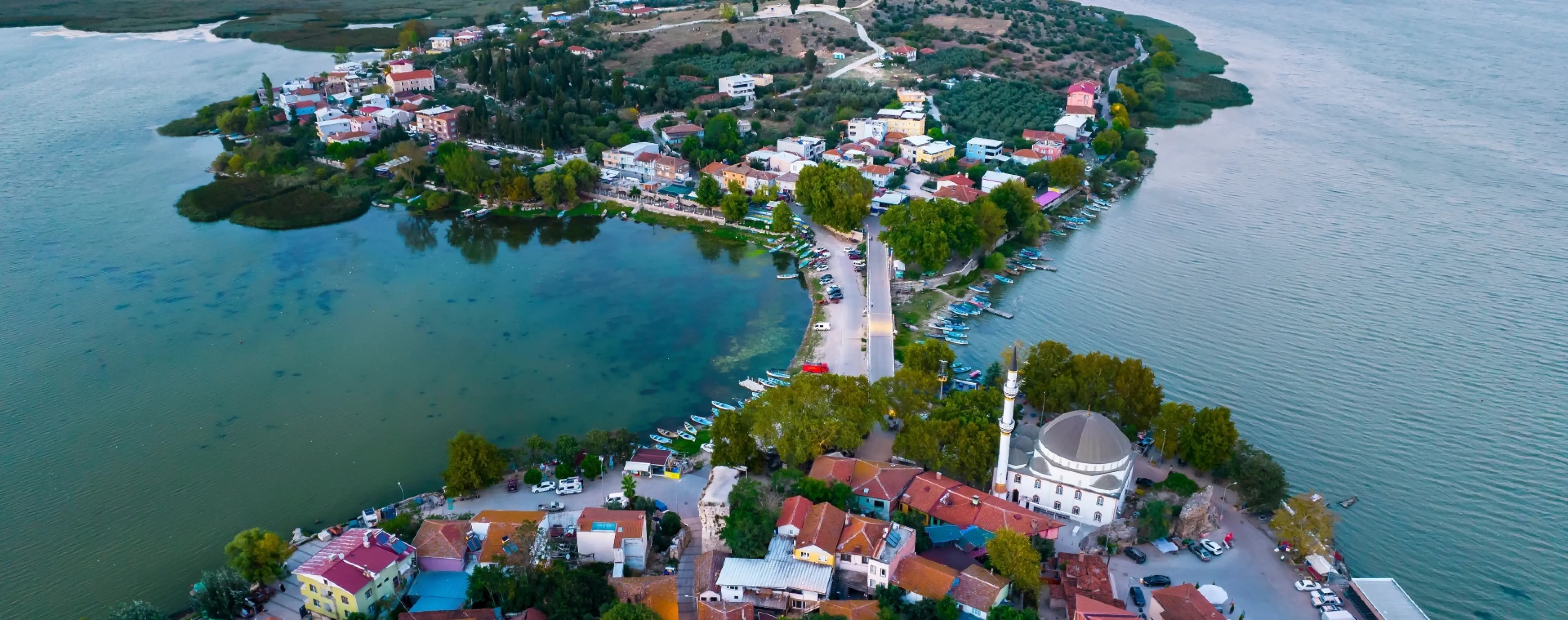
Lake Uluabat
Lake Uluabat near Bursa, Turkey - a freshwater ecosystem
Lake Uluabat is located west of central Bursa and is one of the largest shallow lakes in the Marmara Sea region. In antiquity, it was known as Apolyont, and today it is valued primarily as an important freshwater ecosystem. In 1998, the lake was included in the list of wetlands of international importance under the Ramsar Convention.
The shores and waters of Uluabat combine open stretches of water, reed beds, marshy areas, and small islands. This environment is important for many bird species: seasonal migrations, feeding, and, in certain areas, nesting can be observed here. For this reason, the lake is well known among birdwatching enthusiasts and those interested in the natural landscapes of northwestern Turkey.
One of the most visited places on the lake is the village of Golyazi on the northeastern shore. The historic part of the settlement is located on a former island connected to the mainland by a causeway. Old houses, fishing boats by the water, narrow streets, and the 19th-century Church of Saint Panteleimon have been preserved here, and nearby stands an old plane tree known as the Crying Plane Tree.
Uluabat is well suited for a მშვიდமான day trip from Bursa, especially if you want to see not only the rural landscape but also the wetland nature of the region. When planning a visit, it is worth considering seasonal fluctuations in water levels: the appearance of the shoreline, the condition of coastal paths, and birdwatching opportunities change throughout the year. During your visit, it is important not to enter sensitive sections of the shore and not to disturb the birds, especially during the nesting period.
Lake Uluabat on the map
What to see at Lake Uluabat and in the village of Golyazi
This is a place to observe waterfowl and explore coastal landscapes.
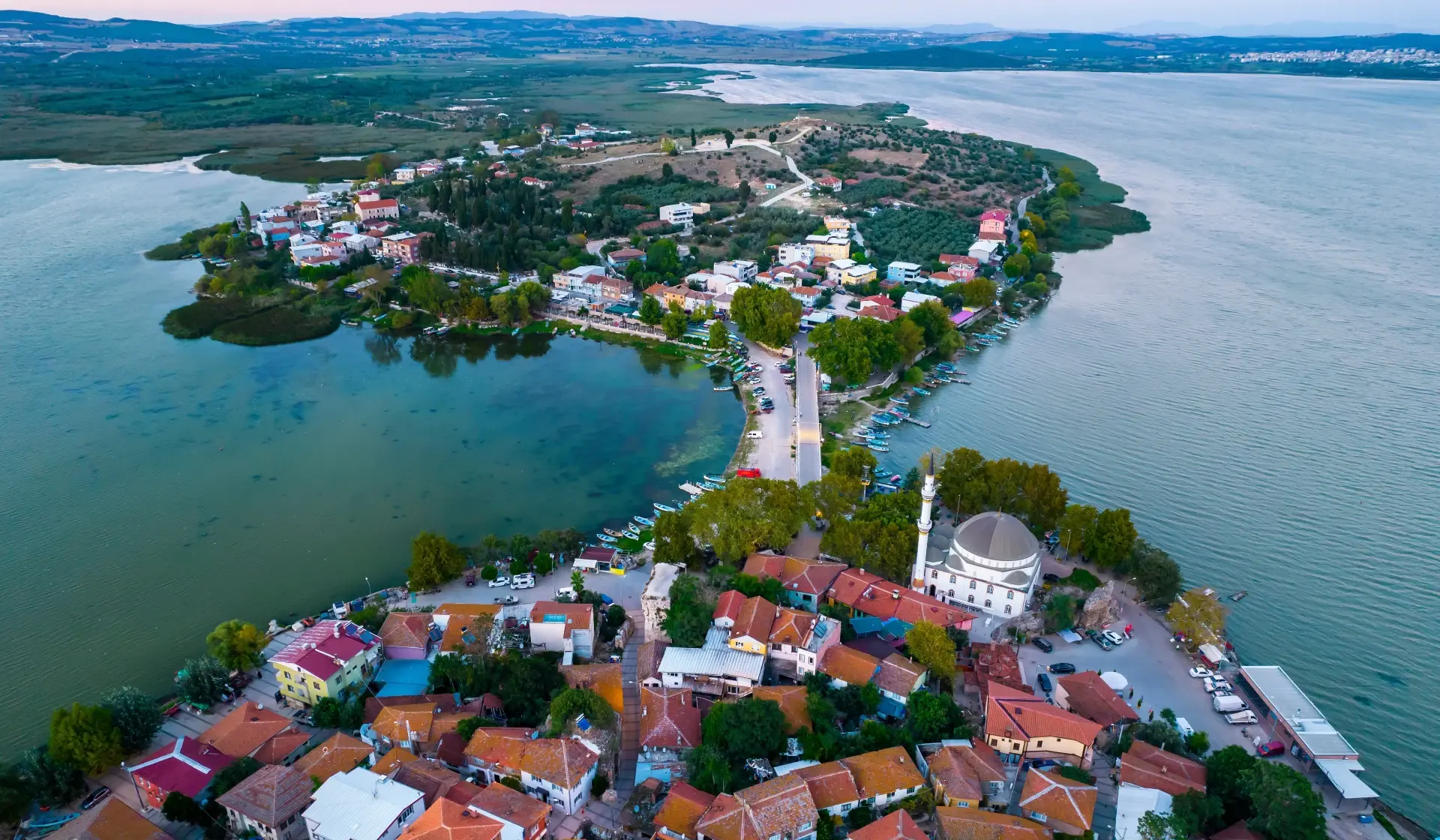
Shallow waters, birds, and an old fishing village
The lake is interesting not so much for beach holidays as for observing nature and the life of the settlements along its shores. Different sections of the shore offer views of broad shallow waters, bands of reeds, and seasonally flooded lowlands. It is best to come with binoculars: even from accessible points along the shore, you can spot waterfowl and shorebirds, although the range of species depends on the season.
The most convenient place to get acquainted with the lake is Golyazi. Here, visitors stroll along the waterfront and old streets, look at fishing boats and the stone buildings of the historic quarter, and also approach the Crying Plane Tree, one of the most famous trees in the area. The village has places from which it is convenient to photograph the lake at sunrise and closer to evening, when the light is softer and the water calmer.
For walks around the area, it is important to choose equipped or clearly accessible sections of the shore, because part of the coastal zone is marshy and sensitive to external impact. Swimming and active water recreation are not the main purpose of a trip here, while unhurried exploration of the landscape, photography, and observation of the lake’s seasonal changes are most suitable. Nearby, you can also explore the rural surroundings west of Bursa and combine the trip with visits to other places in the direction of Mustafakemalpasa.
From Bursa, the lake is usually reached by car via the westbound road; the journey to Golyazi takes about an hour depending on traffic and your departure point in central Bursa.
Best tours and travel experiences across the continent




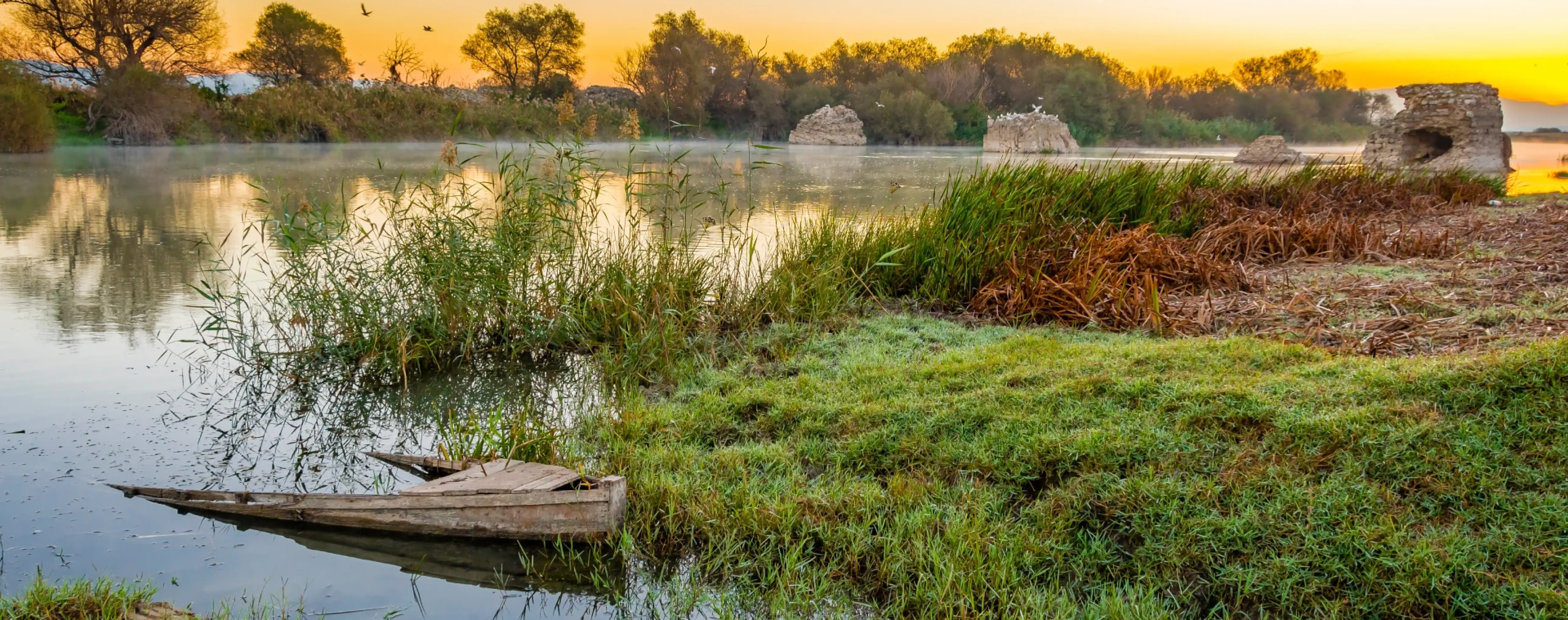
photos of Golyazi and Uluabat
Guided tours, popular attractions, and top-rated hotels across the continent


