
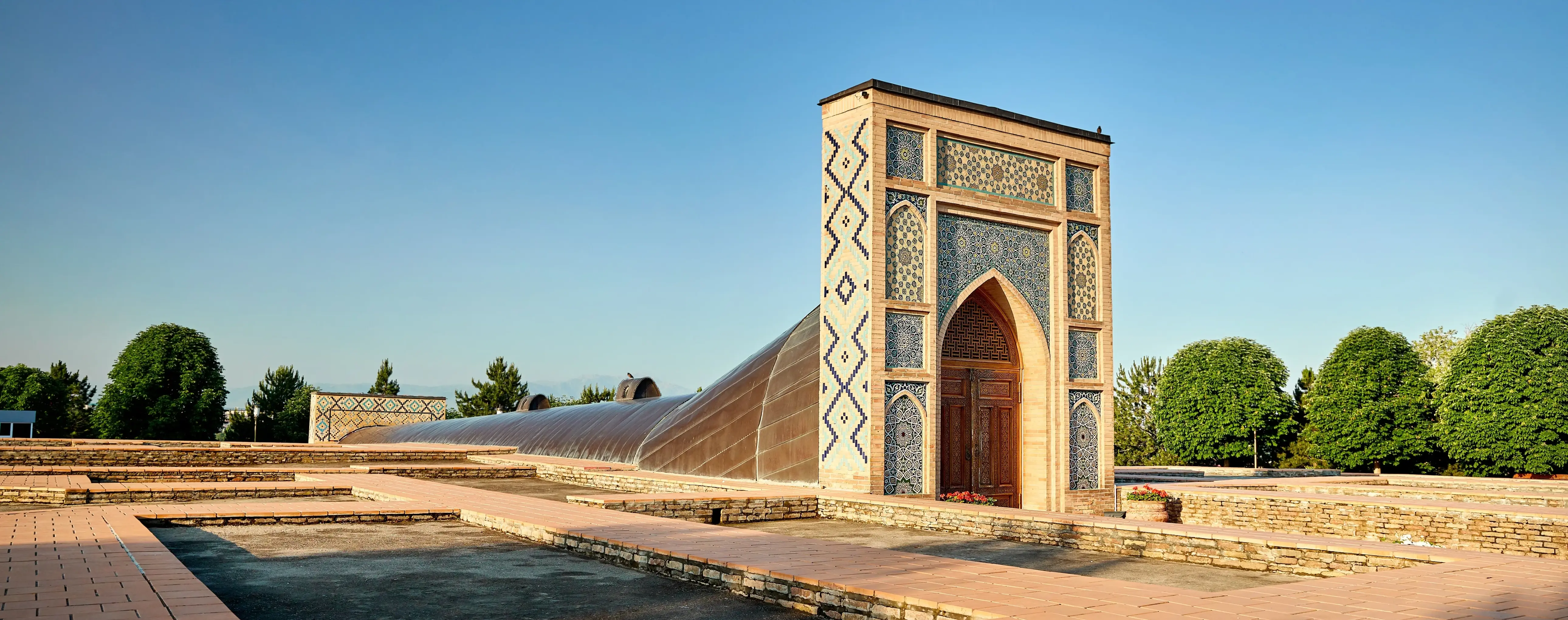
Ulugh Beg Observatory
Ulugh Beg Observatory in Samarkand, Uzbekistan
Ulugh Beg Observatory is located in the northeastern part of Samarkand, on Kuhak Hill, not far from the ancient settlement of Afrasiab. It is one of the most famous monuments in the history of science in Uzbekistan, associated with the name of the ruler and scholar Mirzo Ulugh Beg. In the 15th century, a major astronomical school operated here, where precise observations of the movement of celestial bodies were carried out.
The observatory was built as a special scientific structure rather than as a palace or religious complex. The main value of the monument today is the preserved underground part of a huge astronomical instrument that was used to measure the height of celestial bodies above the horizon. It was thanks to such observations that the data included in the famous star catalog "Zij-i Guragani" were obtained.
The building itself has not been fully preserved, but archaeological research has made it possible to reconstruct its overall appearance and significance. A museum dedicated to Ulugh Beg, his associates, and the development of astronomy in Samarkand has been created nearby. The exhibition helps visitors understand how mathematics, observational astronomy, and engineering precision were combined here in the 15th century.
For tourists, this place is interesting not only as an archaeological monument, but also as an opportunity to see a rare example of a medieval scientific center. A visit to the observatory combines well with a walk through Afrasiab and other historical sites in Samarkand, especially if you want to better understand the intellectual history of the city, and not only its architecture.
Ulugh Beg Observatory on the map
Ulugh Beg Observatory and the Museum of the History of Astronomy
Here, the history of 15th-century Samarkand science unfolds.
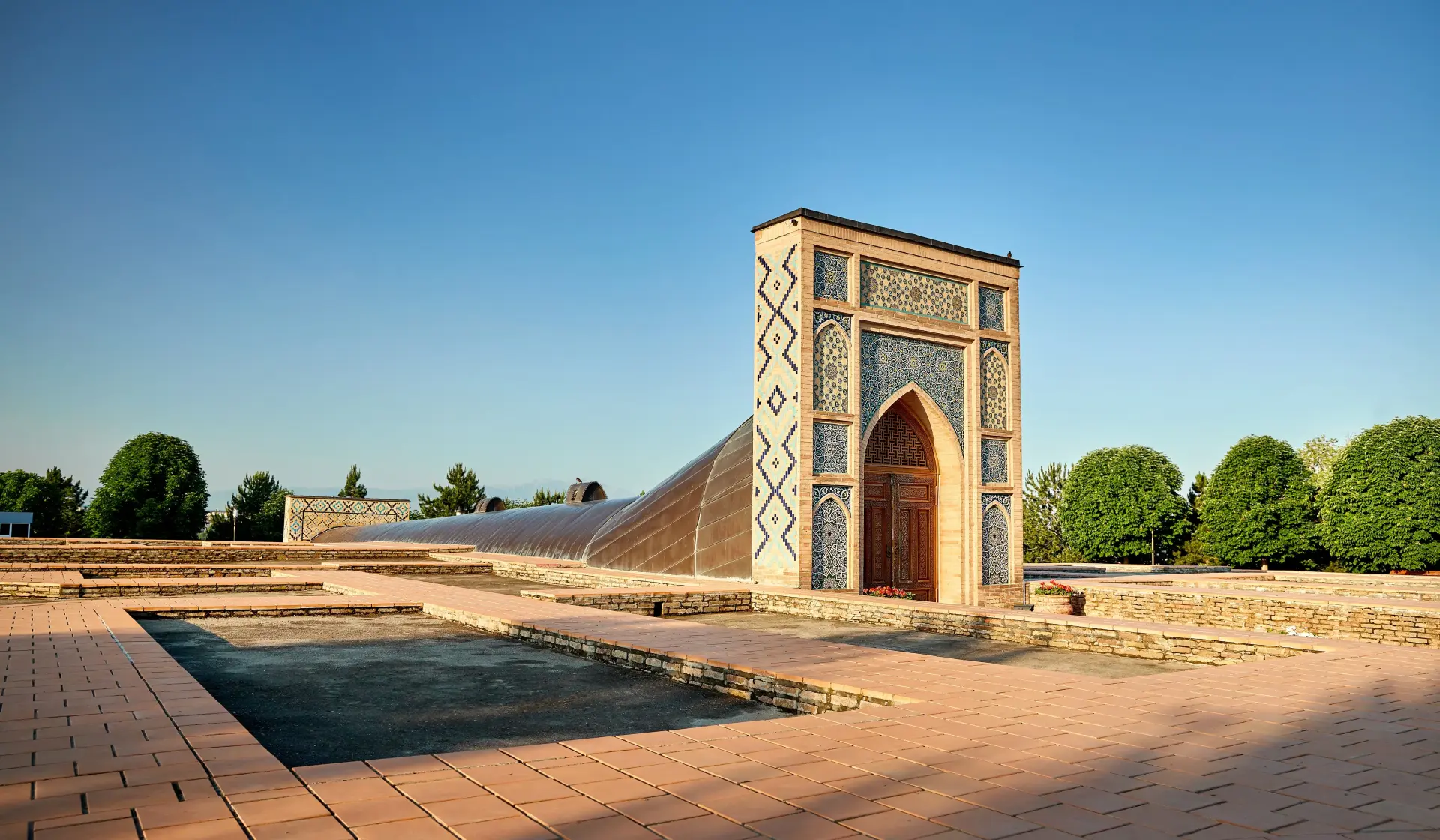
15th-century underground astronomical instrument
On the grounds of the complex, visitors first of all see the preserved fragment of a giant arc-shaped measuring device placed in a deep stone channel. It is this part that makes it possible to imagine the scale of the observatory and the level of precision that the scholars of Samarkand were striving for. Nearby are explanatory materials, models, and museum exhibits related to the history of the construction and the research carried out here.
The museum section tells about the scientific environment of Ulugh Beg's time, his work as an astronomer and mathematician, as well as the people who were connected with the Samarkand school - including Qadi Zada al-Rumi and Ali Qushji. Here you can see reconstructions, photographs of archaeological excavations, and materials about how the monument was discovered and studied in the 20th century.
A visit usually does not take too much time, so the observatory is easy to include in an itinerary around the northeastern part of Samarkand. Nearby are the Afrasiab Museum and settlement, as well as the Khoja Daniyar Mausoleum, which are often visited on the same day.
The easiest way to get here is by taxi or by car from the center of Samarkand; the journey usually takes little time. The site will appeal to those who are interested not only in monumental architecture, but also in the history of science, archaeology, and the medieval scholarly tradition of Central Asia.
Best tours and travel experiences across the continent




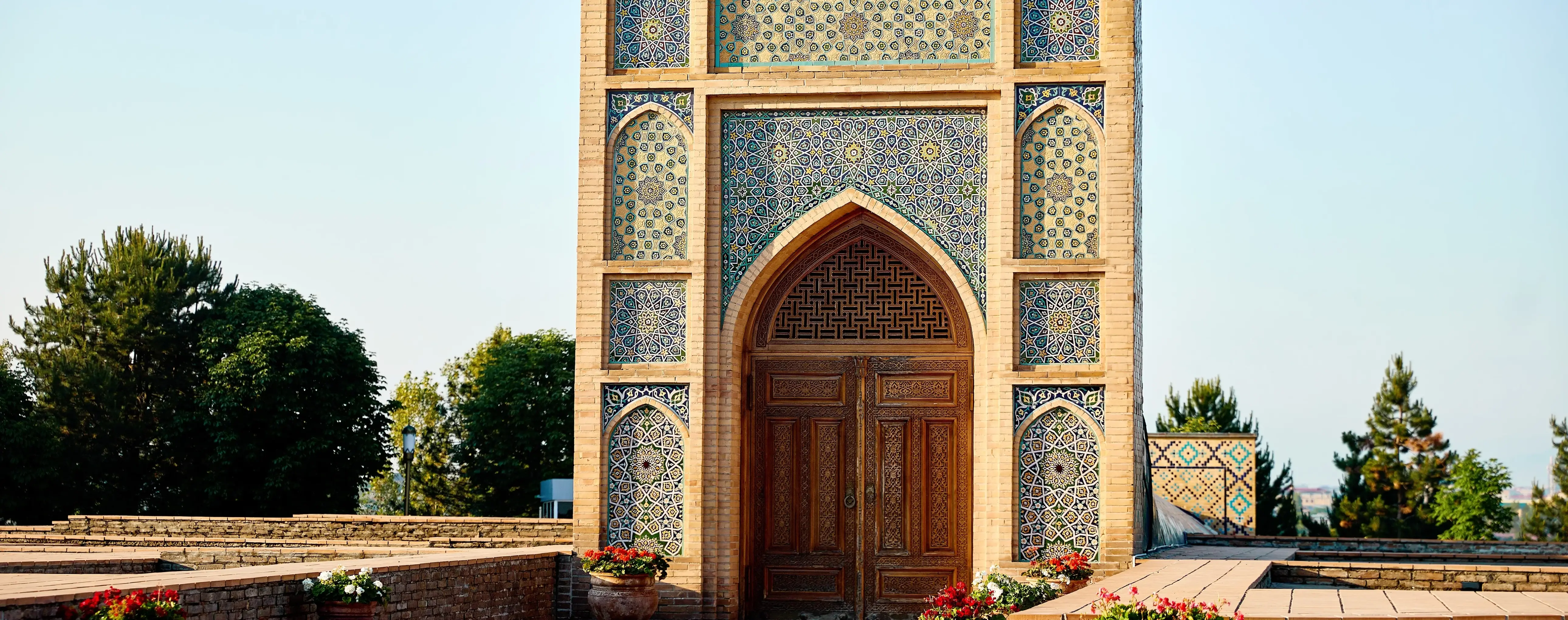
Photos of the observatory
Guided tours, popular attractions, and top-rated hotels across the continent


