
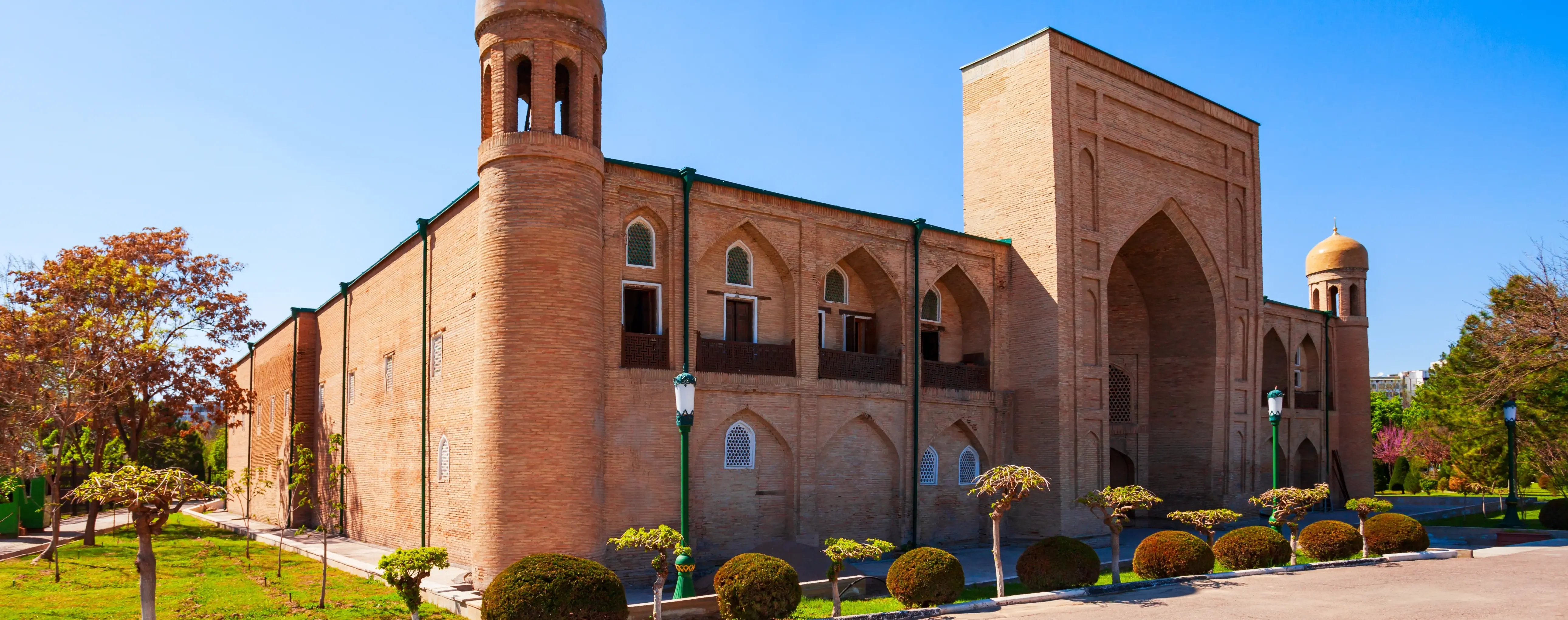
Abdulkasim Sheikh Madrasah
Abdulkasim Sheikh Madrasah in Tashkent
Abdulkasim Sheikh Madrasah is located in the historic part of Tashkent, not far from the old city districts where important religious and cultural monuments have been preserved. The complex was founded in the 16th century and is among the notable monuments of Islamic architecture in the capital of Uzbekistan. Originally, it included not only the madrasah, but also a mosque and a bathhouse, which was typical of large urban complexes of that time.
The building was rebuilt several times, including in the 19th century, so its appearance combines an earlier layout with later modifications. In its structure, it is a traditional Central Asian madrasah with an inner courtyard and hujra rooms arranged around the perimeter. For tourists, it is of interest as an example of an educational and religious building connected with the history of old Tashkent.
This place is also associated with local religious legends and the memory of shrines that once existed here, which gives the monument additional historical context. Today, the madrasah is known not only as an architectural site, but also as a space where craft traditions continue. Its premises house workshops where visitors can see the works of Uzbek artisans - ceramics, embroidery, textiles, and decorative metalwork.
A visit to Abdulkasim Sheikh Madrasah will suit those who want to see not only the city's well-known landmarks, but also less formal cultural venues in Tashkent. This place makes it possible to combine an introduction to historic architecture with contemporary applied art that has preserved its connection with the traditions of the region.
Abdulkasim Sheikh Madrasah on the map
Tashkent, Chilanzar District: Architectural and historical complexes
Hazrati Imam Ensemble, Barak-Khan Madrasah, Kukeldash Madrasah, Muyi Muborak Madrasah
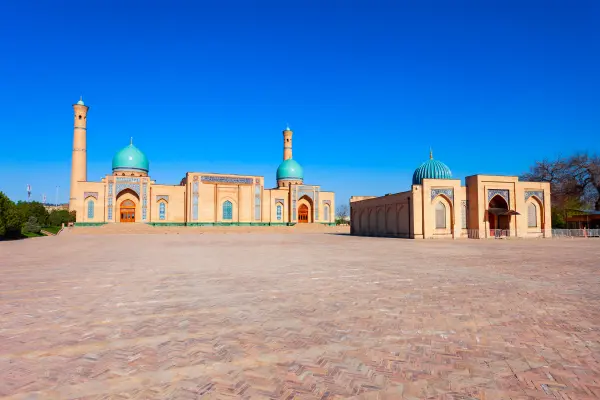
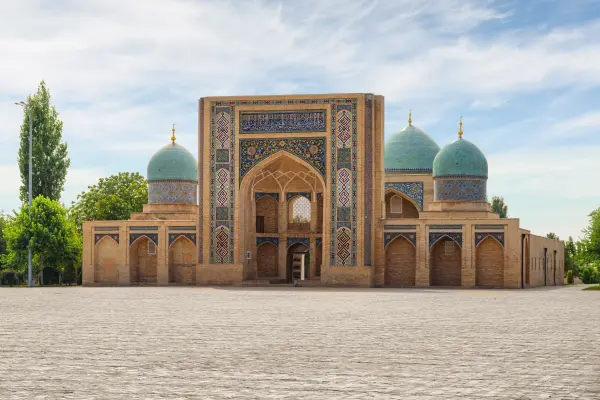
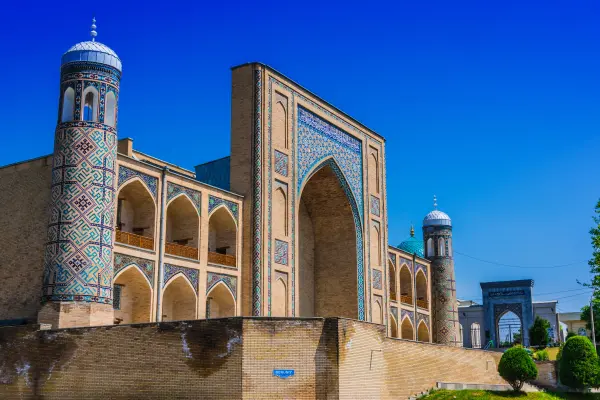
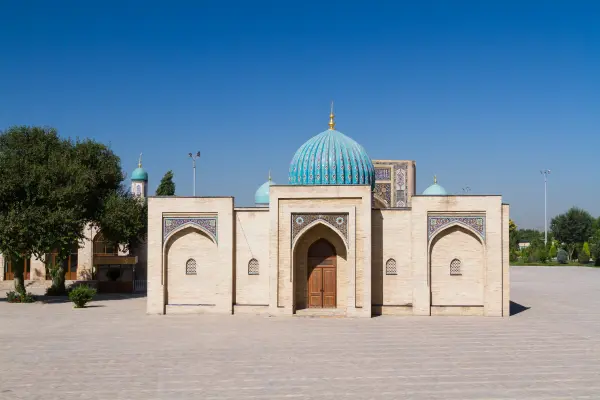
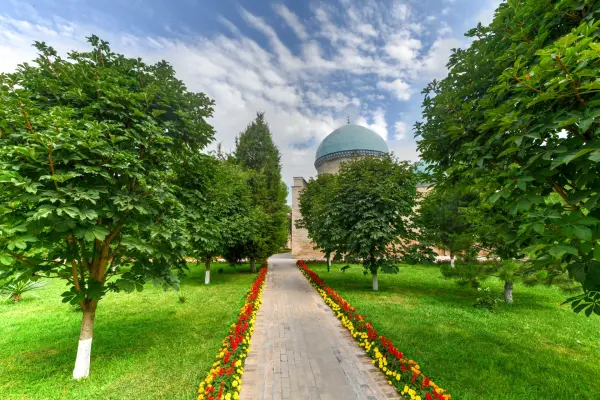
Abdulkasim Sheikh Madrasah and the craft workshops in the courtyard
Here, historic architecture is combined with the work of Uzbek artisans.
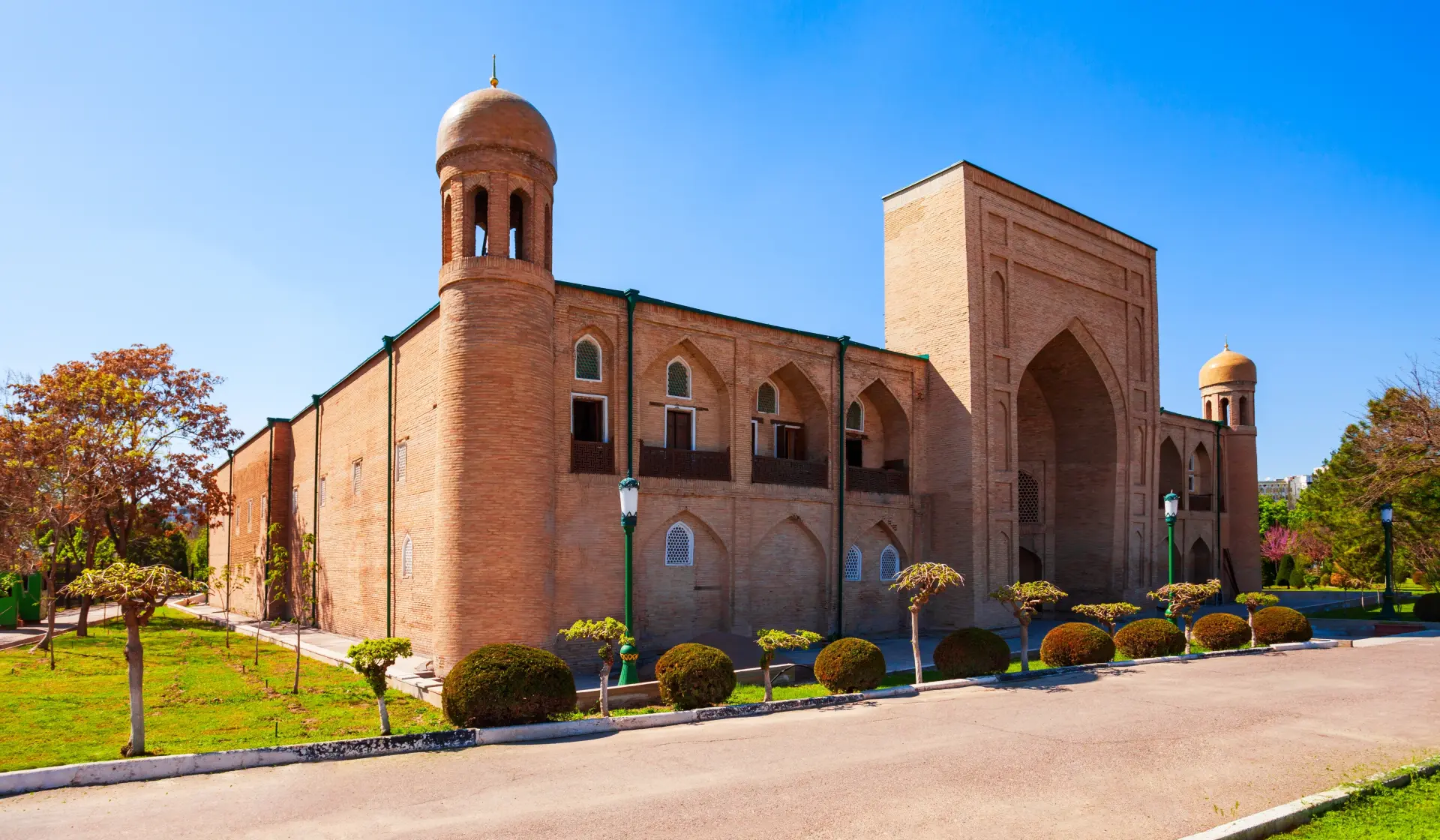
Historic madrasah with craft workshops in the courtyard
Today, inside the madrasah, visitors can see not a museum exhibition in the usual sense, but a functioning space where historic architecture is combined with the work of artisans. The former hujras now house workshops and small exhibitions dedicated to traditional forms of Uzbek applied art. For visitors, this is an opportunity to examine hand embroidery, ceramics, textiles, carving, and decorative metal items in a more lively and everyday setting.
The layout of the complex itself is of architectural interest. It is worth paying attention to the inner courtyard, the arched passages, and the rhythm of the small rooms along the perimeter, which help to imagine the arrangement of an old educational institution. Even taking later reconstructions into account, the madrasah retains the characteristic features of traditional Tashkent architecture and gives an idea of what the city's religious and educational complexes looked like in the past.
A visit is usually convenient to combine with a walk through old Tashkent. Other historic places and religious monuments are located nearby, including ensembles associated with the city's Islamic heritage. It is better to come during daylight hours, when it is easier to see the details of the courtyard and facades, and when the craft workshops are more often open.
You can get here by taxi or public transport from the center of Tashkent, after which there is usually a short walking distance along the streets of the old city. Before visiting, it is useful to check the current access schedule, as the premises of the complex may be used in different ways.
Best tours and travel experiences across the continent

Photos of the madrasah
Guided tours, popular attractions, and top-rated hotels across the continent


