
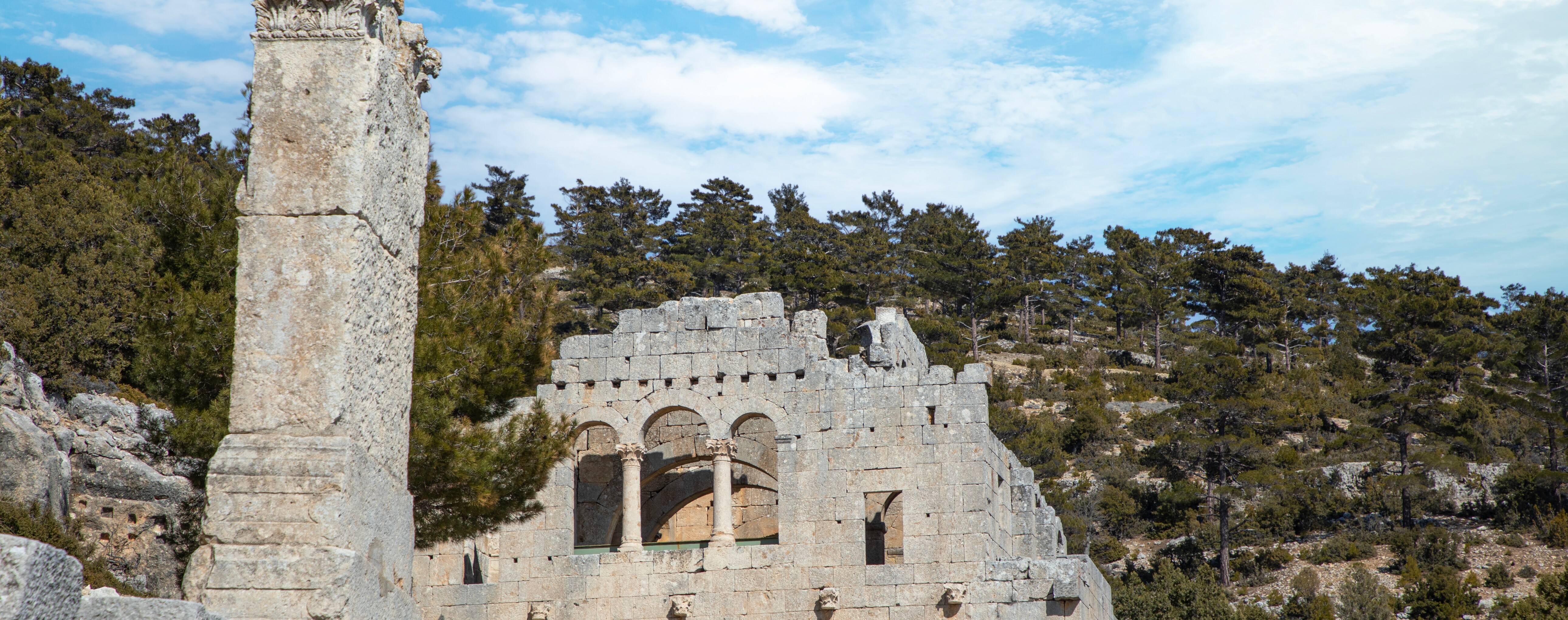
Alahan Monastery
Alahan Monastery in Karaman, Turkey
Alahan Monastery is an early Christian monastic complex in the southern part of Turkey, in the mountainous area between Karaman and Mut. It is located high above the Goksu River valley, on the slope of the Taurus Mountains, so people come here not only for the archaeology but also for the open views of the surrounding landscape. Despite its remoteness, the monument is well known to specialists in early Byzantine architecture.
The main structures of the complex date from the 5th-6th centuries. Alahan is important as an example of monastic architecture from a transitional period, when late Roman building techniques were combined with early Byzantine forms. The remains of two churches, living quarters, passages, terraces, and structures partly carved into the rock and partly built of stone have been preserved here.
Visitors are usually attracted by the layout of the complex and the quality of the stone carving. Even in its ruined state, it is possible to imagine how the monastery was arranged on the steep slope: the buildings were placed on tiers and connected to one another by stairs and passageways. This place is especially interesting for those who want to see not a single church, but an entire monastic ensemble in a natural mountain setting.
A trip here is most often combined with a visit to Mut or with a route from Karaman along mountain roads. The final section of the journey runs through winding terrain, so it is better to allow extra travel time and take weather conditions into account.
Alahan Monastery on the map
Alahan Monastery and its ruins above the Goksu Valley
The complex on the slope of the Taurus Mountains is connected with the region's early Christian history.
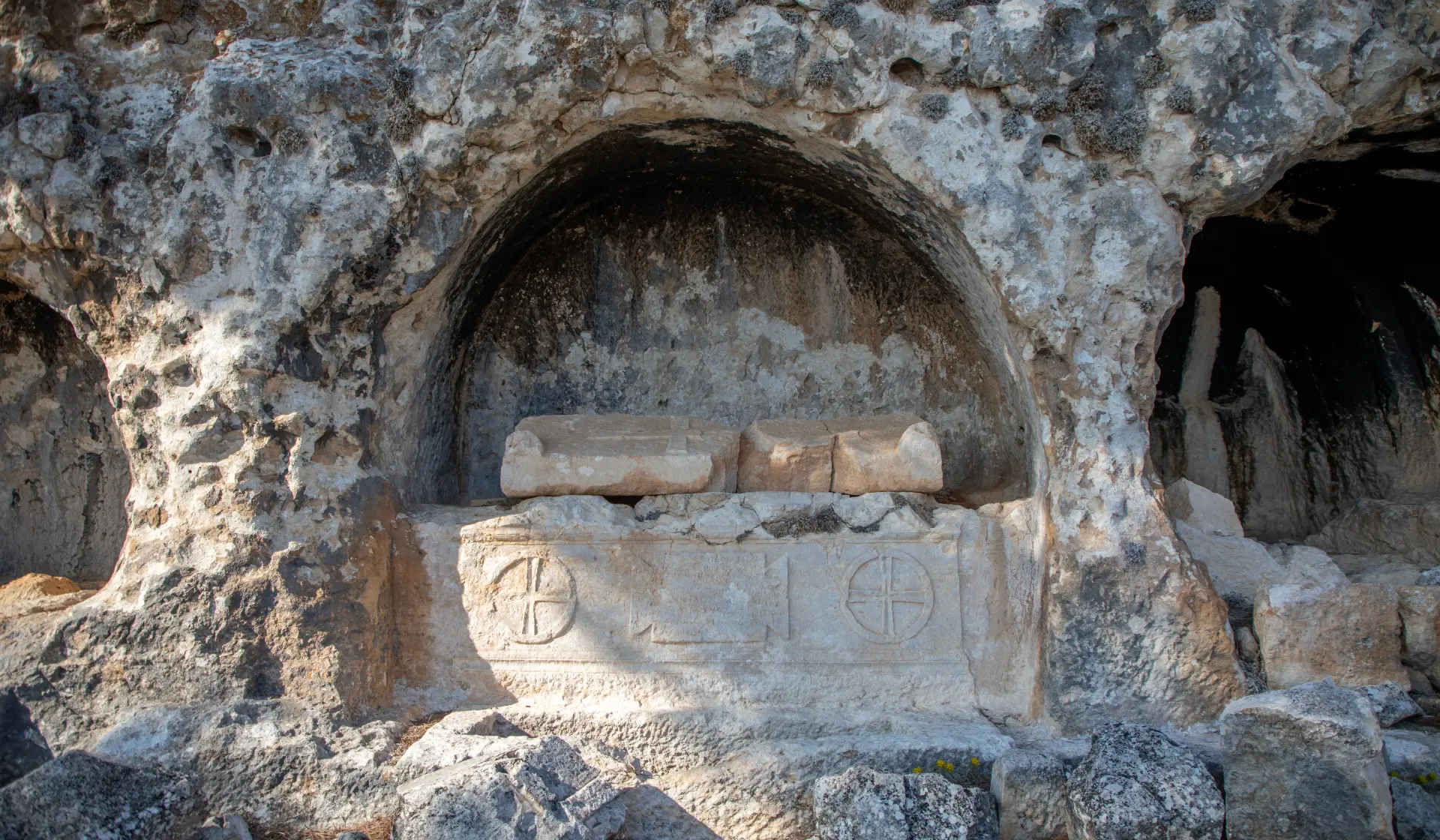
Rock monastery ensemble above the Goksu Valley
On the grounds of the complex, you can see the ruins of the western and eastern churches, sections of colonnades, stone arches, rooms carved into the rock, and fragments of decorative carving. The reliefs and architectural details in light-colored stone deserve special attention: they clearly show the high level of workmanship and thoughtful design characteristic of major church buildings of their time.
The visit usually takes place on foot over uneven ground, with climbs, steps, and transitions between terraces. It is better to come in comfortable shoes, bring water, and keep in mind that there is little shade on the open slope. The site is more suitable for a calm inspection of the ruins, photography, and learning about the history of early Christianity than for a long walk with service infrastructure.
From the upper sections, there are wide views of the mountain slopes and the valley, making the choice of location for the monastery easy to understand - secluded, yet connected to an important natural corridor of the region. Nearby, travelers also visit Mut and other historical sites of the Goksu Valley if they are planning a route through the south of Central Anatolia.
People usually get here by car from the Mut side; the road in the final section is mountainous and winding, so public transport is less convenient for such a visit.
Best tours and travel experiences across the continent




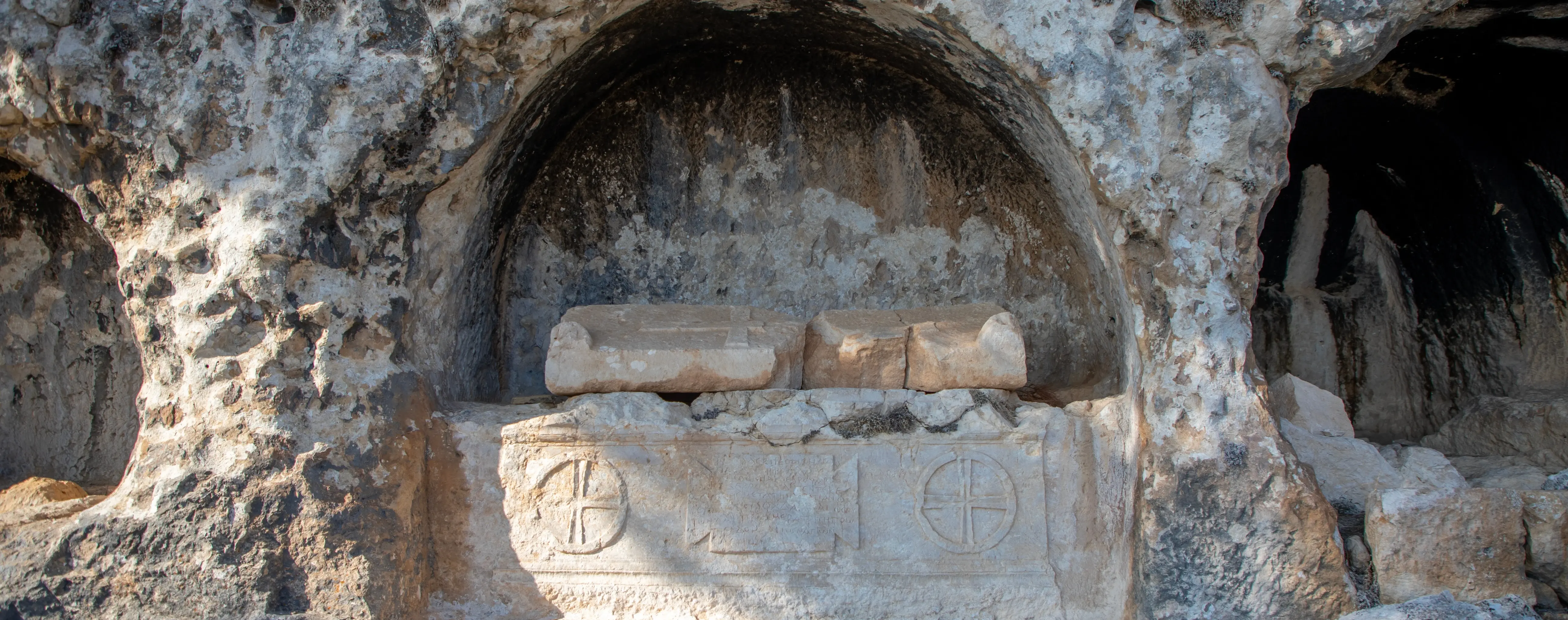
Photos of the monastery
Guided tours, popular attractions, and top-rated hotels across the continent


