
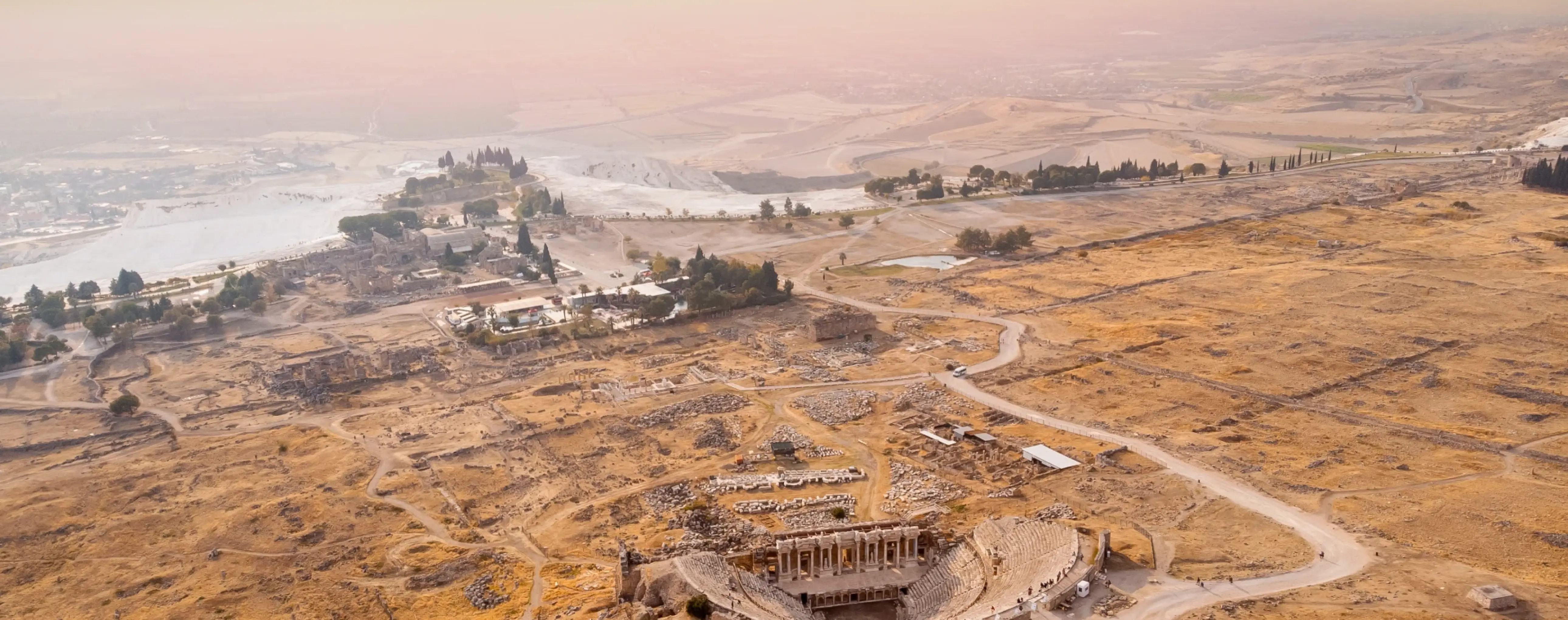
Amphitheater in Pamukkale
Amphitheater in Pamukkale on the Slope of Hierapolis
The Theater of Hierapolis, often referred to by tourists as the amphitheater in Pamukkale, is located on a hillside in the archaeological zone of the ancient city of Hierapolis, next to Pamukkale. It stands in the upper part of the ancient complex and is clearly visible from various points thanks to its semicircular seating rows. It is a Roman theater, built with consideration for the natural terrain and intended for major urban performances.
Hierapolis emerged in the Hellenistic era, while the surviving theater mainly dates to the Roman period. After destructive earthquakes, the structure was rebuilt and expanded, so its present appearance took shape over several centuries. The theater hosted stage performances, public ceremonies, and spectacular events, as evidenced by archaeological finds and inscriptions.
Today, it is one of the best-preserved ancient theaters in western Turkey. The rows of the cavea, stair passages, orchestra, and seats for honored spectators are clearly visible here. Of particular interest is the stage building with its marble decoration and reliefs depicting mythological and cult subjects from the Roman era.
The theater is part of the Pamukkale–Hierapolis archaeological complex, included on the UNESCO World Heritage List. For visitors, it is one of the key stops on a walk through the ancient city: from here, one can not only examine architectural details, but also better understand how a major ancient center near the thermal springs of Pamukkale was organized.
Amphitheater in Pamukkale on the map
Visiting and Features of the Amphitheater in Pamukkale
Understand the structure of the theater and its role in the life of ancient Hierapolis.
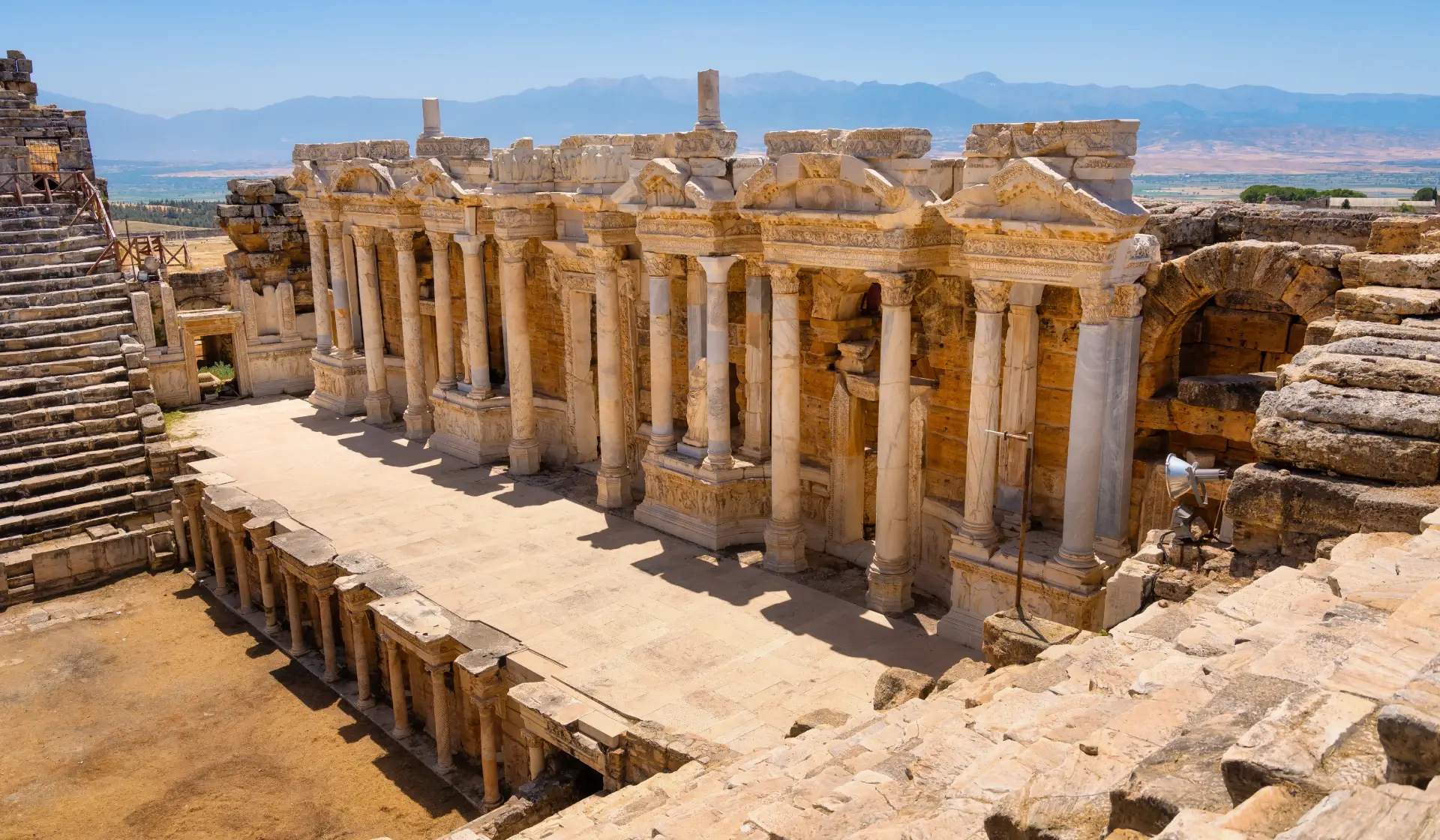
Stone rows, the orchestra, and reliefs of the Roman stage
When visiting, it is worth paying attention to the structure of the seating area: the sections are divided by stairways, and the upper and lower tiers clearly show how the audience was arranged. Below, the orchestra has been preserved, and along it are stone seats for honored guests. Even without full restoration, the theater allows visitors to clearly imagine the scale of ancient performances and the layout of the public space.
The stage facade is notable for its preserved architectural elements and decorative reliefs. These include masks, mythological scenes, and images associated with the official religious symbolism of the Roman period. Part of the decorative design is known through archaeological research and restoration work carried out here over several decades.
The theater is usually visited during a walk through Hierapolis together with the Roman baths, the necropolis, the North Gate, and sections of ancient streets; the Pamukkale travertines and Cleopatra's Pool are relatively nearby. The ascent to the theater follows pedestrian paths within the archaeological park, so it is more convenient to plan the visit together with a tour of the entire complex.
You can get here from the center of Pamukkale on foot or by transport to one of the entrances to the archaeological zone of Hierapolis, then continue along the marked routes. It is worth choosing comfortable footwear for the visit, as the surface is rocky in places, and the climb to the upper rows follows the slope.
Best tours and travel experiences across the continent




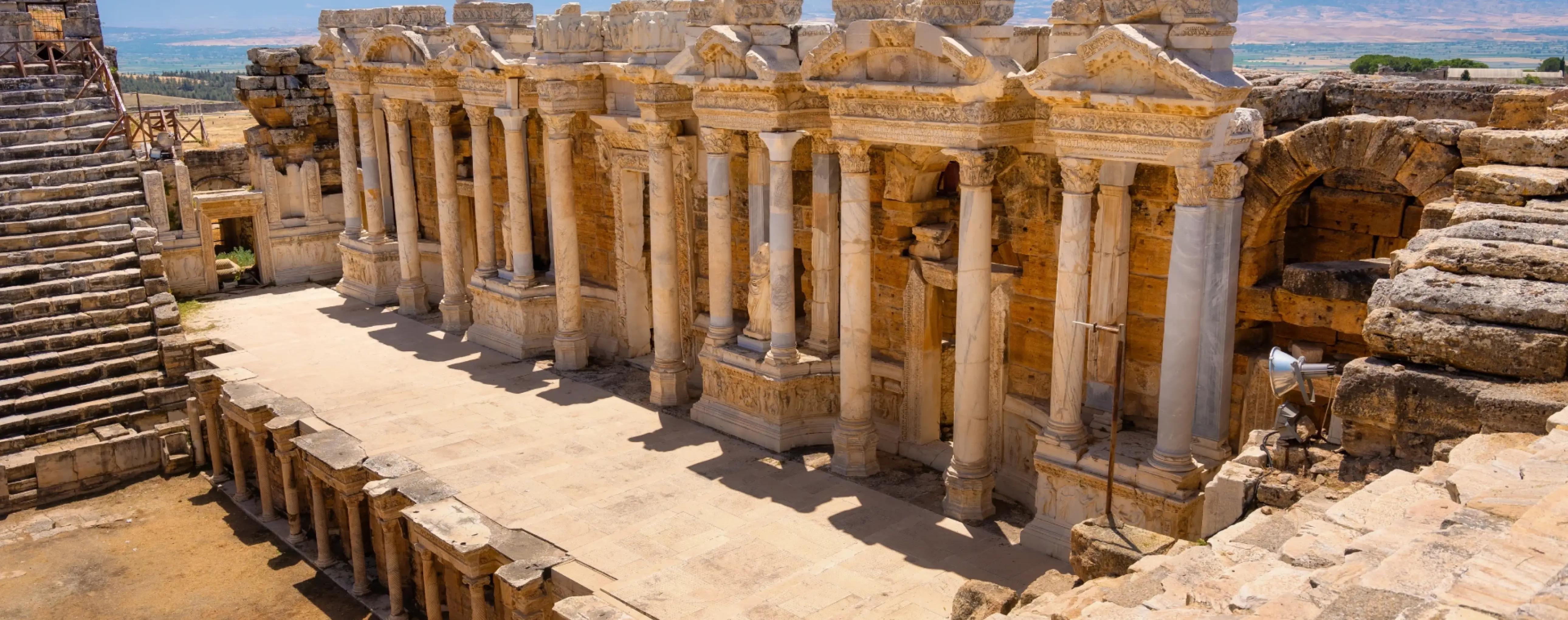
Photos of the amphitheater
Guided tours, popular attractions, and top-rated hotels across the continent


