
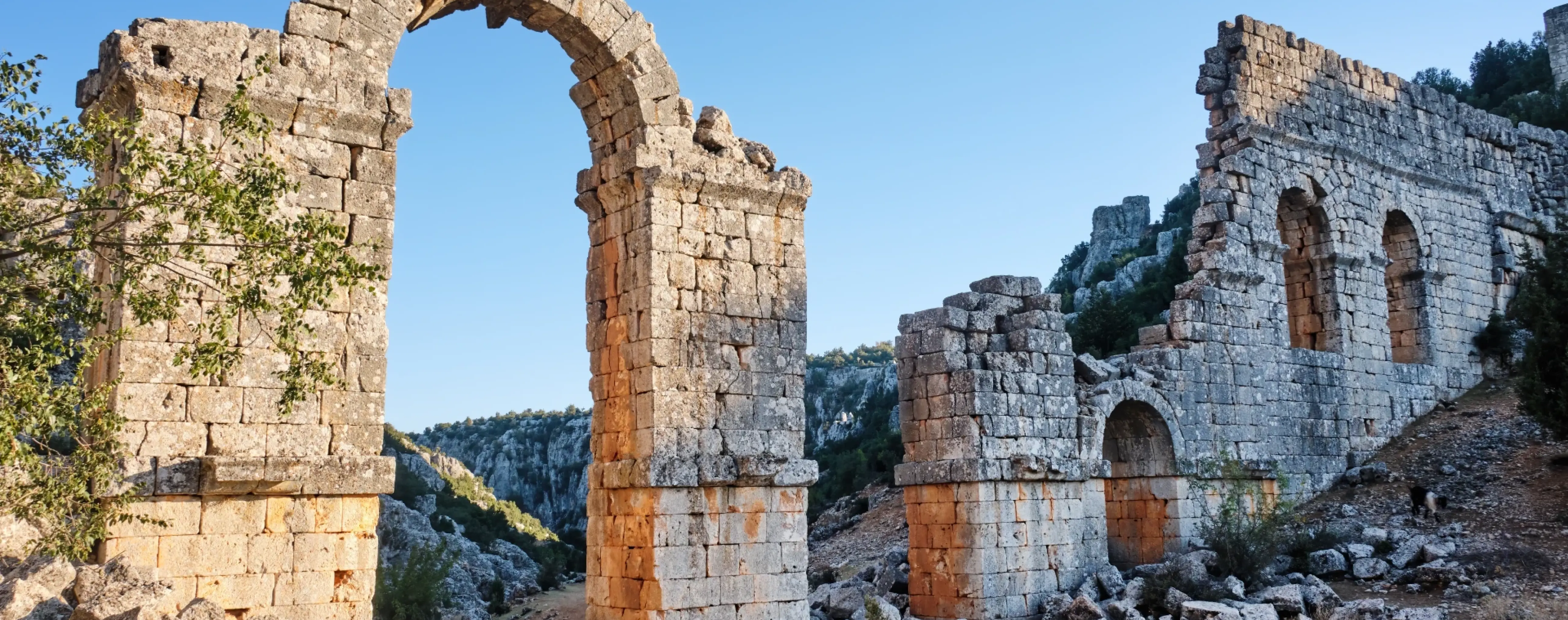
Ancient City of Olba
Ancient City of Olba in Mersin, Turkey
The Ancient City of Olba, later known as Diocaesarea, is located in the settlement of Uzuncaburc in the vicinity of Silifke, in the south of Mersin Province. The archaeological site lies on an elevated plateau about 30 km from Silifke. Today, it is one of the most notable ancient complexes of mountainous Cilicia, visited for its well-preserved ruins and open views of the surrounding plateau.
In antiquity, Olba was associated with a major religious center of the region of Cilicia Trachea. During the Hellenistic period, there was a sanctuary of Zeus here, which held great importance for the local priestly authority. In Roman times, the city was rebuilt and received the name Diocaesarea, so within the site one can see a combination of earlier traditions and Roman urban architecture.
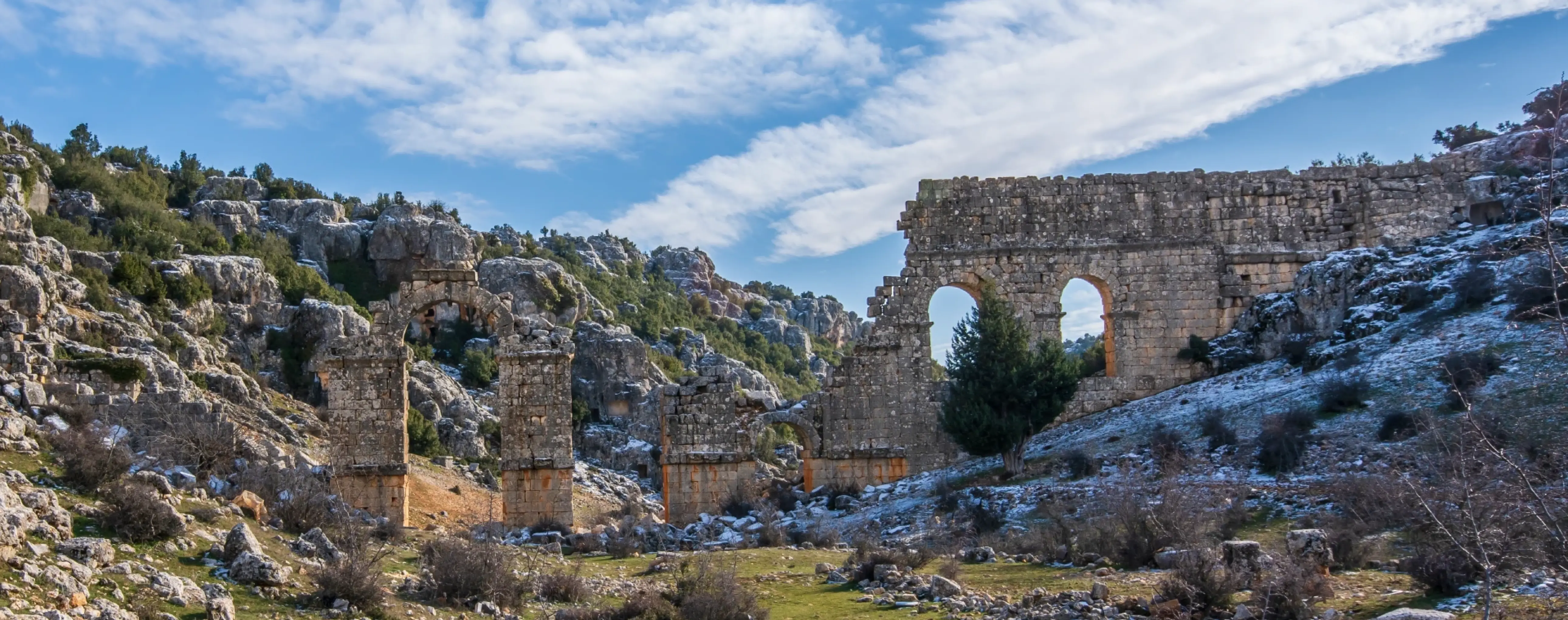
Among the main surviving structures are a colonnaded street, monumental gates, a theater, cisterns, remains of an aqueduct, a tower, and ruins of temple buildings. Especially notable are the Temple of Zeus with its surviving columns and the ancient tower from which the modern name Uzuncaburc originated. In the surrounding area there are also ancient tombs and sections of the necropolis, adding to the understanding of life in the city beyond its central part.
This place is suitable for those interested in ancient history, archaeology, and monuments outside the main tourist routes. A visit to Olba makes it possible to see how a mountain city of the Roman era was organized and to better understand the role of the inland areas of Cilicia in the history of southern Anatolia.
Ancient City of Olba on the map
Mersin, Silifke: Ancient cities and ruins
Soli-Pompeiopolis, Elaiussa Sebaste Ruins, Ancient City of Kanlidivane
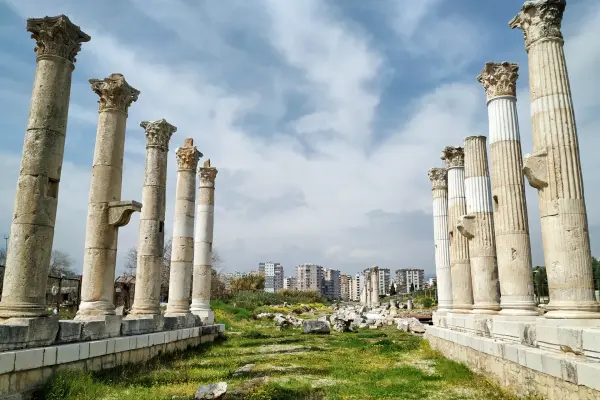
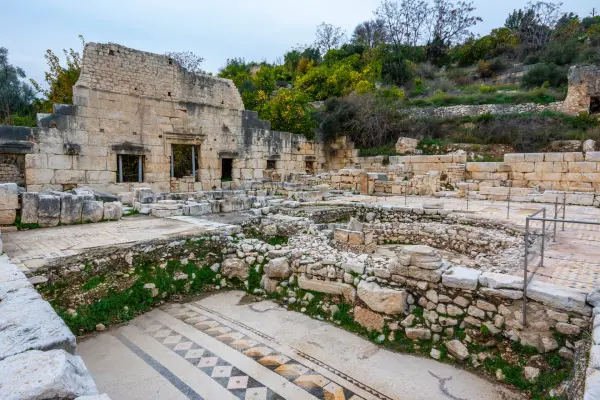
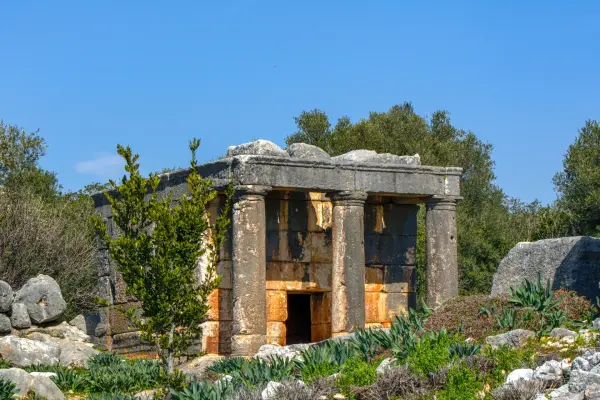
The Ancient City of Olba and its ruins on the plateau
Traces of an ancient city in mountainous Cilicia have been preserved here.
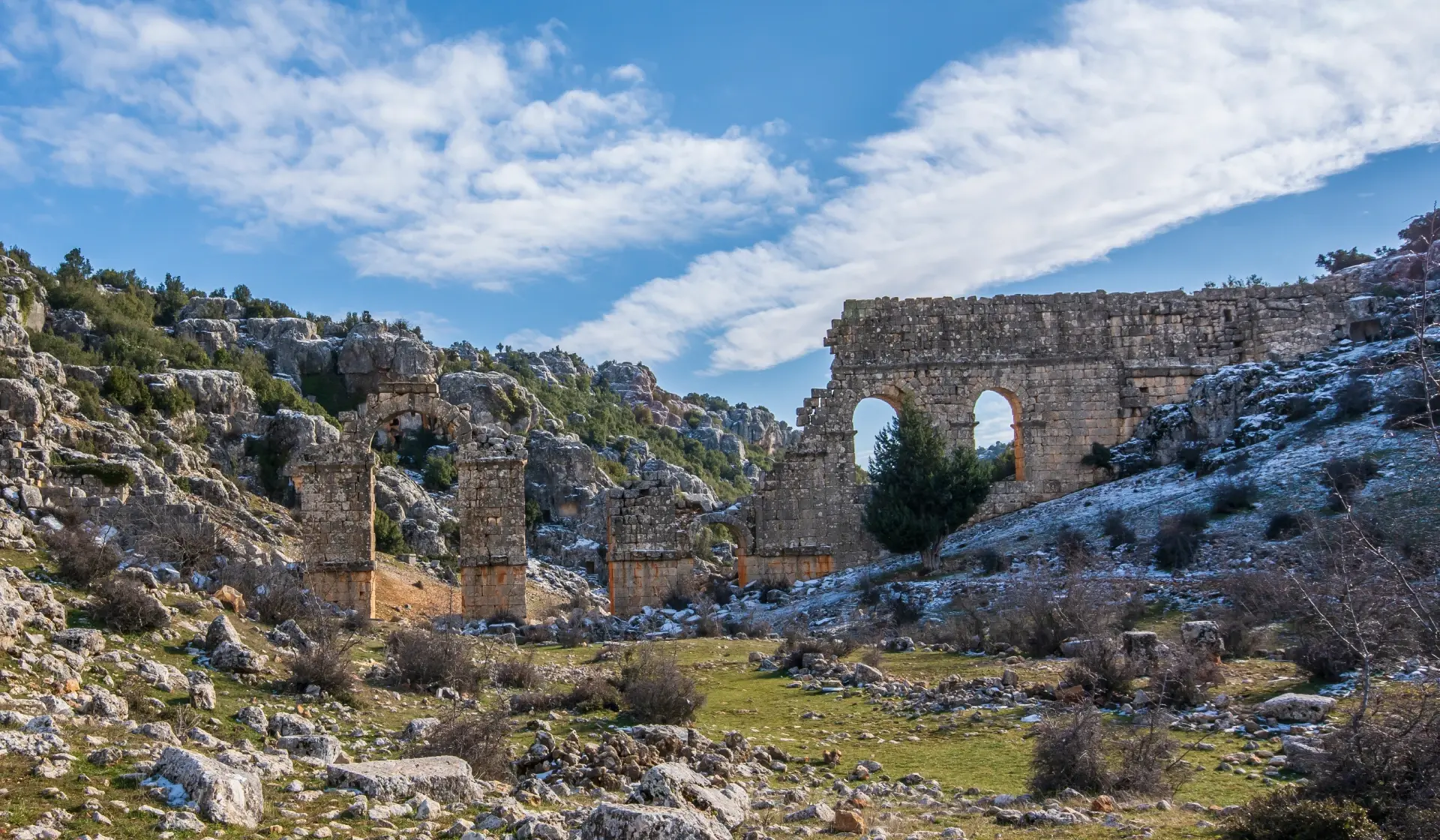
Columns, tower, and ruins of a Roman city on the plateau
During a walk around the site, you can follow the remains of an ancient street lined with columns, see the theater, water structures, and fragments of public buildings. The monument area is quite open, so the layout is easy to read: sections of urban development, passageways, entrance zones, and individual architectural highlights are clearly visible. The most striking features are the columns of the Temple of Zeus and the tall tower, which has survived better than many of the other structures.
The site is interesting not only for its individual ruins but also for the overall layout of an ancient center in a mountainous setting. Here, you can see how religious buildings, public spaces, a water supply system, and funerary monuments outside the main urban area coexist within one complex. It is best to allow plenty of time for a visit, as the site covers a large area and architectural details are spread throughout the grounds.
Visitors should keep in mind that this is прежде всего an open-air archaeological zone: comfortable shoes, water, and sun protection are especially useful in warm weather. Near Olba, you can also visit the Cennet ve Cehennem sinkhole, Astim Cave, and other ancient monuments in the vicinity of Silifke. The site is usually reached from Silifke by car along the road toward Uzuncaburc.
Best tours and travel experiences across the continent

Photos of Olba
Guided tours, popular attractions, and top-rated hotels across the continent


