

Grand Mosque
Grand Mosque in Bursa, Turkey
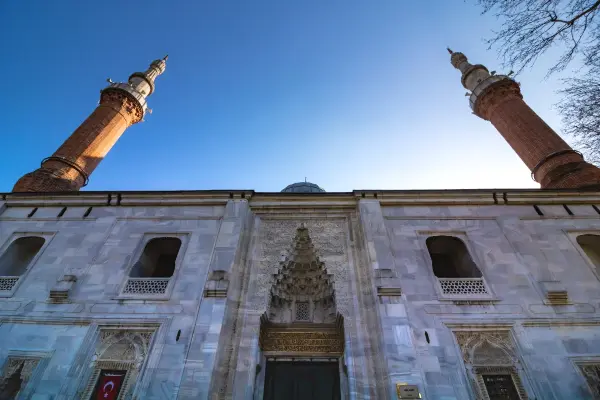
The Grand Mosque of Bursa, or Ulu Cami, is located in the center of Bursa, in the historic commercial district next to the covered bazaars and old hans. It is one of the city's most famous mosques and an important monument of early Ottoman architecture, associated with the period when Bursa was the first major capital of the Ottoman state.
The mosque was built at the end of the 14th century by order of Sultan Bayezid I. According to a widespread tradition, the ruler vowed to build twenty mosques, and this idea was realized in one large building with twenty domes. Over its long history, Ulu Cami repeatedly suffered from fires and earthquakes, after which it was restored while preserving its overall historic appearance.
On the outside, the building stands out for its austere forms and two minarets, while inside there is a vast prayer hall with massive supports and a domed ceiling. One of the most unusual details of the interior is the sadirvan for ablutions, located directly inside the mosque beneath an opening in the roof. Here you can also see famous examples of Islamic calligraphy and a carved wooden minbar, which is considered an outstanding work by Ottoman craftsmen.
For tourists, the Grand Mosque is interesting not only as a religious monument, but also as part of Bursa's historic urban environment. It is easy to combine with a walk through the old center, a visit to Koza Han, and the nearby markets. At the entrance, visitors should observe the rules for visiting an active mosque: choose modest clothing, remove shoes, and keep prayer times in mind.
Grand Mosque on the map
Bursa: Mosques
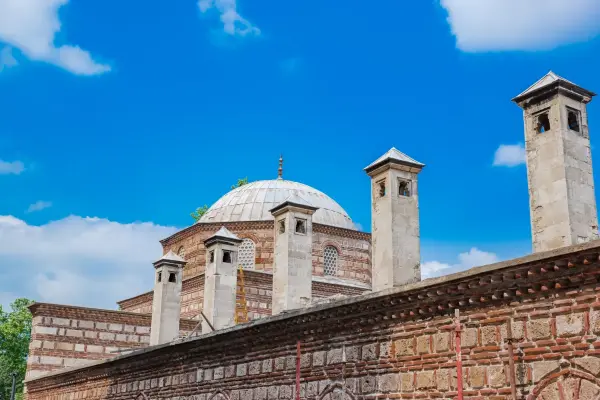
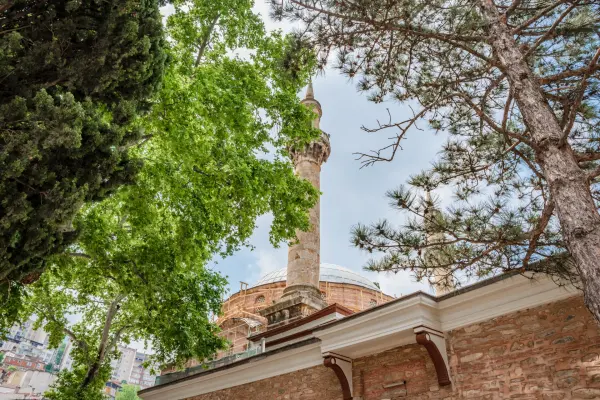
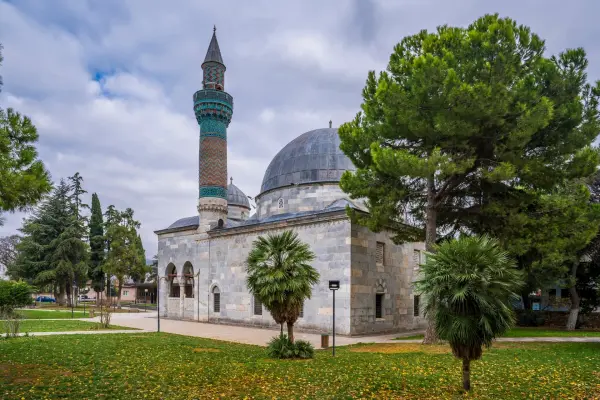
Bayezid Mosque, Emir Sultan Mosque, Yesil Mosque in Iznik, Green Mosque
Architecture and visiting rules of the Grand Mosque in Bursa
This is an active congregational mosque with a historic interior and calligraphy.
Twenty domes, a sadirvan beneath the roof, and calligraphy on the walls
Inside the mosque, attention is usually drawn not to a single central volume, but to an entire system of domed spaces that creates a distinctive rhythm in the interior. Light enters the hall through numerous windows and the upper opening above the sadirvan, allowing visitors to appreciate both the architectural structure of the building and its decorative details without excessive ornamentation.
One of the main features of Ulu Cami is the large calligraphic inscriptions on the walls and columns. They were created by different masters and are among the most famous elements of the mosque's decoration. The wooden minbar with its delicate geometric carving deserves special attention: it is often noted as one of the most interesting surviving examples of woodwork from the early Ottoman period.
During a visit, it is worth remembering that this is an active congregational mosque, so part of the space may be used for prayer. Tourists usually view the interior outside prayer hours, observing silence and dress rules. Nearby are Koza Han, historic markets, and other landmarks of old Bursa, so the visit can easily be included in a walking route through the city center.
The mosque is usually reached on foot from the central part of Bursa or by public transport to the old bazaar district. Before entering, shoes must be removed, and women may need a headscarf to visit the prayer area.
Best tours and travel experiences across the continent


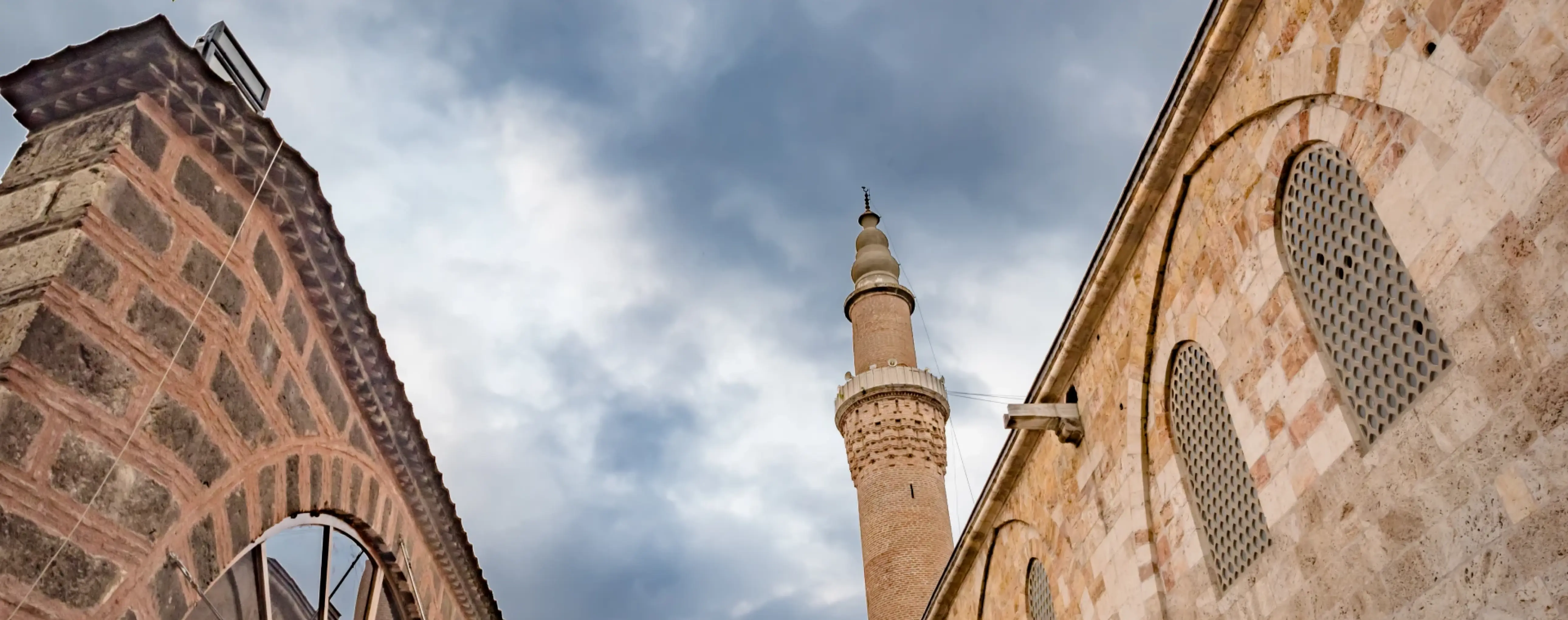
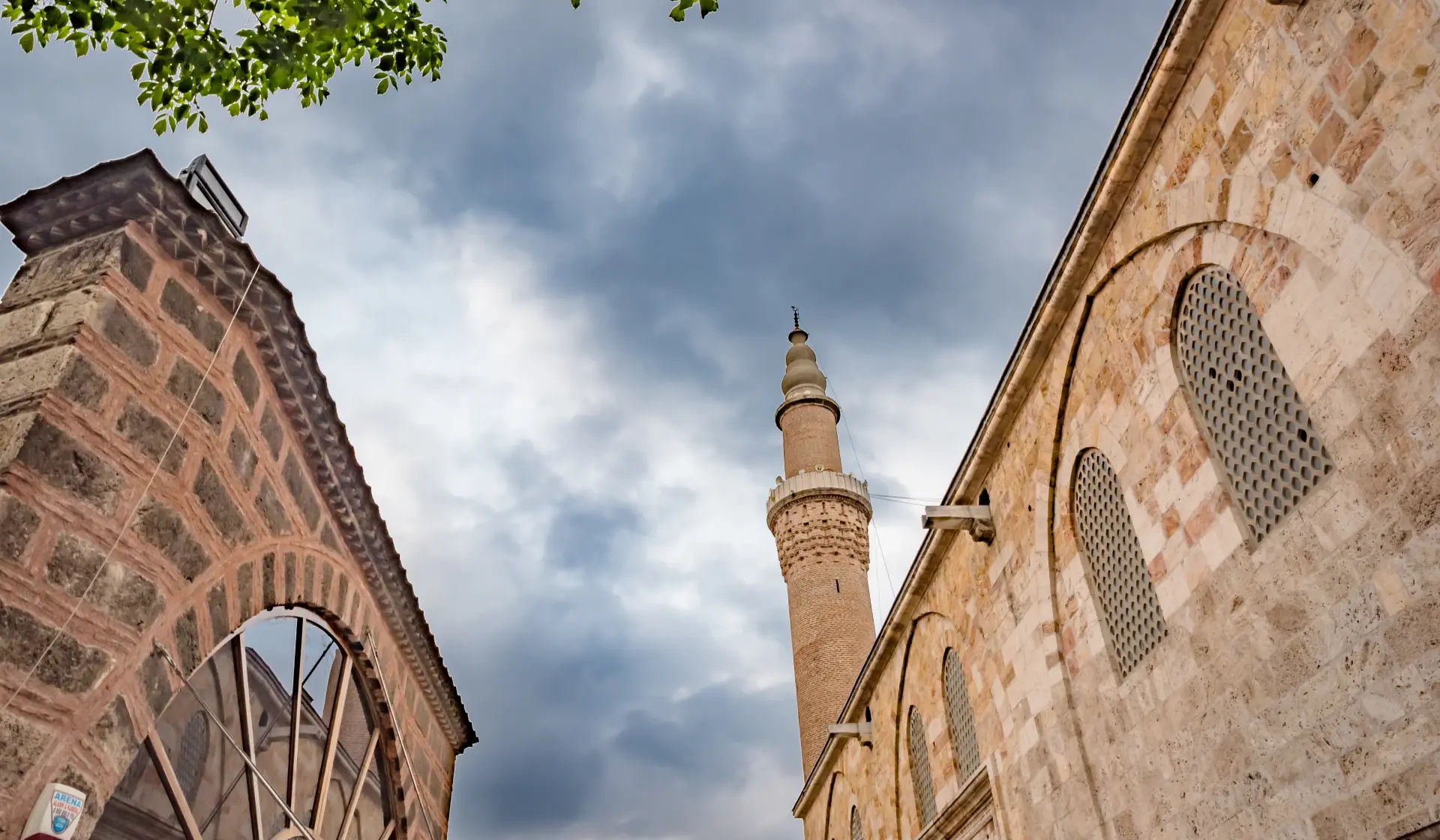
Photos of the Grand Mosque
Guided tours, popular attractions, and top-rated hotels across the continent


