
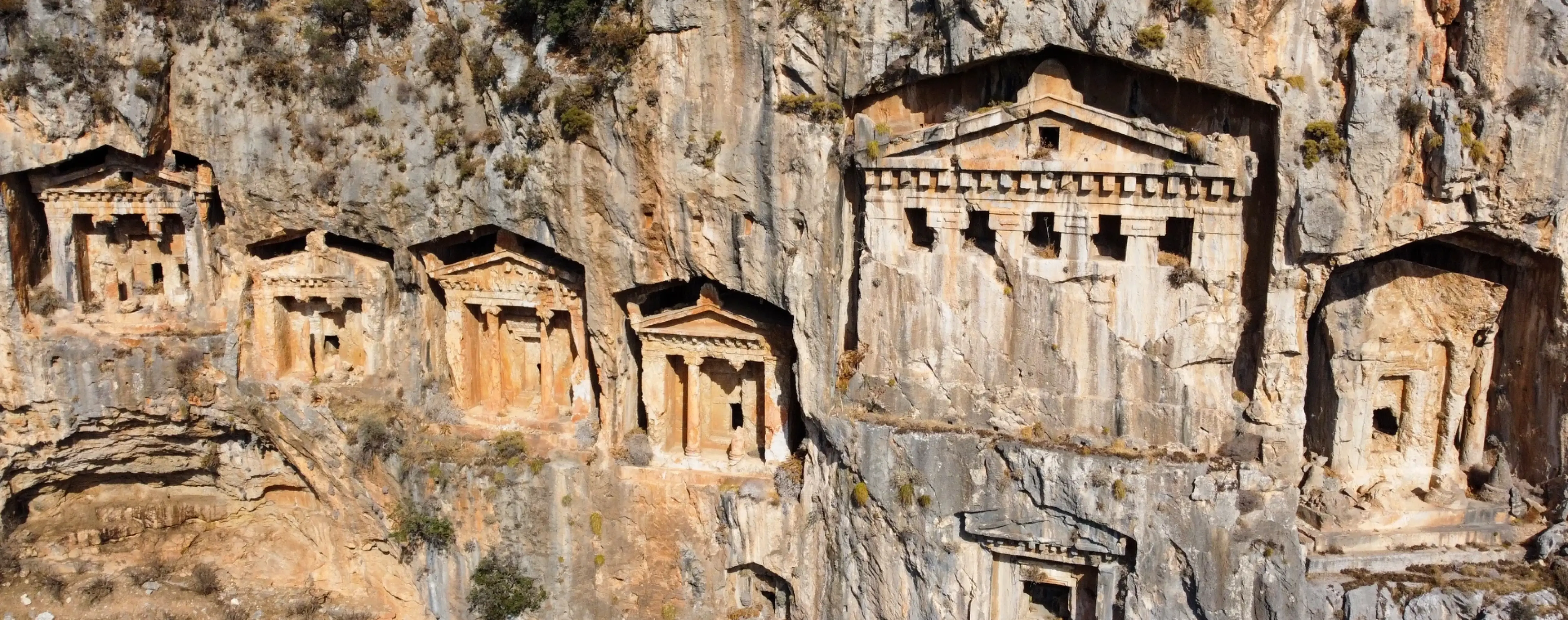
Lycian Tombs in Dalyan
Lycian Tombs in Dalyan, Dalyan, Turkey
The Lycian Tombs in Dalyan are located on a steep slope above the Dalyan River, opposite the center of Dalyan, near Dalaman in southwestern Turkey. This monument is usually associated with ancient Kaunos, a major city of Caria that was influenced by neighboring Lycia at various times. The rock-cut facades are clearly visible from the water and have become one of the area's most recognizable historical landmarks.
The tombs were carved into the rock in the 4th century BC and were intended for members of the nobility. Their design resembles the facades of ancient temples: some feature columns, pediments, and rectangular entrances cut into the stone. This elevated position high above the ground is typical of the region's burial traditions and emphasized the status of those buried there.
For tourists, this site is primarily interesting because of its combination of archaeology and natural scenery. The tombs are most often viewed from a boat during a river trip or from the Dalyan waterfront, which offers the clearest overview. Direct access up to the monument is limited, so visits usually take place from a distance, which does not prevent visitors from appreciating the scale and preservation of the rock-cut facades.
A trip to the tombs is usually combined with a visit to the ruins of Kaunos, river routes to Iztuzu Beach, and observation of the surrounding wetlands of the delta. It is a convenient stop for those interested in ancient history and wanting to see one of the characteristic monuments of southwestern Turkey outside the major archaeological zones.
Lycian Tombs in Dalyan on the map
Lycian Tombs in Dalyan: an overview of the monument and surroundings
A monument above the river, viewed from the water and from the waterfront.
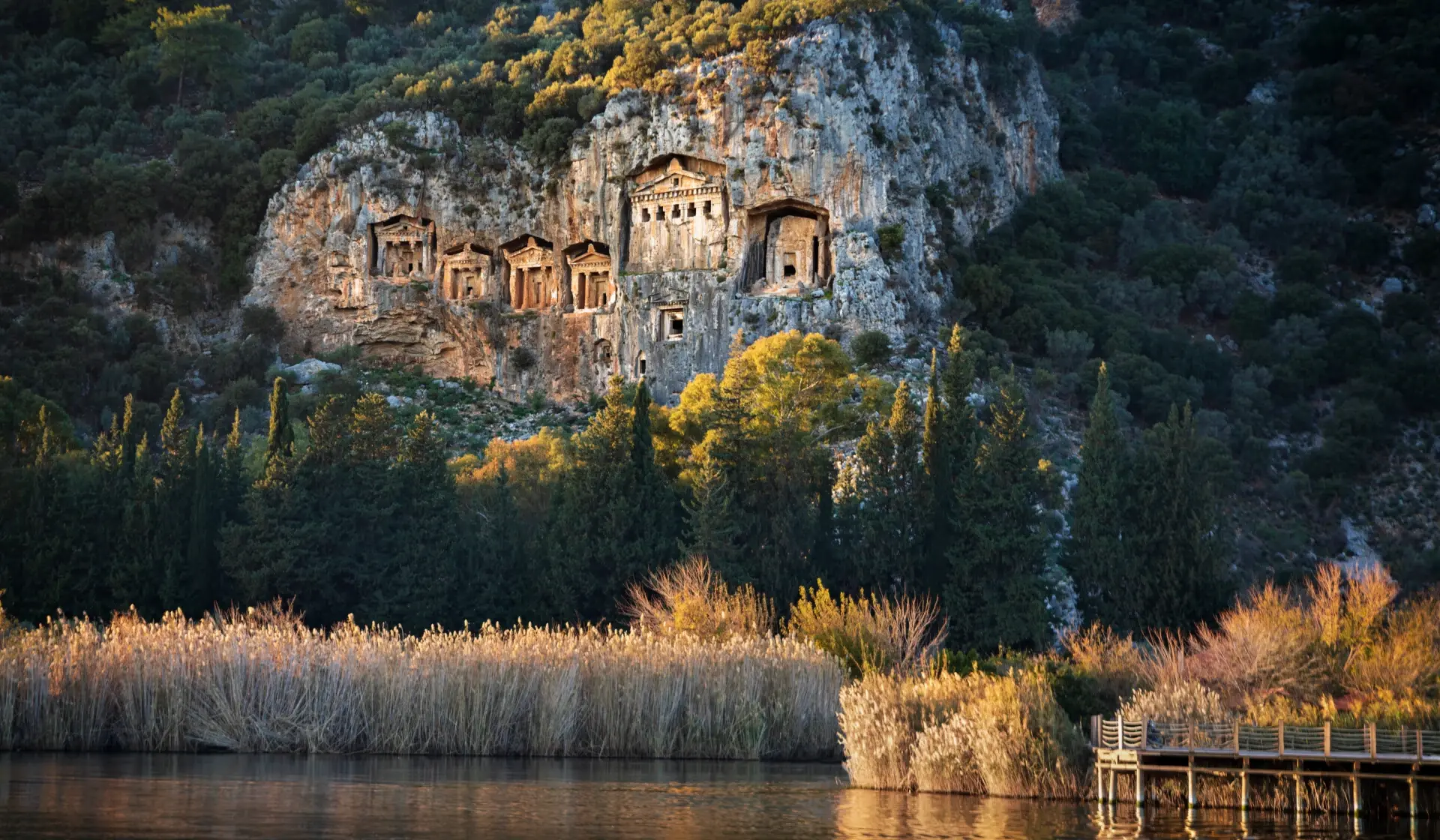
Rock-cut facades above the river opposite ancient Kaunos
The best way to view the tombs is from the water: during a boat trip along the river, the facades are seen almost head-on, making it easier to notice their architectural details. From the waterfront in Dalyan, there is a more distant but convenient view, especially in the morning and evening, when the rock is lit more softly. As a rule, it is not possible to enter from close range, so the visit is focused on viewing the exterior.
The main things visitors notice are the height at which the tombs were placed and their resemblance to ancient temples. Carved columns, pediments, and entrance openings can be seen in the rock, and nearby there are traces of other burials that are less noticeable at first glance. The interior chambers have preserved almost none of their original contents: most of the ancient burials were looted back in antiquity.
Nearby are the ruins of ancient Kaunos, which can be reached after crossing the river, as well as the river route toward Iztuzu Beach and the protected natural areas of the delta. For this reason, a trip here is often planned as part of a broader exploration of Dalyan and its surroundings.
The site is usually reached from Dalaman by car, transfer, or bus to Dalyan, and then by walking to the waterfront or boarding an excursion boat. A short stop is enough for sightseeing, but if desired, it can easily be combined with a river trip and a visit to the archaeological zone of Kaunos.
Best tours and travel experiences across the continent




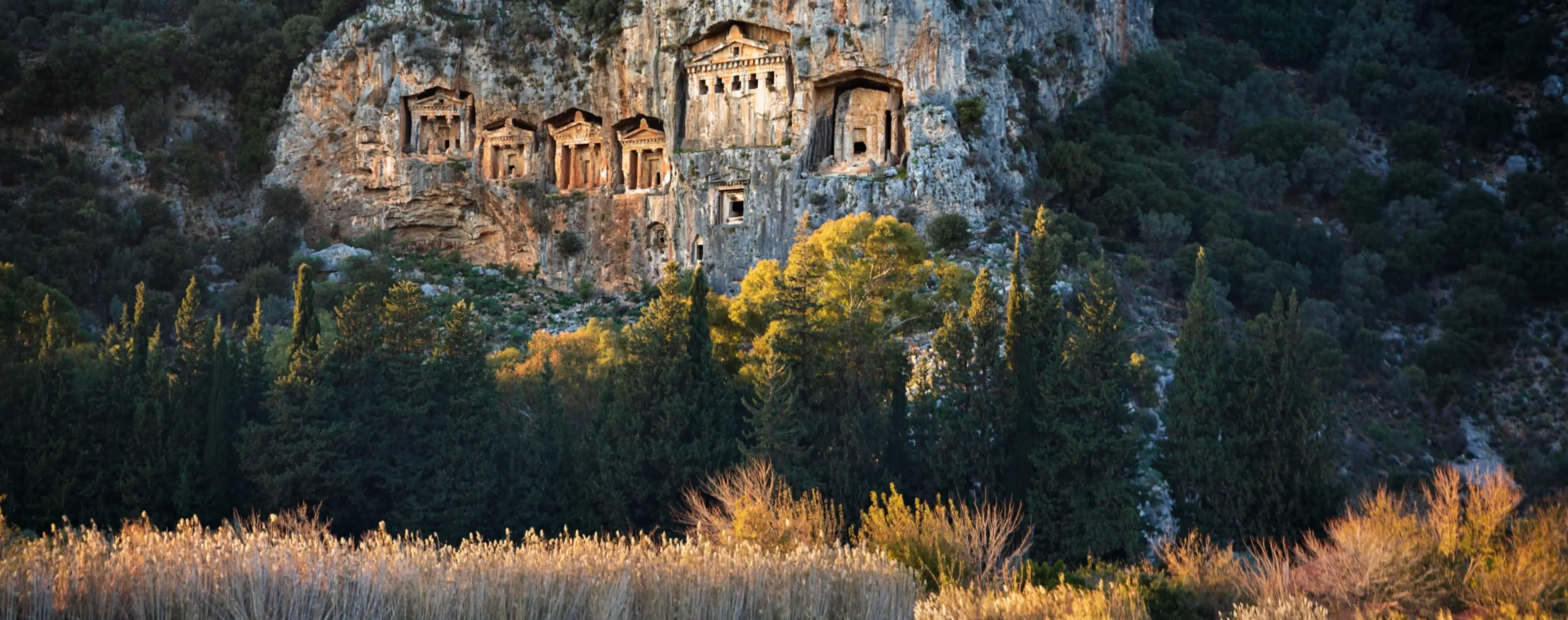
Photos of the tombs
Guided tours, popular attractions, and top-rated hotels across the continent


