
Olympos National Reserve
Olympos National Reserve in Kemer, Turkey - ruins and coastal nature
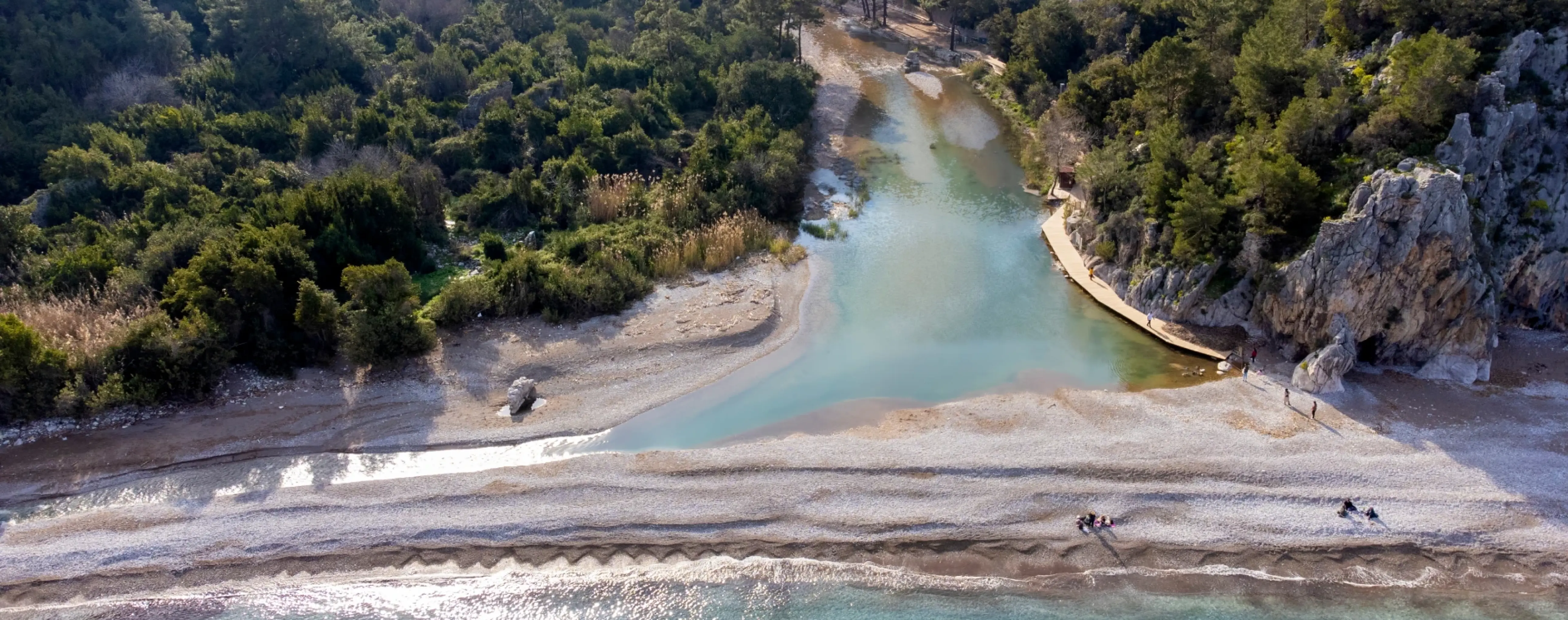
Olympos National Reserve is located on the Mediterranean coast southwest of central Kemer, near the resort villages of Cirali and Olympos. This area is part of Beydaglari Coastal National Park and combines mountain slopes, forested areas, coastal bays, and archaeological monuments. Visitors usually get here from Antalya via the D400 highway, while the drive from Kemer takes noticeably less time.
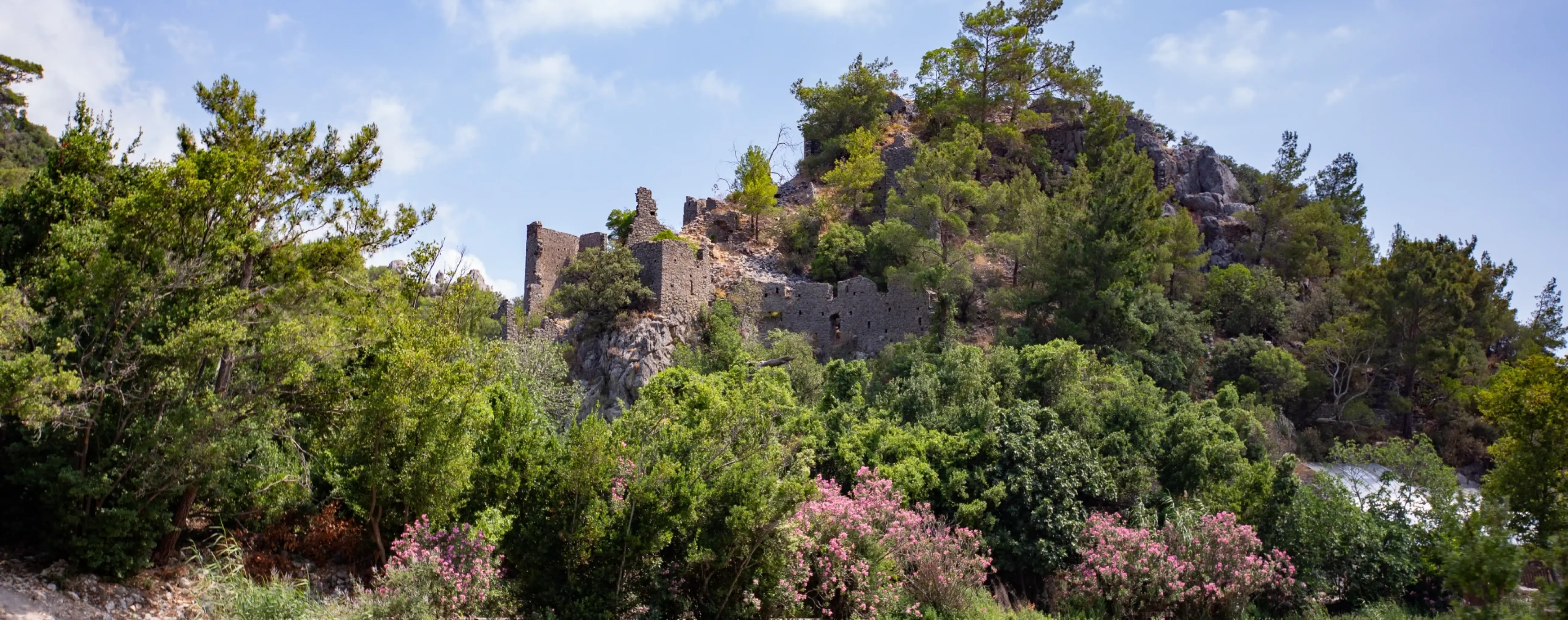
The main historical part of the reserve is connected with the ancient city of Olympos, one of the cities of ancient Lycia. During the Roman and Byzantine periods, it retained its importance as a coastal settlement and port, but was later abandoned. Today, the site features ruins of stone walls, sarcophagi, remains of public buildings, fragments of a bridge, a theatre, and ancient structures hidden among the trees on both sides of the river valley.
The natural part of the area is no less notable. It combines pine forests, areas of Mediterranean vegetation, and the rocky slopes of the Beydaglari mountain range. Nearby are Cirali Beach and Olympos Beach, where restrictions apply during the warm season to protect the nesting sites of loggerhead sea turtles.
Another well-known feature of this area is Yanartas, or the Chimera, a section of the mountainside with natural gas vents where small flames burn all year round. Thanks to the combination of archaeological ruins, coastline, and mountain landscapes, Olympos is interesting for those who want to see not only the beaches around Kemer, but also a more diverse side of this area.
Olympos National Reserve on the map
Olympos National Reserve in Kemer - archaeology and natural areas
Here, the ruins of an ancient city stand alongside pine forests and coastal bays.
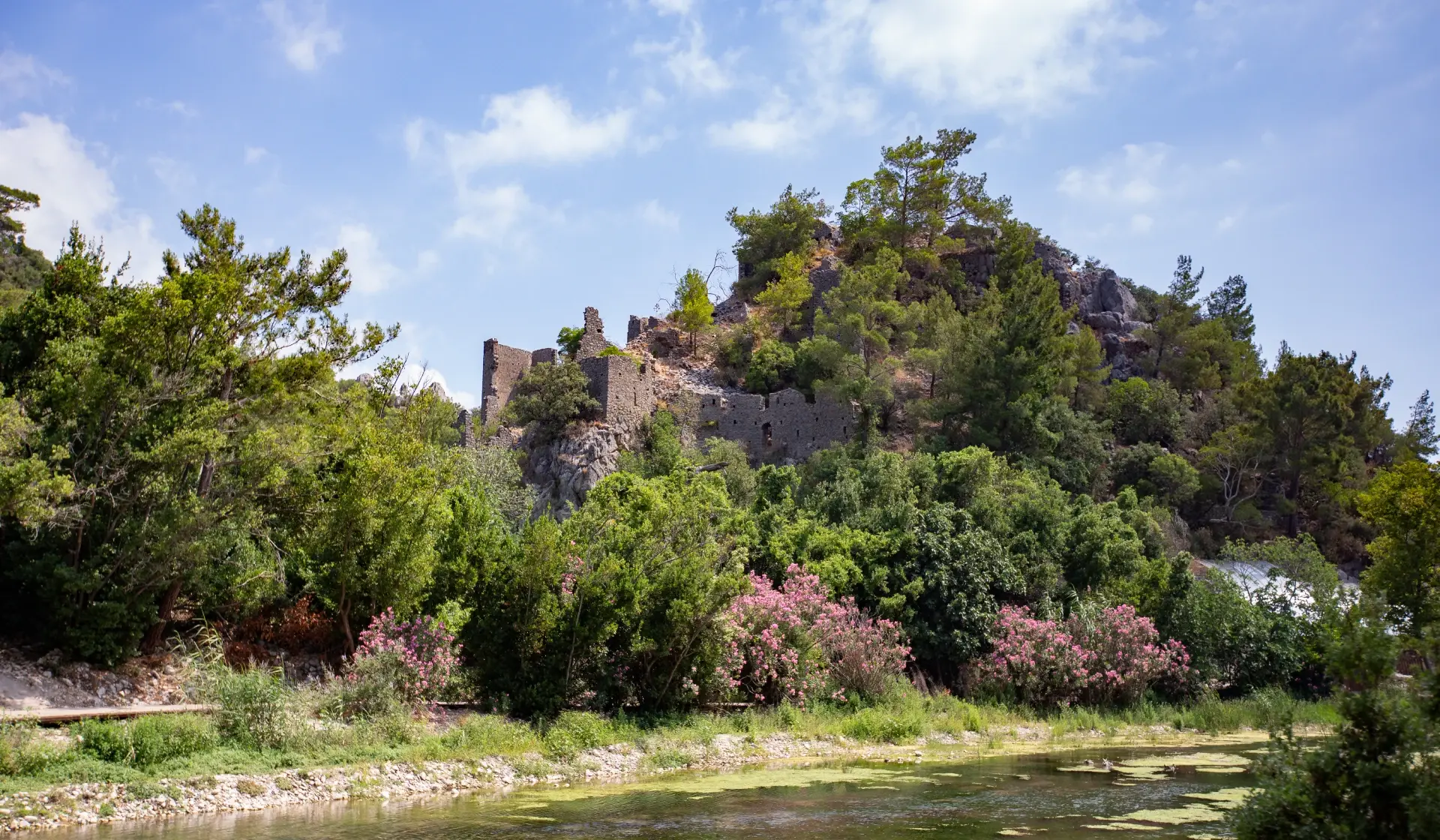
Ruins of an ancient city among forests, the sea, and mountain slopes
A visit to the area usually begins with access to the archaeological zone, where the path runs along a stream and through sections of old settlement remains. Here you can see Lycian and Roman sarcophagi, remains of streets, vaulted structures, and fragments of temple and residential buildings. The ruins are not gathered into one compact ensemble, so the walk feels more like a route through a natural landscape with historical sites than a visit to a classic open-air museum.
After the archaeological part, many head to the sea. Olympos Beach is covered with pebbles and sand, the entrance to the water is fairly open, and the shoreline retains a natural appearance without dense urban development. There are also hiking routes nearby along the Lycian Way, while in the higher part of the national park stands Mount Tahtali, known for its panoramic views and cable car.
For your visit, it is worth taking the protected status of the area into account: seasonal restrictions may apply on the coast and in the turtle nesting zone, especially in the evening and at night. Yanartas is usually visited separately, via a stone path from Cirali; people most often go there closer to sunset or after dark, when the flames are more visible. Nearby, you can also see the ruins of Phaselis, where ancient streets, an aqueduct, and bays for swimming have been preserved.
From central Kemer, visitors usually get here via the D400 highway toward Cirali and Olympos, then continue along a local road to the entrance of the reserve.
Best tours and travel experiences across the continent

Photos of Olympos and Cirali
Guided tours, popular attractions, and top-rated hotels across the continent


