
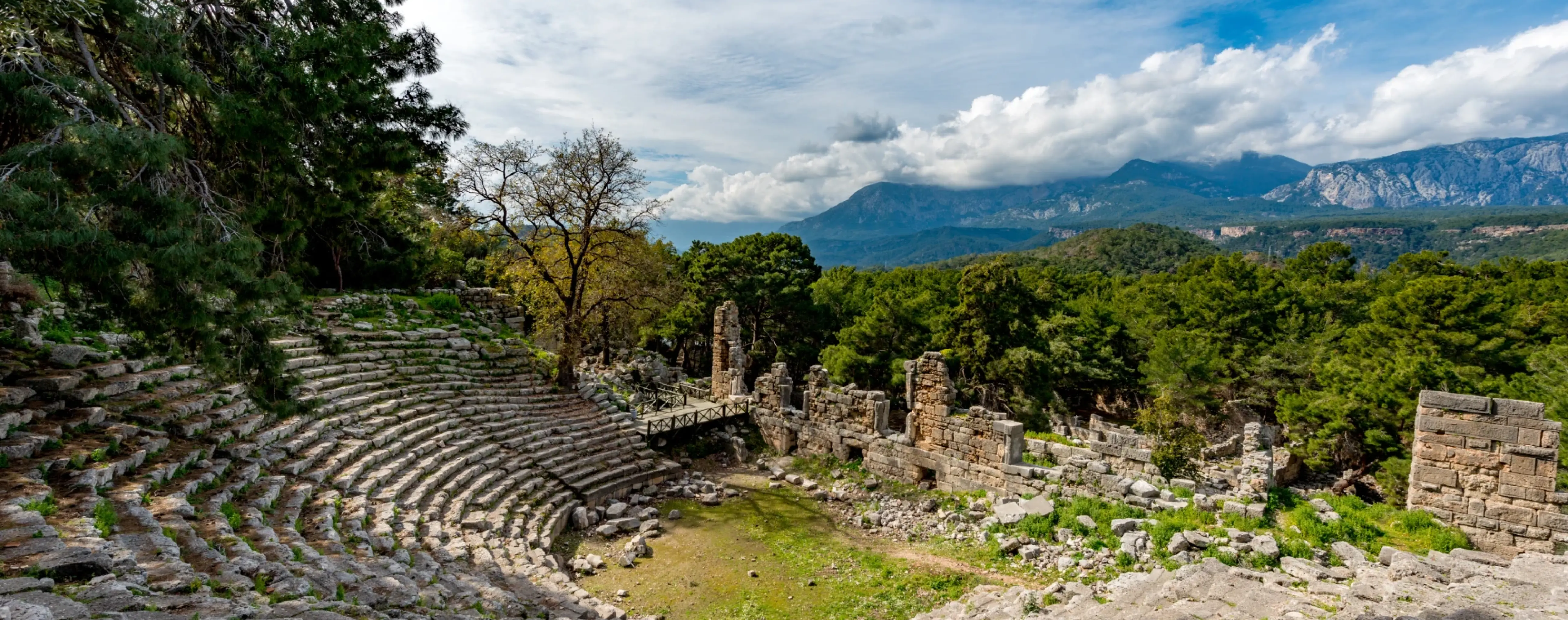
Phaselis Amphitheater
Phaselis Amphitheater in Kemer, Turkey
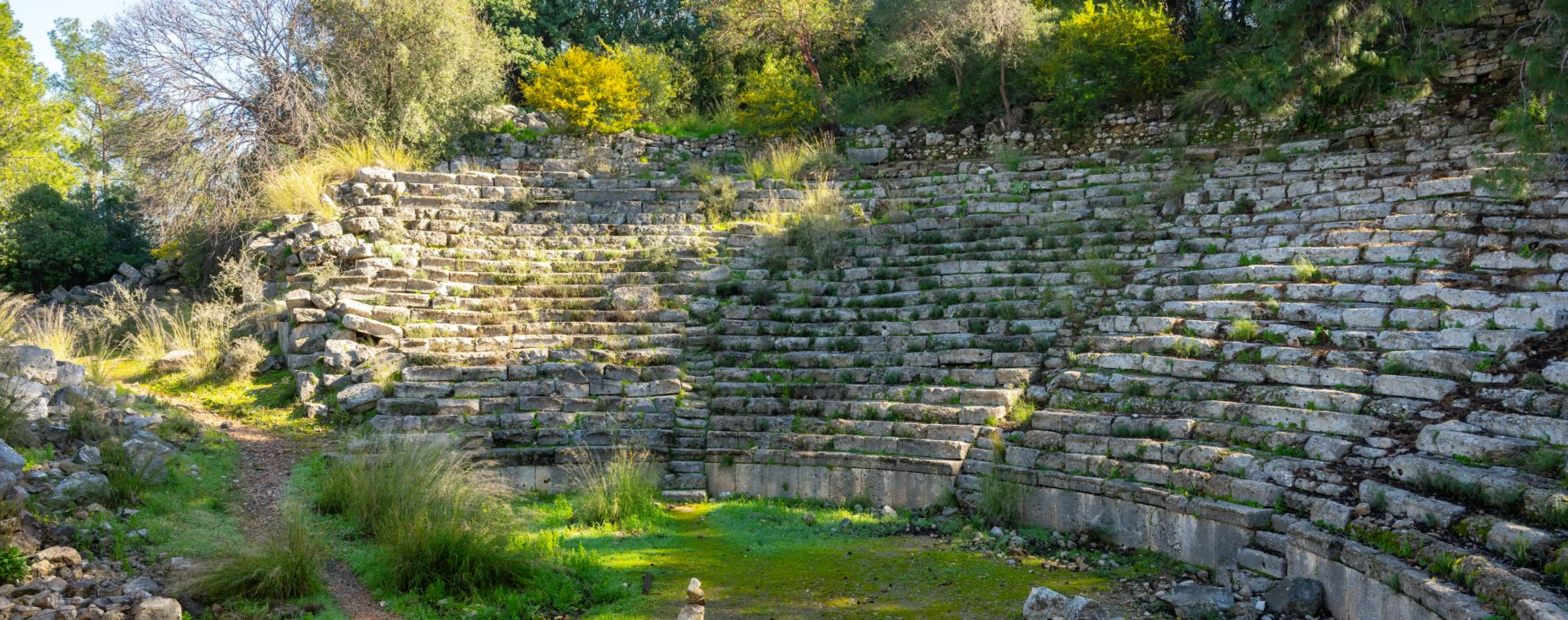
The Phaselis Amphitheater is located among the ruins of the ancient city of Phaselis on the coast near Tekirova, not far from Kemer. The theater stands in the central part of the archaeological zone and is partially supported by the slope of a hill, as was customary in the ancient architecture of Asia Minor. During a walk through the complex, it is easy to spot among the other urban structures.
Phaselis itself was founded in the 7th century BC and for a long time remained an important port city. The theater is attributed to the ancient urban development of the Hellenistic period, and in the Roman era it was probably still in use and underwent modifications. From the surviving remains, it is clear that this was not the largest structure, but rather a civic public building for gatherings and performances.
Rows of stone seats, fragments of structures, and individual traces of later alterations have survived to the present day. They make it possible to imagine the layout of the ancient theater and understand how the public spaces of Phaselis were organized. Visitors here usually do not limit themselves to viewing a single site, but combine a visit to the theater with a walk along the ancient streets, the remains of the agora, the aqueduct, the necropolis, and the coastal bays.
The amphitheater is of interest to those who want to see not an isolated monument, but part of an entire ancient city in a natural setting. It is a convenient point for becoming acquainted with the history of Phaselis: the theater is located near the main routes through the archaeological area and complements the overall impression of the complex well.
Phaselis Amphitheater on the map
Kemer, Tekirova: Archaeological monuments
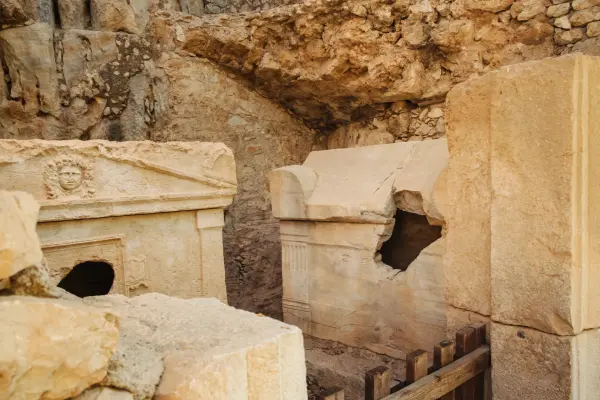
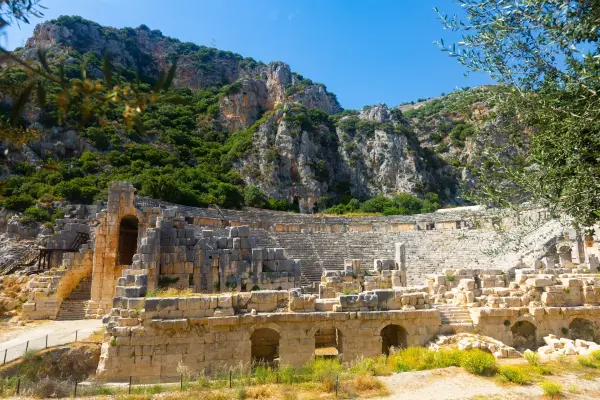
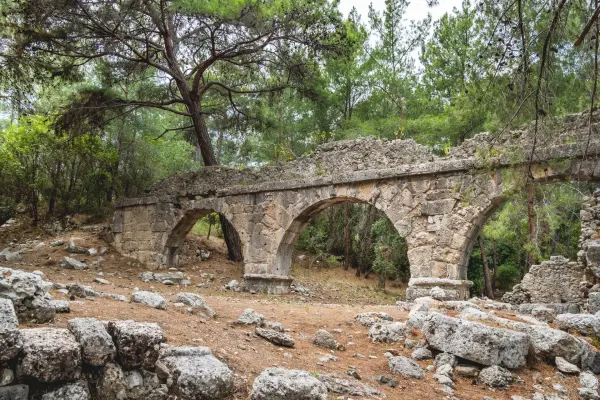
Tombs of Ancient Olimpos, Greco-Roman Theatre of Myra, Phaselis Aqueduct
The Phaselis Amphitheater as part of the ancient city
It helps you see how the public center of Phaselis was organized.
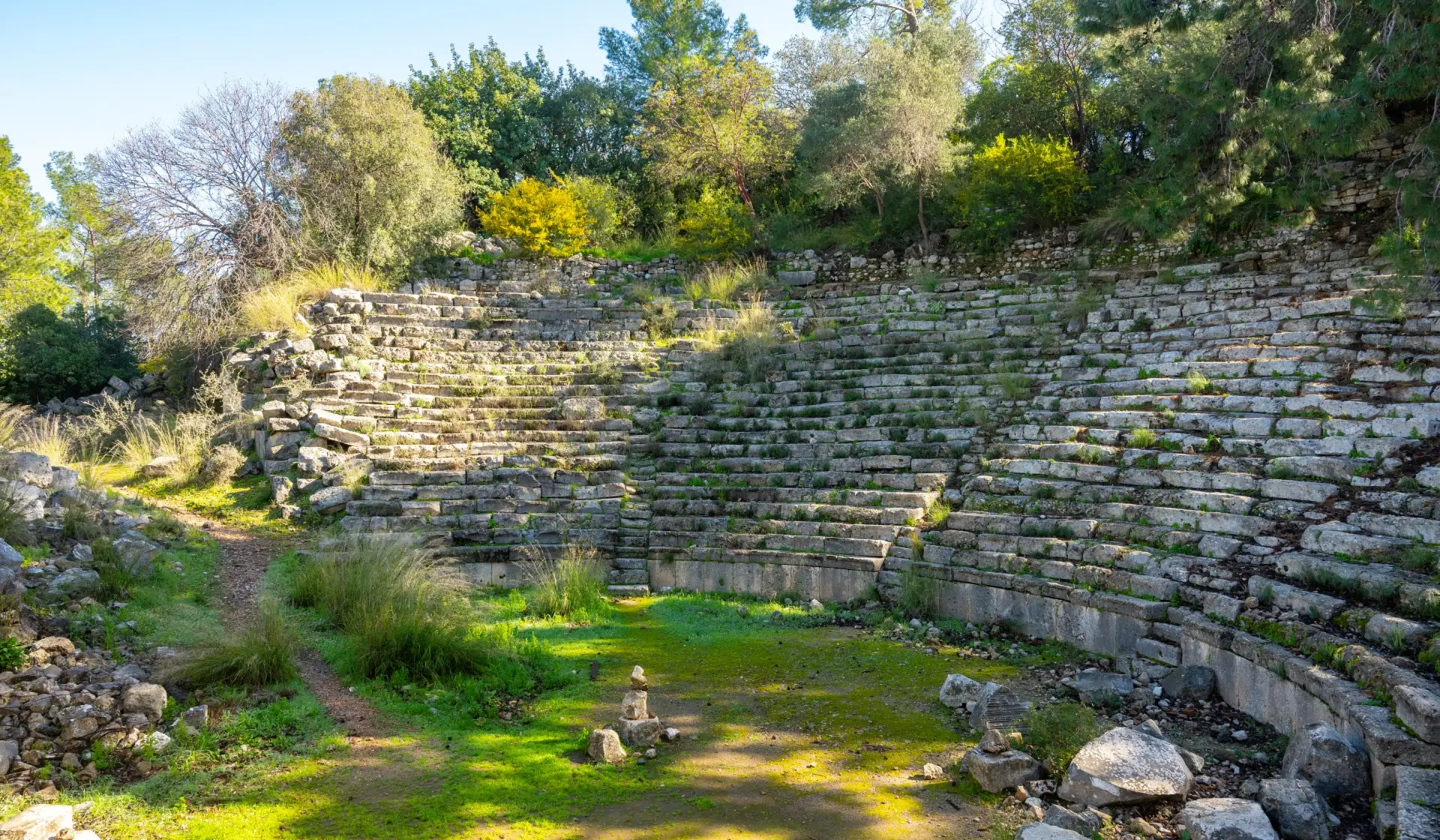
A small ancient theater on the slope by the central street
The structure has survived only in part, but its layout can still be read quite clearly. Visitors can examine the semicircular cavea with its stone rows, appreciate how the theater was integrated into the terrain, and see masonry elements belonging to different stages of use. Thanks to these remains, it is easier to understand the scale of public performances and gatherings in Phaselis.
Exploring the theater usually takes little time, but it is best viewed as part of the overall route through the archaeological complex. From here, it is convenient to continue walking toward the main street of the ancient city, the ruins of public buildings, and the sections leading to the sea. Against the backdrop of the pine forest and the coast, it is especially noticeable how closely ancient buildings and the natural landscape coexist in Phaselis.
Nearby are the agora, the remains of the aqueduct, the necropolis, and the bays of Phaselis, where many visitors stop after exploring the ruins. People usually get here by road from Kemer toward Tekirova, and then enter through the entrance to the national park and archaeological complex.
Best tours and travel experiences across the continent

Photos of the amphitheater
Guided tours, popular attractions, and top-rated hotels across the continent


