

Saratli Underground City
Saratli Underground City in Cappadocia, Turkey, layout and description
Saratli Underground City is located in the village of the same name in Aksaray Province, in the southeastern part of Cappadocia, not far from the road between Aksaray and Nevsehir. In local tradition, it is also known as Kirkgoz. It is one of the region’s underground complexes where it is easy to see how multi-level spaces for living and shelter were created in soft volcanic rock.
The exact date of its foundation has not been established, but researchers generally attribute the main levels to the Late Roman and Byzantine periods. Like other underground cities of Cappadocia, Saratli was used in times of danger, but its layout shows that people could not only hide here but also stay for extended periods. Inside, living rooms, storage areas, utility sections, wells, and ventilation shafts were carved out.
Today, part of the complex is open to visitors, with a route laid out through several levels. During the visit, you can see rooms of different purposes connected by corridors and imagine how underground life was organized: storing supplies, access to water, air circulation, and protection of the inner spaces. Some sections remain closed, as the site is still being studied and requires careful preservation.
Saratli is usually regarded as a more compact underground city compared with Derinkuyu or Kaymakli, so it is convenient to include in a trip around Cappadocia for those who want to get acquainted with the region’s underground architecture without taking a long route through the largest complexes. This place is especially interesting for its layout and the clear structure of an underground settlement.
Saratli Underground City on the map
Saratli Underground City, route through the open section and recommendations
The visit shows the layout of living rooms, storage areas, and the ventilation system.
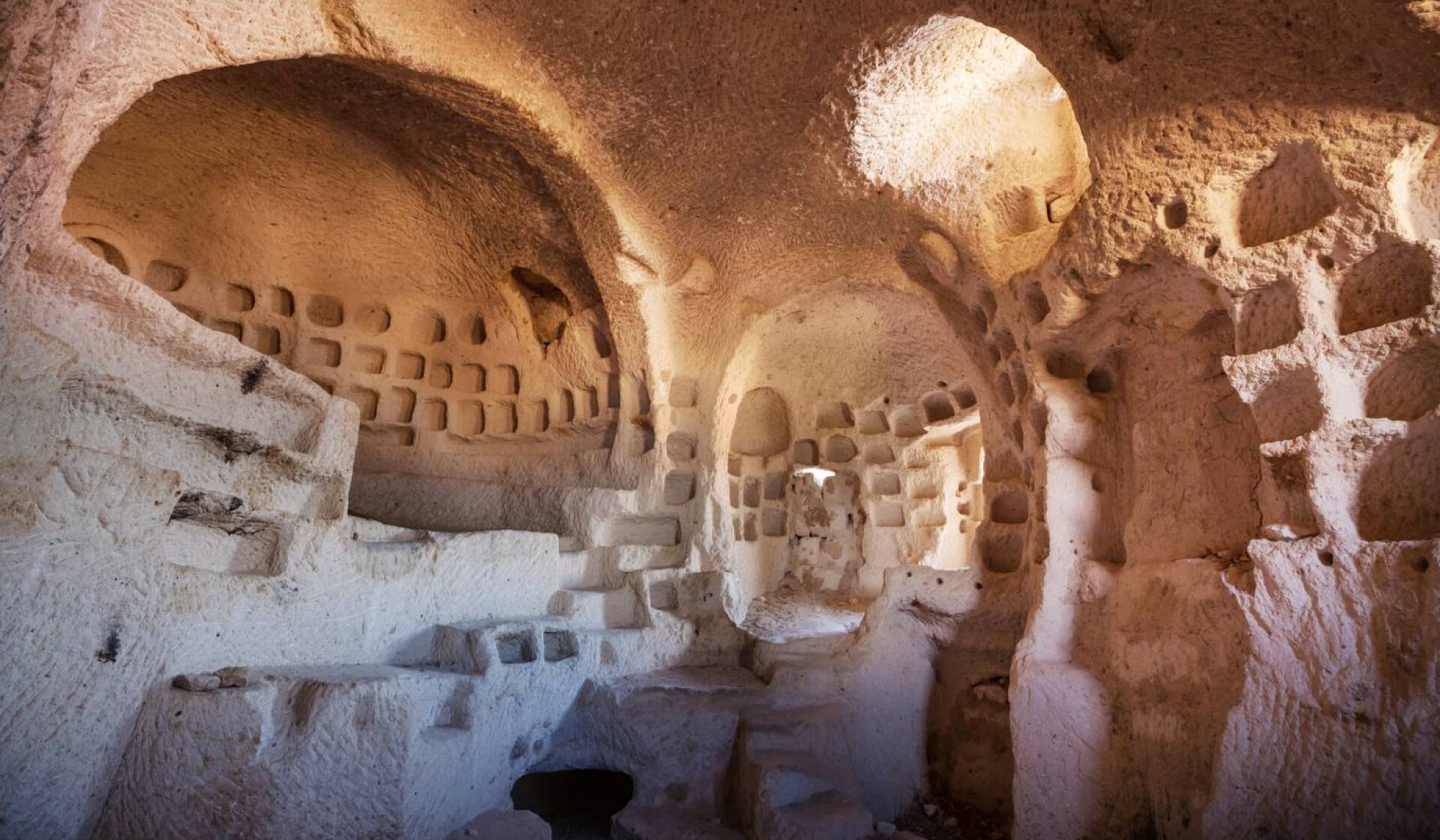
Multi-level corridors, storage areas, and ventilation shafts
The route through the open section passes through several underground levels. Visitors explore narrow passageways, small rooms, utility spaces, and storage areas carved directly into the tuff. Inside, the characteristic features of Cappadocian underground structures are noticeable - low passages, isolated sections, and systems that helped preserve air and water.
The visit usually takes less time than in the region’s largest underground cities, so Saratli is well suited to a relaxed stop as part of a trip around the Aksaray area. It is worth keeping in mind that some passages may be narrow, and the temperature underground is usually lower than outside. Closed shoes are convenient for the visit, especially if a full itinerary with several sites is planned for the day.
Nearby, the trip can be combined with other places in Cappadocia on the Aksaray side, and on a longer route - with the Ihlara Valley or the underground cities of Derinkuyu and Kaymakli. Saratli is usually reached by car or as part of an excursion from Aksaray and other cities of Cappadocia.
Best tours and travel experiences across the continent

Photos of Saratli
Guided tours, popular attractions, and top-rated hotels across the continent


