
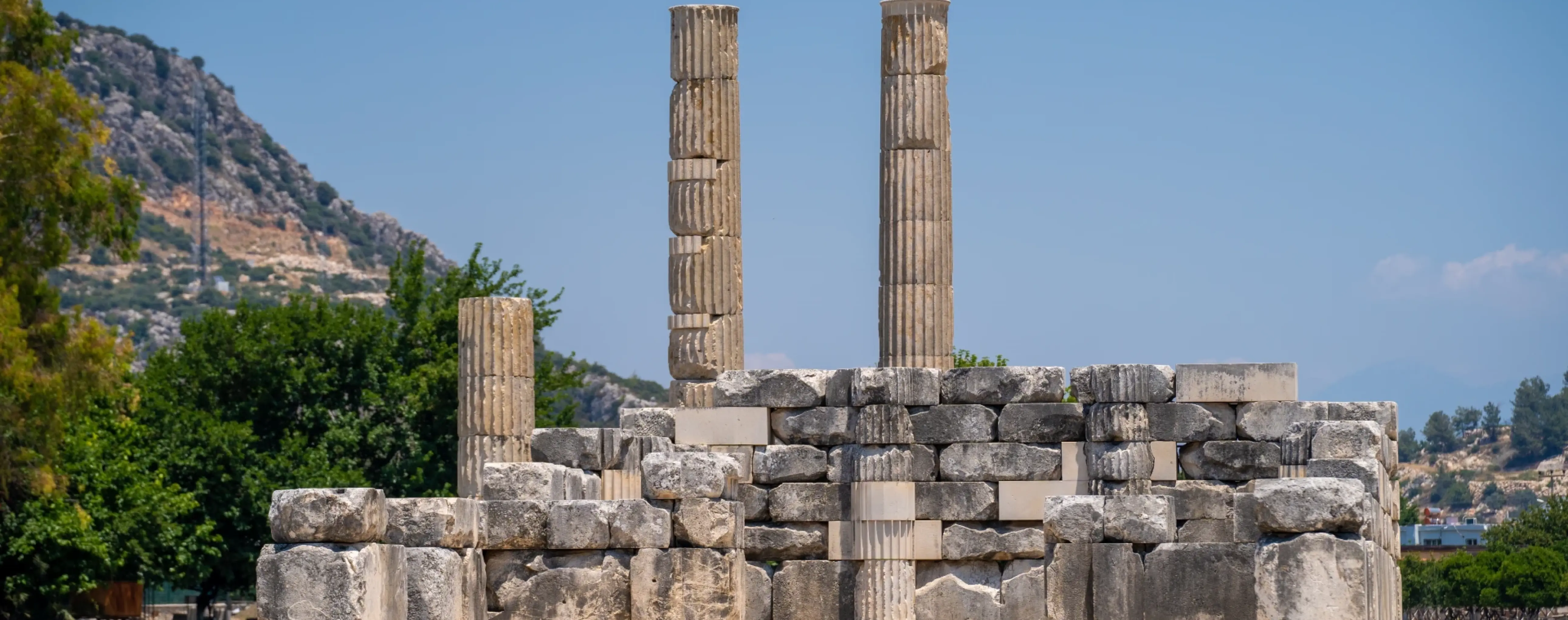
Temple of Apollo
Temple of Apollo in Gokova, Turkey
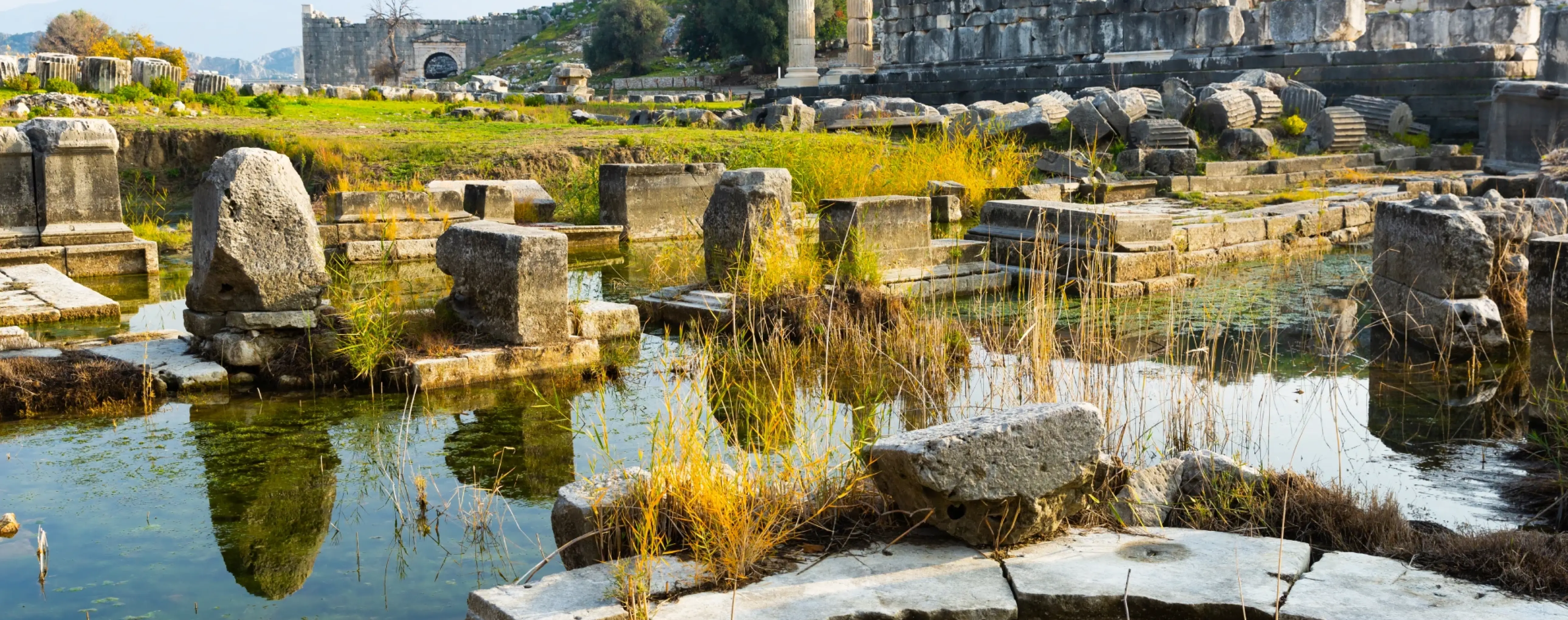
The Temple of Apollo in the Gokova area of Mugla Province is associated with the ancient sanctuary of Letoon, one of the important monuments of ancient Lycia in southwestern Turkey. Today, visitors can see the ruins of the temple complex, where the foundations of structures, stone blocks, and fragments of architectural details have been preserved, making it possible to imagine the layout of this ancient religious center.
Letoon was dedicated to Leto, Apollo, and Artemis, so the Temple of Apollo is regarded as part of the overall sanctuary rather than as a separate monument. Archaeological research has helped reveal the layout of the complex and confirmed the significance of this site for the history of Lycia. Of particular value are the inscriptions found here, which have contributed to the study of local culture and the Lycian language.
The ruins are part of the archaeological zone of Letoon, which is included in the UNESCO World Heritage List together with neighboring Xanthos. For tourists, this place is interesting primarily as an opportunity to see one of the key monuments of ancient Anatolia and to better understand how the sanctuaries of the ancient world were organized.
A trip here will suit those interested in archaeology, the history of Lycia, and ancient mythology. A visit usually does not take much time, but when combined with other monuments in the region, it provides a more complete picture of the past of southwestern Turkey.
Temple of Apollo on the map
Temple of Apollo and the Ruins of the Letoon Sanctuary
Here you can see the remains of an ancient cult complex.
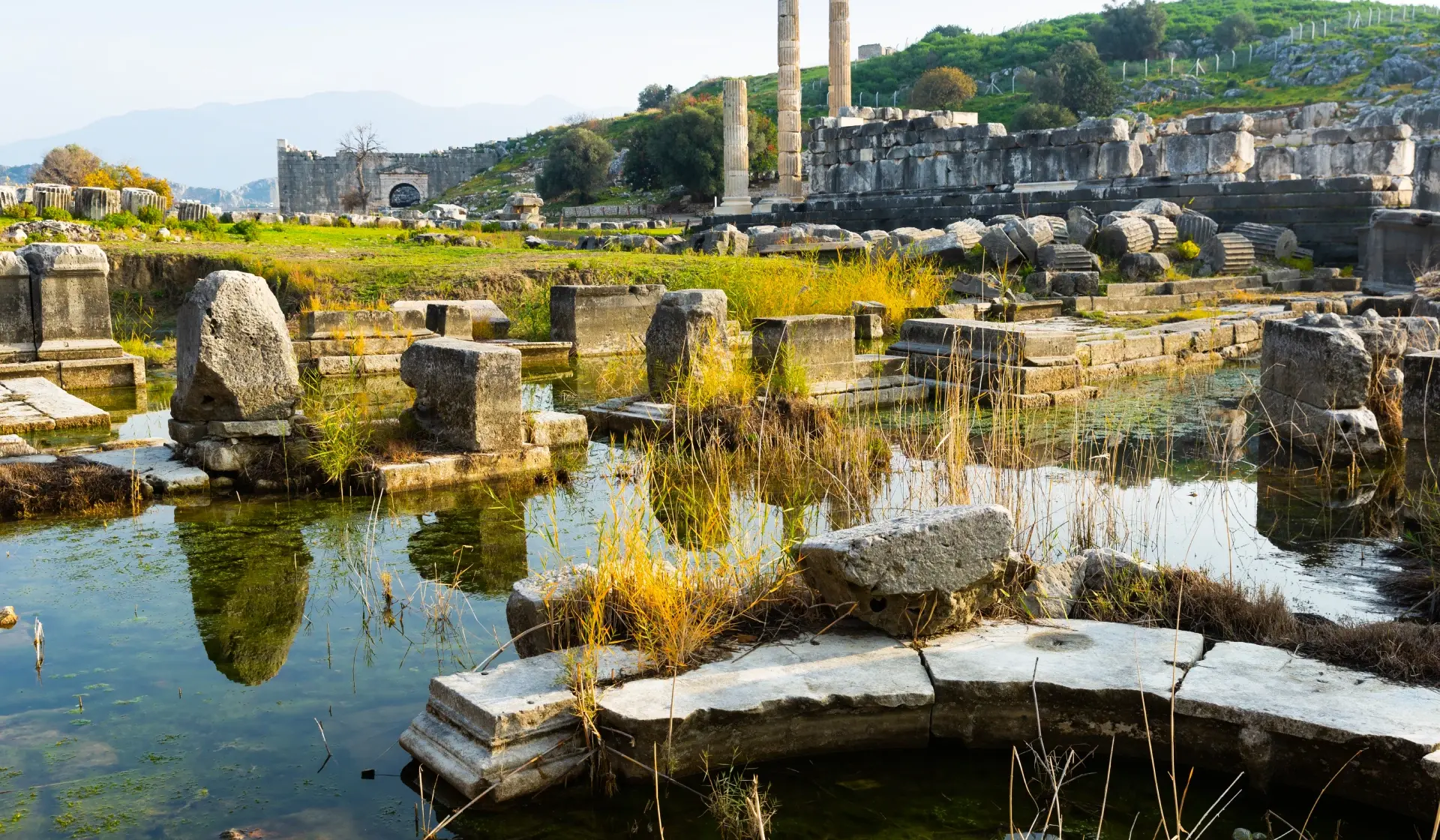
Sanctuary Ruins Within Ancient Letoon
At the site of the temple, visitors primarily see archaeological remains - foundations, sections of stone masonry, and individual architectural elements. This is not a reconstructed building, but genuine ruins, so the interest of the visit lies in the historical context and the overall structure of the sacred complex. It is best to explore the monument at a leisurely pace, paying attention to the arrangement of the temples and the features of the site's terrain.
During the visit, it is worth bearing in mind that the Temple of Apollo is perceived as part of the larger ensemble of Letoon. Here, visitors usually become familiar not only with the temple itself, but also with the territory of the ancient sanctuary, where cult buildings, approaches to them, and sections uncovered by archaeologists were located. Information materials on site help explain how religious life in Lycia was organized.
The ruins of ancient Xanthos are located nearby, so these two monuments are often combined into one trip. The most convenient way to get here is usually by car or as part of an экскурсия по ликийским древностям from the resort areas of Mugla Province and neighboring Antalya.
For the visit, it is best to choose comfortable footwear and allow time for a walk through the entire archaeological zone. The site is especially suitable for those who want to see not a museum reconstruction, but an authentic open-air monument of important historical and cultural significance.
Best tours and travel experiences across the continent


Photos of the Ruins
Guided tours, popular attractions, and top-rated hotels across the continent


