
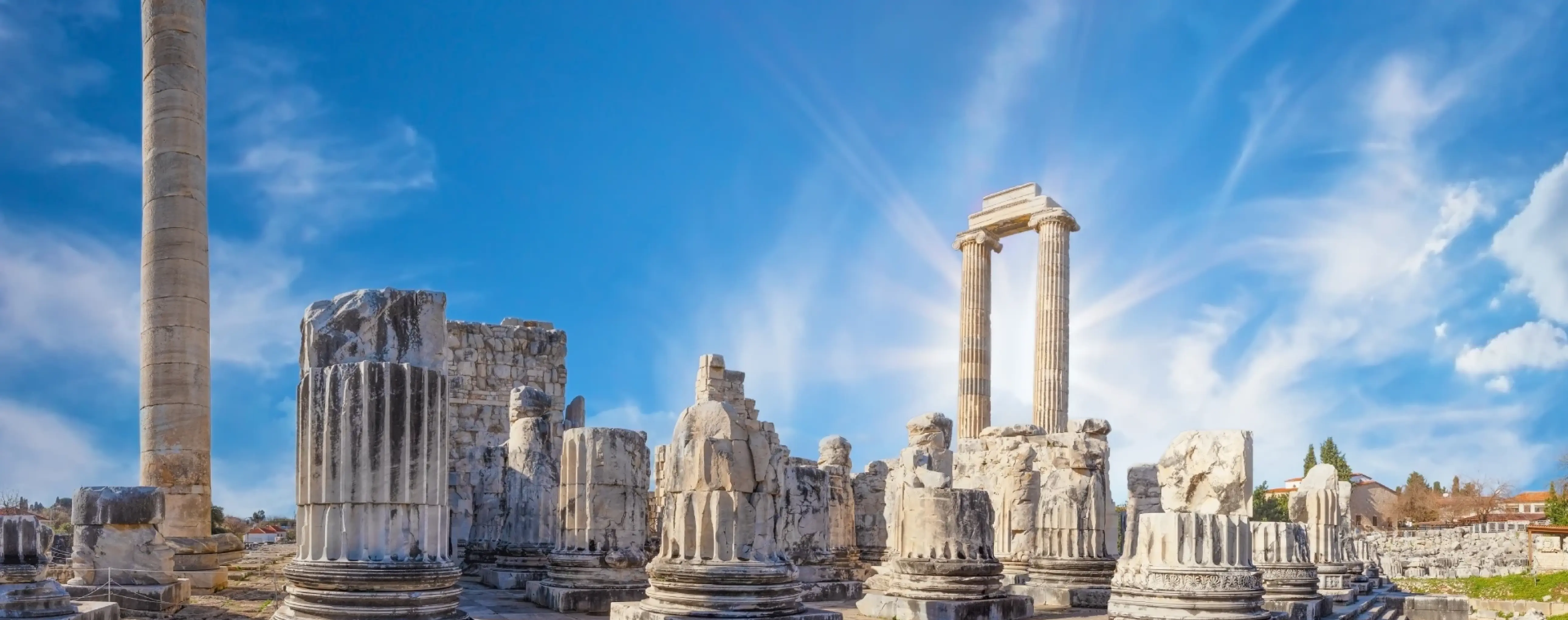
Temple of Apollo at Didyma
Temple of Apollo at Didyma, Didim, Turkey
The Temple of Apollo at Didyma is located in the town of Didim on Turkey’s Aegean coast. In antiquity, this place was known as one of the main sanctuaries of Ionia and was closely associated with the oracle of Apollo. The name Didyma is usually linked to the ancient Greek word for “twins” and to the cult of Apollo and Artemis.
The main monument of the archaeological zone is the Temple of Apollo Didymaeus, one of the largest temples in the Greek world. Its monumental construction began in the 4th century BC on the site of an earlier sanctuary that had existed since the Archaic period. Didyma was connected by the Sacred Way, which linked the sanctuary with ancient Miletus, emphasizing the importance of this place in the religious life of the region.
Today, visitors can see well-preserved columns, massive stone blocks, relief details, and part of the temple’s complex layout. Of particular interest are the high podium, the monumental staircases, and the inner sacred space, which distinguished the temple at Didyma from many other ancient structures. Even in its ruined state, the monument makes it possible to imagine the scale and vision of the ancient architects.
The temple will appeal to those who want to see not just isolated ruins, but a large archaeological complex with a clear history and striking architecture. A visit here can easily be combined with exploring other ancient monuments of western Turkey and a walk around Didim itself.
Temple of Apollo at Didyma on the map
The Temple of Apollo at Didyma and its architectural remains
An ancient sanctuary with an oracular tradition and a complex layout.
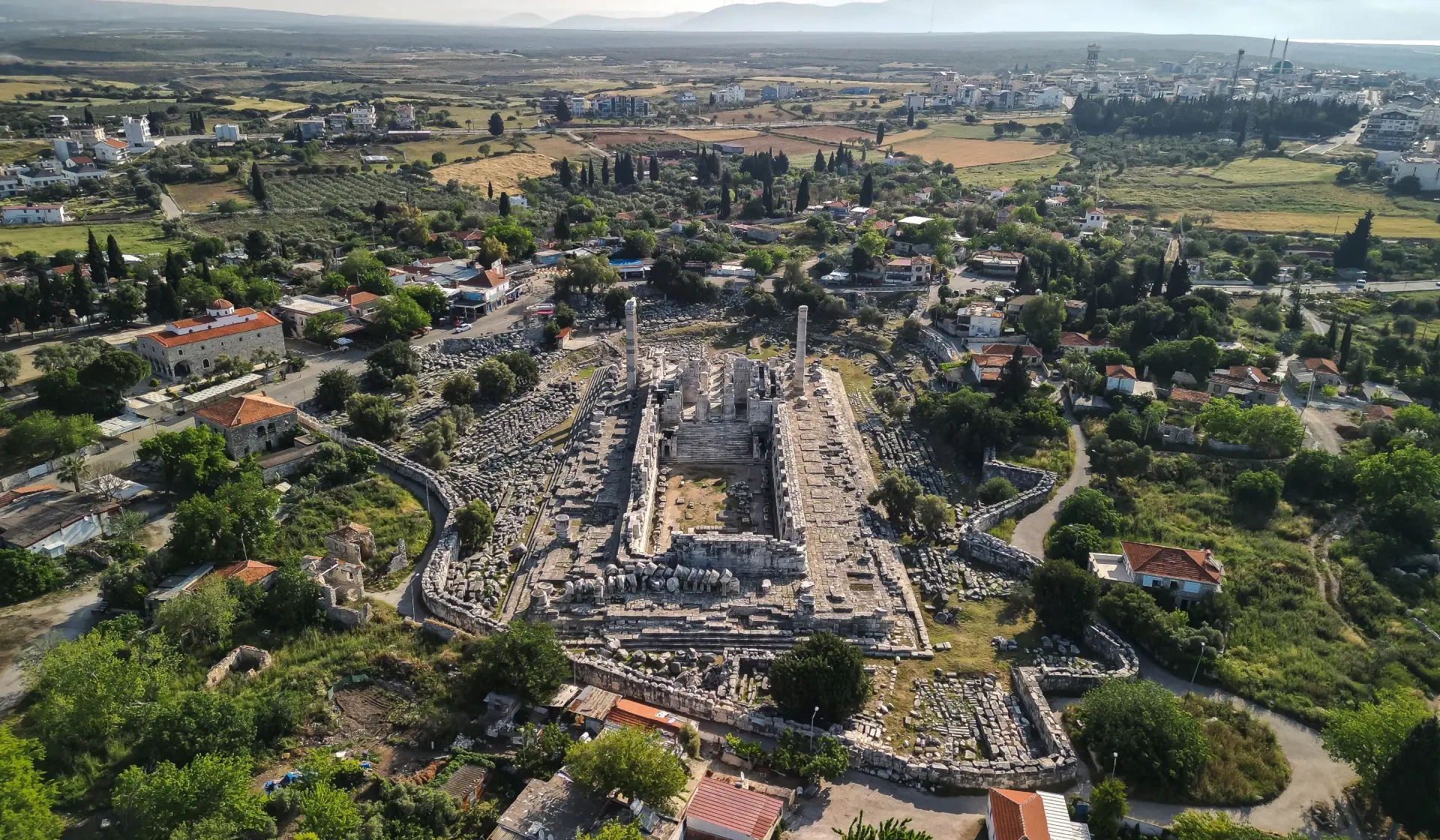
Monumental columns and the sacred courtyard of the ancient oracle
On site, you can examine preserved sections of the double colonnade, wall foundations, relief decoration, and passages leading to the inner courtyard. One of the temple’s distinctive features was its unusual composition with an open sacred space inside, where the altar and elements associated with the cult were located. Thanks to these details, the ruins are perceived not as chaotic fragments, but as a thoughtful and complex structure.
When visiting, it is worth paying attention to the scale of the stone masonry and the height of the surviving columns - they clearly show how grand the project was. The site allows for convenient viewing of the architectural elements from different sides, and the information boards help explain the layout of the sanctuary and its role as a place of prophecy. A leisurely visit usually provides enough time to walk through the entire complex and see the key parts of the monument.
Nearby are the ruins of ancient Miletus and the archaeological site of Priene, so the trip is often combined with visits to several ancient cities in the region. The temple itself is located within Didim, and it is usually easy to reach from the town center by taxi, local transport, or on foot if you are staying nearby.
Best tours and travel experiences across the continent




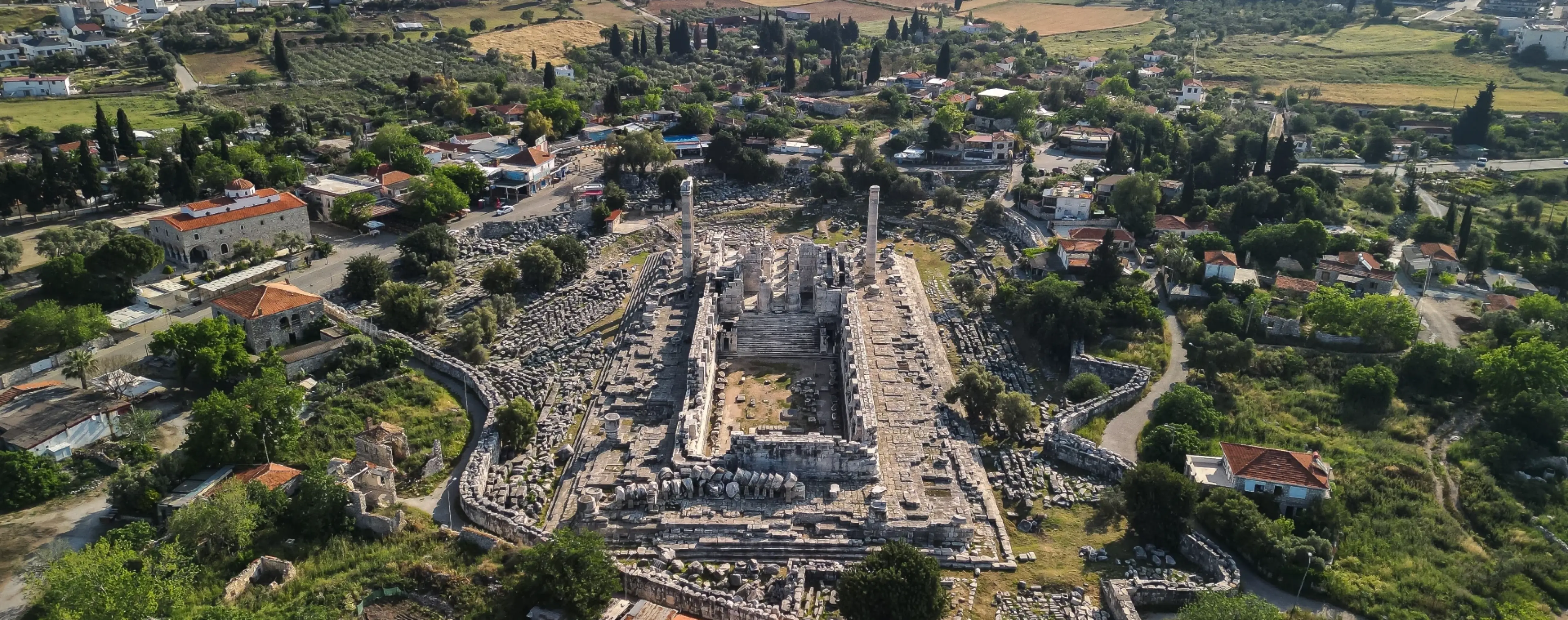
Photos of the temple
Guided tours, popular attractions, and top-rated hotels across the continent


