
The Golden Gate of Constantinople
The Golden Gate of Constantinople in Istanbul, Turkey
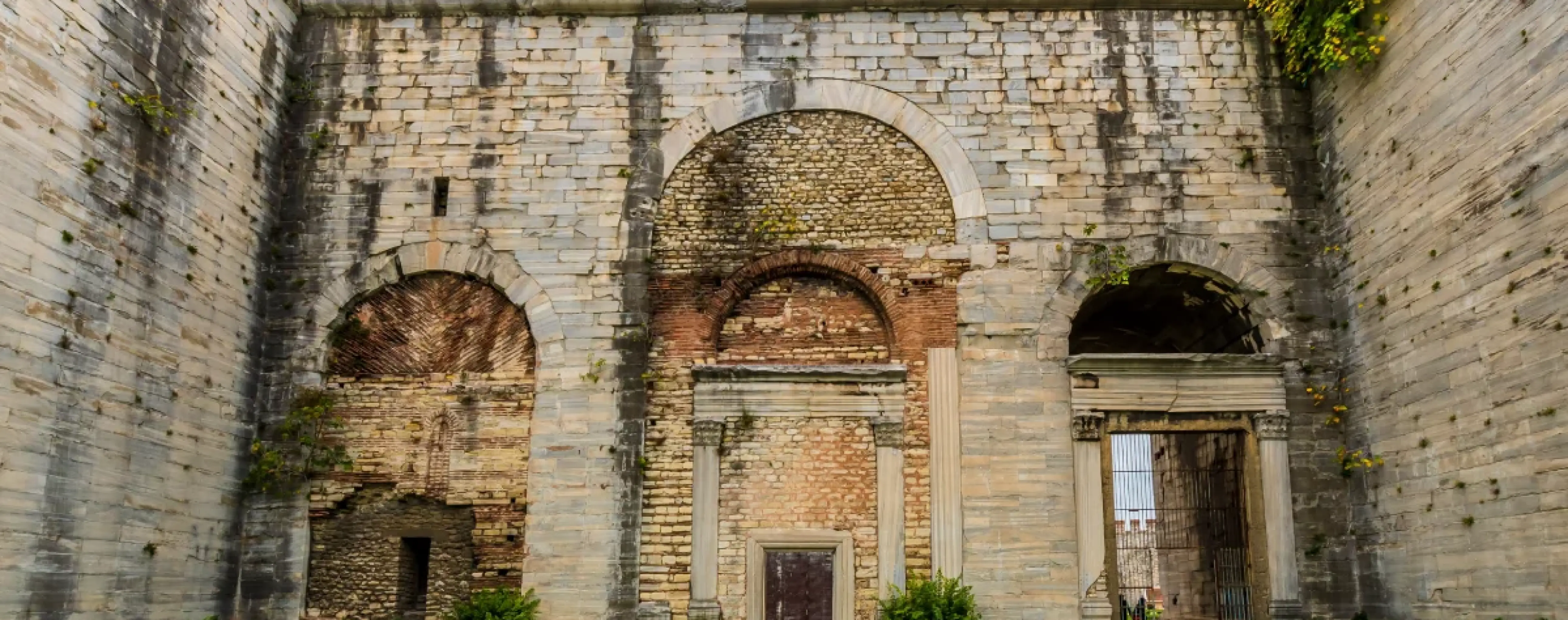
The Golden Gate of Constantinople is located in the European part of Istanbul, at the southern section of the Theodosian Walls, next to Yedikule Fortress. In the Late Roman and Byzantine periods, it was the city's main ceremonial land entrance, associated with official ceremonies, the return of emperors after victories, and especially solemn entries into the capital.
The structure was a monumental triple-arched gateway with towers on either side. Originally, the gate was clad in marble and formed part of Constantinople's defensive system, while standing out for its representative character. Unlike ordinary openings in the city wall, it was not opened for everyday traffic, but only on exceptional occasions.
After the Ottoman conquest of the city, the gate was incorporated into Yedikule Fortress, built in the second half of the 15th century. The arched openings were gradually sealed, and the monument ceased to perform its former function as an entrance. Nevertheless, its structure clearly shows how military significance and a ceremonial role were combined in a single construction.
Today, the Golden Gate is of interest to those who want to see one of the most famous fragments of Constantinople's land fortifications and better understand the history of the transition from the Late Roman city to Byzantine and then Ottoman Istanbul. It is not a standalone monument, but part of a larger historical ensemble, which is best explored together with the adjoining section of the walls and Yedikule Fortress.
The Golden Gate of Constantinople on the map
Istanbul: Monuments and memorials
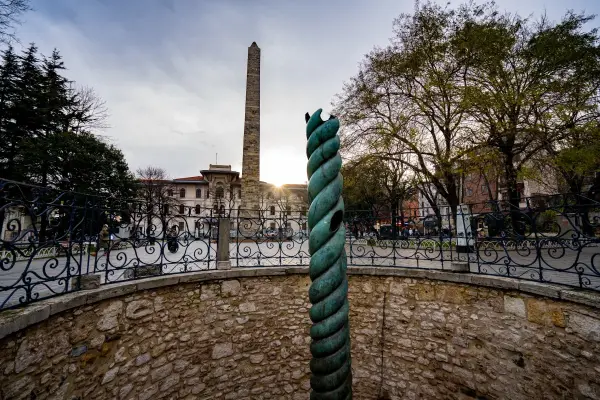
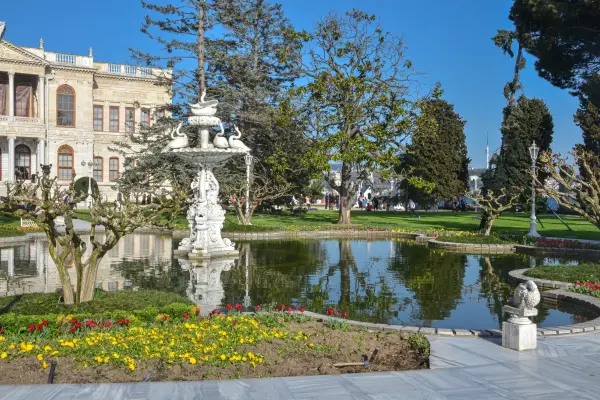
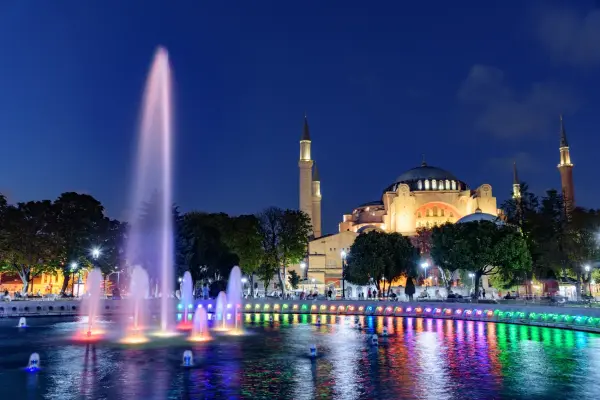
Serpent Column, Swan Fountain of Dolmabahce Palace, Fountain in Sultanahmet Square, Egyptian Obelisk
The Golden Gate of Constantinople - history, architecture, and its connection to Yedikule
The arch reflects the combination of a ceremonial function and the city's defense.
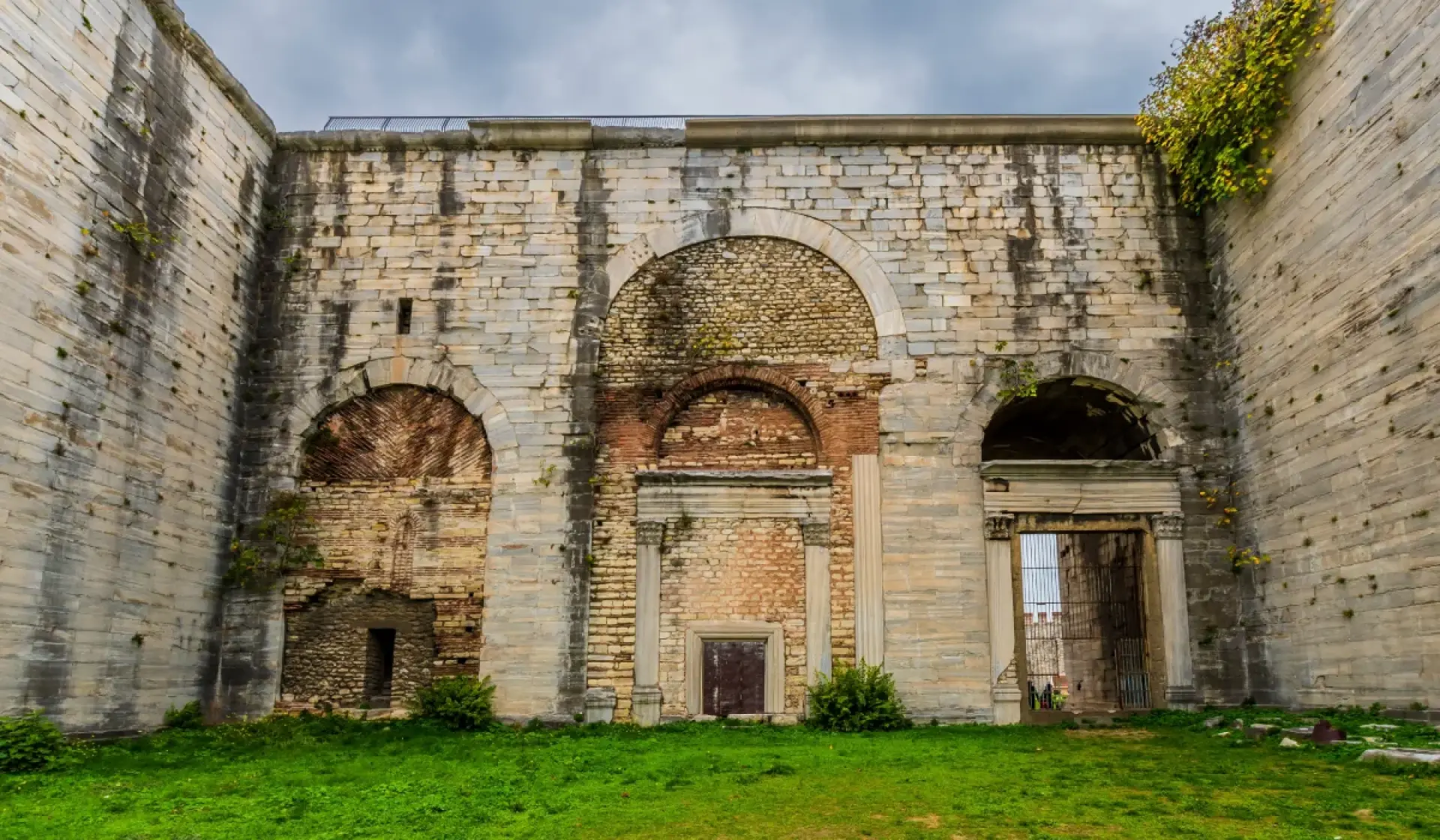
A ceremonial arch as part of the Theodosian Walls and Yedikule Fortress
Today, visitors see the Golden Gate as a monument integrated into the fortification system, where the massive stone blocks, remnants of the cladding, and the characteristic composition with a central passage and side sections are especially noticeable. It is best to view this site not as an isolated object, but as part of the long line of land walls through which the development of Constantinople's defenses over several eras can be traced.
When visiting, it is worth paying attention to the contrast between the Roman-Byzantine arch and the later Ottoman additions of Yedikule Fortress. It is precisely this juxtaposition that makes the monument so illustrative: here one can clearly see how a ceremonial entrance was transformed into an element of a closed fortification complex. Tourists usually come inside the fortress to walk along the walls, towers, and courtyards, and the Golden Gate becomes one of the key historical points along the route.
Nearby are Yedikule Fortress and preserved sections of the Theodosian Walls; if desired, the walk can be continued toward the Sea of Marmara or to other fragments of the old city fortifications. The most convenient way to get there is by the Marmaray suburban line to Yedikule station, from where the monument can be reached on foot.
Best tours and travel experiences across the continent

Photos of the Golden Gate
Guided tours, popular attractions, and top-rated hotels across the continent


