
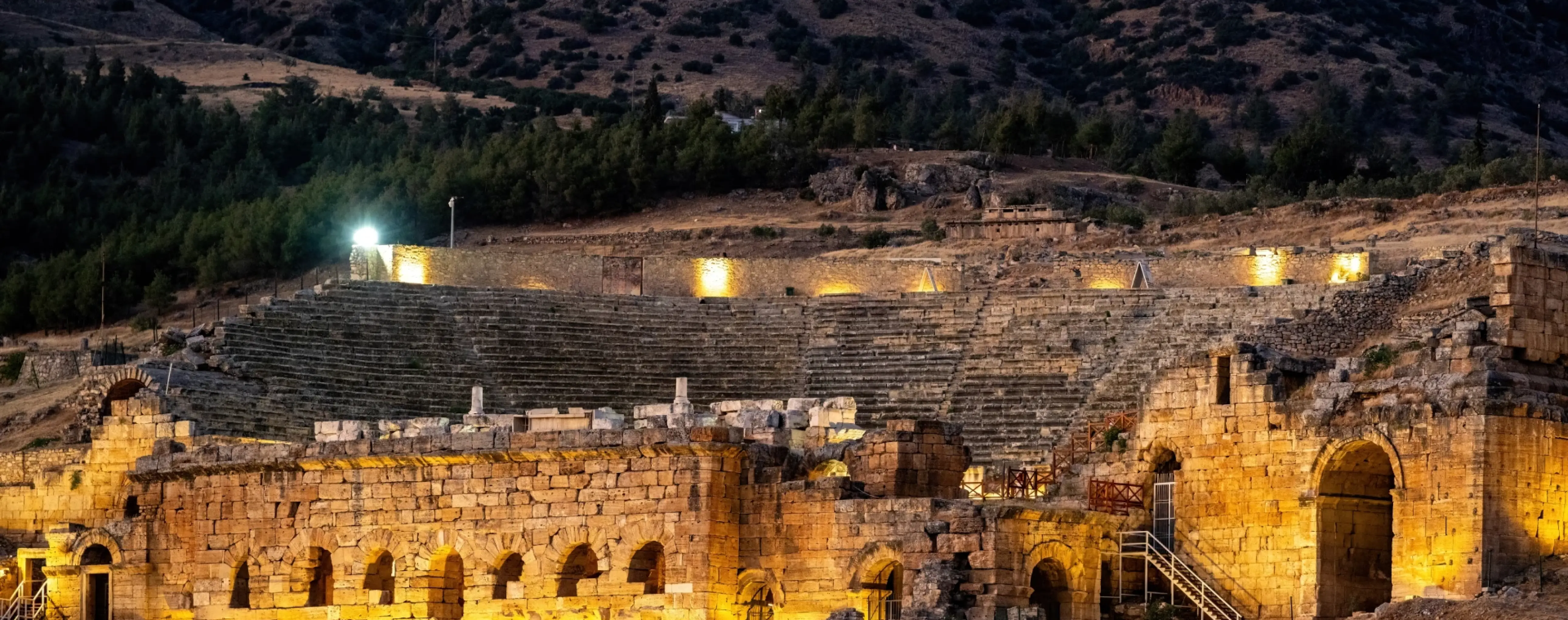
Acropolis in Pamukkale
Acropolis in Pamukkale on the Hierapolis Plateau, Turkey
The Acropolis in Pamukkale is usually associated with the upper part of the archaeological zone of ancient Hierapolis, which lies above the travertine terraces of Pamukkale, not far from the center of the village. For tourists, this is part of a large complex where the natural landscape and the ruins of the ancient city are located side by side, so a walk through the archaeological area is often combined with viewing the white limestone slopes.
Hierapolis was founded in the Hellenistic period and developed especially under the Romans, when the local hot springs made it a famous healing center. Later, the city retained its importance in the Byzantine period, but over time it declined after destructive earthquakes. Today, its remains make it possible to understand how a major ancient city was organized, connected at the same time with healing, religious cults, and everyday life.
The site preserves an ancient theater, necropolises, city gates, colonnaded streets, ruins of baths, the Temple of Apollo, the Ploutonion sanctuary, and traces of later structures. The acropolis itself is perceived not as a separate fortress, but as the elevated part of the ancient city on the plateau. This place is of interest to those who want to see Pamukkale not only as a natural attraction, but also as an important archaeological monument of southwestern Turkey.
The archaeological zone of Hierapolis, together with the travertines of Pamukkale, is included on the UNESCO World Heritage List. Visiting this part of the complex provides an opportunity in a single trip to discover both the history of the ancient city and the features of the limestone plateau that made the area famous.
Acropolis in Pamukkale on the map
Acropolis in Pamukkale - sites and recommended route
A walk across the plateau combines archaeological remains and views of the travertines.
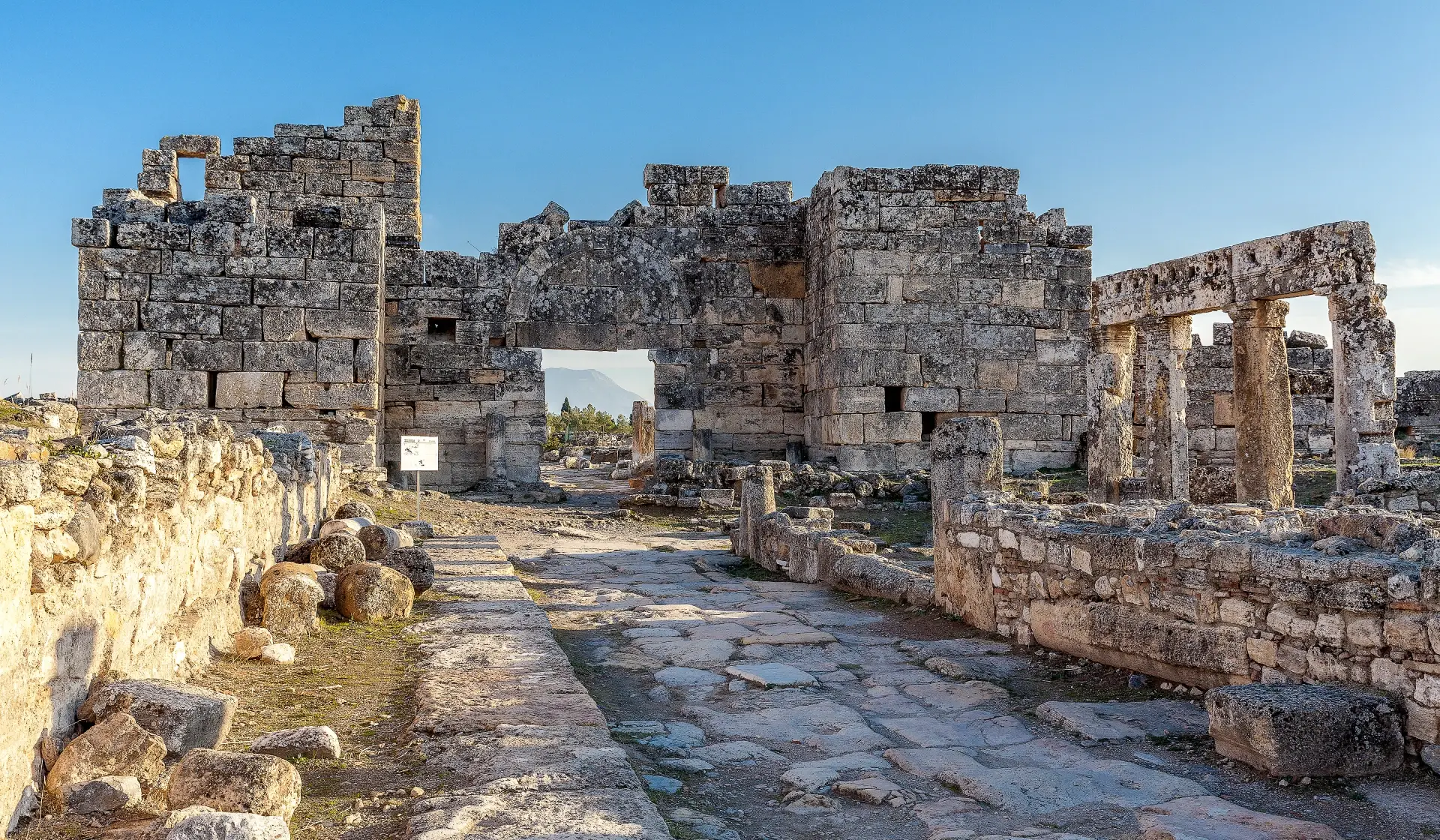
Ruins of an ancient city on the plateau above the travertines
While exploring the upper part of Hierapolis, visitors walk through an extensive archaeological area with fragments of streets, public buildings, and temple zones. What matters here is not a single individual monument, but the overall structure of the city: it is possible to see how it was planned, where the entrances, thermal facilities, places of worship, and residential areas were located. On the open plateau, the scale of the ancient settlement is especially tangible.
The route usually includes the theater, Roman baths, the museum housed in the former bath building, the Temple of Apollo, and the area of the Ploutonion, associated with ancient ideas about the underworld. Some of the paths run over uneven stone surfaces, so comfortable footwear is especially useful here. During the hottest part of the day, there is little shade in the open areas, and this is worth considering when planning a walk.
Nearby are the Pamukkale travertine terraces, the ancient Cleopatra Pool, and the large necropolises of Hierapolis, so a visit usually takes several hours. The archaeological zone is easy to reach from the center of Pamukkale on foot, as well as by taxi or local transport from Denizli.
Best tours and travel experiences across the continent



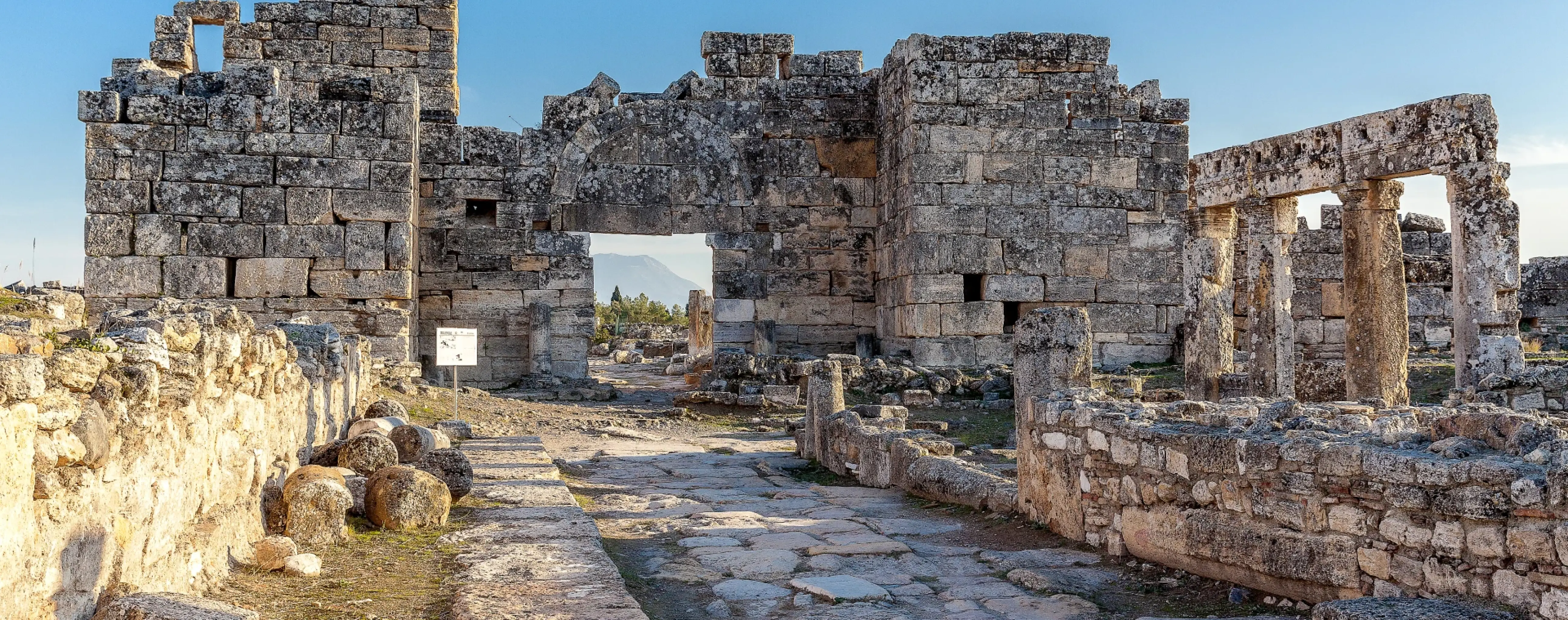
Photos of the acropolis
Guided tours, popular attractions, and top-rated hotels across the continent


