
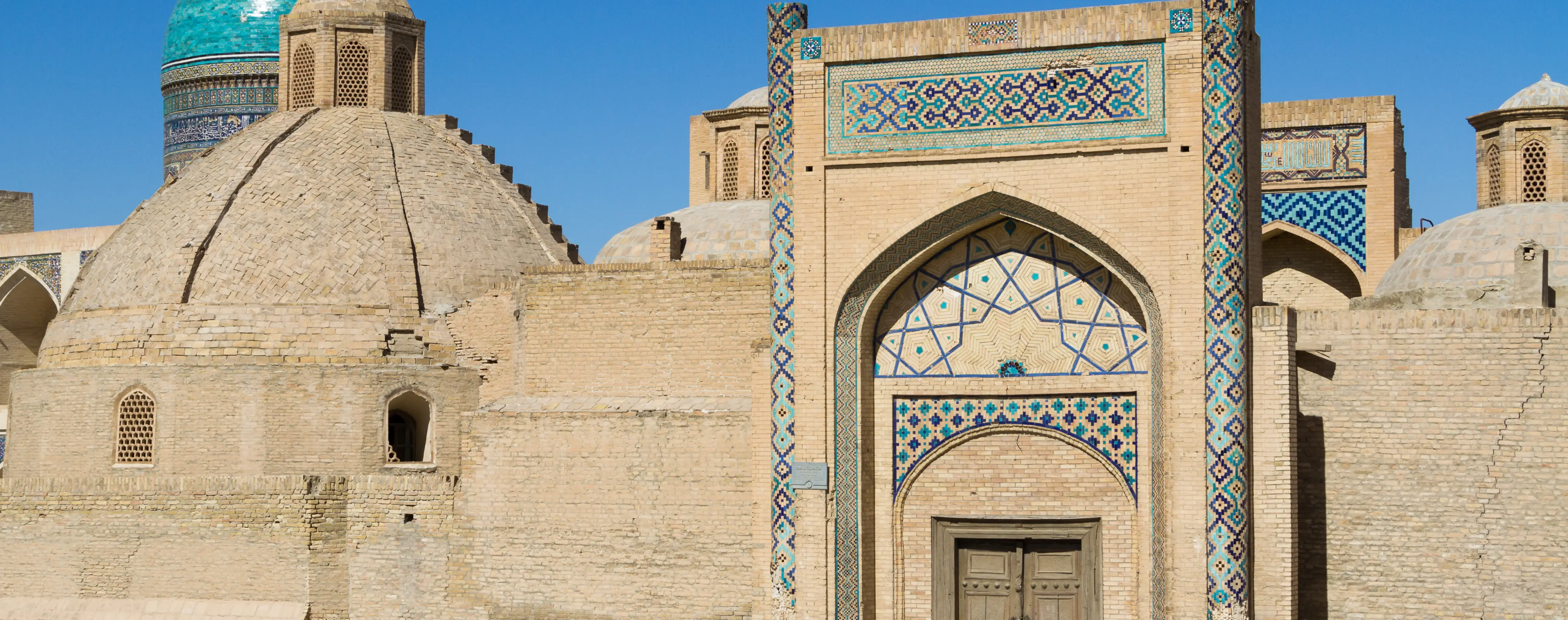
Alim Khan Madrasa
Alim Khan Madrasa in Bukhara, Uzbekistan
Alim Khan Madrasa is located in the historic part of Bukhara, within the old city, where the main monuments of Islamic architecture are concentrated. It was built in 1915 by order of Said Alim Khan, the last emir of the Bukhara Emirate, and belongs to the late stage of development of the Bukhara architectural school.
This madrasa is interesting as an early 20th-century monument, when the traditional forms of educational and religious buildings were preserved, but were already being created in a different historical context. For Bukhara, it is important not only as a separate structure, but also as part of the urban environment in which different stages of the development of local architecture can be seen.
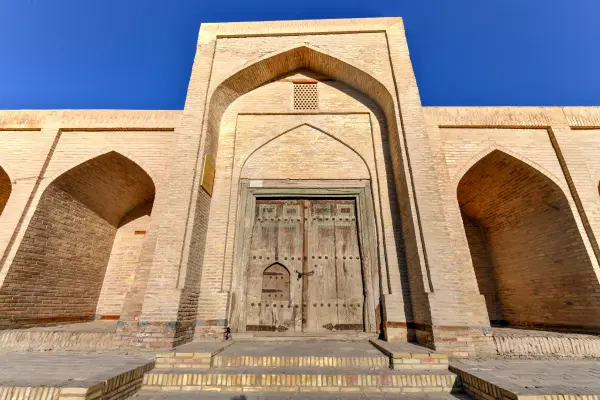
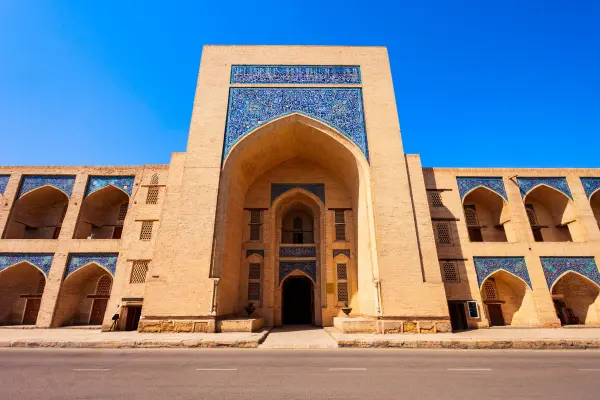
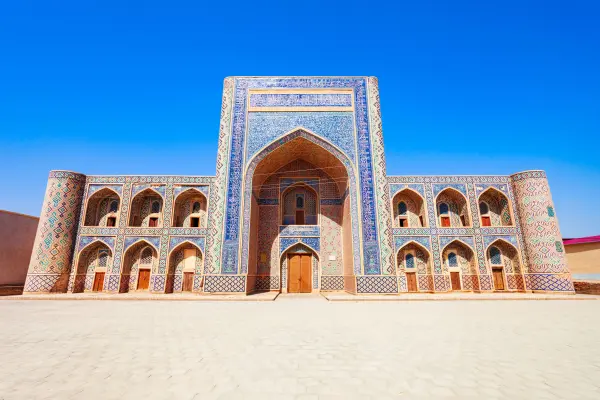
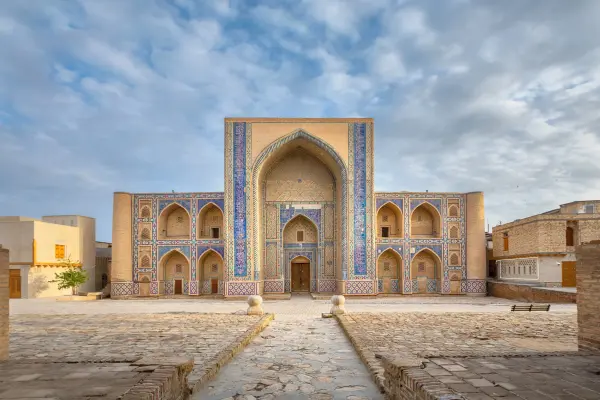
Visitors should pay attention to the overall appearance of the building, characteristic of Bukhara madrasas: an inner courtyard, a facade with a portal, and hujra cells arranged around the perimeter. Even if the monument is less famous than the city's largest ensembles, it helps to better understand what Bukhara looked like on the eve of the major changes of the early 20th century.
Alim Khan Madrasa is usually visited as part of a walk through the center of Bukhara, where many architectural monuments are located a short distance from one another. It is a convenient stop for those who want to see not only the most famous sites, but also less conspicuous yet important buildings for the historical appearance of the city.
Alim Khan Madrasa on the map
Bukhara, Old City of Bukhara: Architectural and historical complexes
Ulugbek Tamokifurush Caravanserai, Kukeldash Madrasah, Khoja-Zaynuddin Complex, Kosh Madrasah
Alim Khan Madrasa and Its Place in Old Bukhara
A monument of the late stage of Bukhara architecture in the city's historic center.
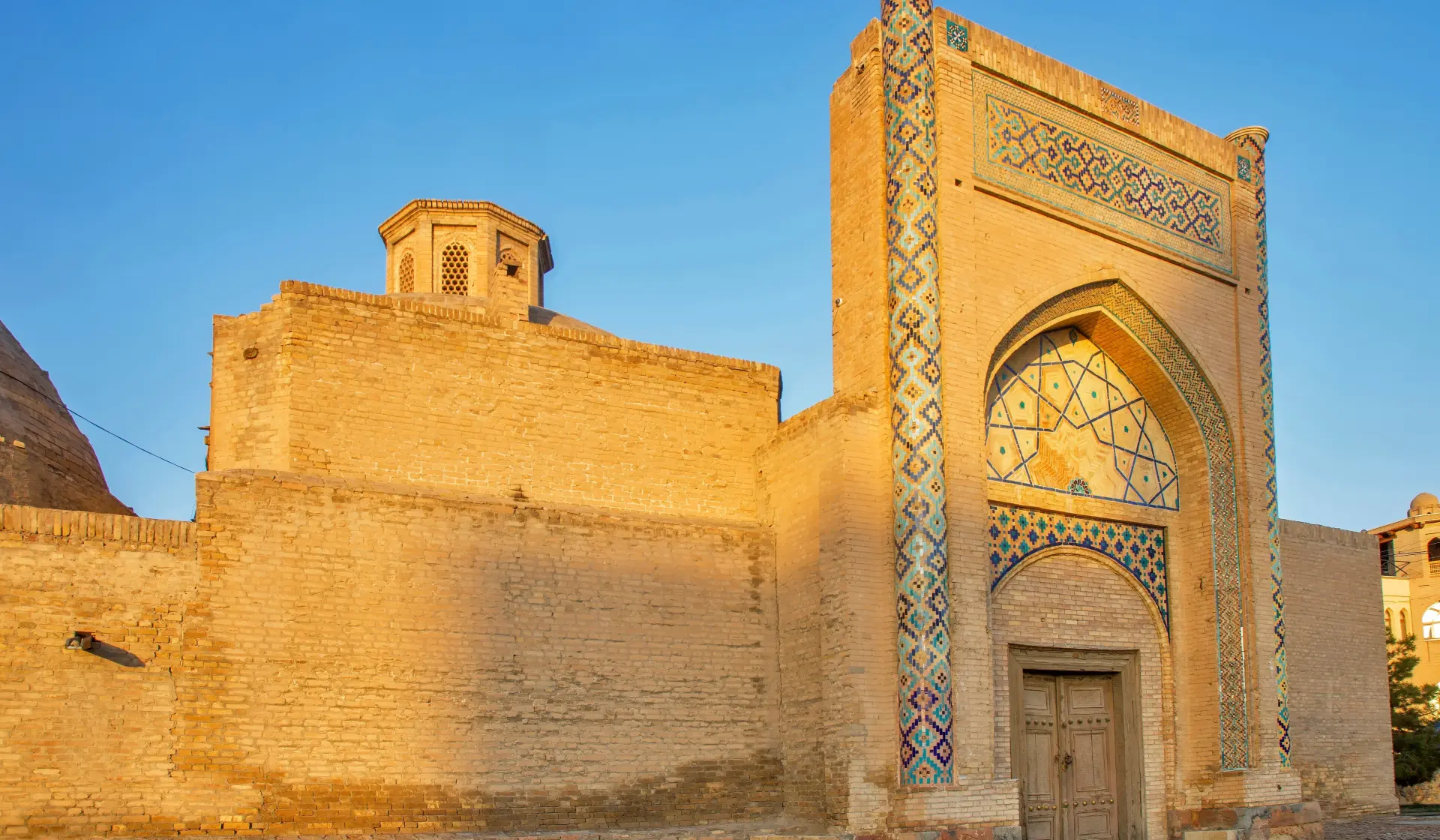
Late Bukhara madrasa from the era of the last emir
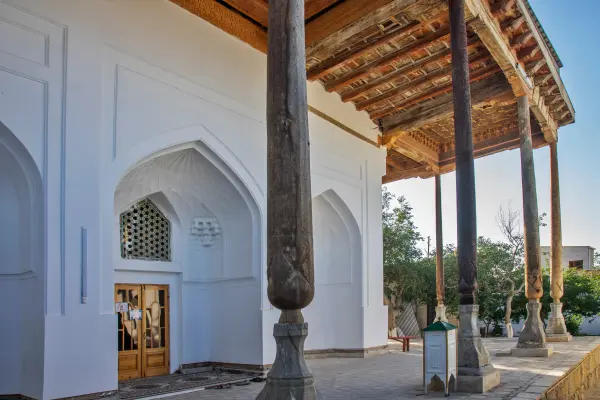
Today, people come here primarily to become acquainted with the late stage of Bukhara's architecture. The building preserves elements traditional for a madrasa: the main facade leading into the inner space, and living or study rooms arranged around the courtyard. A visit usually does not take much time, but it complements a route through the old city well.
The place will be especially interesting for those who have already seen Bukhara's major ensembles and want to compare them with a monument from a later period. Buildings like this make it easier to notice how long enduring architectural techniques and the layout of religious and educational structures were preserved in the city.
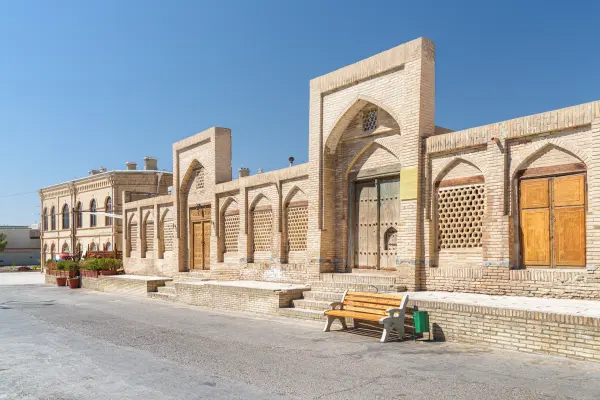
Other attractions of Bukhara's historic center are located nearby, so the madrasa can easily be included in a walking tour of the old quarters. It is usually reached on foot from the center of Bukhara, following a route through the monuments of the old city.
Best tours and travel experiences across the continent

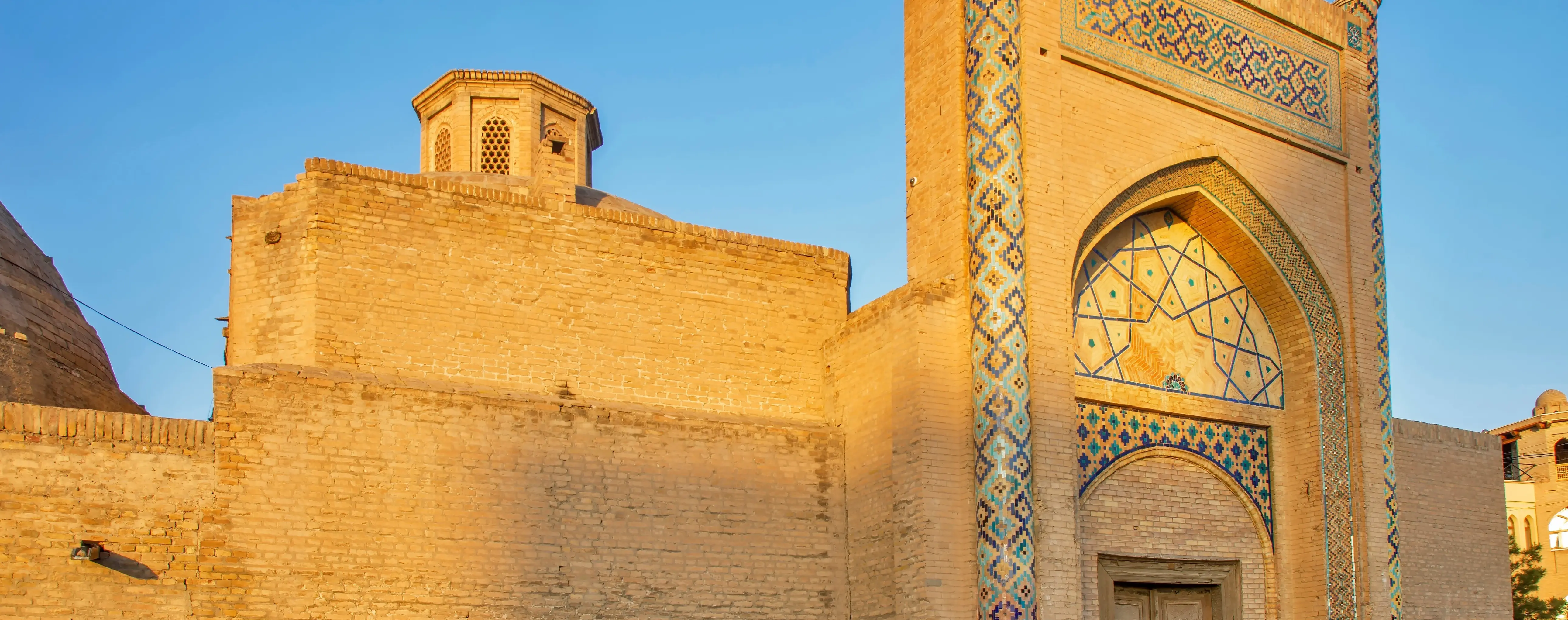
Photos of the madrasa
Guided tours, popular attractions, and top-rated hotels across the continent


