

Ancient Hierapolis
Ancient Hierapolis near Pamukkale, Turkey
Ancient Hierapolis is located by Pamukkale, not far from the modern center of the village and about 18 km from Denizli. The city arose on a plateau above the Lycus River valley and from an early period was associated with hot springs, which made this place known as a healing and religious center. Today, the ruins of Hierapolis are part of the unified archaeological and natural complex of Pamukkale, included on the UNESCO World Heritage List.
Hierapolis was founded in the Hellenistic era and developed especially actively during Roman times. The layout of the city can still be traced through its main streets, gates, baths, and public buildings. The most striking monument is the Roman theater, which has preserved its seating rows, stage building, and decorative reliefs, making it possible to imagine the scale and structure of the ancient city.
Among the important sites are also the Sanctuary of Apollo and the Ploutonion, an area by a fault from which carbon dioxide naturally emerges. In the Late Antique and Byzantine periods, Hierapolis became an important place of Christian pilgrimage. This is recalled by the Martyrium of Saint Philip and the large necropolis with sarcophagi, tombs, and mausoleums stretching along the roads beyond the urban area.
For tourists, Hierapolis is interesting because it is easy to combine a visit to the ancient ruins with a visit to the travertine terraces of Pamukkale. In one area, you can see the theater, streets, and temples, and then walk to the natural limestone cascades and historic thermal pools. This route gives a complete picture of how nature, religion, healing, and urban life were connected in this place.
Ancient Hierapolis on the map
Ancient Hierapolis - routes through the ruins and museum finds
The archaeological zone combines ruins, mausoleums, and thermal sites.
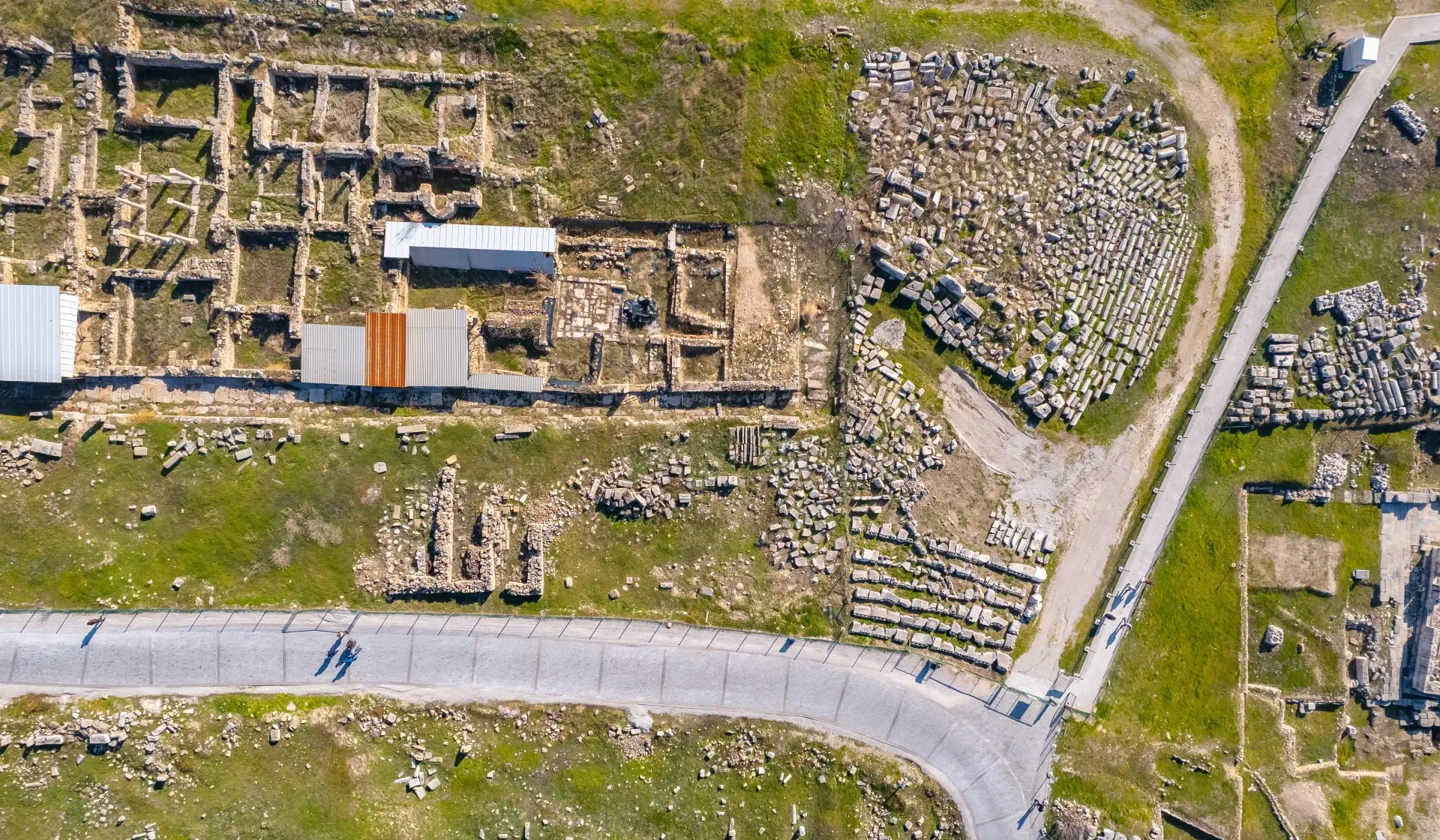
The Roman theater, necropolis, and thermal springs on one plateau
Within the territory of Hierapolis, it is convenient to view the city as a sequence of distinct zones. Visitors usually first pass through the monumental gates and the main street, then explore the theater, public baths, and the remains of former residential and religious buildings. The theater is considered one of the most expressive structures in the complex: from the upper rows there are views of the ruins and the white slopes of Pamukkale.
The necropolis, located along the ancient roads, deserves special attention. Sarcophagi, family tombs, burial mounds, and mausoleums from different periods have been preserved here, making this part of the monument important for understanding the funerary traditions of Asia Minor. In the Hierapolis Archaeological Museum, housed in the former Roman baths, you can see sculptures, reliefs, inscriptions, and objects found during excavations.
Along the route through the ruins, there are also areas connected with the thermal waters thanks to which the city existed for many centuries. Nearby is the ancient pool known as Cleopatra's Pool, and lower on the slope lie the travertine terraces of Pamukkale. For this reason, a visit to Hierapolis is often combined with a walk through the natural part of the complex on the same day.
The easiest way to get here is from Denizli by bus, taxi, or car to Pamukkale, after which the entrance to the archaeological zone is within walking distance from the village. It is worth allowing several hours to explore the site, as the distances between the main landmarks are considerable, and part of the route passes under the open sun.
Best tours and travel experiences across the continent


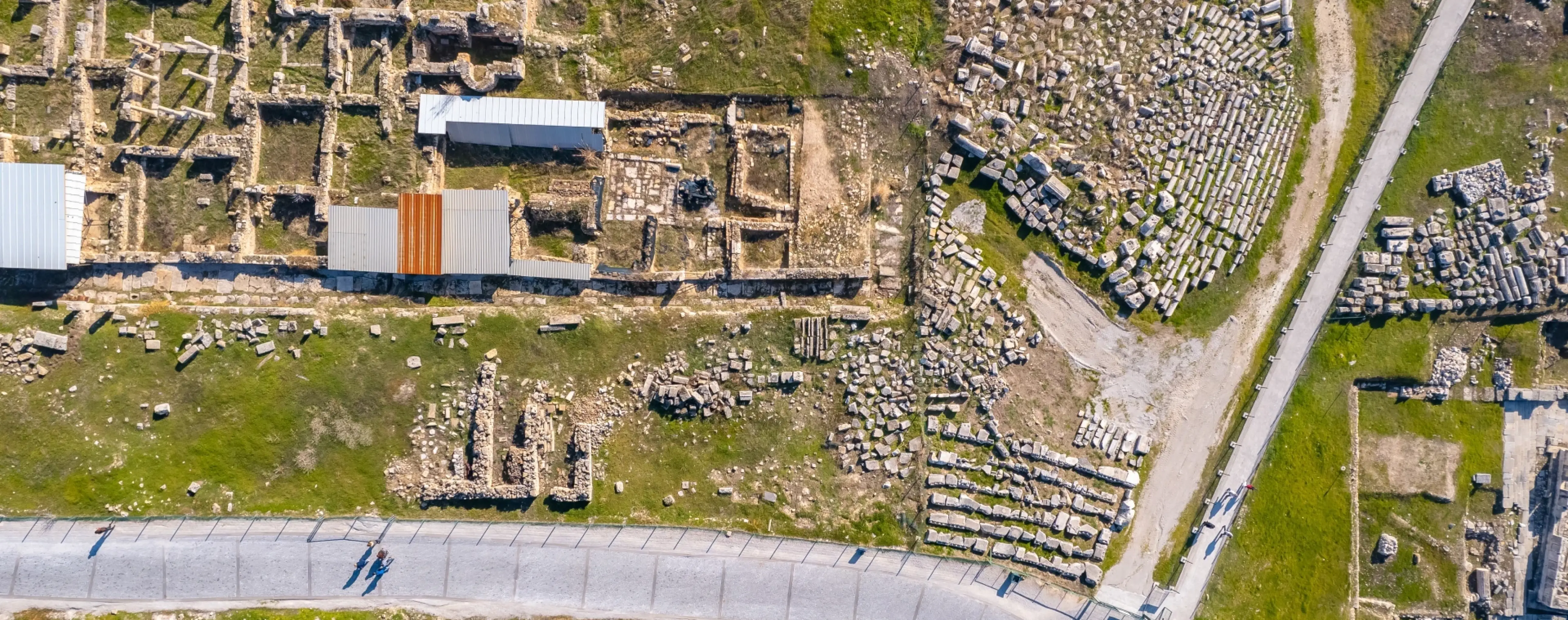
Photos of Hierapolis
Guided tours, popular attractions, and top-rated hotels across the continent


