
Hierapolis, Turkey Travel Guide
Hierapolis, Turkey
Hierapolis is an ancient settlement near Pamukkale in Turkey, set above the white travertine terraces. The site is large, open, and exposed, and the landscape is a major part of the visit. Most people explore it on foot and often combine the ruins with the terraces below, making it well suited to walking-focused trips or as a stop on a cultural holiday.
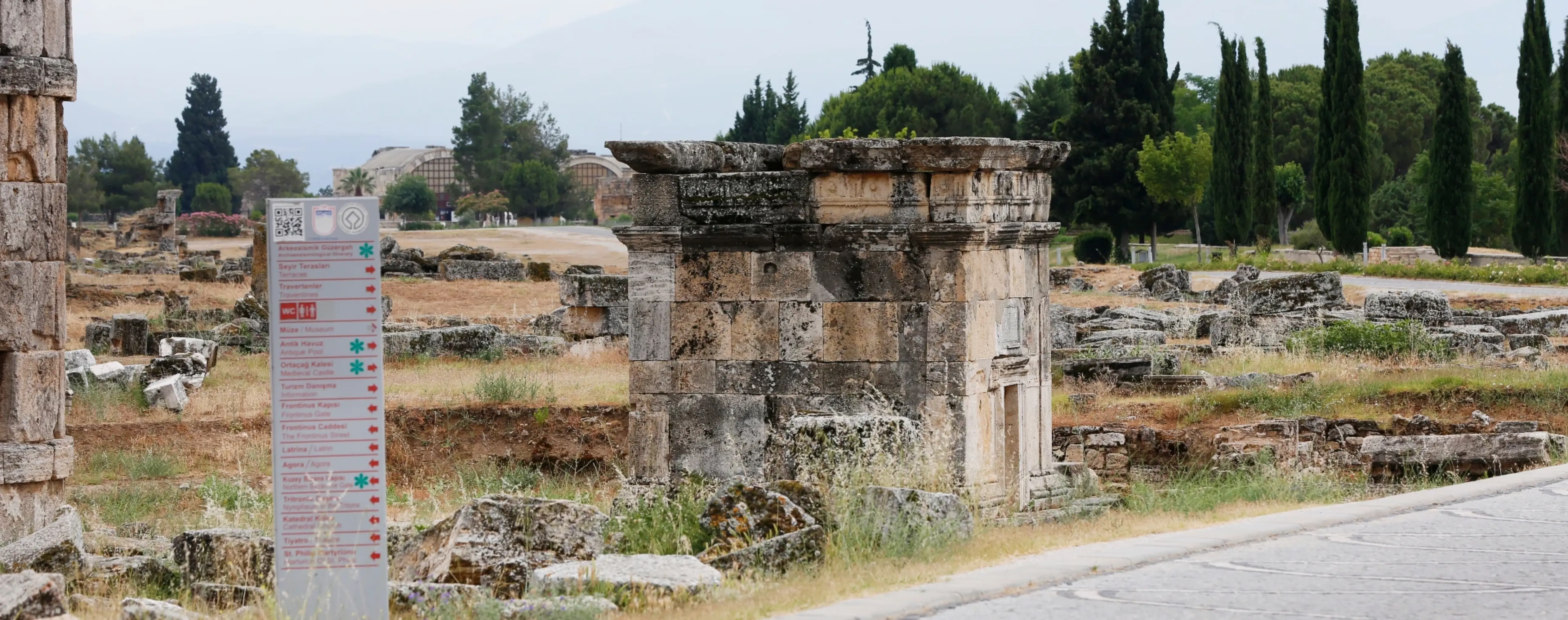
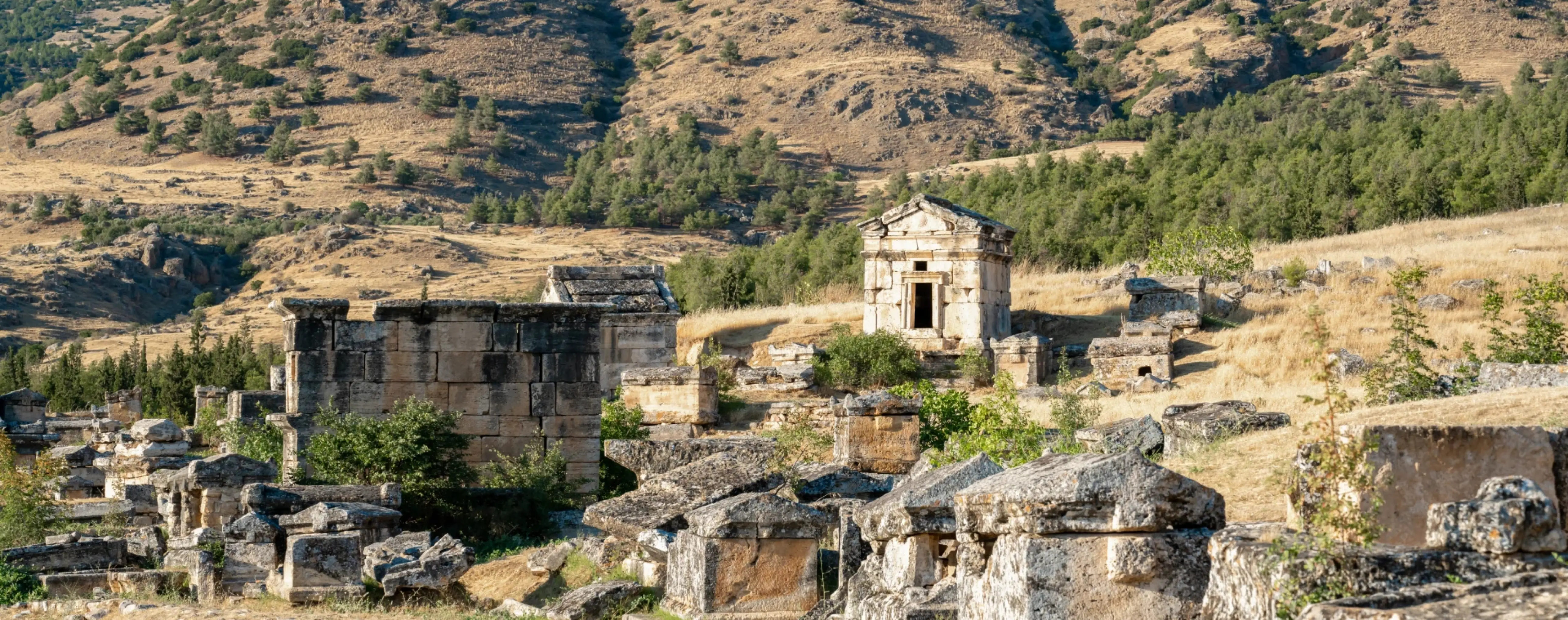
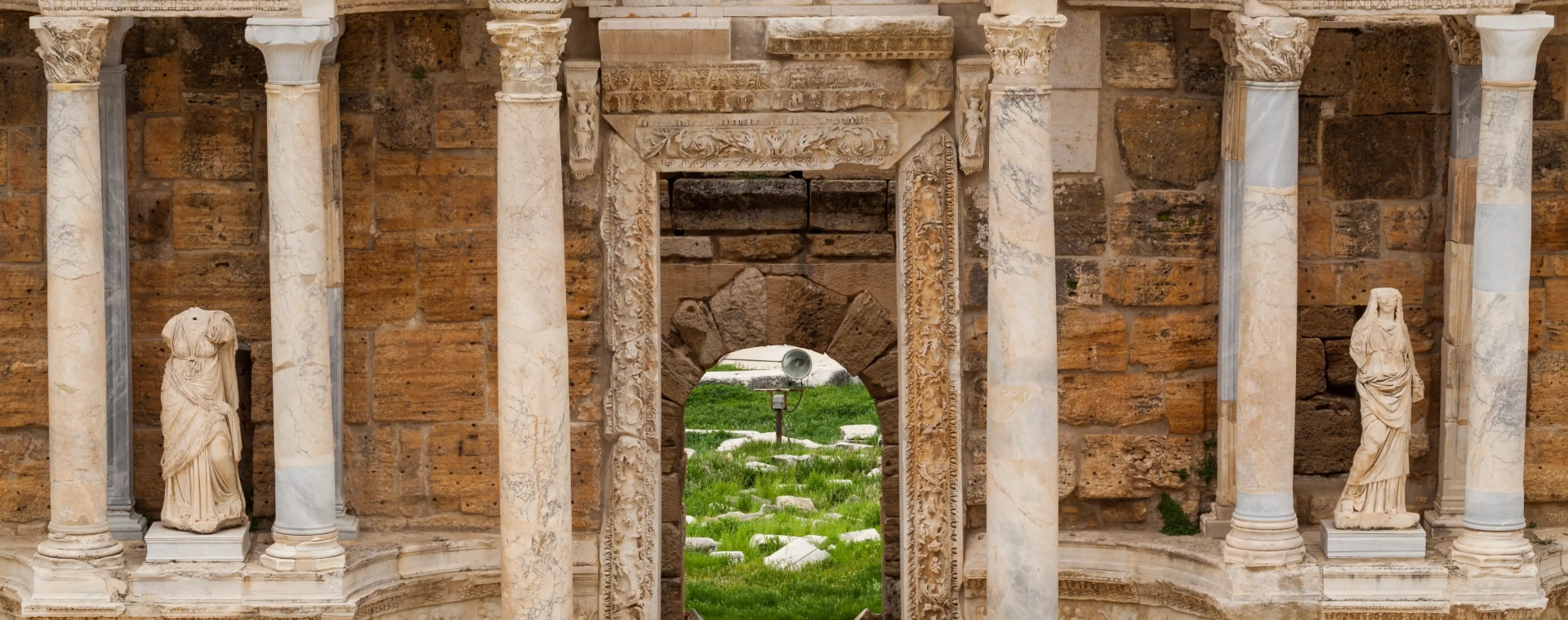
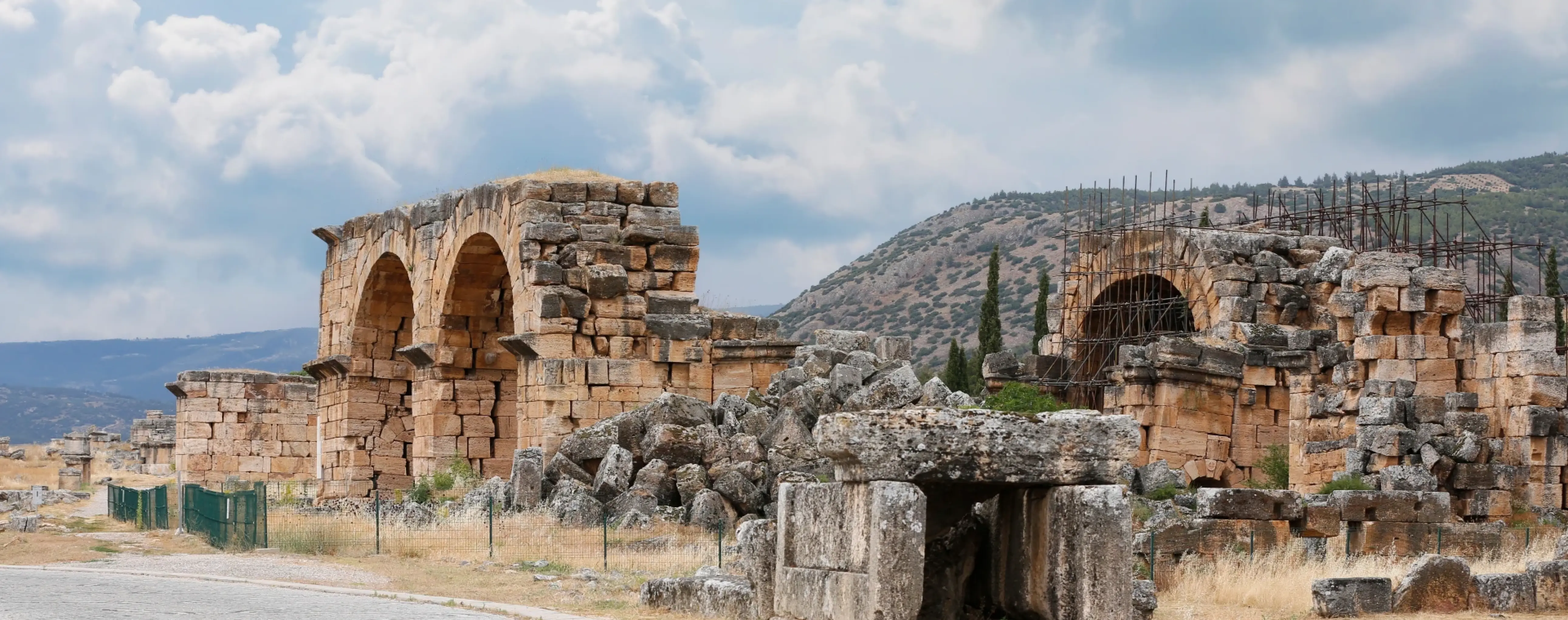
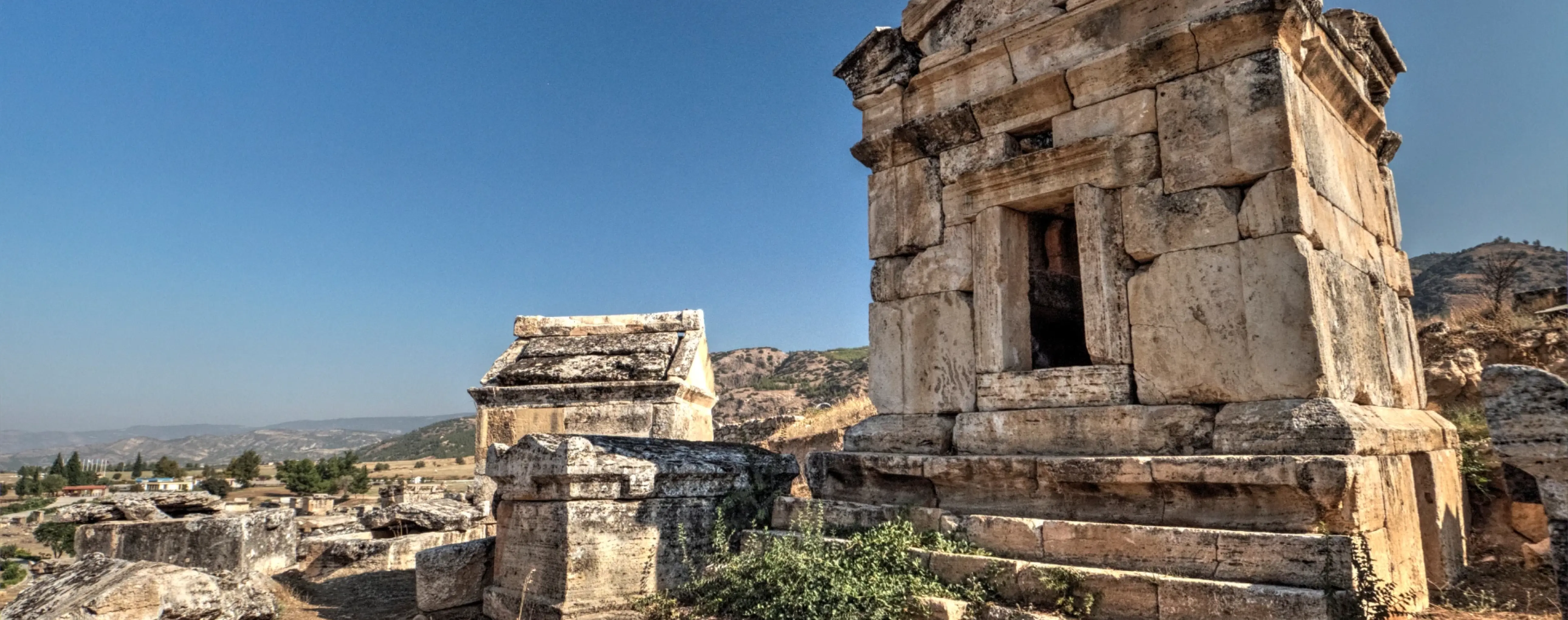
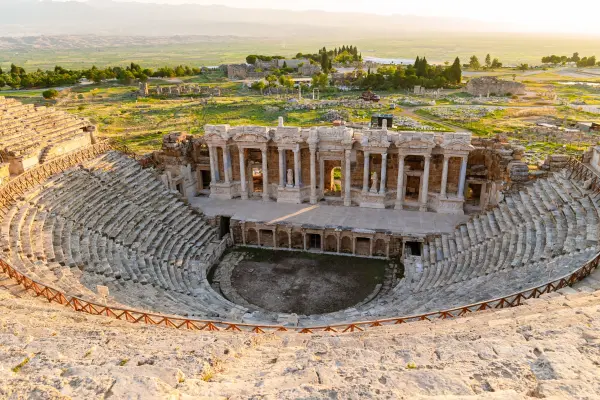
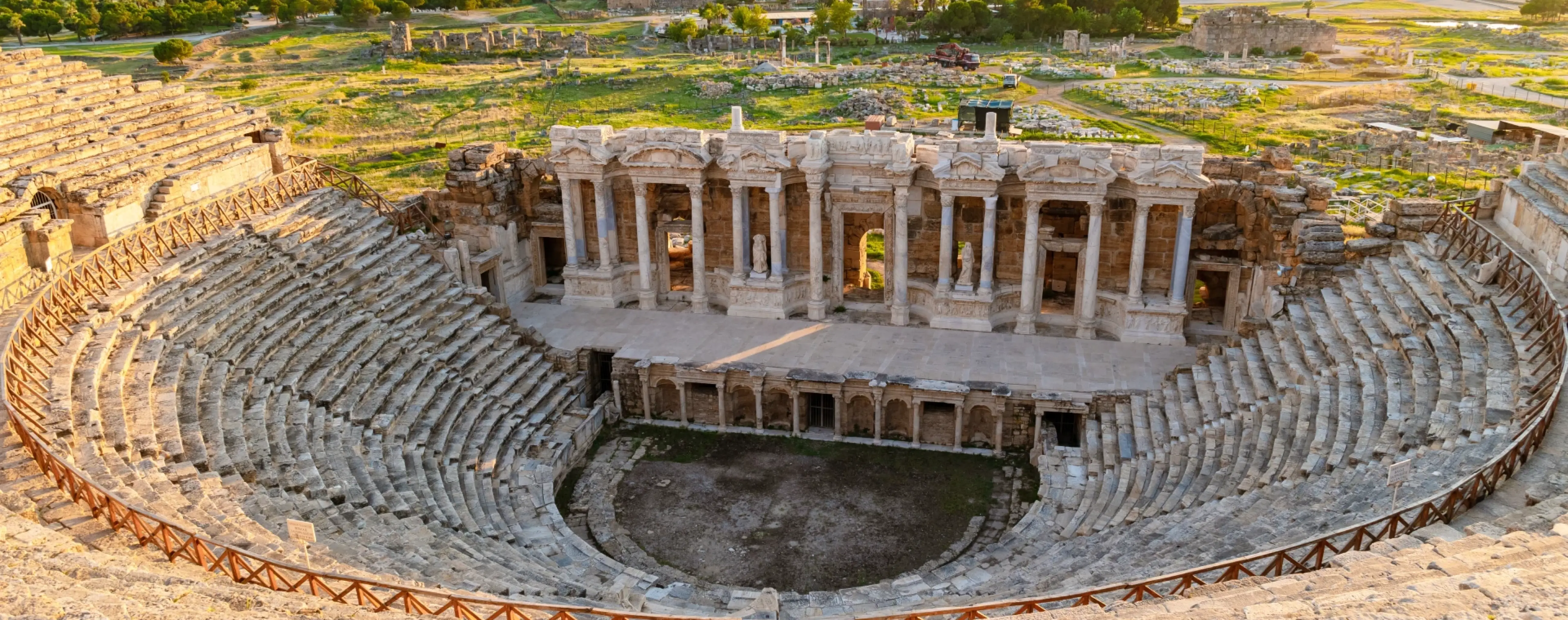
Hierapolis is best known for its UNESCO World Heritage status, shared with Pamukkale, and for its history as a spa city connected to mineral-rich thermal springs. Visitors come to see the large Roman theater, the extensive necropolis with its sarcophagi and tombs, the Plutonium, and Frontinus Gate. Many also visit the Antique Pool, where you can bathe in warm mineral water among ancient stone remains.
Hierapolis is usually reached by road from Denizli by local bus, dolmus, taxi, or tour vehicle. Many visitors also approach from nearby Pamukkale when combining both sites in a single trip. The nearest airport commonly used for visiting Pamukkale and Hierapolis is Denizli Cardak Airport.
Hierapolis on the map
Hierapolis: Attractions, interesting places for excursions
Ancient Hierapolis, Ancient Theatre of Hierapolis, Hierapolis History Museum, Hierapolis Necropolis
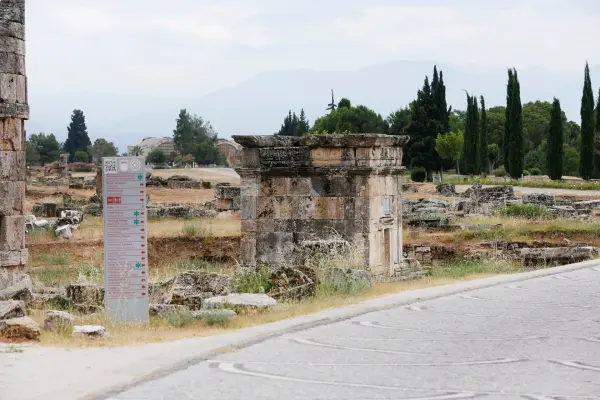
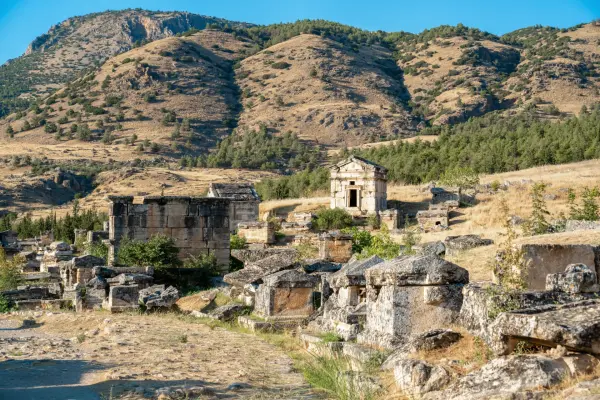
Top attractions in Hierapolis and what to see
Roman ruins, white terraces, and warm mineral waters above Pamukkale
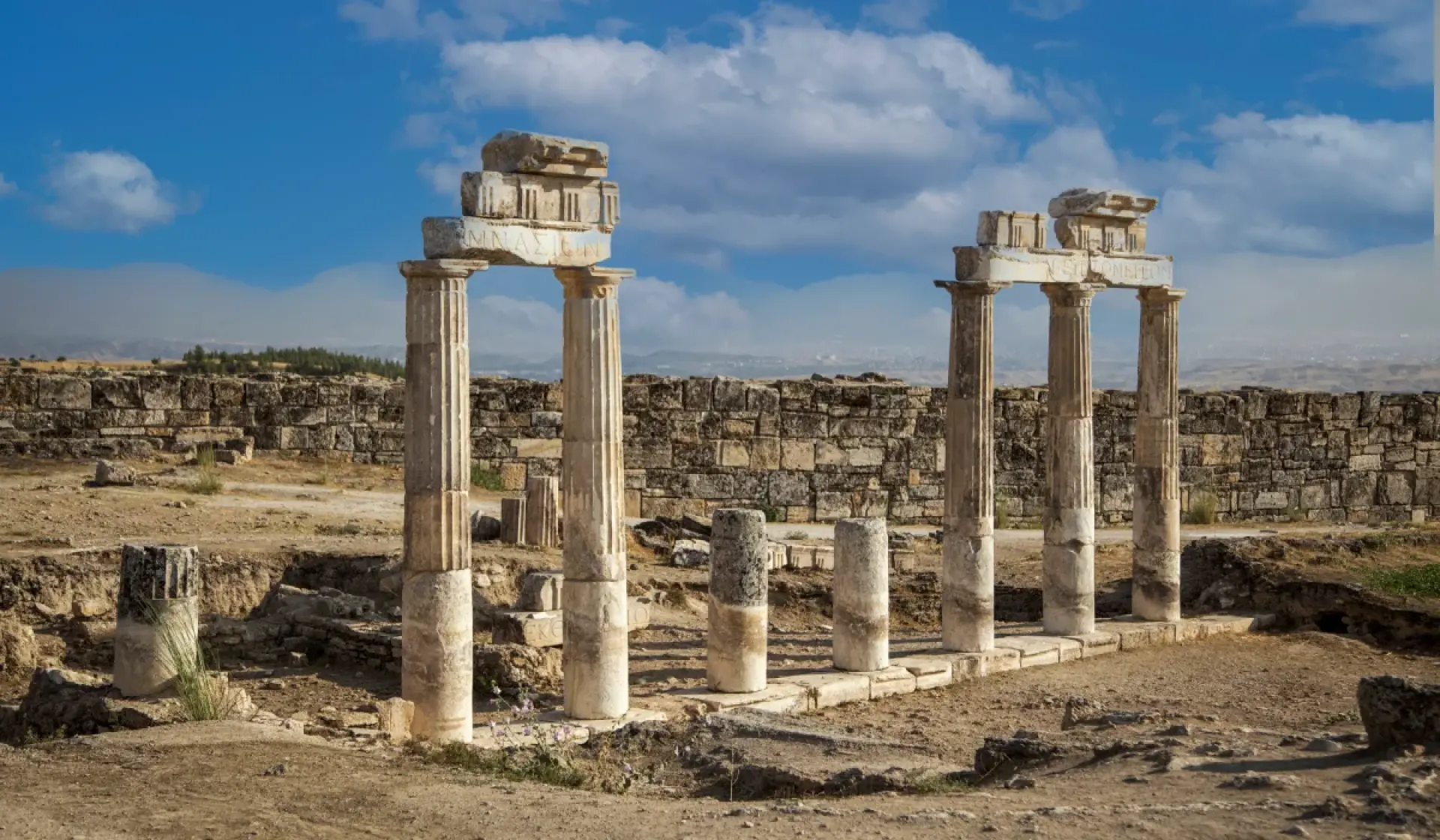
Main sights and visitor experience in Hierapolis
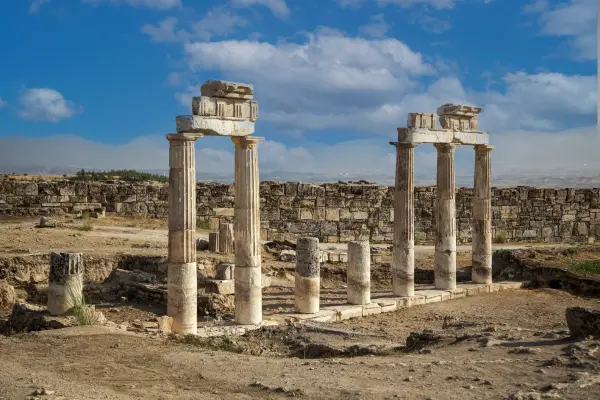
The main places to visit in Hierapolis are spread across a large archaeological zone. The best-known monument is the Roman theater, while the necropolis stands out for its many sarcophagi, tombs, and funerary structures. Other key attractions include the Plutonium, Frontinus Gate, and the Antique Pool, and many visitors continue their route with a walk across the Pamukkale travertines.
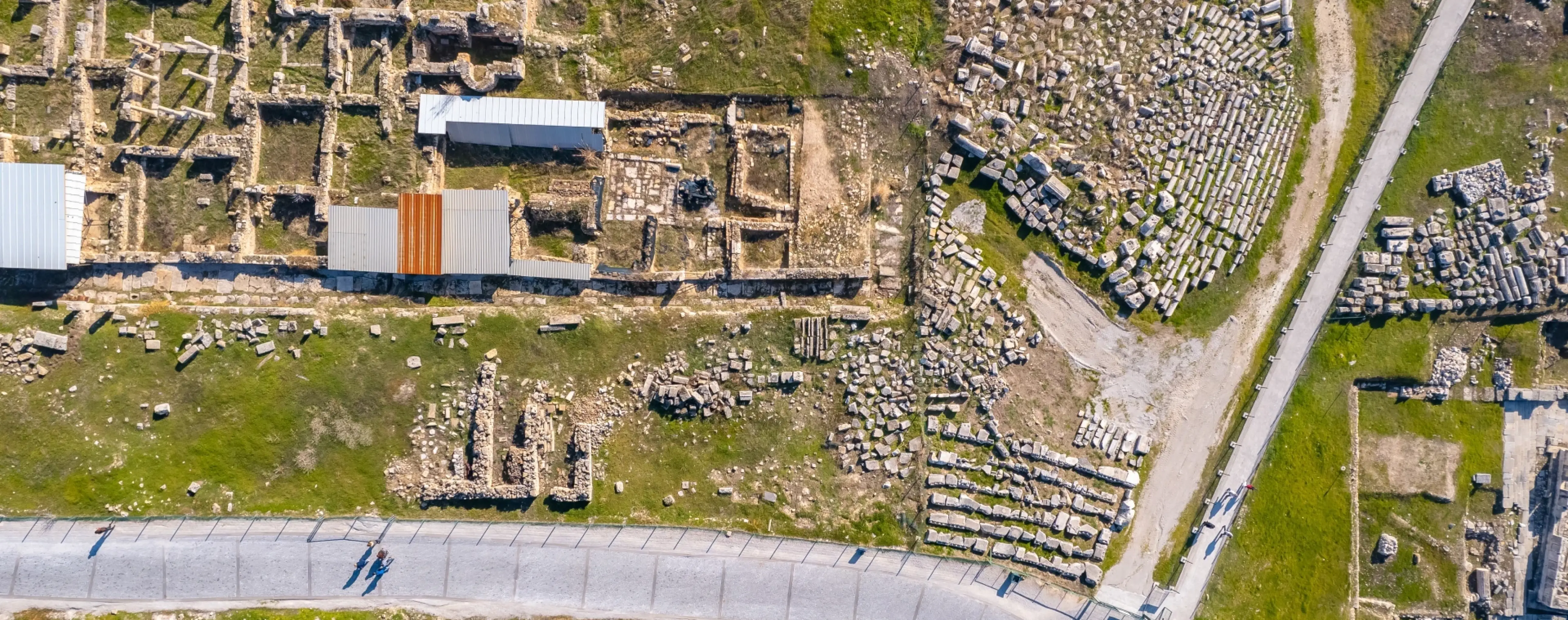
The site has a distinctly open-air archaeological character and is best explored on foot. Visitors move through a broad ruined landscape above the white terraces, following long, exposed walking routes with little separation between the ancient remains and the natural thermal setting. That walking experience is central to a visit here, rather than viewing the site from a single point.
Beyond the ruins, most practical visitor services are in nearby Pamukkale rather than within Hierapolis itself. Dining, hotels, and souvenir shops used by visitors are mainly located there. Evenings are generally quiet and centered on Pamukkale, as Hierapolis functions primarily as a daytime cultural excursion site rather than a place for nightlife or urban activity.
District overview – facts & data for travelers
Best tours and travel experiences across the continent

Hierapolis photos
Guided tours, popular attractions, and top-rated hotels across the continent