
Ancient Public Toilet in Ephesus
Ancient Public Toilet in Ephesus, Izmir, Turkey
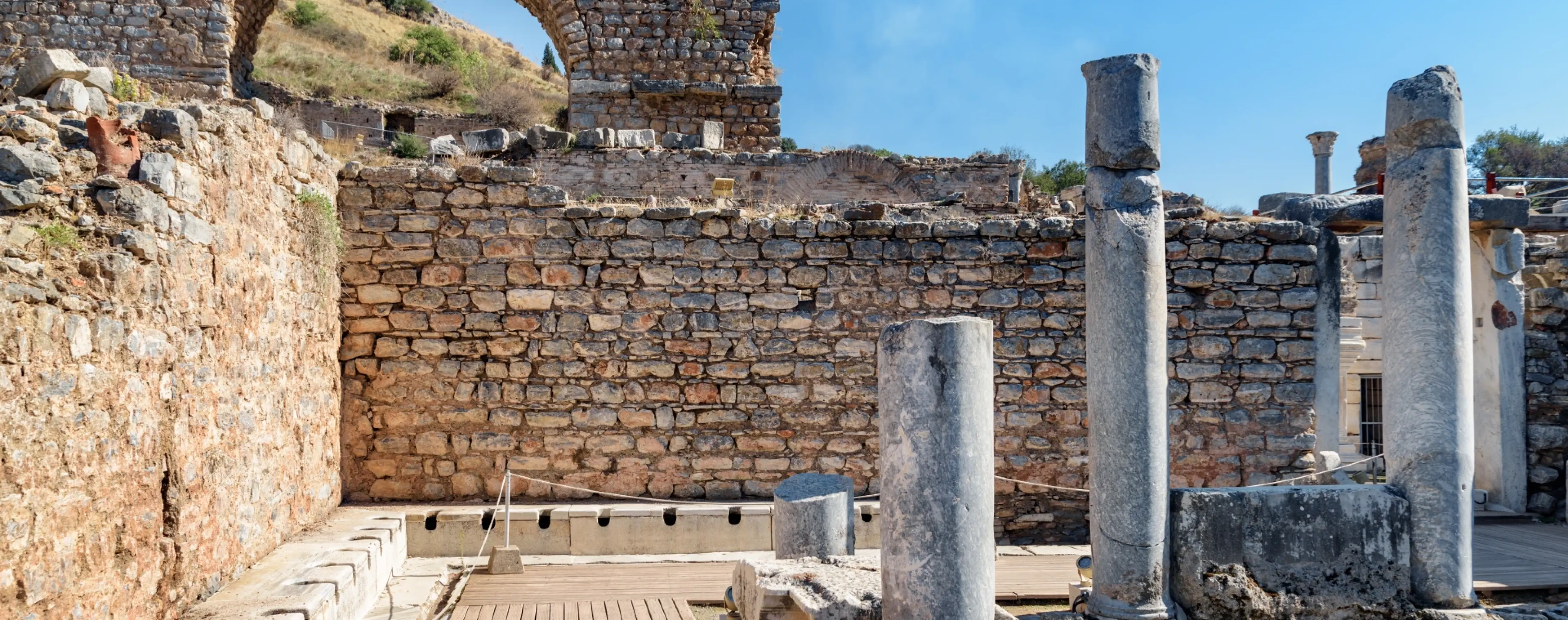
The Ancient Public Toilet in Ephesus is located within the archaeological complex of ancient Ephesus near the town of Selcuk in Izmir Province. This site dates to the Roman period and is considered one of the most famous surviving urban latrines of the ancient world. It helps reveal not the ceremonial side of the ancient city, but its everyday functioning.
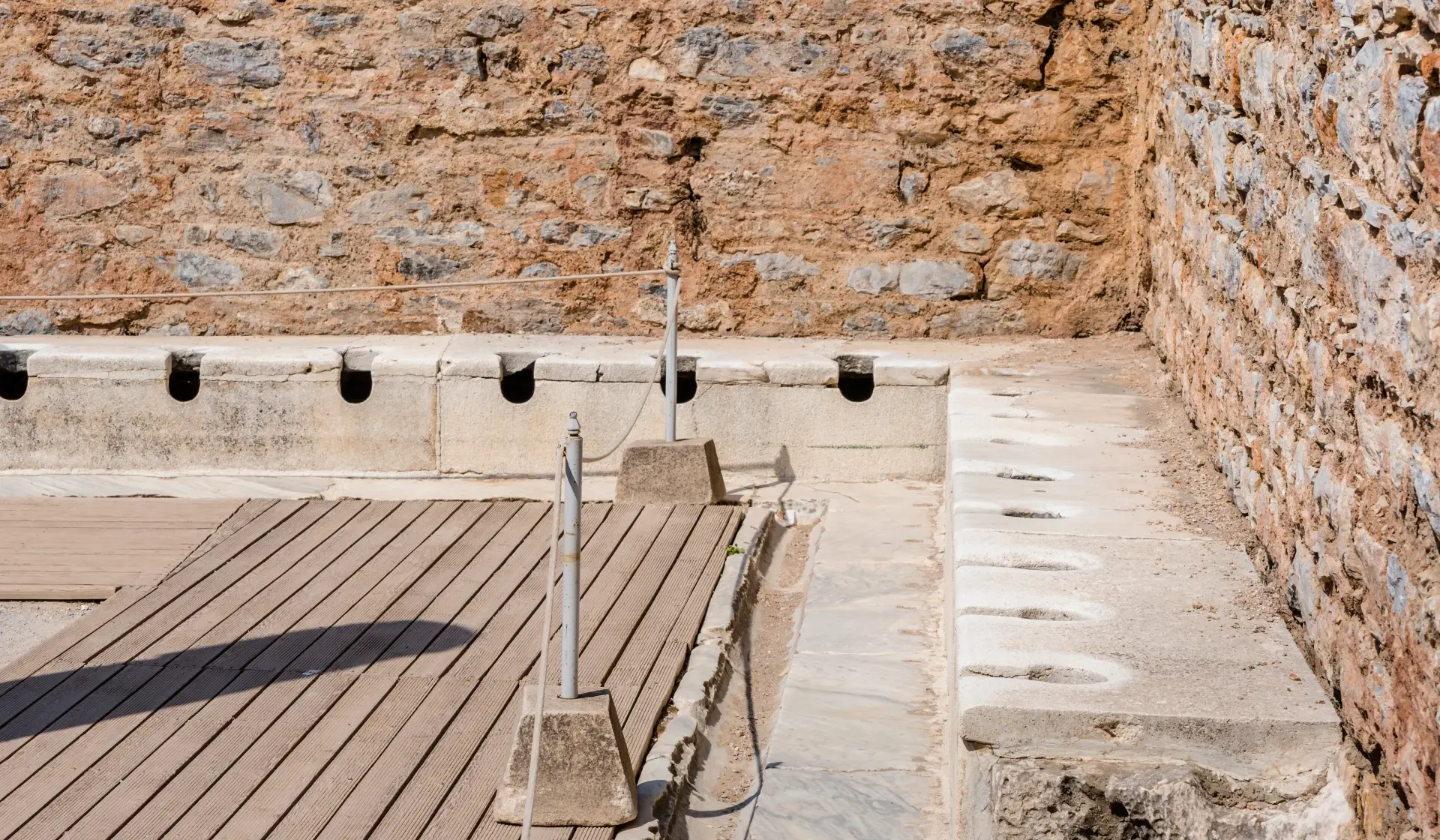
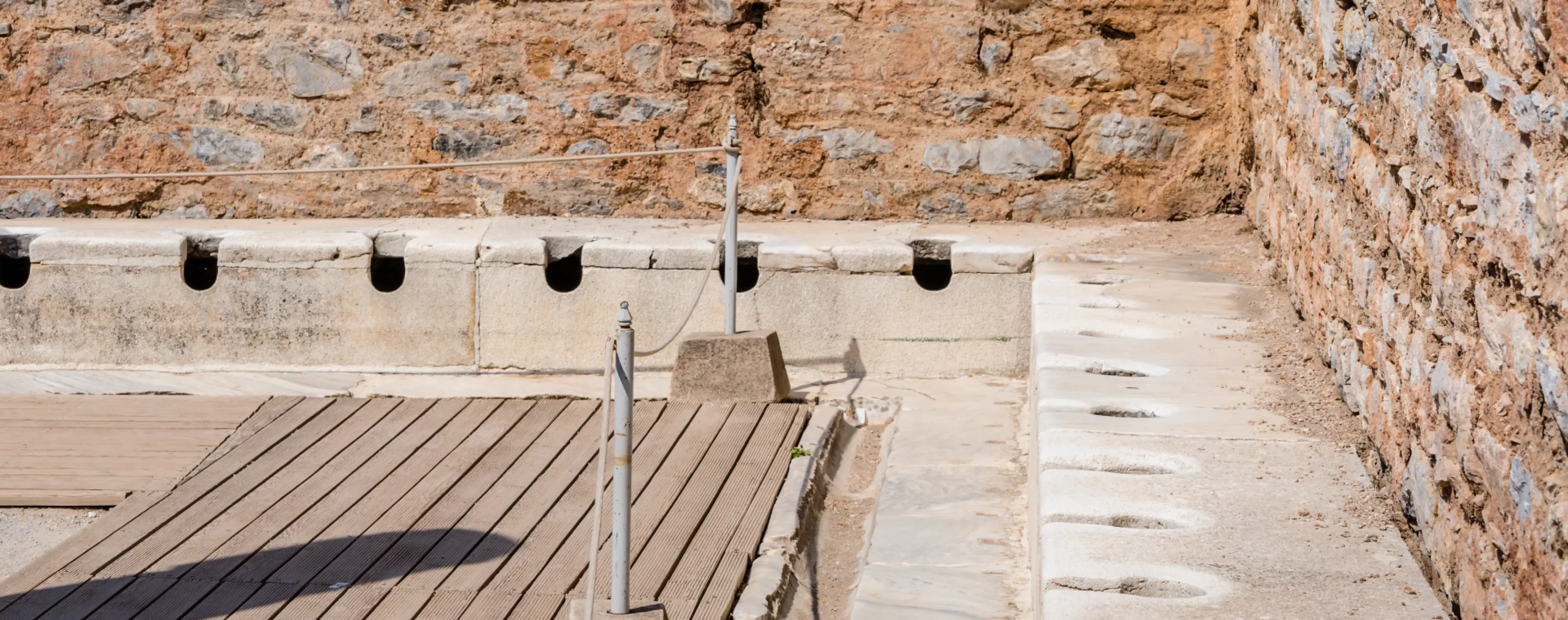
The latrine was located next to the Baths of Scholastica and was part of a well-planned urban infrastructure. Inside, stone seats arranged along the perimeter have been preserved, placed without partitions, which was typical for public toilets of that time. Such spaces were used not only for their direct purpose, but also remained part of the ordinary social life of the city's residents.
For visitors, the engineering aspect of the structure is especially interesting. Beneath the seats ran a channel for removing waste, and in front of them there was a water channel designed to maintain cleanliness. In the center was an open inner courtyard that provided lighting and ventilation, which speaks to the high level of sanitary and construction organization in Ephesus.
Today, this monument is regarded as an important detail of the urban environment of ancient Ephesus. It complements visits to the streets, baths, the Library of Celsus, and other public structures in the complex, making it possible to imagine more accurately how a large ancient city on the western coast of Asia Minor was organized.
Ancient Public Toilet in Ephesus on the map
Izmir, Ephesus: Archaeological monuments
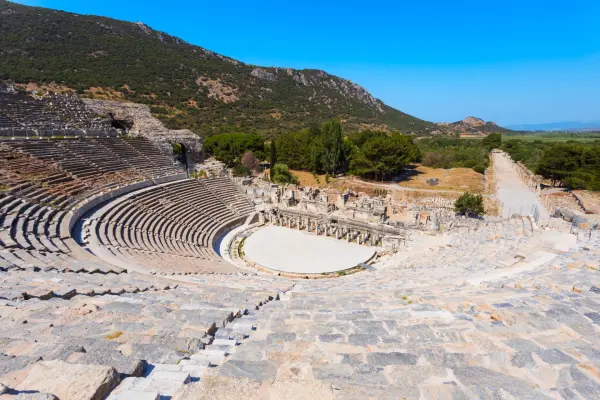
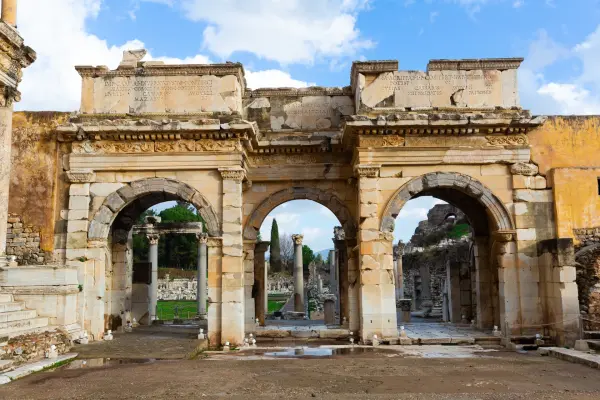
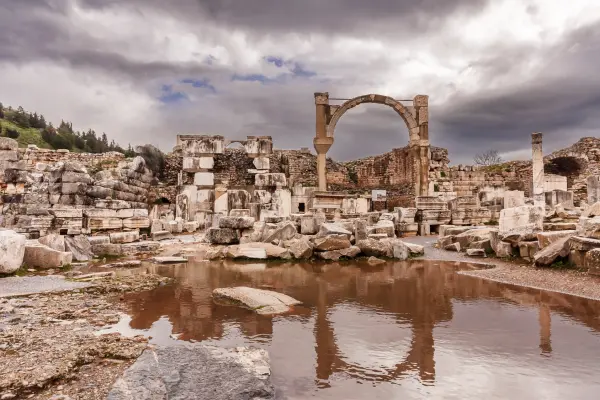
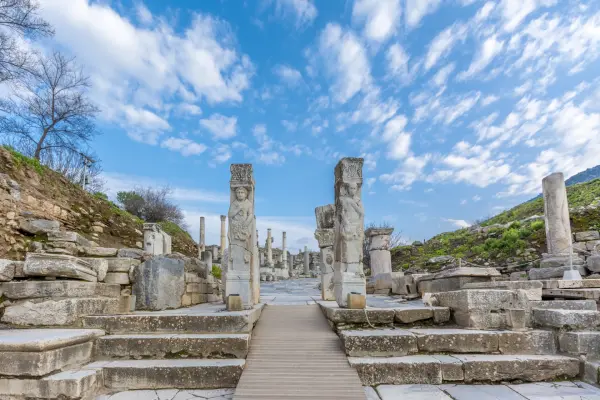
Ephesus Theatre, Gate of Mazeus and Mithridates, Pollio Fountain, Hercules Gate
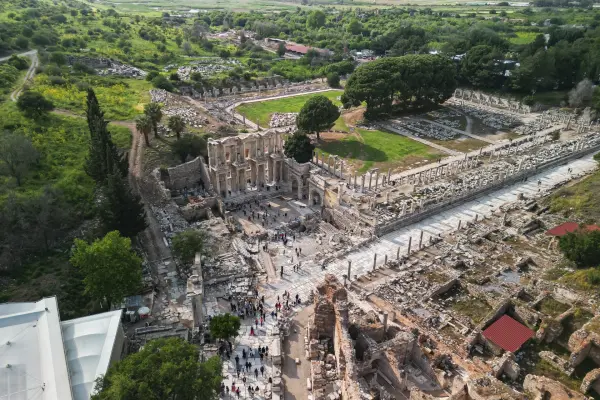
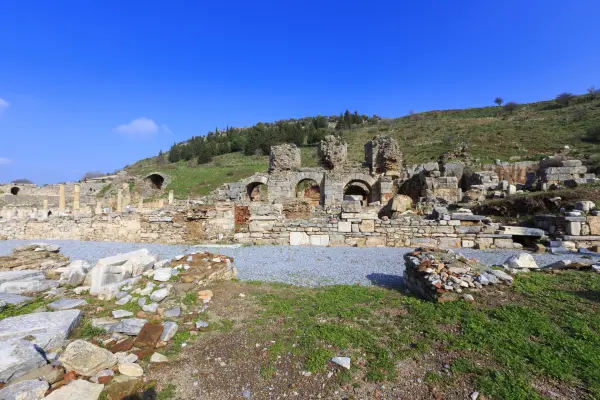
The Ancient Public Toilet in Ephesus and Its Roman Layout
Here you can see the everyday urban infrastructure of Roman Ephesus.
The Roman Latrine as Part of Everyday Life in Ephesus
During a visit here, you can observe the stone seats, the rectangular layout of the room, and traces of the water system that served the latrines. It is precisely such details that make the site understandable even to those who are usually more interested in temples and theaters: before the visitor is not an abstract ruin, but a clearly readable element of urban life.
It is best to view the structure in the context of the neighboring buildings. Its proximity to the baths shows how closely hygiene, water supply, and public spaces were connected in a Roman city. The open central courtyard helped ventilate the room and allowed daylight to enter, which was an important part of its design.
Tourists usually come here as part of the general route through the archaeological zone of Ephesus. Nearby are the Baths of Scholastica, Curetes Street, the Library of Celsus, and the Great Theatre, so a stop at the latrine easily fits into a walk through the main monuments of the complex.
Visitors reach it through the entrances to the archaeological park of ancient Ephesus from the Selcuk side, and then continue on foot along the main excavation route. It is worth bearing in mind that the site is outdoors, so it is more convenient to choose morning hours for visiting and footwear suitable for long walks on stone paths.
Best tours and travel experiences across the continent




Photos of Ephesus
Guided tours, popular attractions, and top-rated hotels across the continent


